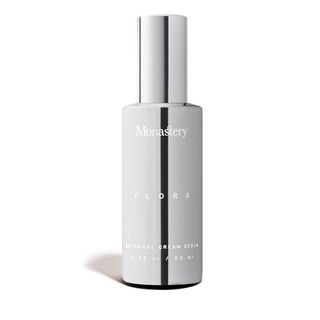
Works for
1 of 1 advertised claim delivered
Moisturizing7 ingredients credited for this claimGood support
“Hydrating and firming, this cream nourishes deeply to reveal your healthiest, most radiant skin.”
This product can help improve hydration of the skin with the two types of ingredients.
The first type is called “humectants”:
these ingredients help attract water.
When humectants are on the surface of the skin, they “pull in” the moisture from the outside environment, or from
within deeper layers of the skin. The following ingredients in this product do the job:
hyaluronic acid, sodium hyaluronate.
This product also contains ingredients called “occlusives”. They help reduce the speed with which our skin loses moisture to the outside environment. These ingredients also help soften the upper layer of the skin, so it feels less tight and nicer to the touch. The following ingredients in this product do the job: beeswax, cera alba.
Can it cause trouble?
Irritancy6 strong irritants: Rosa damascena extract, Salvia sclarea extract + 4 more — patch-test recommendedHigh risk
ComedogenicClean of flagged comedogenic ingredientsNone flagged
User reviews
Be the first — your take helps the next person decide.
Ingredients
Filter by role to see what each ingredient is doing.
Aloe barbadensis extract~23–35%
- Irritation risk
- Medium
Traditionally used to treat sunburns, dermatitis and inflammation, but evidence for its effectiveness is lacking. The extract can contain humectants that help attract water into the skin
More about Aloe barbadensis extractRubus idaeus extract~6.1–9.1%
- Irritation risk
- High
Mostly used as a fragrance. Might have some anti-oxidant effect
More about Rubus idaeus extractRubus idaeus seed~4.2–6.3%
- Irritation risk
- Low
Jasminum sambac flower extract~3.3–4.9%
- Irritation risk
- Low
Rosa damascena extract~2.5–3.8%
- Irritation risk
- High
Oil of a very fragrant pink rose used as fragrance in cosmetics. Extensive research has shown it has mixed benefits. In the pro column, inhaling this flower’s scent seems to have relaxing properties and the plant’s petals contain skin-soothing and antioxidant compounds that can benefit skin. On the flipside, the numerous chemicals that create this rose’s distinctive fragrance pose a risk of causing skin aggravation.
More about Rosa damascena extractSodium hyaluronate~1.7–2.6%
- Irritation risk
- Low
One of the best moisturizing ingredients. Attracts water into the upper layer of the skin
More about Sodium hyaluronateHyaluronic acid~1.2–1.9%
- Irritation risk
- Low
One of the best moisturizing ingredients. Attracts water into the upper layer of the skin. Naturally present in skin. Typically has large molecule size unless advertised otherwise on the product label. Helps support skin's barrier function and may help to reduce inflammation
More about Hyaluronic acidLeuconostoc/radish root ferment filtrate~1–1.6%
- Irritation risk
- Medium
A preservative that comes from radishes fermented by a bacteria. New research suggests that the preservation properties in the ingredient come from an ammonium salt that is not present naturally in radish root but used in its cultivation. Is problematic because the exact amount of the preservative agents is difficult to determine
More about Leuconostoc/radish root ferment filtrateSambucus nigra extract~0.9–1.35%
- Irritation risk
- Low
Salvia sclarea extract~0.55–1.35%
- Irritation risk
- High
Used as a fragrance. Can be irritating
More about Salvia sclarea extractClay~0.6–1.4%
- Irritation risk
- Low
Can absorb oil. There is no research confirming other benefits for the skin
More about ClaySalvia officinalis extract~0.5–1.2%
- Irritation risk
- High
Lavandula angustifolia herb oil~0.4–0.95%
- Irritation risk
- High
A fragrance. Is a common allergen and irritant
More about Lavandula angustifolia herb oilLavandula angustifolia extract~0.35–0.85%
- Irritation risk
- High
Used for fragrance and contains volatile compounds that can irritate the skin
More about Lavandula angustifolia extractSalvia officinalis extract~0.4–0.95%
- Irritation risk
- High
Xanthan gum~0.15–0.65%
- Irritation risk
- Low
Used to create a thicker product consistency
More about Xanthan gumCera alba~0.4–0.9%
- Irritation risk
- Medium
Forms a protective barrier that holds water and keeps dry skin hydrated. Keeps an emulsion from separating into its oil and liquid components, and increases the thickness of a product. Can be an allergen
More about Cera albaBeeswax~0.15–0.65%
- Irritation risk
- Low
Forms a protective barrier that holds water and keeps dry skin hydrated. Keeps an emulsion from separating into its oil and liquid components, and increases the thickness of a product. Can be an allergen
More about BeeswaxRosa rubiginosa seed oil~0.15–0.6%
- Irritation risk
- High
Plant oil that due to the high content of linoleic acid can support skin's barrier function and reduce moisture loss
More about Rosa rubiginosa seed oilRosa canina seed~0.15–0.55%
Ingredient list view
Aloe barbadensis extract, Rubus idaeus extract, Rubus idaeus seed, Unknown, Jasminum sambac flower extract, Unknown, Rosa damascena extract, Sodium hyaluronate, Hyaluronic acid, Leuconostoc/radish root ferment filtrate, Unknown, Sambucus nigra extract, Salvia sclarea extract, Clay, Salvia officinalis extract, Lavandula angustifolia herb oil, Lavandula angustifolia extract, Salvia officinalis extract, Xanthan gum, Cera alba, Beeswax, Rosa rubiginosa seed oil, Rosa canina seed
Compare prices
Retailers ranked by price — lowest first.

Affiliate links · prices updated regularly
Sources cited in this review
Every concentration estimate and effectiveness label is anchored to one of these 5 studies and safety reviews.
- 1Hyaluronic acid: A key molecule in skin agingncbi.nlm.nih.gov
- 2
- 3Efficacy of a New Topical Nano-hyaluronic Acid in Humansncbi.nlm.nih.gov
- 4Physiochemical properties and application of hyaluronic acid: a systematic reviewonlinelibrary.wiley.com
- 5

Affiliate links · As an Amazon Associate, WIMJ earns from qualifying purchases.