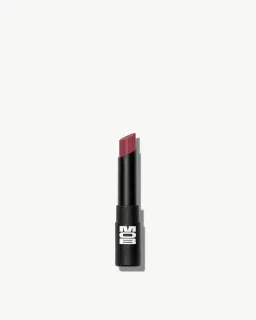
MOB Beauty Hydrating Shine Lip Balm
Works for
1 of 1 advertised claim delivered
Moisturizing17 ingredients credited for this claimStrong support
“A buttery plant super blend of jojoba, pomegranate, mimosa, sunflower, and orange oils restore softness and moisture and nourish dry lips.”
This product can help improve hydration of the skin with the two types of ingredients.
The first type is called “humectants”:
these ingredients help attract water.
When humectants are on the surface of the skin, they “pull in” the moisture from the outside environment, or from
within deeper layers of the skin. The following ingredients in this product do the job:
polyglycerin-3.
This product also contains ingredients called “occlusives”. They help reduce the speed with which our skin loses moisture to the outside environment. These ingredients also help soften the upper layer of the skin, so it feels less tight and nicer to the touch. The following ingredients in this product do the job: bis-diglyceryl polyacyladipate-2, helianthus annuus seed oil.
The following ingredients in this product are especially good for supporting the skin barrier and helping with the hydration level: phytosphingosine
Anti-oxidationNot advertised by the brand · 4 ingredients credited for this claimStrong support
This product contains antioxidants (tocopherol) that can help neutralize free radicals in skin. By doing so, they can lessen the damage the skin gets from the UV light (sun).
Anti-agingNot advertised by the brand · 3 ingredients credited for this claimModerate support
This product contains tocopherol. This ingredient help neutralize free radicals in skin. By doing so, they might be able to prevent early signs of aging (like fine lines and wrinkles), at least to some extent. These ingredients will not be able to "reverse" signs of aging.
Can it cause trouble?
Irritancy2 strong irritants: Mentha piperita oil, Mentha viridis leaf oilMedium risk
Comedogenic1 ingredient rated 2 or more on the 0–5 pore-clogging scale1 flagged
User reviews
Be the first — your take helps the next person decide.
Ingredients
Filter by role to see what each ingredient is doing.
Jojoba esters~22–34%
- Irritation risk
- Medium
An emollient made of jojoba oil. Helps soften the skin and support its barrier function
More about Jojoba estersDiisostearyl malate~4.4–6.6%
- Irritation risk
- Medium
Helps to soften the upper layer of the skin
More about Diisostearyl malateEuphorbia cerifera wax~5.2–7.8%
- Irritation risk
- Low
Octyldodecanol~3.7–5.6%
- Irritation risk
- Low
An emollient that helps to soften the skin and create a pleasant product texture and stabilize the formulation
More about OctyldodecanolPentaerythrityl tetraisostearate~3–4.5%
- Irritation risk
- Medium
Used to create a thicker product consistency
More about Pentaerythrityl tetraisostearateHelianthus annuus seed wax~2.2–3.3%
- Irritation risk
- Low
Helps soften the upper layer of the skin and support skin's barrier function while creating a thicker product consistency
More about Helianthus annuus seed waxBis-diglyceryl polyacyladipate-2~1.8–2.7%
- Irritation risk
- Low
Helps soften the upper layer of the skin and reduce water loss from its surface
More about Bis-diglyceryl polyacyladipate-2Polyhydroxystearic acid~1.3–1.9%
- Irritation risk
- Medium
Used to create a thicker product consistency and stabilize the formulation
More about Polyhydroxystearic acidTocopherol~1–1.6%
- Irritation risk
- Low
Pure form of vitamin E. Can help moisturise and protect the skin from free radicals. Often used to help stabilise other ingredients or the formula itself
More about TocopherolDisteardimonium hectorite~0.95–1.4%
- Irritation risk
- Low
A type of clay that is used to thicken the product consistency
More about Disteardimonium hectoritePropylene carbonate~0.8–1.25%
- Irritation risk
- Low
Is used to dissolve other ingredients and create nice product texture
More about Propylene carbonateAscorbyl palmitate~0.55–1.25%
- Irritation risk
- Medium
Being a lipid soluble form of vitamin C, it is more stable and can penetrate the skin better than L-Ascorbic acid. It is effective in protecting the skin from free radicals, as well as evening the skin tone, but is less effective in stimulating collagen production compared to L-Ascorbic acid.
More about Ascorbyl palmitateHelianthus annuus seed oil~0.55–1.3%
- Irritation risk
- Low
A great emollient due to its high linoleic acid content. One of the most effective plant oils in helping skin hydration and repairing skin barrier function
More about Helianthus annuus seed oilSimmondsia chinensis seed oil~0.55–1.3%
- Irritation risk
- Medium
Softens the upper layer of skin and helps restore the healthy skin barrier. Has shown to help calm down inflammation in skin. It is a stable oil, meaning that it retains its properties even when exposed to air.
More about Simmondsia chinensis seed oilPunica granatum flower extract~0.45–1.05%
- Irritation risk
- Low
Bisabolol~0.45–1.05%
- Irritation risk
- Low
An active component of chamomile plant that historically has been used to calm down irritated skin. A recent study shows that bisabolol indeed can have some anti-inflammatory effect on skin, even though conclusive data is lacking. Bisabolol has a sweet floral scent and can be added to products for its aromatic properties
More about BisabololPhytosphingosine~0.5–1.15%
- Irritation risk
- Low
A type of lipid that is naturally present in skin. It might help in repairing skin barrier function and has anti-bacterial effect
More about PhytosphingosineTetrahexyldecyl ascorbate~0.4–0.95%
- Irritation risk
- Medium
Being a lipid soluble form of vitamin C, it is more stable than ascorbic acid, but still degrades quickly and needs to be stabilized in a formulation with another ingredient. It is claimed to penetrate skin better than pure vitamin C and have the the similar benefits, but solid studies of its effectiveness are lacking. Is likely to require a higher concentration in a product than pure vitamin C to be effective. It might be able to help reduce pore clogging.
More about Tetrahexyldecyl ascorbateAluminum hydroxide~0.45–1%
- Irritation risk
- Low
Is used to add opaque (non-transparent) appearance to formulations. Can be used to coat other ingredients for even dispersion. This is a different ingredient compared to the ones used in antipersperants (aluminium chloride and aluminium chlorohydrate)
More about Aluminum hydroxideSynthetic fluorphlogopite~0.4–0.9%
- Irritation risk
- Low
A mineral that is used as an optical filter (makes the skin looks nicer through light reflection) and to improve the texture of cosmetic products
More about Synthetic fluorphlogopiteVanillin~0.35–0.8%
- Irritation risk
- Low
Persea gratissima oil~0.4–0.95%
- Irritation risk
- Medium
An emollient that helps soften the skin and could be helpful in repairing its barrier function
More about Persea gratissima oilHydrogenated vegetable oil~0.4–0.9%
- Irritation risk
- Low
- Comedogenicity
- 2/5
An oil from a mixture of different vegetables. Helps soften the upper layer of the skin
More about Hydrogenated vegetable oilCetearyl nonanoate~0.35–0.85%
- Irritation risk
- Low
Caprylic/capric triglyceride~0.4–0.9%
- Irritation risk
- Medium
A good mix of fatty acids that forms a protective layer on the skin. Improves the shelf life of products. Derived from coconut and glycerin
More about Caprylic/capric triglycerideC10-18 triglycerides~0.35–0.85%
- Irritation risk
- Low
Helps soften the skin and attract water to its upper layer. Helps create nice product texture
More about C10-18 triglyceridesMicrocrystalline wax~0.3–0.7%
Tridecyl trimellitate~0.2–0.75%
- Irritation risk
- Medium
Used to create a thicker product consistency and soften the upper layer of the skin
More about Tridecyl trimellitateHydrogenated jojoba oil~0.3–0.7%
- Irritation risk
- Low
Helps soften the upper layer of the skin
More about Hydrogenated jojoba oilTocopherol~0.15–0.65%
- Irritation risk
- Low
Pure form of vitamin E. Can help moisturise and protect the skin from free radicals. Often used to help stabilise other ingredients or the formula itself
More about TocopherolMentha piperita oil~0.15–0.5%
Acacia decurrens flower wax~0.15–0.7%
Polyglycerin-3~0.15–0.6%
- Irritation risk
- Low
Helps to attract water to the upper layer of the skin
More about Polyglycerin-3Mentha viridis leaf oil~0.15–0.55%
Ascorbyl palmitate~0.1–0.45%
- Irritation risk
- Medium
Being a lipid soluble form of vitamin C, it is more stable and can penetrate the skin better than L-Ascorbic acid. It is effective in protecting the skin from free radicals, as well as evening the skin tone, but is less effective in stimulating collagen production compared to L-Ascorbic acid.
More about Ascorbyl palmitateTitanium dioxide~0.2–0.75%
- Irritation risk
- Low
Works as a UV filter when used in high concentrations. It is photostable and is effective mostly against the UVB light, with some protection in the UVA range. In small concentrations, used for its ability to improve the color of cosmetic products. Is usually well tolerated by the skin
More about Titanium dioxideIron oxides~0.1–0.4%
- Irritation risk
- Low
An umbrella term for the following three colorants: CI 77491, CI 77492, CI 77499. They might be able to offer some protection against visible light, but the degree of the protection is not clear
More about Iron oxidesCi 15850~0.1–0.3%
Blue 1 lake~0.05–0.2%
Ci 19140~0.05–0.15%
Ingredient list view
Jojoba esters, Diisostearyl malate, Euphorbia cerifera wax, Octyldodecanol, Pentaerythrityl tetraisostearate, Helianthus annuus seed wax, Bis-diglyceryl polyacyladipate-2, Polyhydroxystearic acid, Tocopherol, Disteardimonium hectorite, Propylene carbonate, Ascorbyl palmitate, Helianthus annuus seed oil, Simmondsia chinensis seed oil, Punica granatum flower extract, Bisabolol, Phytosphingosine, Tetrahexyldecyl ascorbate, Aluminum hydroxide, Synthetic fluorphlogopite, Vanillin, Persea gratissima oil, Hydrogenated vegetable oil, Unknown, Cetearyl nonanoate, Caprylic/capric triglyceride, C10-18 triglycerides, Microcrystalline wax, Tridecyl trimellitate, Hydrogenated jojoba oil, Tocopherol, Mentha piperita oil, Acacia decurrens flower wax, Polyglycerin-3, Mentha viridis leaf oil, Ascorbyl palmitate, Titanium dioxide, Iron oxides, Unknown, Ci 15850, Unknown, Blue 1 lake, Ci 19140, Unknown
Compare prices
Retailers ranked by price — lowest first.

Affiliate links · prices updated regularly
Sources cited in this review
Every concentration estimate and effectiveness label is anchored to one of these 14 studies and safety reviews.
- 1
- 2
- 3
- 4Vitamin E in dermatologyncbi.nlm.nih.gov
- 5Vitamin E and Skin Healthlpi.oregonstate.edu
- 6

Affiliate links · As an Amazon Associate, WIMJ earns from qualifying purchases.