Works for
MoisturizingHelianthus annuus seed oil, Butyrospermum parkii butter + 20 moreWorks
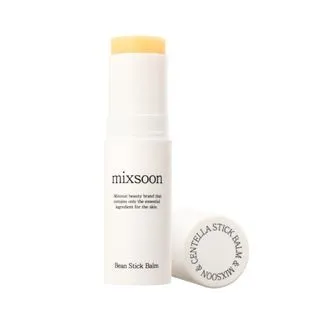
“A stick-type balm that moisturizes and nourishes skin on the go.”
This product can help improve hydration of the skin with the two types of ingredients.
The first type is called “humectants”:
these ingredients help attract water.
When humectants are on the surface of the skin, they “pull in” the moisture from the outside environment, or from
within deeper layers of the skin. The following ingredients in this product do the job:
lactobacillus ferment, monascus extract.
This product also contains ingredients called “occlusives”. They help reduce the speed with which our skin loses moisture to the outside environment. These ingredients also help soften the upper layer of the skin, so it feels less tight and nicer to the touch. The following ingredients in this product do the job: butyrospermum parkii butter, helianthus annuus seed oil.
Can it cause trouble?
Irritancy16 flagged ingredientsMedium risk
Comedogenic2 ingredients rated 2 or more on the 0–5 pore-clogging scale2 flagged
User reviews
Be the first — your take helps the next person decide.
Ingredients
Filter by role to see what each ingredient is doing.
Helianthus annuus seed oil~23–34%
- Irritation risk
- Low
A great emollient due to its high linoleic acid content. One of the most effective plant oils in helping skin hydration and repairing skin barrier function
More about Helianthus annuus seed oilPolyglyceryl-2 triisostearate~4.7–7%
- Irritation risk
- Low
Helps to soften the upper layer of the skin and create a nice product texture
More about Polyglyceryl-2 triisostearateOctyldodecanol~4.9–7.4%
- Irritation risk
- Low
An emollient that helps to soften the skin and create a pleasant product texture and stabilize the formulation
More about OctyldodecanolButyrospermum parkii butter~4.1–6.2%
- Irritation risk
- Low
- Comedogenicity
- 3/5
A great moisturising ingredient that softens the skin and reduces water loss from its upper layer. It also can be helpful in protecting skin from free radicals
More about Butyrospermum parkii butterEuphorbia cerifera wax~3.4–5%
- Irritation risk
- Low
Microcrystalline wax~2.3–3.5%
Diisostearyl malate~2–3%
- Irritation risk
- Medium
Helps to soften the upper layer of the skin
More about Diisostearyl malatePrunus amygdalus dulcis oil~1.7–2.6%
- Irritation risk
- Low
An emollient that softens the skin
More about Prunus amygdalus dulcis oilTocopheryl acetate~1.3–2%
- Irritation risk
- Medium
A more stable but less bio-available form of vitamin E compared to Tocopherol. Might help moisturize and protect the skin from free radicals, but mostly used in low concentrations to stabilize other ingredients.
More about Tocopheryl acetateRicinus communis seed oil~1.3–1.9%
- Irritation risk
- Medium
A plant oil that can help soften the skin. It might be helpful in calming down inflammation, but solid research is lacking. Is often used in lip products to create the needed product consistency
More about Ricinus communis seed oilMacadamia seed oil polyglyceryl-6 esters behenate~0.85–1.3%
Synthetic wax~0.55–1.3%
- Irritation risk
- Low
Used to stabilize product formulations and thicken product consistency
More about Synthetic waxPolyethylene~0.8–1.2%
Polymethylsilsesquioxane~0.45–1.05%
- Irritation risk
- Low
A silicone that improves product texture and helps dissolve other ingredients. Can form a non-greasy film on the skin to prevent moisture loss
More about PolymethylsilsesquioxaneVinyl dimethicone/methicone silsesquioxane crosspolymer~0.35–0.85%
- Irritation risk
- Low
A type of silicone that create a smooth product finish and can create an optical soft-focus effect on the skin. Helps to thicken the product consistency
More about Vinyl dimethicone/methicone silsesquioxane crosspolymerGlycine soja oil~0.4–0.9%
- Irritation risk
- Medium
- Comedogenicity
- 2/5
A good emollient that helps soften the skin and helps repair its barrier function. It can clog pores if used in high concentrations.
More about Glycine soja oilSorbitan olivate~0.35–0.85%
Eclipta prostrata extract~0.3–0.75%
- Irritation risk
- High
A plant extract that might help neutralize free radicals in skin. It can be irritating
More about Eclipta prostrata extractMelia azadirachta leaf extract~0.2–0.8%
- Irritation risk
- High
A plant extract that has anti-bacterial properties. Can be used to preserve the product. Can be irritating
More about Melia azadirachta leaf extractMonascus extract~0.2–0.75%
- Irritation risk
- Low
A yeast extract that might help to attract water to the upper layer of the skin
More about Monascus extractLactobacillus/punica granatum fruit ferment extract~0.2–0.7%
- Irritation risk
- High
An enzyme-based exfoliant
More about Lactobacillus/punica granatum fruit ferment extractLactobacillus/soybean ferment extract~0.15–0.7%
- Irritation risk
- Low
A fermentation product created by bacteria Lactobacillus out of soybean. The fermented product helps to attract water to the upper layer of the skin and has anti-bacterial properties. It might be helpful in calming down inflammation and could be helpful in evening out skin tone, but studies are lacking
More about Lactobacillus/soybean ferment extractHippophae rhamnoides fruit oil~0.15–0.65%
- Irritation risk
- High
A plant oil that might somewhat help to neutralize free radicals. It could be irritating
More about Hippophae rhamnoides fruit oilCamellia sinensis seed oil~0.2–0.75%
- Irritation risk
- Low
A plant oil that helps to soften the upper layer of the skin and can help restore the skin barrier. Might have some anti-oxidant effect
More about Camellia sinensis seed oilCamellia japonica seed oil~0.3–0.7%
- Irritation risk
- Low
A plant oil that helps to soften the upper layer of the skin and can help restore skin's barrier function. Might have an anti-oxidant effect
More about Camellia japonica seed oilArgania spinosa kernel oil~0.3–0.7%
- Irritation risk
- Medium
An emollient that helps soften the upper layer of the skin. Might have some weak anti-oxidant properties
More about Argania spinosa kernel oilOlea europaea fruit oil~0.2–0.75%
- Irritation risk
- Medium
An emollient that helps soften the skin but is not effective for restoring its barrier function. Might be helpful to calm down inflammation
More about Olea europaea fruit oilMacadamia ternifolia seed oil~0.3–0.75%
- Irritation risk
- Medium
Plant oil from nuts that helps soften the upper layer of the skin. Contains a high concentration of oleic acid that can weaken skin's barrier function and increase water-loss while enhancing penetration of other ingredients
More about Macadamia ternifolia seed oilSimmondsia chinensis seed oil~0.35–0.8%
- Irritation risk
- Medium
Softens the upper layer of skin and helps restore the healthy skin barrier. Has shown to help calm down inflammation in skin. It is a stable oil, meaning that it retains its properties even when exposed to air.
More about Simmondsia chinensis seed oilBisabolol~0.15–0.65%
- Irritation risk
- Low
An active component of chamomile plant that historically has been used to calm down irritated skin. A recent study shows that bisabolol indeed can have some anti-inflammatory effect on skin, even though conclusive data is lacking. Bisabolol has a sweet floral scent and can be added to products for its aromatic properties
More about BisabololTocopherol~0.15–0.7%
- Irritation risk
- Low
Pure form of vitamin E. Can help moisturise and protect the skin from free radicals. Often used to help stabilise other ingredients or the formula itself
More about TocopherolMoringa oleifera seed oil~0.3–0.7%
- Irritation risk
- Medium
A plant oil that helps soften the upper layer of the skin. Is unlikely to be helpful in restoring skin barrier function due to the low content of linoleic acid
More about Moringa oleifera seed oilWater~0.15–0.65%
1,2-hexanediol~0.15–0.55%
Lactobacillus/acerola cherry ferment~0.15–0.55%
- Irritation risk
- Low
Lactobacillus ferment~0.15–0.5%
- Irritation risk
- Low
A fermentation product created by bacteria Lactobacillus. The fermented product has anti-bacterial properties and might be helpful in calming down inflammation, but studies are lacking. Helps attract water to the upper layer of the skin. Can be used as a preservative
More about Lactobacillus fermentLactobacillus ferment lysate~0.1–0.45%
- Irritation risk
- Low
A "broth" with parts of dead cells of lactobacteria. Might be helpful supporting diverse microbiome in skin, but evidence is lacking
More about Lactobacillus ferment lysateLactococcus ferment~0.1–0.45%
- Irritation risk
- Low
Lactococcus ferment lysate~0.1–0.4%
- Irritation risk
- Low
Consists of remains of dead bacteria cells. Is likely helpful in attracting water to the upper layer of the skin. Might be helpful in reducing inflammation and neutralizing free radicals in skin
More about Lactococcus ferment lysateLeuconostoc/radish root ferment filtrate~0.1–0.35%
- Irritation risk
- Medium
A preservative that comes from radishes fermented by a bacteria. New research suggests that the preservation properties in the ingredient come from an ammonium salt that is not present naturally in radish root but used in its cultivation. Is problematic because the exact amount of the preservative agents is difficult to determine
More about Leuconostoc/radish root ferment filtrateBifida ferment filtrate~0.1–0.35%
- Irritation risk
- Low
Dehydroacetic acid~0.1–0.35%
Ingredient list view
Helianthus annuus seed oil, Polyglyceryl-2 triisostearate, Octyldodecanol, Butyrospermum parkii butter, Euphorbia cerifera wax, Microcrystalline wax, Diisostearyl malate, Prunus amygdalus dulcis oil, Tocopheryl acetate, Ricinus communis seed oil, Macadamia seed oil polyglyceryl-6 esters behenate, Synthetic wax, Polyethylene, Polymethylsilsesquioxane, Vinyl dimethicone/methicone silsesquioxane crosspolymer, Glycine soja oil, Sorbitan olivate, Eclipta prostrata extract, Melia azadirachta leaf extract, Monascus extract, Lactobacillus/punica granatum fruit ferment extract, Lactobacillus/soybean ferment extract, Hippophae rhamnoides fruit oil, Camellia sinensis seed oil, Camellia japonica seed oil, Argania spinosa kernel oil, Olea europaea fruit oil, Macadamia ternifolia seed oil, Simmondsia chinensis seed oil, Bisabolol, Tocopherol, Moringa oleifera seed oil, Water, 1,2-hexanediol, Lactobacillus/acerola cherry ferment, Lactobacillus ferment, Lactobacillus ferment lysate, Lactococcus ferment, Lactococcus ferment lysate, Leuconostoc/radish root ferment filtrate, Bifida ferment filtrate, Dehydroacetic acid
Compare prices
Retailers ranked by price — lowest first.

Affiliate links
Worth comparing, line by line.
Match % combines shared ingredients, the first five ingredients, shared actives and hero ingredients, irritancy (lower counts in the alternative's favour), texture and body area. Only products in the same routine step are compared.
| mixsoonBean Stick BalmYOUR PRODUCT | MediFlowerRosy Bouncy Stick Balm | The SaemSnail Essential EX Wrinkle Solution Multi Stick | VT CosmeticsPDRN Essence Stick Balm | |
|---|---|---|---|---|
| Match | — | 41% | 38% | 36% |
| Price | — | $8.87 | — | $14.00 |
| Shared key ingredients | — | 8 of 12 | 7 of 12 | 3 of 12 |
| Key difference | — | Alanine | Tripeptide-1 | Copper Tripeptide-1 |
| Irritancy | Medium | Medium | Medium | Low |
| Drying alcohol | — | — | — | — |
| View product | Shop | Shop | Shop |


More alternatives: delyvely Collagen Multi BalmAMPLE:N Ceramide Shot Double Core Multi Balm
Sources cited in this review
Every concentration estimate and effectiveness label is anchored to one of these 26 studies and safety reviews.
- 1
- 2
- 3Effect of topically applied lipids on surfactant-irritated skinonlinelibrary.wiley.com
- 4
- 5
- 6

Affiliate links · As an Amazon Associate, WIMJ earns from qualifying purchases.