Works for:
based on ingredients and %- Sun protection
- Anti-aging
- Evens skin tone
- Moisturizing
Can it cause trouble?
- Irritation risk: high
- Comedogenic risk ingredients: 0
Key actives

Product Summary
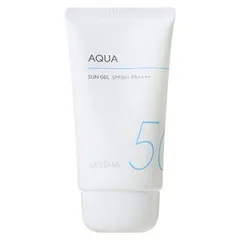
We believe that "MISSHA - All Around Safe Block Aqua Sun Gel SPF50+ PA++++" can provide reliable sun protection based on the ingredients listed. We love that it can protect from both UVA and UVB rays (not all sunscreens with SPF ratings give UVA protection. UVA rays do not cause sunburn, but still damage our skin and lead to early aging).
Because it includes good moisturizing ingredients, it can also work as a hydrating day cream. This product prevents early signs of aging by protecting against sun damage (all broad spectrum sunscreens do that).
Sunscreen filters
This is a so-called "chemical" sunscreen. It means that it uses organic UV filters. They typically offer good sun protection and rarely leave a white cast, but they can be irritating for some people with sensitive skin. Here are the exact UV filters in this sunscreen: tinosorb s 3.10% - 3.70%, avobenzone 4.40% - 5.30%, amiloxate 1.40% - 1.70% and octocrylene 5.80% - 7.10%.
Irritation risk
This sunscreen contains a bunch of common irritants, including ingredients that do not provide any known benefit for the skin. It might not be the best choice if your skin is sensitive. We assess the overall irritancy of this product to be high. For a detailed overview of all potential irritants: click here
You can see the detailed formula review with the breakdown of all actives in the product and the full ingredient list with estimated concentrations in the tables below.
What our users say
Based on 1 review 100% recommend this product- When it comes to comedogenicity, the reviewer found that it does not clog pores.
- As for the white cast, it did not leave a noticeable white residue for the reviewer.
- When it comes to using this sunscreen under makeup, the user found that it pills under a foundation.
- As for using this sunscreen in the eye area, the reviewer reported that it does not sting eyes.
Price
The product retails for 10.00£ in the United Kingdom and for 8.18$ in the United States.
For a detailed price comparison: click here.
Anti-aging
What does the product description say?
It is water and sweat resistant while helps to prevent skin from aging by blocking the harmful UV rays.
Source: Glowsecret
This product can help prevent early signs of skin aging because it offers a good level of broad spectrum sun protection. Sun damage is the main cause of premature skin aging, and protecting your skin from the sun is the best anti-aging strategy.
Can contain potent anti-oxidant compounds (abbreviated ECG, GCG, EGC, and EGCG) that might help protect the skin from free radicals. Can help calm down inflammation and has some anti-bacterial properties. Unfortunately, these antioxidants are unstable and lose their effectiveness very quickly in products. The concentration of the antioxidant compounds in the extract also tends to be low to be effective in topical formulation
Evens skin tone
This product offers broad spectrum sun protection. It means that it can prevent hyperpigmentation and help keep the skin tone even (sun damage is the main factor causing age spots, darkening of post-acne marks and other discolorations).
Can contain potent anti-oxidant compounds (abbreviated ECG, GCG, EGC, and EGCG) that might help protect the skin from free radicals. Can help calm down inflammation and has some anti-bacterial properties. Unfortunately, these antioxidants are unstable and lose their effectiveness very quickly in products. The concentration of the antioxidant compounds in the extract also tends to be low to be effective in topical formulation
Sun protection
This product offers a good level of protection against both UVB and UVA rays.
This sunscreen uses organic (so-called "chemical") sunscreen filters. Organic, or "chemical" filters usually provide reliable sun protection and rarely leave a white cast. Sunscreens with organic filters can sting eyes.
This product can be considered "reef safe" because it does not contain the UV filters (oxybenzone and octinoxate) that can be harmful to coral reefs when present in the water in high concentrations.
Tinosorb S. One of the most effective broad spectrum sunscreen ingredients. Protects from both UVA and UVB rays. It is photostable. Unfortunately, not approved by FDA (US) yet.
Avobenzone. An organic, or so-called "chemical" UV filter. Protects against both UVA and UVB rays. Needs to be combined with other filters in a formulation to be stable.
Amiloxate or Neo Heliopan E1000. A UV filter. It is effective against UVB and UVA II rays. Not available in the US. It can be irritating
A weak sunscreen that protects against the sun rays that cause sunburn (UVB) and is somewhat effective against the UVA rays. It is quite stable and can help stabilize other, more vulnerable, sunscreen ingredients like Avobenzone. It is an organic, or so called "chemical" sunscreen
A weak sunscreen that offers some protection against the sun rays that cause sunburn (UVB), but does not offer meaningful protection against protect against the most aging sun rays (UVA). It loses its effectiveness quickly when exposed to sunlight. It is an organic, or so called "chemical" sunscreen. When used in low concentrations, helps to stabilize the product formulation
Octisalate. A UV filter. It offers some protection against the sun rays that cause sunburn (UVB), but does not protect against the most aging sun rays (UVA). It loses its effectiveness quickly when exposed to sunlight. It is an organic, or so called "chemical" sunscreen
Moisturizing
What does the product description say?
Fitted with SPF50+ PA++++ and infused with MISSHA’s Aquaporin Active Formula, this powerful sunscreen keeps skin soothed and hydrated while effectively fending off UV rays.
Source: Yesstyle
This product can help soften the skin and reduce its moisture loss with emollients and occlusives: dimethicone, cyclopentasiloxane.
Keep in mind that this product does not contain effective ingredients to attract water to the upper layer of the skin. This is why an additional product with humectants like glycerin or hyaluronic acid can be helpful (apply it before this product for the best results).
A silicone that helps to reduce water loss from the surface of the skin. Can temporarily "fill in" lines and wrinkles, absorb oil, and create a nice product finish
A silicone that helps improve the product texture and spreadability. Can absorb oil creating a short-term mattifying effect on the skin
Helps preserve products and creates a nice product texture
Used to create a nice product texture and help delivery of other ingredients. Might be somewhat helpful in attracting water to the upper layer of the skin
A good mix of fatty acids that forms a protective layer on the skin. Improves the shelf life of products. Derived from coconut and glycerin
Can contain potent anti-oxidant compounds (abbreviated ECG, GCG, EGC, and EGCG) that might help protect the skin from free radicals. Can help calm down inflammation and has some anti-bacterial properties. Unfortunately, these antioxidants are unstable and lose their effectiveness very quickly in products. The concentration of the antioxidant compounds in the extract also tends to be low to be effective in topical formulation
How honest is this product?
| Promise | Can it deliver? |
|---|---|
| Sun protection | |
| Anti-aging |
Total Promises Fulfilled score: 90/100.
We receive a small commission for purchases made through these links at no cost for you. Thank you for your support! Learn more
Potential irritants
Comedogenic ingredients
No comedogenic ingredients detected
User reviews (1)
Averages from community submissions.
How would you describe the finish?
How would you describe the texture?
How much white cast does it leave?
How much does it sting eyes?
How much does it pill under makeup?
How much does this product clog pores?
How would you describe the smell?
Tried this product?
Help capture what the ingredient list can't—texture, finish, pilling, scent, and more. Answer what you can, skip the rest.
Takes ~30 seconds.
Reviews are shown in aggregate. No personal details.
Key Actives
Can contain potent anti-oxidant compounds (abbreviated ECG, GCG, EGC, and EGCG) that might help protect the skin from free radicals. Can help calm down inflammation and has some anti-bacterial properties. Unfortunately, these antioxidants are unstable and lose their effectiveness very quickly in products. The concentration of the antioxidant compounds in the extract also tends to be low to be effective in topical formulation
A silicone that helps improve the product texture and spreadability. Can absorb oil creating a short-term mattifying effect on the skin
A silicone that helps to reduce water loss from the surface of the skin. Can temporarily "fill in" lines and wrinkles, absorb oil, and create a nice product finish
A weak sunscreen that protects against the sun rays that cause sunburn (UVB) and is somewhat effective against the UVA rays. It is quite stable and can help stabilize other, more vulnerable, sunscreen ingredients like Avobenzone. It is an organic, or so called "chemical" sunscreen
Avobenzone. An organic, or so-called "chemical" UV filter. Protects against both UVA and UVB rays. Needs to be combined with other filters in a formulation to be stable.
Tinosorb S. One of the most effective broad spectrum sunscreen ingredients. Protects from both UVA and UVB rays. It is photostable. Unfortunately, not approved by FDA (US) yet.
Amiloxate or Neo Heliopan E1000. A UV filter. It is effective against UVB and UVA II rays. Not available in the US. It can be irritating
A weak sunscreen that offers some protection against the sun rays that cause sunburn (UVB), but does not offer meaningful protection against protect against the most aging sun rays (UVA). It loses its effectiveness quickly when exposed to sunlight. It is an organic, or so called "chemical" sunscreen. When used in low concentrations, helps to stabilize the product formulation
Helps thicken the product consistency
A good mix of fatty acids that forms a protective layer on the skin. Improves the shelf life of products. Derived from coconut and glycerin
Potential irritants
Amiloxate or Neo Heliopan E1000. A UV filter. It is effective against UVB and UVA II rays. Not available in the US. It can be irritating
An aromatic blend of unspecified and possibly irritating ingredients
Cornflower water. Might have an anti-oxidant effect and can help reduce inflammation in skin. However, it can be irritating on its own
Can be drying and contribute to skin irritation. Used in formulars to dissolve other ingredients, create a thinner product consistency or for its antibacterial properties
A weak sunscreen that protects against the sun rays that cause sunburn (UVB) and is somewhat effective against the UVA rays. It is quite stable and can help stabilize other, more vulnerable, sunscreen ingredients like Avobenzone. It is an organic, or so called "chemical" sunscreen
Avobenzone. An organic, or so-called "chemical" UV filter. Protects against both UVA and UVB rays. Needs to be combined with other filters in a formulation to be stable.
Tinosorb S. One of the most effective broad spectrum sunscreen ingredients. Protects from both UVA and UVB rays. It is photostable. Unfortunately, not approved by FDA (US) yet.
Helps preserve products and creates a nice product texture
Used to stabilize product formulation, help create an even product layer over skin (for example, in sunscreen), evenly disperse pigements and create a nice product consistency
Maintains the texture of skincare products. Allows the product to spread evenly. Helps oil and water mix together
A weak sunscreen that offers some protection against the sun rays that cause sunburn (UVB), but does not offer meaningful protection against protect against the most aging sun rays (UVA). It loses its effectiveness quickly when exposed to sunlight. It is an organic, or so called "chemical" sunscreen. When used in low concentrations, helps to stabilize the product formulation
A good mix of fatty acids that forms a protective layer on the skin. Improves the shelf life of products. Derived from coconut and glycerin
Comedogenic ingredients
We couldn't find any comedogenic ingredients in this product
All ingredients
A weak sunscreen that protects against the sun rays that cause sunburn (UVB) and is somewhat effective against the UVA rays. It is quite stable and can help stabilize other, more vulnerable, sunscreen ingredients like Avobenzone. It is an organic, or so called "chemical" sunscreen
Avobenzone. An organic, or so-called "chemical" UV filter. Protects against both UVA and UVB rays. Needs to be combined with other filters in a formulation to be stable.
Tinosorb S. One of the most effective broad spectrum sunscreen ingredients. Protects from both UVA and UVB rays. It is photostable. Unfortunately, not approved by FDA (US) yet.
Helps preserve products and creates a nice product texture
Amiloxate or Neo Heliopan E1000. A UV filter. It is effective against UVB and UVA II rays. Not available in the US. It can be irritating
Used to stabilize product formulation, help create an even product layer over skin (for example, in sunscreen), evenly disperse pigements and create a nice product consistency
A preservative. It helps prevent bacterial growth in cosmetic products
Can contain potent anti-oxidant compounds (abbreviated ECG, GCG, EGC, and EGCG) that might help protect the skin from free radicals. Can help calm down inflammation and has some anti-bacterial properties. Unfortunately, these antioxidants are unstable and lose their effectiveness very quickly in products. The concentration of the antioxidant compounds in the extract also tends to be low to be effective in topical formulation
A silicone that helps improve the product texture and spreadability. Can absorb oil creating a short-term mattifying effect on the skin
Octisalate. A UV filter. It offers some protection against the sun rays that cause sunburn (UVB), but does not protect against the most aging sun rays (UVA). It loses its effectiveness quickly when exposed to sunlight. It is an organic, or so called "chemical" sunscreen
An aromatic blend of unspecified and possibly irritating ingredients
A silicone that helps to reduce water loss from the surface of the skin. Can temporarily "fill in" lines and wrinkles, absorb oil, and create a nice product finish
Cornflower water. Might have an anti-oxidant effect and can help reduce inflammation in skin. However, it can be irritating on its own
Can be drying and contribute to skin irritation. Used in formulars to dissolve other ingredients, create a thinner product consistency or for its antibacterial properties
Creates a nice product texture and can support water-resistance of sunscreens
Maintains the texture of skincare products. Allows the product to spread evenly. Helps oil and water mix together
A weak sunscreen that offers some protection against the sun rays that cause sunburn (UVB), but does not offer meaningful protection against protect against the most aging sun rays (UVA). It loses its effectiveness quickly when exposed to sunlight. It is an organic, or so called "chemical" sunscreen. When used in low concentrations, helps to stabilize the product formulation
Used to create a nice product texture and help delivery of other ingredients. Might be somewhat helpful in attracting water to the upper layer of the skin
A good mix of fatty acids that forms a protective layer on the skin. Improves the shelf life of products. Derived from coconut and glycerin
Helps to dissolve other ingredients in a formulation. Slows down the rate of product drying
Ingredient list view
Water, Octocrylene, Butyl methoxydibenzoylmethane, Limonia acidissima extract, Bis-ethylhexyloxyphenol methoxyphenyl triazine, Methoxy peg/ppg-25/4 dimethicone, Morus alba fruit extract, Caprylyl glycol, Silica, Isoamyl p-methoxycinnamate, Chrysanthemum indicum flower extract, Bht, Diospyros kaki leaf extract, Helichrysum italicum flower water, Thymus vulgaris leaf water, Acrylates/dimethicone copolymer, Phenoxyethanol, Camellia sinensis leaf extract, Cyclopentasiloxane, Ethylhexyl salicylate, Parfum, Dimethicone, Centaurea cyanus flower water, Alcohol, Pueraria lobata root extract, Ethylhexylglycerin, Vp/hexadecene copolymer, Cinnamomum cassia bark extract, Acrylates/c10-30 alkyl acrylate crosspolymer, Homosalate, Methyl methacrylate crosspolymer, Butylene glycol, 1,2-hexanediol, Artemisia princeps leaf extract, Bis-peg/ppg-20/5 peg/ppg-20/5 dimethicone, Disodium edta, Caprylic/capric triglyceride, Sodium hydroxide, Water, Dipropylene glycol