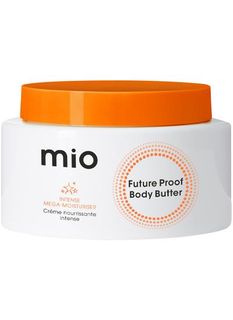
Mio Skincare Mio Future Proof Body Butter
Works for
1 of 1 advertised claim delivered
Moisturizing24 ingredients credited for this claimStrong support
“Brimming with Andiroba Oil, you’ll benefit from intense moisture that wards off dryness, helping you to achieve a suppler, softer surface.”
This product can help improve hydration of the skin with the two types of ingredients.
The first type is called “humectants”:
these ingredients help attract water.
When humectants are on the surface of the skin, they “pull in” the moisture from the outside environment, or from
within deeper layers of the skin. The following ingredients in this product do the job:
glycerin, glycogen.
This product also contains ingredients called “occlusives”. They help reduce the speed with which our skin loses moisture to the outside environment. These ingredients also help soften the upper layer of the skin, so it feels less tight and nicer to the touch. The following ingredients in this product do the job: butyrospermum parkii butter, cocos nucifera oil.
The following ingredients in this product are especially good for supporting the skin barrier and helping with the hydration level: urea
Anti-agingNot advertised by the brand · 7 ingredients credited for this claimModerate support
This product contains serine. This ingredient might be able to help reduce and prevent fine lines and wrinkles, improve skin elasticity and firmness, but there is not enough evidence that it actually works.
Can it cause trouble?
Irritancy6 strong irritants: Parfum, Limonene + 4 more — patch-test recommendedHigh risk
Comedogenic4 ingredients rated 2 or more on the 0–5 pore-clogging scale4 flagged
User reviews
Be the first — your take helps the next person decide.
Ingredients
Filter by role to see what each ingredient is doing.
Water~45–55%
Cocos nucifera oil~4.7–5.7%
- Irritation risk
- Low
- Comedogenicity
- 3/5
An emollient. Found to be as effective as a moisturizer for dry skin as mineral oil. Could be comedogenic
More about Cocos nucifera oilEthylhexyl palmitate~4.2–5.2%
- Irritation risk
- Low
- Comedogenicity
- 3/5
An emollient that helps soften the skin and create a nice product texture
More about Ethylhexyl palmitateCetyl alcohol~2.6–3.1%
- Irritation risk
- Low
A non-drying alcohol that works to soften the skin and stabilize product formulations helping oil and water mix together
More about Cetyl alcoholButyrospermum parkii butter~2.5–3%
- Irritation risk
- Low
- Comedogenicity
- 3/5
A great moisturising ingredient that softens the skin and reduces water loss from its upper layer. It also can be helpful in protecting skin from free radicals
More about Butyrospermum parkii butterStearic acid~2–2.5%
- Irritation risk
- Low
Helps oil and water mix together and works as an emollient
More about Stearic acidPrunus amygdalus dulcis oil~1.7–2%
- Irritation risk
- Low
An emollient that softens the skin
More about Prunus amygdalus dulcis oilGlyceryl stearate~1.5–1.8%
- Irritation risk
- Low
An emollient that softens the skin and forms a protective layer on its surface. Helps water and oil mix together
More about Glyceryl stearatePeg-100 stearate~1.2–1.5%
- Irritation risk
- Low
Helps oil and water mix togehter and creates a nice product texture
More about Peg-100 stearateParfum~0.9–1.1%
- Irritation risk
- High
An aromatic blend of unspecified and possibly irritating ingredients
More about ParfumArgania spinosa kernel oil~0.7–1.05%
- Irritation risk
- Medium
An emollient that helps soften the upper layer of the skin. Might have some weak anti-oxidant properties
More about Argania spinosa kernel oilIsopropyl palmitate~0.55–0.85%
- Irritation risk
- Medium
- Comedogenicity
- 3/5
Helps soften the upper layer of the skin and create a thicker product consistency
More about Isopropyl palmitateEuterpe oleracea fruit extract~0.5–0.7%
- Irritation risk
- Medium
A plant extract that can have some anti-oxidant effect in skin
More about Euterpe oleracea fruit extractLimonene~0.4–0.6%
- Irritation risk
- High
A common frangrance that can easily irritate skin, especially if exposed to air, light or heat
More about LimonenePhenoxyethanol~0.4–0.6%
- Irritation risk
- Low
A preservative. It helps prevent bacterial growth in cosmetic products
More about PhenoxyethanolHydroxyacetophenone~0.35–0.65%
Glycerin~0.45–0.65%
- Irritation risk
- Low
One of the best moisturizing ingredients. Naturally present in skin. It attracts water to the upper layer of the skin working as a humectant
More about GlycerinCarbomer~0.3–0.6%
- Irritation risk
- Low
Helps create a thicker or gel-like product texture. It is not a surfactant but can be used in gentle cleansing formulations
More about CarbomerCarapa guaianensis seed oil~0.3–0.55%
- Irritation risk
- High
A plant oil that contains limonoids. Might help neutralize free radicals in skin. Can be irritating
More about Carapa guaianensis seed oilOlea europaea fruit oil~0.3–0.5%
- Irritation risk
- Medium
An emollient that helps soften the skin but is not effective for restoring its barrier function. Might be helpful to calm down inflammation
More about Olea europaea fruit oil1,2-hexanediol~0.25–0.45%
Tocopherol~0.25–0.45%
- Irritation risk
- Low
Pure form of vitamin E. Can help moisturise and protect the skin from free radicals. Often used to help stabilise other ingredients or the formula itself
More about TocopherolGlycogen~0.2–0.35%
- Irritation risk
- Low
Helps attract water to the upper layer of the skin
More about GlycogenTocopheryl acetate~0.2–0.4%
- Irritation risk
- Medium
A more stable but less bio-available form of vitamin E compared to Tocopherol. Might help moisturize and protect the skin from free radicals, but mostly used in low concentrations to stabilize other ingredients.
More about Tocopheryl acetateAlcohol~0.2–0.4%
- Irritation risk
- High
Can be drying and contribute to skin irritation. Used in formulars to dissolve other ingredients, create a thinner product consistency or for its antibacterial properties
More about AlcoholPentylene glycol~0.25–0.5%
- Irritation risk
- Medium
Used to preserve products, dissolve other ingredients and create a nice product texture
More about Pentylene glycolLactic acid~0.2–0.35%
- Irritation risk
- Medium
An exfoliating and moisturizing alpha-hydroxy acid (AHA). Typically causes less irritation than other AHAs, for example, glycolic acid. At high concentrations (about 15%), lactic acid can help reduce lines and wrinkles. Recent studies show that lactic acid can support the "good" bacteria living on skin's surface (healthy skin microbiome)
More about Lactic acidSerine~0.2–0.35%
- Irritation risk
- Low
An amino-acid that helps to attract water to the upper layer of the skin. In combination with other amino-acids, might help to reduce fine lines and wrinkles
More about SerineSodium lactate~0.2–0.4%
- Irritation risk
- Medium
Helps attract water to the upper layer of the skin. Is often used to adjust the pH level of the product
More about Sodium lactateSorbitol~0.2–0.4%
- Irritation risk
- Low
Helps attract water to the upper layer of the skin and improves the product texture
More about SorbitolTrisodium ethylenediamine disuccinate~0.2–0.4%
- Irritation risk
- Medium
Used to improve stability of the formulation
More about Trisodium ethylenediamine disuccinateBiosaccharide gum-4~0.2–0.35%
Citral~0.2–0.35%
Urea~0.2–0.4%
- Irritation risk
- Low
Naturally present in skin (urea makes up about 7% of natural moisturizing factors in skin). Attracts water to the upper layer of the skin. Also has a positive effect on the skin barrier beyond the humectant action. Can enhance penetration of other ingredients. Is an exfoliating ingredient when used in high concentrations
More about UreaLactobacillus ferment~0.2–0.35%
- Irritation risk
- Low
A fermentation product created by bacteria Lactobacillus. The fermented product has anti-bacterial properties and might be helpful in calming down inflammation, but studies are lacking. Helps attract water to the upper layer of the skin. Can be used as a preservative
More about Lactobacillus fermentMyrtus communis leaf extract~0.15–0.3%
- Irritation risk
- High
A plant extract that contains an essential oil and often used for its fragrance. Can be irritating. It has some anti-bacterial and anti-oxidant properties
More about Myrtus communis leaf extractOlea europaea leaf extract~0.2–0.35%
- Irritation risk
- Medium
A plant extract that might have some anti-oxidant and anti-inflammatory properties but evidence for effectiveness in skin is missing
More about Olea europaea leaf extractLecithin~0.25–0.45%
- Irritation risk
- Low
Used mostly for creating emulsions - helping oil and water mix together. Helps soften the upper layer of the skin
More about LecithinOpuntia ficus-indica stem extract~0.2–0.35%
- Irritation risk
- Low
Sodium hydroxide~0.2–0.35%
Linalool~0.15–0.3%
Sodium chloride~0.2–0.4%
- Irritation risk
- Low
Used to stabilize mixtures of oil and water, and create thicker, gel-like product textures
More about Sodium chlorideCamellia sinensis leaf extract~0.2–0.35%
- Irritation risk
- Low
Can contain potent anti-oxidant compounds (abbreviated ECG, GCG, EGC, and EGCG) that might help protect the skin from free radicals. Can help calm down inflammation and has some anti-bacterial properties. Unfortunately, these antioxidants are unstable and lose their effectiveness very quickly in products. The concentration of the antioxidant compounds in the extract also tends to be low to be effective in topical formulation
More about Camellia sinensis leaf extractVitex agnus-castus extract~0.15–0.3%
- Irritation risk
- Medium
A plant extract that might have some antioxidant properties but evidence of effectiveness in skin is missing
More about Vitex agnus-castus extractAscorbyl tetraisopalmitate~0.2–0.35%
- Irritation risk
- Medium
A vitamin C derivative. Studies show that is might be effective in reducing hyperpigmentation, but there are no studies confirming that it is effectively converted into the bioavailable form of Vitamin C in skin. It is not clear how this derivative compares in effectiveness to the topical application of bioavailable form of vitamin C (L-ascorbic acid)
More about Ascorbyl tetraisopalmitateCyclodextrin~0.15–0.3%
- Irritation risk
- Low
A type of sugar that is used to support delivery of active ingredients and can enhance their penetration into the skin without disrupting the skin's barrier
More about CyclodextrinAllantoin~0.15–0.3%
- Irritation risk
- Low
Helps calm down inflammation in skin and can help reduce itching. Helps to repair the skin barrier and keep skin hydrated
More about AllantoinPotassium sorbate~0.15–0.25%
Sodium benzoate~0.1–0.25%
Ingredient list view
Water, Cocos nucifera oil, Ethylhexyl palmitate, Cetyl alcohol, Butyrospermum parkii butter, Stearic acid, Prunus amygdalus dulcis oil, Glyceryl stearate, Peg-100 stearate, Parfum, Argania spinosa kernel oil, Isopropyl palmitate, Euterpe oleracea fruit extract, Limonene, Phenoxyethanol, Hydroxyacetophenone, Glycerin, Carbomer, Carapa guaianensis seed oil, Olea europaea fruit oil, 1,2-hexanediol, Tocopherol, Glycogen, Tocopheryl acetate, Alcohol, Pentylene glycol, Lactic acid, Serine, Sodium lactate, Sorbitol, Trisodium ethylenediamine disuccinate, Biosaccharide gum-4, Citral, Urea, Lactobacillus ferment, Myrtus communis leaf extract, Olea europaea leaf extract, Lecithin, Opuntia ficus-indica stem extract, Sodium hydroxide, Linalool, Unknown, Sodium chloride, Camellia sinensis leaf extract, Vitex agnus-castus extract, Ascorbyl tetraisopalmitate, Cyclodextrin, Allantoin, Potassium sorbate, Sodium benzoate
Compare prices
Retailers ranked by price — lowest first.


.png)
Worth comparing, line by line.
Match % combines shared ingredients, the first five ingredients, shared actives and hero ingredients, irritancy (lower counts in the alternative's favour), texture and body area. Only products in the same routine step are compared.
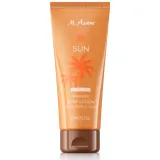
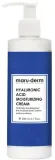
| Mio SkincareMio Future Proof Body ButterYOUR PRODUCT | Lise WatierAge Control Supreme Ultimate Body Butter | M. AsamSun Shimmering Body Lotion | MarudermHyaluronic Acid Moisturizer Face & Body Cream | |
|---|---|---|---|---|
| Match | — | 56% | 53% | 53% |
| Price | $6.61 | $97.83+$91.22 | $43.61+$37.00 | $21.99+$15.38 |
| Shared key ingredients | — | 7 of 12 | 8 of 12 | 5 of 12 |
| Key difference | — | Biosaccharide Gum-1 | Lactic Acid | Niacinamide |
| Irritancy | High | Medium | Medium | Low |
| Drying alcohol | Contains drying alcohol | — | — | — |
| View product | Shop | Shop | Shop |

Product summary
Judging from the ingredient list, "Mio Skincare - Mio Future Proof Body Butter" works well for improving skin hydration To work well, any moisturizer needs to include a combination of water-binding and emollient ingredients. Mio Skincare - Mio Future Proof Body Butter ticks this box. Urea, glycerin, glycogen, lactobacillus ferment and sodium lactate in this product (humectants) attract water molecules to the upper layer of the skin (the water comes from the outside air or from the deeper layers of the skin if the air is dry). Butyrospermum parkii butter, cocos nucifera oil, cetyl alcohol, ethylhexyl palmitate and olea europaea fruit oil in this product help decrease the water evoporation from the skin, so that it stays hydrated for longer. These ingredients also soften the skin and take away the feeling of tightness and dryness.
Irritation risk
There are quite a few common irritants in this product, including ingredients without particular skin benefits. We would not recommend it for sensitive skin. We assess the overall irritancy of this moisturizer to be high. For a detailed overview of all potential irritants: click here
You can see the detailed formula review with the breakdown of all actives in the product and the full ingredient list with estimated concentrations in the tables below.
Price
The product retails from 18.00$ up to 25.00$ in the United States, for 24.00CA$ in Canada, for 39.90A$ in Australia and from 22.50£ up to 30.00£ in the United Kingdom.
For a detailed price comparison: click here.
Sources cited in this review
Every concentration estimate and effectiveness label is anchored to one of these 26 studies and safety reviews.
- 1
- 2
- 3Final Report on the Safety Assessment of Isopropyl Isostearatejournals.sagepub.com
- 4
- 5
- 6

Affiliate links · As an Amazon Associate, WIMJ earns from qualifying purchases.