Works for
0 of 1 advertised claim delivered
Evens skin tone1 ingredient credited for this claimWeak support
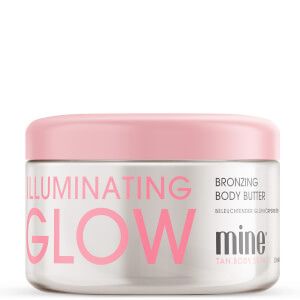
“The addition of a gradual tan helps to illuminate skin and even out skin tone for a healthy sunkissed bronze glow .”
Effective ingredients missing or their concentration is too low
MoisturizingNot advertised by the brand · 17 ingredients credited for this claimGood support
This product can help improve hydration of the skin with the two types of ingredients.
The first type is called “humectants”:
these ingredients help attract water.
When humectants are on the surface of the skin, they “pull in” the moisture from the outside environment, or from
within deeper layers of the skin. The following ingredients in this product do the job:
glycerin, caprylyl glycol.
This product also contains ingredients called “occlusives”. They help reduce the speed with which our skin loses moisture to the outside environment. These ingredients also help soften the upper layer of the skin, so it feels less tight and nicer to the touch. The following ingredients in this product do the job: caprylic/capric triglyceride, cocos nucifera oil.
Can it cause trouble?
Irritancy19 flagged ingredientsMedium risk
Comedogenic2 ingredients rated 2 or more on the 0–5 pore-clogging scale2 flagged
User reviews
Be the first — your take helps the next person decide.
Ingredients
Filter by role to see what each ingredient is doing.
Water~45–55%
Caprylic/capric triglyceride~6.4–7.8%
- Irritation risk
- Medium
A good mix of fatty acids that forms a protective layer on the skin. Improves the shelf life of products. Derived from coconut and glycerin
More about Caprylic/capric triglycerideCetyl alcohol~3.9–4.8%
- Irritation risk
- Low
A non-drying alcohol that works to soften the skin and stabilize product formulations helping oil and water mix together
More about Cetyl alcoholSodium acrylate/sodium acryloyldimethyl taurate copolymer~3–3.6%
- Irritation risk
- Low
Used to create a thicker product consistency
More about Sodium acrylate/sodium acryloyldimethyl taurate copolymerPolysorbate 80~2.3–2.8%
Glyceryl stearate~2–2.4%
- Irritation risk
- Low
An emollient that softens the skin and forms a protective layer on its surface. Helps water and oil mix together
More about Glyceryl stearateGlycerin~1.7–2.1%
- Irritation risk
- Low
One of the best moisturizing ingredients. Naturally present in skin. It attracts water to the upper layer of the skin working as a humectant
More about GlycerinDihydroxyacetone~1.4–1.7%
Isopropyl palmitate~1.1–1.4%
- Irritation risk
- Medium
- Comedogenicity
- 3/5
Helps soften the upper layer of the skin and create a thicker product consistency
More about Isopropyl palmitatePhenoxyethanol~0.5–1%
- Irritation risk
- Low
A preservative. It helps prevent bacterial growth in cosmetic products
More about PhenoxyethanolCaprylyl glycol~0.65–1%
- Irritation risk
- Medium
Helps preserve products and creates a nice product texture
More about Caprylyl glycolPotassium sorbate~0.3–0.6%
Hexylene glycol~0.45–0.7%
- Irritation risk
- Medium
Helps create a more spreadable product texture
More about Hexylene glycolDisodium edta~0.4–0.65%
Polyglyceryl-4 isostearate~0.4–0.6%
- Irritation risk
- Medium
Helps water and oil mix together
More about Polyglyceryl-4 isostearateCetyl peg/ppg-10/1 dimethicone~0.35–0.65%
- Irritation risk
- Low
A type of silicone that helps water and oil mix together. Can help to soften upper layer of the skin
More about Cetyl peg/ppg-10/1 dimethiconeHexyl laurate~0.4–0.6%
- Irritation risk
- Medium
Helps soften the upper layer of the skin and create a nice product consistency
More about Hexyl laurateIsopropyl titanium triisostearate~0.35–0.65%
- Irritation risk
- Medium
Helps water and oil mix together
More about Isopropyl titanium triisostearateArgania spinosa kernel oil~0.3–0.55%
- Irritation risk
- Medium
An emollient that helps soften the upper layer of the skin. Might have some weak anti-oxidant properties
More about Argania spinosa kernel oilMacadamia integrifolia seed oil~0.3–0.55%
- Irritation risk
- Low
A plant oil that helps soften the upper layer of the skin
More about Macadamia integrifolia seed oilCocos nucifera oil~0.25–0.45%
- Irritation risk
- Low
- Comedogenicity
- 3/5
An emollient. Found to be as effective as a moisturizer for dry skin as mineral oil. Could be comedogenic
More about Cocos nucifera oilSimmondsia chinensis seed oil~0.3–0.55%
- Irritation risk
- Medium
Softens the upper layer of skin and helps restore the healthy skin barrier. Has shown to help calm down inflammation in skin. It is a stable oil, meaning that it retains its properties even when exposed to air.
More about Simmondsia chinensis seed oilRosa canina fruit oil~0.25–0.5%
- Irritation risk
- Medium
A great emollient. Contains vitamin E (tocopherol) which may give it some anti-oxidant properties. Can contain volatile compounds and can be irritating
More about Rosa canina fruit oilVitis vinifera seed oil~0.25–0.5%
- Irritation risk
- Medium
A great emollient that can also have anti-oxidant properties
More about Vitis vinifera seed oilPersea gratissima oil~0.25–0.5%
- Irritation risk
- Medium
An emollient that helps soften the skin and could be helpful in repairing its barrier function
More about Persea gratissima oilCucumis sativus fruit extract~0.2–0.4%
- Irritation risk
- Medium
Might be somewhat helpful in reducing hyperpigmentation and neutralizing free radicals but its typical concentration in a product is too low for having an effect
More about Cucumis sativus fruit extractAscorbic acid~0.25–0.4%
- Irritation risk
- High
The most well-researched antioxidant that works in skin. Helps neutralize free radicals supporting collagen production, helping to even out the skin tone and preventing early signs of aging
More about Ascorbic acidTocopheryl acetate~0.25–0.45%
- Irritation risk
- Medium
A more stable but less bio-available form of vitamin E compared to Tocopherol. Might help moisturize and protect the skin from free radicals, but mostly used in low concentrations to stabilize other ingredients.
More about Tocopheryl acetateTocopherol~0.2–0.4%
- Irritation risk
- Low
Pure form of vitamin E. Can help moisturise and protect the skin from free radicals. Often used to help stabilise other ingredients or the formula itself
More about TocopherolTitanium dioxide~0.3–0.6%
- Irritation risk
- Low
Works as a UV filter when used in high concentrations. It is photostable and is effective mostly against the UVB light, with some protection in the UVA range. In small concentrations, used for its ability to improve the color of cosmetic products. Is usually well tolerated by the skin
More about Titanium dioxideCi 77891~0.15–0.3%
- Irritation risk
- Low
Ci 15985~0.15–0.25%
Ci 77492~0.1–0.15%
Ci 77499~0.05–0.1%
Ci 77491~0.05–0.1%
- Irritation risk
- Low
A red colorant made of iron oxide. Typically is not irritating
More about Ci 77491Ingredient list view
Water, Caprylic/capric triglyceride, Cetyl alcohol, Sodium acrylate/sodium acryloyldimethyl taurate copolymer, Polysorbate 80, Glyceryl stearate, Glycerin, Dihydroxyacetone, Isopropyl palmitate, Phenoxyethanol, Caprylyl glycol, Potassium sorbate, Hexylene glycol, Disodium edta, Polyglyceryl-4 isostearate, Cetyl peg/ppg-10/1 dimethicone, Hexyl laurate, Isopropyl titanium triisostearate, Argania spinosa kernel oil, Macadamia integrifolia seed oil, Cocos nucifera oil, Simmondsia chinensis seed oil, Rosa canina fruit oil, Vitis vinifera seed oil, Persea gratissima oil, Cucumis sativus fruit extract, Ascorbic acid, Tocopheryl acetate, Tocopherol, Titanium dioxide, Unknown, Ci 77891, Ci 15985, Unknown, Ci 77492, Ci 77499, Ci 77491
Compare prices
Retailers ranked by price — lowest first.

Affiliate links · prices updated regularly
Sources cited in this review
Every concentration estimate and effectiveness label is anchored to one of these 6 studies and safety reviews.
- 1
- 2Final Report on the Safety Assessment of Isopropyl Isostearatejournals.sagepub.com
- 3
- 4
- 5Vitamin E in dermatologyncbi.nlm.nih.gov
- 6Vitamin E and Skin Healthlpi.oregonstate.edu

Affiliate links · As an Amazon Associate, WIMJ earns from qualifying purchases.