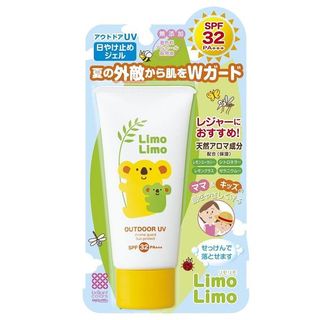
Meishoku Limo Limo Outdoor UV Gel SPF32 PA+++
Works for
1 of 1 advertised claim delivered
Sun protectionSPF 32 · 2 UV filtersBroad spectrum
This product offers a good level of protection against both UVB and UVA rays.
This sunscreen uses organic (so-called "chemical") sunscreen filters. Organic, or "chemical" filters usually provide reliable sun protection and rarely leave a white cast. Sunscreens with organic filters can sting eyes.
Anti-agingNot advertised by the brand · 1 ingredient credited for this claimStrong support
This product can help prevent early signs of skin aging because it offers a good level of broad spectrum sun protection. Sun damage is the main cause of premature skin aging, and protecting your skin from the sun is the best anti-aging strategy.
Evens skin toneNot advertised by the brand · 2 ingredients credited for this claimStrong support
This product offers broad spectrum sun protection. It means that it can prevent hyperpigmentation and help keep the skin tone even (sun damage is the main factor causing age spots, darkening of post-acne marks and other discolorations).
MoisturizingNot advertised by the brand · 8 ingredients credited for this claimGood support
This product can help soften the skin and reduce its moisture loss with emollients and occlusives: dimethicone, squalane.
Keep in mind that this product does not contain effective ingredients to attract water to the upper layer of the skin. This is why an additional product with humectants like glycerin or hyaluronic acid can be helpful (apply it before this product for the best results).
Can it cause trouble?
Irritancy6 strong irritants: Rosmarinus officinalis leaf extract, Rosa damascena extract + 4 more — patch-test recommendedHigh risk
Comedogenic1 ingredient rated 2 or more on the 0–5 pore-clogging scale1 flagged
User reviews
Be the first — your take helps the next person decide.
Ingredients
Filter by role to see what each ingredient is doing.
Water~45–55%
Ethylhexyl methoxycinnamate~6.2–7.5%
- Irritation risk
- High
Octinoxate. When used in higher concentrations, works as a sunscreen protecting the skin from UVB rays. When used in lower concentration, helps to preserve the product formulation. Is shown to be harmful to coral reefs - consider avoiding bathing in coral reef areas when wearing a product with this ingredient. It can be irritating
More about Ethylhexyl methoxycinnamateDipropylene glycol~4.4–5.3%
- Irritation risk
- Low
Helps to dissolve other ingredients in a formulation. Slows down the rate of product drying
More about Dipropylene glycolIsostearyl isostearate~3.2–3.9%
- Irritation risk
- Medium
- Comedogenicity
- 3/5
Helps soften the upper layer of the skin and improve the product texture. It can be comedogenic
More about Isostearyl isostearateCyclopentasiloxane~2.4–3%
- Irritation risk
- Low
A silicone that helps improve the product texture and spreadability. Can absorb oil creating a short-term mattifying effect on the skin
More about CyclopentasiloxaneMethyl gluceth-10~2–2.4%
Sorbitol~1.7–2%
- Irritation risk
- Low
Helps attract water to the upper layer of the skin and improves the product texture
More about SorbitolButylene glycol~1.4–1.7%
- Irritation risk
- Low
Used to create a nice product texture and help delivery of other ingredients. Might be somewhat helpful in attracting water to the upper layer of the skin
More about Butylene glycolSqualane~1.3–1.6%
- Irritation risk
- Low
An oil naturally present in skin. Works as an emollient to soften the skin and form a protective layer on its surface without a greasy feeling.
More about SqualaneButyl methoxydibenzoylmethane~1.5–1.8%
- Irritation risk
- Medium
Avobenzone. An organic, or so-called "chemical" UV filter. Protects against both UVA and UVB rays. Needs to be combined with other filters in a formulation to be stable.
More about Butyl methoxydibenzoylmethaneChamomilla recutita flower extract~0.65–1%
- Irritation risk
- High
Plant extract that can have healing and anti-inflammatory properties. It is a potential allergen and can be irritating
More about Chamomilla recutita flower extractSimmondsia chinensis leaf extract~0.55–0.85%
- Irritation risk
- Medium
A plant extract that might have an antioxidant effect and help attract water to the upper layer of the skin
More about Simmondsia chinensis leaf extractRosmarinus officinalis leaf extract~0.5–0.75%
- Irritation risk
- High
Can be helpful in reducing inflammation in skin, including inflamed acne. It can be irritating
More about Rosmarinus officinalis leaf extractRosa damascena extract~0.45–0.65%
- Irritation risk
- High
Oil of a very fragrant pink rose used as fragrance in cosmetics. Extensive research has shown it has mixed benefits. In the pro column, inhaling this flower’s scent seems to have relaxing properties and the plant’s petals contain skin-soothing and antioxidant compounds that can benefit skin. On the flipside, the numerous chemicals that create this rose’s distinctive fragrance pose a risk of causing skin aggravation.
More about Rosa damascena extractEucalyptus oil~0.45–0.7%
- Irritation risk
- Low
Cymbopogon martini oil~0.4–0.6%
- Irritation risk
- High
Aromatic plant oil used in cosmetics as a fragrance. A likely irritant
More about Cymbopogon martini oilSorbitan sesquioleate~0.45–0.65%
- Irritation risk
- High
Used to help oil and water mix together. Can be irritating
More about Sorbitan sesquioleateSorbitan isostearate~0.4–0.6%
- Irritation risk
- Low
Helps oil and water mix together
More about Sorbitan isostearateStearyl glycyrrhetinate~0.3–0.55%
- Irritation risk
- Medium
A fatty acid derived from licorice. Works as an emollient and can help calm down inflammation
More about Stearyl glycyrrhetinateMenthanediol~0.3–0.6%
- Irritation risk
- High
Polysorbate 60~0.3–0.55%
Acrylates crosspolymer~0.25–0.5%
Ceteth-20~0.4–0.6%
Carbomer~0.25–0.45%
- Irritation risk
- Low
Helps create a thicker or gel-like product texture. It is not a surfactant but can be used in gentle cleansing formulations
More about Carbomer2-hydroxyethyl acrylate~0.25–0.5%
- Irritation risk
- Low
Helps create a nice product texture and uniform layer on the skin (when used in sunscreens, for example)
More about 2-hydroxyethyl acrylateTaurine~0.25–0.45%
- Irritation risk
- Medium
Could be helpful in reducing inflammation in skin, evening out the skin tone and neutralizing free radicals, but more research is needed to confirm its effectiveness
More about TaurineDimethicone~0.3–0.55%
- Irritation risk
- Low
A silicone that helps to reduce water loss from the surface of the skin. Can temporarily "fill in" lines and wrinkles, absorb oil, and create a nice product finish
More about DimethiconeGlycol~0.2–0.4%
- Irritation risk
- Low
Phenoxyethanol~0.2–0.35%
- Irritation risk
- Low
A preservative. It helps prevent bacterial growth in cosmetic products
More about PhenoxyethanolBht~0.15–0.3%
Disodium edta~0.15–0.25%
Tocopherol~0.15–0.25%
- Irritation risk
- Low
Pure form of vitamin E. Can help moisturise and protect the skin from free radicals. Often used to help stabilise other ingredients or the formula itself
More about TocopherolMethylparaben~0.1–0.2%
Propylparaben~0.1–0.2%
Parfum~0.05–0.1%
- Irritation risk
- High
An aromatic blend of unspecified and possibly irritating ingredients
More about ParfumIngredient list view
Water, Ethylhexyl methoxycinnamate, Dipropylene glycol, Isostearyl isostearate, Cyclopentasiloxane, Methyl gluceth-10, Sorbitol, Butylene glycol, Squalane, Butyl methoxydibenzoylmethane, Chamomilla recutita flower extract, Simmondsia chinensis leaf extract, Rosmarinus officinalis leaf extract, Rosa damascena extract, Eucalyptus oil, Cymbopogon martini oil, Sorbitan sesquioleate, Sorbitan isostearate, Stearyl glycyrrhetinate, Menthanediol, Polysorbate 60, Unknown, Acrylates crosspolymer, Ceteth-20, Carbomer, 2-hydroxyethyl acrylate, Unknown, Taurine, Unknown, Dimethicone, Unknown, Glycol, Phenoxyethanol, Bht, Disodium edta, Tocopherol, Methylparaben, Propylparaben, Parfum
Compare prices
Retailers ranked by price — lowest first.
Product summary
We believe that "Meishoku - Limo Limo Outdoor UV Gel SPF32 PA+++" can provide reliable sun protection based on the ingredients listed. It can protect from both UVA and UVB rays. This is great news because not all sunscreens with SPF ratings give UVA protection. (UVA rays do not cause sunburn, but still damage our skin and lead to early aging).
Its formula is also hydrating, so you might not need an additional moistruizer during the day. Like all broad-spectrum sunscreens, this product helps prevent early signs of aging.
Sunscreen filters
This sunscreen uses so-called "chemical", or organic UV filters (organic simply means that their molecules contain atoms of carbon). These filters typically give good sun protection and rarely leave a white cast, but they can be irritating for sensitive skin. The UV filters in this sunscreen are: avobenzone 1.50% - 1.80% and octinoxate 6.20% - 7.50%.
Irritation risk
We assess the overall irritancy of this sunscreen to be high. For a detailed overview of all potential irritants: click here
You can see the detailed formula review with the breakdown of all actives in the product and the full ingredient list with estimated concentrations in the tables below.
Sources cited in this review
Every concentration estimate and effectiveness label is anchored to one of these 11 studies and safety reviews.
- 1Dermatology News Commentary: Jojobamdedge.com
- 2Jojoba in dermatology: A succinct reviewresearchgate.net
- 3Allergic contact dermatitis induced by rosemary leaf extract in a cleansing gelpubmed.ncbi.nlm.nih.gov
- 4
- 5
- 6

Affiliate links · As an Amazon Associate, WIMJ earns from qualifying purchases.