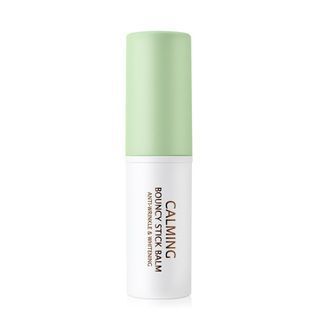
Works for
2 of 3 advertised claims delivered
MoisturizingMadecassoside, Glycerin + 17 moreStrong evidence
“Ectoine helps protect skin by forming solid moisture barrier over skin.”
This product contains good ingredients to attract water to the upper layer of the skin. These ingredients are called "humectants": glycerin, saccharide hydrolysate.
When humectants are on the surface of the skin, they “pull in” the moisture from the outside environment, or from within deeper layers of the skin. If the air is dry, humectants can speed up the moisture loss from the skin. This is why it is a good idea to use another product on top of this one to help "seal in" the moisture (look for ingredients like dimethicone, squalane, oils and butters).
The following ingredients in this product are especially good for supporting the skin barrier and helping with the hydration level: madecassoside
Anti-agingAsiaticoside, Madecassoside + 2 moreModerate evidence
“Anti-wrinkle & Whitening functional product infused with Adenosine and Niacinamide.”
This product contains asiaticoside, madecassoside. These ingredients might be able to help reduce and prevent fine lines and wrinkles, improve skin elasticity and firmness, but there is not enough evidence that it actually works.
Evens skin toneMadecassosideLimited evidence
“Omija Peptide content improves skin tone and imperfections for clear skin express.”
This product contains ingredients (madecassoside) that could help reduce hyperpigmentation (for example, post-acne marks or age spots) in theory, but there is not enough evidence that they actually work.
Anti-oxidationNot advertised by the brand · Madecassoside, Asiaticoside + 8 moreStrong evidence
This product contains antioxidants (asiaticoside, madecassoside) that can help neutralize free radicals in skin. By doing so, they can lessen the damage the skin gets from the UV light (sun).
Can it cause trouble?
Irritancy3 strong irritants: Sorbitan sesquioleate, Ocimum sanctum leaf extract + 1 more — patch-test recommendedHigh risk
Comedogenic2 ingredients rated 2 or more on the 0–5 pore-clogging scale2 flagged


User reviews
Be the first — your take helps the next person decide.
Ingredients
Filter by role to see what each ingredient is doing.
Water~45–55%
Dicaprylyl carbonate~4.1–5.1%
- Irritation risk
- Low
Helps products spread more easily and works as an emollient to soften skin
More about Dicaprylyl carbonateButylene glycol~4.3–5.3%
- Irritation risk
- Low
Used to create a nice product texture and help delivery of other ingredients. Might be somewhat helpful in attracting water to the upper layer of the skin
More about Butylene glycolCeresin~3.3–4%
Isodecyl neopentanoate~2.6–3.2%
- Irritation risk
- Low
An emollient that helps soften the skin. It also forms a protective on its surface to reduce water loss.
More about Isodecyl neopentanoateSynthetic wax~2–2.5%
- Irritation risk
- Low
Used to stabilize product formulations and thicken product consistency
More about Synthetic waxStearyl heptanoate~1.8–2.2%
Tocopheryl acetate~1.4–1.8%
- Irritation risk
- Medium
A more stable but less bio-available form of vitamin E compared to Tocopherol. Might help moisturize and protect the skin from free radicals, but mostly used in low concentrations to stabilize other ingredients.
More about Tocopheryl acetateGlycerin~1.3–1.6%
- Irritation risk
- Low
One of the best moisturizing ingredients. Naturally present in skin. It attracts water to the upper layer of the skin working as a humectant
More about GlycerinStearyl caprylate~1–1.3%
- Irritation risk
- Low
Lauryl peg-8 dimethicone~0.75–1.1%
- Irritation risk
- Medium
A type of silicone that helps water and oil mix together
More about Lauryl peg-8 dimethicone1,2-hexanediol~0.6–0.9%
Sodium chloride~0.6–0.95%
- Irritation risk
- Low
Used to stabilize mixtures of oil and water, and create thicker, gel-like product textures
More about Sodium chlorideSorbitan sesquioleate~0.5–0.8%
- Irritation risk
- High
Used to help oil and water mix together. Can be irritating
More about Sorbitan sesquioleateMelia azadirachta leaf extract~0.45–0.7%
- Irritation risk
- High
A plant extract that has anti-bacterial properties. Can be used to preserve the product. Can be irritating
More about Melia azadirachta leaf extractCoccinia indica fruit extract~0.45–0.7%
- Irritation risk
- Medium
A plant extract that might have some anti-oxidant effect helping neutralize free radicals in skin
More about Coccinia indica fruit extractSolanum melongena fruit extract~0.45–0.65%
- Irritation risk
- Medium
Eggplant fruit extract. Might have some anti-oxidant effect
More about Solanum melongena fruit extractCurcuma longa root extract~0.35–0.65%
- Irritation risk
- High
A plant extract that can contain an active compound curcumin, that may have some anti-inflammatory properties when applied to the skin, but solid research is lacking and the typical concentration used in skincare products is too low. Can be an irritant
More about Curcuma longa root extractOcimum sanctum leaf extract~0.35–0.6%
- Irritation risk
- High
A plant extract that is rich in a fragrance compound eugenol that is a frequent allergen and can be irritating. It might also contain anti-oxidants to help neutralize free radicals
More about Ocimum sanctum leaf extractCorallina officinalis extract~0.3–0.6%
- Irritation risk
- Low
- Comedogenicity
- 3/5
Red algae extract that helps attract water to the upper layer of the skin and might contain antioxidants
More about Corallina officinalis extractCentella asiatica extract~0.35–0.65%
- Irritation risk
- Medium
A plant extract that has been shown to be able to reduce inflammation in skin, support restoration of skin barrier function, as well as support collagen production. Contains active compounds called centelloids: asiaticoside, madecasosside, asiatic acid and madecassic acid. Might be helpful in preventing stretch marks. It can be itself be irritating though.
More about Centella asiatica extractCaprylic/capric triglyceride~0.4–0.6%
- Irritation risk
- Medium
A good mix of fatty acids that forms a protective layer on the skin. Improves the shelf life of products. Derived from coconut and glycerin
More about Caprylic/capric triglycerideGlyceryl caprylate~0.35–0.6%
- Irritation risk
- Low
An emollient that can also help water and oil mix together, as well as prevent bacteria growth in products
More about Glyceryl caprylateBisabolol~0.25–0.45%
- Irritation risk
- Low
An active component of chamomile plant that historically has been used to calm down irritated skin. A recent study shows that bisabolol indeed can have some anti-inflammatory effect on skin, even though conclusive data is lacking. Bisabolol has a sweet floral scent and can be added to products for its aromatic properties
More about BisabololDimethicone/peg-15 crosspolymer~0.25–0.5%
Tocopherol~0.3–0.5%
- Irritation risk
- Low
Pure form of vitamin E. Can help moisturise and protect the skin from free radicals. Often used to help stabilise other ingredients or the formula itself
More about TocopherolStearalkonium hectorite~0.3–0.5%
Propylene carbonate~0.3–0.55%
- Irritation risk
- Low
Is used to dissolve other ingredients and create nice product texture
More about Propylene carbonateAmber powder~0.25–0.5%
Dipropylene glycol~0.25–0.45%
- Irritation risk
- Low
Helps to dissolve other ingredients in a formulation. Slows down the rate of product drying
More about Dipropylene glycolMoringa oleifera seed oil~0.3–0.55%
- Irritation risk
- Medium
A plant oil that helps soften the upper layer of the skin. Is unlikely to be helpful in restoring skin barrier function due to the low content of linoleic acid
More about Moringa oleifera seed oilSodium citrate~0.25–0.45%
- Irritation risk
- Medium
Helps to control the skin's pH level. Maintains the skin's natural film of amino-lactic acids and oils. Helps to preserve products
More about Sodium citrateMadecassoside~0.25–0.4%
- Irritation risk
- Medium
An antioxidant that is typically derived from plant Centella Asiatica. It can help neutralize free radicals in skin and support skin barrier function. It could, however, itself be irritating. It is often unstable in formulations
More about MadecassosideEctoin~0.2–0.4%
- Irritation risk
- Low
Softens the upper layer of the skin and can support skin barrier function
More about EctoinMaltodextrin~0.2–0.35%
- Irritation risk
- Low
Used to stabilize the product formulation and can help absorb oil
More about MaltodextrinSaccharide hydrolysate~0.15–0.3%
Asiaticoside~0.15–0.25%
- Irritation risk
- Medium
An active compound of Centella Asiatica plant extract. In combination with other active compounds of Centella Asiatica extract (madecasosside, asiatic acid and madecassic acid), asiaticoside has been shown to be helpful in wound-healing, restoring skin barrier function and supporting collagen production in skin. It can, however, itself be irritating
More about AsiaticosideMadecassic acid~0.1–0.2%
- Irritation risk
- Medium
An active compound of Centella Asiatica plant extract. In combination with other active compounds of Centella Asiatica extract (asiaticoside, madecasosside and asiatic acid), madecassic acid has been shown to be helpful in wound-healing, restoring skin barrier function and supporting collagen production in skin. It can, however, itself be irritating
More about Madecassic acidAsiatic acid~0.1–0.2%
- Irritation risk
- Medium
An active compound of Centella Asiatica plant extract. In combination with other active compounds of Centella Asiatica extract (asiaticoside, madecasosside and madecassic acid) asiatic acid has been shown to be helpful in wound-healing, restoring skin barrier function and supporting collagen production in skin. It can, however, itself be irritating
More about Asiatic acidAlcohol~0.05–0.15%
- Irritation risk
- High
Can be drying and contribute to skin irritation. Used in formulars to dissolve other ingredients, create a thinner product consistency or for its antibacterial properties
More about AlcoholIngredient list view
Water, Dicaprylyl carbonate, Butylene glycol, Ceresin, Isodecyl neopentanoate, Synthetic wax, Stearyl heptanoate, Tocopheryl acetate, Glycerin, Stearyl caprylate, Lauryl peg-8 dimethicone, 1,2-hexanediol, Sodium chloride, Sorbitan sesquioleate, Melia azadirachta leaf extract, Coccinia indica fruit extract, Solanum melongena fruit extract, Curcuma longa root extract, Ocimum sanctum leaf extract, Corallina officinalis extract, Centella asiatica extract, Caprylic/capric triglyceride, Glyceryl caprylate, Bisabolol, Dimethicone/peg-15 crosspolymer, Tocopherol, Stearalkonium hectorite, Propylene carbonate, Amber powder, Dipropylene glycol, Moringa oleifera seed oil, Sodium citrate, Madecassoside, Ectoin, Maltodextrin, Saccharide hydrolysate, Asiaticoside, Madecassic acid, Asiatic acid, Alcohol
Compare prices
Retailers ranked by price — lowest first.

Affiliate links · prices updated regularly
Worth comparing, line by line.
Match % combines shared ingredients, the first five ingredients, shared actives and hero ingredients, irritancy (lower counts in the alternative's favour), texture and body area. Only products in the same routine step are compared.
| MediFlowerCalming Bouncy Stick BalmYOUR PRODUCT | MedicubeExosome Cica Cream 50ml | Skin79Cica Pine Intense Relief Cream | JUMISONiacinamide 5+ Overnight Cream 50ml | |
|---|---|---|---|---|
| Match | — | 59% | 58% | 58% |
| Price | $9.84 | $25.68+$15.84 | $31.37+$21.53 | $16.12+$6.28 |
| Shared key ingredients | — | 11 of 13 | 9 of 13 | 9 of 13 |
| Key difference | — | Ceramide Np | Niacinamide | Niacinamide |
| Irritancy | High | Medium | Medium | Medium |
| Drying alcohol | Contains drying alcohol | — | — | — |
| View product | Shop | Shop | Shop |

Product summary
Judging from the ingredient list, "MediFlower - Calming Bouncy Stick Balm" works well for improving skin hydration This moisturizer uses a good combo of humectants and emollients. These both types of ingredients are essentials for improving the skin hydration and keeping the skin barrier healthy. Humectants in this product (glycerin, saccharide hydrolysate and butylene glycol) help to increase the water content in the upper layer of the skin. (These ingredients do so by "capturing" water molecules from the outside air or from within the deeper layers of the skin). Dicaprylyl carbonate, glyceryl caprylate, moringa oleifera seed oil, stearyl heptanoate and isodecyl neopentanoate in this product help decrease the water evoporation from the skin, so that it stays hydrated for longer. These ingredients also soften the skin and take away the feeling of tightness and dryness.
Ingredient callouts
- Actives derived from an extract of the Centella Asiatica plant (also known as Gotu Kola) - asiatic acid 0.10% - 0.20%, madecassic acid 0.10% - 0.20%, asiaticoside 0.15% - 0.25% and madecassoside 0.25% - 0.40% The Centella Asiatica Actives help strengthen and restore the skin barrier, decrease inflammation in skin and neutralize free radicals. They also can help to reduce scarring. The good news is that these actives work even in low concentrations.
Irritation risk
This formulation includes some common irritants, including ingredients that do not provide a benefit for the skin. We assess the overall irritancy of this moisturizer to be high. For a detailed overview of all potential irritants: click here
You can see the detailed formula review with the breakdown of all actives in the product and the full ingredient list with estimated concentrations in the tables below.
Price
The product retails for 9.84$ in the United States.
For a detailed price comparison: click here.
Sources cited in this review
Every concentration estimate and effectiveness label is anchored to one of these 27 studies and safety reviews.
- 1
- 2
- 3
- 4Melia azedarachmdedge.com
- 5
- 6

Affiliate links · As an Amazon Associate, WIMJ earns from qualifying purchases.