MDSolarSciences Mineral Moisture Defense SPF 50 Sunscreen
Works for
Sun protectionSPF 50 · 3 UV filtersBroad spectrum
This product offers a good level of protection against both UVB and UVA rays.
This sunscreen uses organic (so-called "chemical") sunscreen filters. Organic, or "chemical" filters usually provide reliable sun protection and rarely leave a white cast. Sunscreens with organic filters can sting eyes.
This product can be considered "reef safe" because it does not contain the UV filters (oxybenzone and octinoxate) that can be harmful to coral reefs when present in the water in high concentrations.
MoisturizingCeramide ap, Ceramide eop + 7 moreWorks well
“Mineral Moisture Defense SPF 50 Sunscreen”
This product can help soften the skin and reduce its moisture loss with emollients and occlusives: caprylic/capric triglyceride, dimethicone.
Keep in mind that this product does not contain effective ingredients to attract water to the upper layer of the skin. This is why an additional product with humectants like glycerin or hyaluronic acid can be helpful (apply it before this product for the best results).
The following ingredients in this product are especially good for supporting the skin barrier and helping with the hydration level: ceramide ap, ceramide eop, ceramide np, phytosphingosine
Anti-agingSide benefit · Camellia sinensis leaf extract, Tetrahexyldecyl ascorbateWorks well
This product can help prevent early signs of skin aging because it offers a good level of broad spectrum sun protection. Sun damage is the main cause of premature skin aging, and protecting your skin from the sun is the best anti-aging strategy.
Evens skin toneSide benefit · Camellia sinensis leaf extract, Punica granatum extract + 1 moreWorks well
This product offers broad spectrum sun protection. It means that it can prevent hyperpigmentation and help keep the skin tone even (sun damage is the main factor causing age spots, darkening of post-acne marks and other discolorations).
Anti-oxidationSide benefit · Camellia sinensis leaf extract, Punica granatum extract + 3 moreMay help
This product contains antioxidants (camellia sinensis extract, camellia sinensis leaf extract, punica granatum extract) that can help neutralize free radicals in skin to lessen the damage it gets from the UV light (sun). There is some human evidence for this effect in skin, though it is smaller or less consistent than the evidence for the best antioxidants.
Can it cause trouble?
Irritancy10 flagged ingredientsLow risk
ComedogenicClean of flagged comedogenic ingredientsNone flagged


User reviews
Be the first — your take helps the next person decide.
Ingredients
Filter by role to see what each ingredient is doing.
Titanium dioxide2%
- Irritation risk
- Low
Works as a UV filter when used in high concentrations. It is photostable and is effective mostly against the UVB light, with some protection in the UVA range. In small concentrations, used for its ability to improve the color of cosmetic products. Is usually well tolerated by the skin
More about Titanium dioxideZinc oxide17%
- Irritation risk
- Low
A broad spectrum sunblock (protects from both UVA and UVB rays). Is suitable for most sensitive skins. In small concentrations, can be used as a colorant
More about Zinc oxideDimethicone~23–34%
- Irritation risk
- Low
A silicone that helps to reduce water loss from the surface of the skin. Can temporarily "fill in" lines and wrinkles, absorb oil, and create a nice product finish
More about DimethiconeCaprylic/capric triglyceride~7.1–10.6%
- Irritation risk
- Medium
A good mix of fatty acids that forms a protective layer on the skin. Improves the shelf life of products. Derived from coconut and glycerin
More about Caprylic/capric triglycerideDimethicone crosspolymer~5.9–8.8%
- Irritation risk
- Low
Used to create a thicker product texture. Helps soften the upper layer of the skin and might be able to prevent moisture loss from its surface
More about Dimethicone crosspolymerDimethicone/vinyl dimethicone crosspolymer~3.8–5.7%
- Irritation risk
- Low
Used to stabilize product formulations and create a nice product texture
More about Dimethicone/vinyl dimethicone crosspolymerButyloctyl salicylate~2.8–4.2%
- Irritation risk
- Medium
A synthetic ester of salicylic acid that is used to help disperse pigments and boost effectiveness of sunscreen ingredients. It is able to absorb UV light (working as an organic, or chemical filter), but is not approved as a sunscreen ingredient on its own
More about Butyloctyl salicylateGlyceryl isostearate~2.6–3.9%
Polyester-8~2.2–3.3%
- Irritation risk
- Medium
Used to stabilize product formulations and individual ingredients (for example, sunscreens). Can be an allergen
More about Polyester-8Polysilicone-15~2.2–3.4%
- Irritation risk
- Medium
A UV filter. Effective against UVB rays, but does not protect against the most aging UVA light
More about Polysilicone-15Ceramide ap~1.3–2%
- Irritation risk
- Low
A type of lipid similar to ceramides naturally present in skin. Helps to soften the upper layer of the skin and supports the skin barrier function to keep it hydrated. Can help to prevent inflammation in skin
More about Ceramide apCeramide eop~1.1–1.6%
- Irritation risk
- Low
A type of lipid similar to ceramides naturally present in skin. Helps to soften the upper layer of the skin and supports the skin barrier function to keep it hydrated. Can help to prevent inflammation in skin
More about Ceramide eopCeramide np~0.95–1.4%
- Irritation risk
- Low
A type of lipid similar to ceramides naturally present in skin. Helps to soften the upper layer of the skin and supports the skin barrier function to keep it hydrated. Can help to prevent inflammation in skin
More about Ceramide npPhytosphingosine~0.85–1.25%
- Irritation risk
- Low
A type of lipid that is naturally present in skin. It might help in repairing skin barrier function and has anti-bacterial effect
More about PhytosphingosineTetrahexyldecyl ascorbate~0.5–1.2%
- Irritation risk
- Medium
Being a lipid soluble form of vitamin C, it is more stable than ascorbic acid, but still degrades quickly and needs to be stabilized in a formulation with another ingredient. It is claimed to penetrate skin better than pure vitamin C and have the the similar benefits, but solid studies of its effectiveness are lacking. Is likely to require a higher concentration in a product than pure vitamin C to be effective. It might be able to help reduce pore clogging.
More about Tetrahexyldecyl ascorbateCamellia sinensis leaf extract~0.5–1.15%
- Irritation risk
- Low
Can contain potent anti-oxidant compounds (abbreviated ECG, GCG, EGC, and EGCG) that might help protect the skin from free radicals. Can help calm down inflammation and has some anti-bacterial properties. Unfortunately, these antioxidants are unstable and lose their effectiveness very quickly in products. The concentration of the antioxidant compounds in the extract also tends to be low to be effective in topical formulation
More about Camellia sinensis leaf extractCamellia sinensis extract~0.45–1%
- Irritation risk
- Low
Tea extract. Might be helpful in neutralizing free radicals in skin
More about Camellia sinensis extractPunica granatum extract~0.45–1.05%
- Irritation risk
- Medium
A plant extract that can help neutralize free radicals in skin and even out the skin tone, but is typically used in products in a concentration that is too low to be effective
More about Punica granatum extractVaccinium macrocarpon fruit extract~0.45–1.05%
- Irritation risk
- High
A berry extract. Might have some anti-oxidant properties
More about Vaccinium macrocarpon fruit extractWater~0.4–0.95%
Polyhydroxystearic acid~0.4–0.95%
- Irritation risk
- Medium
Used to create a thicker product consistency and stabilize the formulation
More about Polyhydroxystearic acidSilica~0.45–1.1%
Sodium lauroyl lactylate~0.35–0.8%
- Irritation risk
- Medium
Helps water and oil mix together
More about Sodium lauroyl lactylateEthylhexylglycerin~0.2–0.8%
Cholesterol~0.35–0.85%
- Irritation risk
- Low
An emollient that is naturally found in skin
More about CholesterolCarbomer~0.15–0.65%
- Irritation risk
- Low
Helps create a thicker or gel-like product texture. It is not a surfactant but can be used in gentle cleansing formulations
More about CarbomerXanthan gum~0.15–0.65%
- Irritation risk
- Low
Used to create a thicker product consistency
More about Xanthan gumTriethoxycaprylylsilane~0.15–0.55%
- Irritation risk
- Low
A type of silicone that helps oil and water mix well together. Helps to disperse other ingredients, e.g. pigments, evenly in a formulation
More about TriethoxycaprylylsilaneCi 77891~0.1–0.45%
- Irritation risk
- Low
Ci 77492~0.1–0.35%
Ci 77491~0.05–0.3%
- Irritation risk
- Low
A red colorant made of iron oxide. Typically is not irritating
More about Ci 77491Ci 77499~0.05–0.25%
Ingredient list view
Titanium dioxide, Zinc oxide, Dimethicone, Caprylic/capric triglyceride, Dimethicone crosspolymer, Dimethicone/vinyl dimethicone crosspolymer, Butyloctyl salicylate, Glyceryl isostearate, Polyester-8, Polysilicone-15, Ceramide ap, Ceramide eop, Ceramide np, Phytosphingosine, Tetrahexyldecyl ascorbate, Camellia sinensis leaf extract, Camellia sinensis extract, Punica granatum extract, Vaccinium macrocarpon fruit extract, Water, Polyhydroxystearic acid, Silica, Sodium lauroyl lactylate, Ethylhexylglycerin, Cholesterol, Carbomer, Xanthan gum, Triethoxycaprylylsilane, Ci 77891, Ci 77492, Ci 77491, Ci 77499
Compare prices
Retailers ranked by price — lowest first.
Affiliate links · As an Amazon Associate, WIMJ earns from qualifying purchases.
Worth comparing, line by line.
Match % combines shared ingredients, the first five ingredients, shared actives and hero ingredients, irritancy (lower counts in the alternative's favour), texture and body area. Only products in the same routine step are compared.
| MDSolarSciencesMineral Moisture Defense SPF 50 SunscreenYOUR PRODUCT | CeraVeSunscreen Body Lotion SPF 30 | CetaphilSheer Mineral* Sunscreen Lotion SPF 50 | ObagiMINERAL UV BARRIER PROTECT BROAD SPECTRUM SPF 40 | |
|---|---|---|---|---|
| Match | — | 54% | 52% | 51% |
| Price | $35.25 | $13.97−$21.28 | — | $65.00+$29.75 |
| Shared key ingredients | — | 8 of 14 | 7 of 14 | 7 of 14 |
| Key difference | — | Glycerin | Hydrolyzed Hyaluronic Acid | Glycerin |
| Irritancy | Low | Low | Low | Low |
| SPF | SPF 50 | SPF 30 | SPF 50 | SPF 40 |
| Drying alcohol | — | — | — | — |
| View product | Shop | Shop | Shop |


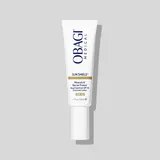
More alternatives: Kate Somerville Daily Deflector Mineral SunScreen SPF 30 PA++++Up&Up Morning Facial Moisturizing Lotion with Sunscreen SPF 30
Product summary
We assess that "MDSolarSciences - Mineral Moisture Defense SPF 50 Sunscreen" can provide reliable sun protection based on the ingredient list. We love that it can protect from both UVA and UVB rays (not all sunscreens with SPF ratings give UVA protection. UVA rays do not cause sunburn, but still damage our skin and lead to early aging).
Because it includes good moisturizing ingredients, it can also work as a hydrating day cream. This product prevents early signs of aging by protecting against sun damage (all broad spectrum sunscreens do that).
Sunscreen filters
This sunscreen uses a mixture of both mineral and organic (so-called "chemical") UV filters. Here are the organic filters this product uses: butyloctyl salicylate and polysilicone-15. As for the mineral filters, this sunscreen uses both titanium dioxide and zinc oxide.
Irritation risk
This moisturizer contains some common irritants, including those without a benefit for the skin. We assess the overall irritancy of this moisturizer to be low. For a detailed overview of all potential irritants: click here
You can see the detailed formula review with the breakdown of all actives in the product and the full ingredient list with estimated concentrations in the tables below.
Sources cited in this review
Every concentration estimate and effectiveness label is anchored to one of these 17 studies and safety reviews.
- 1A review of inorganic UV filters zinc oxide and titanium dioxideonlinelibrary.wiley.com
- 2
- 3
- 4
- 5
- 6

Affiliate links · As an Amazon Associate, WIMJ earns from qualifying purchases.