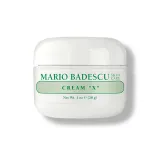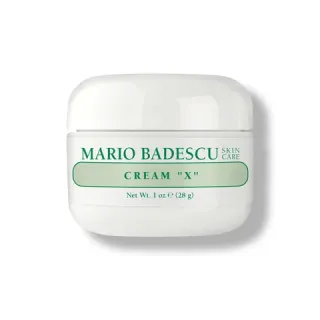
Mario Badescu Cream X

Mario Badescu Cream X

Efficacy83/100IrritancyHigh

Works for

Exfoliation
Salicylic acid, Retinyl palmitate
Works well
What the product description says
“Formulated with mild exfoliating beta hydroxy acids.”
Source: Mario Badescu

This product can help exfoliate the skin. In other words, it helps break down the bonds between dead cells on the surface of the skin and speed up the skin turnover. Skin often appears softer and brighter after exfoliation, but overdoing it can result in disrupted skin barrier. The following ingredient is doing the exfoliating job in this product: salicylic acid.

Salicylic acidKey activeEffect: HighUsed for skin exfoliation. It has an anti-inflammatory and anti-bacterial effect, helps to unclog pores, prevent blemishes and speed up healing of the existing ones. Sometimes referred to as a BHA (beta-hydroxy acid)~0.15–0.6%
Retinyl palmitateEffect: Low, below effective doseThree steps removed from the active form of vitamin A - retinoic acid. To have an effect in the skin, it first needs to be converted twice to become the retinoic acid. This means it is less potent than retinol, but could also be less irritating. Once converted to the retinoic acid in the skin, it helps against all signs of aging, improves skin cell turnover and helps fight blemishes and clogged pores. However, in many cosmetic formulations, it is used in a concentration that is too low to have the full effect~0.05–0.15%
Moisturizing
Petrolatum, Glycerin + 11 more
Works well
What the product description says
“Revives dull, depleted skin with intense moisture.”
Source: Mario Badescu

This product can help improve hydration of the skin with the two types of ingredients.

The first type is called “humectants”:
these ingredients help attract water. When humectants are on the surface of the skin, they “pull in” the moisture from the outside environment, or from within deeper layers of the skin. The following ingredients in this product do the job: glycerin, glyceryl acrylate/acrylic acid copolymer.

This product also contains ingredients called “occlusives”. They help reduce the speed with which our skin loses moisture to the outside environment. These ingredients also help soften the upper layer of the skin, so it feels less tight and nicer to the touch. The following ingredients in this product do the job: cera alba, oryza sativa bran oil.

The following ingredients in this product are especially good for supporting the skin barrier and helping with the hydration level: petrolatum

PetrolatumHero· Emollient, OcclusiveEffect: HighOne of the most effective and the most studied occlusive ingredients that creates a protective layer on top of the skin preventing moisture loss~1.4–2.1%
GlycerinKey active· HumectantEffect: HighOne of the best moisturizing ingredients. Naturally present in skin. It attracts water to the upper layer of the skin working as a humectant~3.8–5.6%
Cetyl estersKey active· EmollientEffect: MediumHelps soften upper layer of the skin and can enhance penetration of other ingredients into the upper layer of the skin~3.4–5.2%
Oryza sativa bran oilKey active· EmollientEffect: HighHelps soften the upper layer of the skin and might have some anti-oxidant properties~1.7–2.5%
Zea mays oilKey activeEffect: HighA good moisturizing plant oil. Due to the high linoleic acid content, it helps soften the upper layer of the skin, reduce water loss and support skin barrier function~0.55–1.3%
Cetearyl alcoholKey active· EmollientEffect: MediumA non-drying alcohol. Works as an emollient. Helps water and oil mix together and creates a nice product texture~0.55–1.25%
Cera albaKey active· Emollient, OcclusiveEffect: HighForms a protective barrier that holds water and keeps dry skin hydrated. Keeps an emulsion from separating into its oil and liquid components, and increases the thickness of a product. Can be an allergen~0.5–1.15%
Glyceryl acrylate/acrylic acid copolymerKey active· HumectantEffect: HighHelps attract water to the upper layer of the skin and provide a longer-lasting hydration. Can create a thicker product consistency~0.15–0.5%
Sodium hyaluronateKey active· HumectantEffect: HighOne of the best moisturizing ingredients. Attracts water into the upper layer of the skin~0.05–0.3%
Stearic acid· EmollientEffect: LowHelps oil and water mix together and works as an emollient~1.3–2%
Olus oil· EmollientEffect: LowAn oil from a mixture of different vegetables. Helps soften the upper layer of the skin~0.3–0.75%
Caprylyl glycol· Humectant, EmollientEffect: LowHelps preserve products and creates a nice product texture~0.15–0.5%
Propylene glycol· HumectantEffect: LowHelps oil and water mix together and can enhance the penetration of other ingredients into the skin. It can be irritating~0.1–0.35%
Evens skin tone
Salicylic acid, Retinyl palmitate
Not delivered
What the product description says
“Encourages a more even-toned, rejuvenated complexion.”
Source: Mario Badescu

This product might help improve the skin tone through exfoliation. In other words, it helps to speed up the shedding of cells from the upper layer of the skin, and this might help reduce hyperpigmentation.

Salicylic acidEffect: LowUsed for skin exfoliation. It has an anti-inflammatory and anti-bacterial effect, helps to unclog pores, prevent blemishes and speed up healing of the existing ones. Sometimes referred to as a BHA (beta-hydroxy acid)~0.15–0.6%
Retinyl palmitateUnder-dosedThree steps removed from the active form of vitamin A - retinoic acid. To have an effect in the skin, it first needs to be converted twice to become the retinoic acid. This means it is less potent than retinol, but could also be less irritating. Once converted to the retinoic acid in the skin, it helps against all signs of aging, improves skin cell turnover and helps fight blemishes and clogged pores. However, in many cosmetic formulations, it is used in a concentration that is too low to have the full effect~0.05–0.15%
Anti-blemish
Side benefit · Salicylic acid, Retinyl palmitate
Works well

This product can help reduce breakouts and clogged pores because it contains the following ingredient: salicylic acid. This ingredient is used for treating acne and can have a noticeable effect.

Salicylic acidHeroEffect: HighUsed for skin exfoliation. It has an anti-inflammatory and anti-bacterial effect, helps to unclog pores, prevent blemishes and speed up healing of the existing ones. Sometimes referred to as a BHA (beta-hydroxy acid)~0.15–0.6%
Retinyl palmitateUnder-dosedThree steps removed from the active form of vitamin A - retinoic acid. To have an effect in the skin, it first needs to be converted twice to become the retinoic acid. This means it is less potent than retinol, but could also be less irritating. Once converted to the retinoic acid in the skin, it helps against all signs of aging, improves skin cell turnover and helps fight blemishes and clogged pores. However, in many cosmetic formulations, it is used in a concentration that is too low to have the full effect~0.05–0.15%

Can it cause trouble?

Irritancy
5 strong irritants: Parfum, Retinyl palmitate + 3 more — patch-test recommended
High risk
We flagged 15 ingredients with irritancy potential. Severity depends on your sensitivity threshold; the table lists the worst offenders first.
IngredientFunctionIrritationEst. amount
Sodium borateA preservativeHigh~0.15–0.7%est.
Salicylic acidUsed for skin exfoliation. It has an anti-inflammatory and anti-bacterial effect, helps to unclog pores, prevent blemishes and speed up healing of the existing ones. Sometimes referred to as a BHA (beta-hydroxy acid)High~0.15–0.6%est.
Propylene glycolHelps oil and water mix together and can enhance the penetration of other ingredients into the skin. It can be irritatingHigh~0.1–0.35%est.
ParfumAn aromatic blend of unspecified and possibly irritating ingredientsHigh~0.05–0.3%est.
Retinyl palmitateThree steps removed from the active form of vitamin A - retinoic acid. To have an effect in the skin, it first needs to be converted twice to become the retinoic acid. This means it is less potent than retinol, but could also be less irritating. Once converted to the retinoic acid in the skin, it helps against all signs of aging, improves skin cell turnover and helps fight blemishes and clogged pores. However, in many cosmetic formulations, it is used in a concentration that is too low to have the full effectHigh~0.05–0.15%est.
LimoneneA common frangrance that can easily irritate skin, especially if exposed to air, light or heatHigh~0.05–0.15%est.
LinaloolA fragrance. Can be irritatingHigh~0.01–0.1%est.
EugenolA fragrance. Is a likely irritantHigh~0.01–0.05%est.
Tocopheryl acetateA more stable but less bio-available form of vitamin E compared to Tocopherol. Might help moisturize and protect the skin from free radicals, but mostly used in low concentrations to stabilize other ingredients.Medium~0.95–1.4%est.
Cera albaForms a protective barrier that holds water and keeps dry skin hydrated. Keeps an emulsion from separating into its oil and liquid components, and increases the thickness of a product. Can be an allergenMedium~0.5–1.15%est.
TriethanolamineUsed to adjust pH of the product and can help improve the product's smellMedium~0.35–0.75%est.
Ceteareth-20Helps oil and water mix together. Has some emollient propertiesMedium~0.3–0.75%est.
Glyceryl acrylate/acrylic acid copolymerHelps attract water to the upper layer of the skin and provide a longer-lasting hydration. Can create a thicker product consistencyMedium~0.15–0.5%est.
Caprylyl glycolHelps preserve products and creates a nice product textureMedium~0.15–0.5%est.
Hexylene glycolHelps create a more spreadable product textureMedium~0.05–0.3%est.
Comedogenic
3 ingredients rated 2 or more on the 0–5 pore-clogging scale
3 flagged
These ingredients have a comedogenic rating of 2 or more on a 0–5 scale; the table shows each one's rating. In leave-on products they can clog pores in acne-prone skin.
IngredientFunctionRatingEst. amount
Zea mays oilA good moisturizing plant oil. Due to the high linoleic acid content, it helps soften the upper layer of the skin, reduce water loss and support skin barrier function3/5~0.55–1.3%est.
Cetearyl alcoholA non-drying alcohol. Works as an emollient. Helps water and oil mix together and creates a nice product texture2/5~0.55–1.25%est.
Ceteareth-20Helps oil and water mix together. Has some emollient properties2/5~0.3–0.75%est.
Did this help you decide?

User reviews

Would you recommend?
No community reviews yet.

Be the first — your take helps the next person decide.

Ingredients

Filter by role to see what each ingredient is doing.

Water~40–60%
Formula
Irritation risk
Low

Plain old water

More about Water
Glycerin~3.8–5.6%
Key active
Irritation risk
Low
Works for
Moisturizing

One of the best moisturizing ingredients. Naturally present in skin. It attracts water to the upper layer of the skin working as a humectant

More about Glycerin
Cetyl esters~3.4–5.2%
Key active
Irritation risk
Low
Works for
Moisturizing

Helps soften upper layer of the skin and can enhance penetration of other ingredients into the upper layer of the skin

More about Cetyl esters
Isodecyl salicylate~2.6–3.9%
Formula
Arachis hypogaea oil~2–3%
Formula
Oryza sativa bran oil~1.7–2.5%
Key active
Irritation risk
Low
Works for
Moisturizing

Helps soften the upper layer of the skin and might have some anti-oxidant properties

More about Oryza sativa bran oil
Petrolatum~1.4–2.1%
Hero · Moisturizing
Irritation risk
Low
Works for
Moisturizing

One of the most effective and the most studied occlusive ingredients that creates a protective layer on top of the skin preventing moisture loss

More about Petrolatum
Stearic acid~1.3–2%
Formula
Irritation risk
Low
Works for
CleansingMoisturizing

Helps oil and water mix together and works as an emollient

More about Stearic acid
Tocopheryl acetate~0.95–1.4%
Irritant · medium
Irritation risk
Medium
Works for
Anti-oxidation

A more stable but less bio-available form of vitamin E compared to Tocopherol. Might help moisturize and protect the skin from free radicals, but mostly used in low concentrations to stabilize other ingredients.

More about Tocopheryl acetate
Zea mays oil~0.55–1.3%
Key activeComedogenic 3/5
Irritation risk
Low
Comedogenicity
3/5
Works for
CleansingMoisturizing

A good moisturizing plant oil. Due to the high linoleic acid content, it helps soften the upper layer of the skin, reduce water loss and support skin barrier function

More about Zea mays oil
Cetearyl alcohol~0.55–1.25%
Key activeComedogenic 2/5
Irritation risk
Low
Comedogenicity
2/5
Works for
CleansingMoisturizing

A non-drying alcohol. Works as an emollient. Helps water and oil mix together and creates a nice product texture

More about Cetearyl alcohol
Cera alba~0.5–1.15%
Key activeIrritant · medium
Irritation risk
Medium
Works for
MoisturizingCleansing

Forms a protective barrier that holds water and keeps dry skin hydrated. Keeps an emulsion from separating into its oil and liquid components, and increases the thickness of a product. Can be an allergen

More about Cera alba
Triethanolamine~0.35–0.75%
Irritant · medium
Irritation risk
Medium
Works for
Cleansing

Used to adjust pH of the product and can help improve the product's smell

More about Triethanolamine
Olus oil~0.3–0.75%
Formula
Irritation risk
Low
Works for
Moisturizing

An oil from a mixture of different vegetables. Helps soften the upper layer of the skin

More about Olus oil
Ceteareth-20~0.3–0.75%
Comedogenic 2/5Irritant · medium
Irritation risk
Medium
Comedogenicity
2/5
Works for
Cleansing

Helps oil and water mix together. Has some emollient properties

More about Ceteareth-20
Sodium borate~0.15–0.7%
Irritant · high
Irritation risk
High

A preservative

More about Sodium borate
Salicylic acid~0.15–0.6%
Hero · Anti-blemishIrritant · high
Irritation risk
High
Works for
Anti-inflammatoryExfoliationAnti-blemishAntibacterialEvens skin tone

Used for skin exfoliation. It has an anti-inflammatory and anti-bacterial effect, helps to unclog pores, prevent blemishes and speed up healing of the existing ones. Sometimes referred to as a BHA (beta-hydroxy acid)

More about Salicylic acid
Glyceryl acrylate/acrylic acid copolymer~0.15–0.5%
Key activeIrritant · medium
Irritation risk
Medium
Works for
Moisturizing

Helps attract water to the upper layer of the skin and provide a longer-lasting hydration. Can create a thicker product consistency

More about Glyceryl acrylate/acrylic acid copolymer
Caprylyl glycol~0.15–0.5%
Irritant · medium
Irritation risk
Medium
Works for
Moisturizing

Helps preserve products and creates a nice product texture

More about Caprylyl glycol
Phenoxyethanol~0.1–0.45%
Formula
Irritation risk
Low

A preservative. It helps prevent bacterial growth in cosmetic products

More about Phenoxyethanol
Propylene glycol~0.1–0.35%
Irritant · high
Irritation risk
High
Works for
Moisturizing

Helps oil and water mix together and can enhance the penetration of other ingredients into the skin. It can be irritating

More about Propylene glycol
Parfum~0.05–0.3%
Irritant · high
Irritation risk
High

An aromatic blend of unspecified and possibly irritating ingredients

More about Parfum
Hexylene glycol~0.05–0.3%
Irritant · medium
Irritation risk
Medium
Works for
Cleansing

Helps create a more spreadable product texture

More about Hexylene glycol
Methylparaben~0.05–0.2%
Formula
Irritation risk
Low

A preservative

More about Methylparaben
Sodium hyaluronate~0.05–0.3%
Key active
Irritation risk
Low
Works for
Moisturizing

One of the best moisturizing ingredients. Attracts water into the upper layer of the skin

More about Sodium hyaluronate
Propylparaben~0.05–0.15%
Formula
Irritation risk
Low

A preservative

More about Propylparaben
Retinyl palmitate~0.05–0.15%
Under-dosedIrritant · high
Irritation risk
High
Works for
Evens skin toneAnti-blemishAnti-agingExfoliation

Three steps removed from the active form of vitamin A - retinoic acid. To have an effect in the skin, it first needs to be converted twice to become the retinoic acid. This means it is less potent than retinol, but could also be less irritating. Once converted to the retinoic acid in the skin, it helps against all signs of aging, improves skin cell turnover and helps fight blemishes and clogged pores. However, in many cosmetic formulations, it is used in a concentration that is too low to have the full effect

More about Retinyl palmitate
Limonene~0.05–0.15%
Irritant · high
Irritation risk
High

A common frangrance that can easily irritate skin, especially if exposed to air, light or heat

More about Limonene
Linalool~0.01–0.1%
Irritant · high
Irritation risk
High

A fragrance. Can be irritating

More about Linalool
Eugenol~0.01–0.05%
Irritant · high
Irritation risk
High

A fragrance. Is a likely irritant

More about Eugenol
Ingredient list view

Water, Glycerin, Cetyl esters, Isodecyl salicylate, Arachis hypogaea oil, Oryza sativa bran oil, Petrolatum, Stearic acid, Tocopheryl acetate, Zea mays oil, Cetearyl alcohol, Cera alba, Triethanolamine, Olus oil, Ceteareth-20, Sodium borate, Salicylic acid, Glyceryl acrylate/acrylic acid copolymer, Caprylyl glycol, Phenoxyethanol, Propylene glycol, Parfum, Hexylene glycol, Methylparaben, Sodium hyaluronate, Propylparaben, Retinyl palmitate, Limonene, Linalool, Eugenol

Compare prices

Retailers ranked by price — lowest first.

Amazon USPrice as of 11/21 18:01 GMT
$40.00
Buy
Mario Badescu
$40.00
Buy

Affiliate links · As an Amazon Associate, WIMJ earns from qualifying purchases.

Worth comparing, line by line.

Match % combines shared ingredients, the first five ingredients, shared actives and hero ingredients, irritancy (lower counts in the alternative's favour), texture and body area. Only products in the same routine step are compared.

Side-by-side comparison of this product against its closest alternatives
Mario BadescuCream XYOUR PRODUCTCliniqueiD: Dramatically Different Moisturizing Lotion + ACC for FatigueGlyDermCream Plus 12NeocutisBody Rejuvenating Cream
Match—85%83%79%
Price$40.00—$46.50+$6.50—
Shared key ingredients—4 of 82 of 84 of 8
Key difference—Mineral OilMineral OilCeramide Eop
Irritancy High Medium Medium Low
Drying alcohol————
View product Shop Shop Shop

More alternatives: T.LeClerc Satin-Finish Complexion CreamGrahams Natural KP Smoothing Cream

Cheaper alternatives? See how this stacks up against similar formulas.
We compare ingredient profiles across our catalog — pick the closest match for your budget.
Open dupe finder

Sources cited in this review

Every concentration estimate and effectiveness label is anchored to one of these 15 studies and safety reviews.

  1. 1
  2. 2
  3. 3
  4. 4
  5. 5
  6. 6

Affiliate links · As an Amazon Associate, WIMJ earns from qualifying purchases.

As an Amazon Associate, WIMJ earns from qualifying purchases.