Works for:
based on ingredients and %- Cleansing
Can it cause trouble?
- Irritation risk: high
- Comedogenic risk ingredients: 2
Key actives

Works for
Cleansing
What does the product description say?
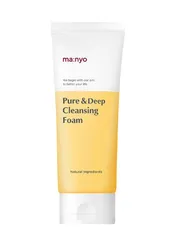
Pure Deep Cleansing Foam
Source: From product name
This product works by removing dirt and oil from the surface of the skin. It uses a combination of mild cleansing agents (arachidic acid, coco-glucoside, glyceryl stearate, hydrogenated lecithin, lauric acid, myristic acid, oleic acid, palmitic acid, potassium cocoate, potassium cocoyl glycinate, quillaja saponaria bark extract, sodium cocoyl isethionate, stearic acid) and should be able to cleanse the skin gently. Still keep in mind that any cleansing can disrupt the skin barrier, and most people do not need to cleanse their skin more than once per day.
Even though this formulation is mild, the following cleansing agents could trigger an irritation or allergy for some people: coco-glucoside
Used as a cleansing agent (surfactant) in cleansers. Helps water and oil mix together in lotions. Can be irritating
An emollient that softens the skin and forms a protective layer on its surface. Helps water and oil mix together
Helps to retain moisture by creating a protective barrier on the skin. Rich in fatty acids. Improves product texture and helps with the penetration of other ingredients.
Helps water and oil mix together. Has anti-bacterial properties that might be helpful in preventing blemishes
Helps oil and water mix together. Could be comedogenic
Helps soften the upper layer of the skin. At the same time, it can weaken the skin's barrier enhancing penetration of other ingredients and increasing the risk of skin dryness
An emollient that is naturally present in skin and helps soften it
Helps oil and water mix together and works as a cleansing agent
Helps water and oil mix together
Helps water and oil mix together. Can be used as a cleansing agent
Helps oil and water mix together and works as an emollient
How honest is this product?
| Promise | Can it deliver? |
|---|---|
| Cleansing |
Total Promises Fulfilled score: 100/100.
We receive a small commission for purchases made through these links at no cost for you. Thank you for your support! Learn more
Potential irritants
Comedogenic ingredients
User reviews (0)
Averages from community submissions.
No reviews yet for this product.
Be the first to share your experience!
Tried this product?
Help capture what the ingredient list can't—texture, finish, pilling, scent, and more. Answer what you can, skip the rest.
Takes ~30 seconds.
Reviews are shown in aggregate. No personal details.
Key Actives
Helps water and oil mix together. Has anti-bacterial properties that might be helpful in preventing blemishes
A type of lipid similar to ceramides naturally present in skin. Helps to soften the upper layer of the skin and supports the skin barrier function to keep it hydrated. Can help to prevent inflammation in skin
Helps soften the upper layer of the skin. At the same time, it can weaken the skin's barrier enhancing penetration of other ingredients and increasing the risk of skin dryness
Helps oil and water mix together and works as an emollient
An emollient that is naturally present in skin and helps soften it
An emollient that softens the skin and forms a protective layer on its surface. Helps water and oil mix together
One of the best moisturizing ingredients. Naturally present in skin. It attracts water to the upper layer of the skin working as a humectant
Helps oil and water mix together. Could be comedogenic
Helps oil and water mix together and works as a cleansing agent
One of the best moisturizing ingredients. Attracts water into the upper layer of the skin
Helps to retain moisture by creating a protective barrier on the skin. Rich in fatty acids. Improves product texture and helps with the penetration of other ingredients.
Used as a cleansing agent (surfactant) in cleansers. Helps water and oil mix together in lotions. Can be irritating
Helps water and oil mix together. Can be used as a cleansing agent
A good mix of fatty acids that forms a protective layer on the skin. Improves the shelf life of products. Derived from coconut and glycerin
Helps water and oil mix together
A great emollient due to its high linoleic acid content. One of the most effective plant oils in helping skin hydration and repairing skin barrier function
Potential irritants
A plant extract that might have antibacterial effect and help neutralize free radicals
A plant extract that might help neutralize free radicals in skin. Can contain volalite oils and be irritating
Used as a cleansing agent (surfactant) in cleansers. Helps water and oil mix together in lotions. Can be irritating
An essential oil. Can be irritating. Can become an allergen with oxidation
An essentil oil from orange peel. Potential allergen and can be irritating
A plant oil with a high content of volatile compounds that can irritate the skin and lead to allergic reactions. Can lead to photosensitivity
Helps oil and water mix together. Could be comedogenic
Helps water and oil mix together. Has anti-bacterial properties that might be helpful in preventing blemishes
Helps oil and water mix together and works as a cleansing agent
Maintains the texture of skincare products. Allows the product to spread evenly. Helps oil and water mix together
Helps water and oil mix together. Can be used as a cleansing agent
Helps soften the upper layer of the skin. At the same time, it can weaken the skin's barrier enhancing penetration of other ingredients and increasing the risk of skin dryness
A good mix of fatty acids that forms a protective layer on the skin. Improves the shelf life of products. Derived from coconut and glycerin
Can work as an exfoliant but is typically used to adjust the product pH
Comedogenic ingredients
Helps oil and water mix together. Could be comedogenic
Helps water and oil mix together. Has anti-bacterial properties that might be helpful in preventing blemishes
All ingredients
One of the best moisturizing ingredients. Naturally present in skin. It attracts water to the upper layer of the skin working as a humectant
Helps oil and water mix together. Could be comedogenic
Helps water and oil mix together. Has anti-bacterial properties that might be helpful in preventing blemishes
Helps oil and water mix together and works as a cleansing agent
An emollient that is naturally present in skin and helps soften it
One of the best moisturizing ingredients. Attracts water into the upper layer of the skin
Used to create a nice product texture and help delivery of other ingredients. Might be somewhat helpful in attracting water to the upper layer of the skin
A plant extract that might have antibacterial effect and help neutralize free radicals
A type of lipid similar to ceramides naturally present in skin. Helps to soften the upper layer of the skin and supports the skin barrier function to keep it hydrated. Can help to prevent inflammation in skin
Helps to retain moisture by creating a protective barrier on the skin. Rich in fatty acids. Improves product texture and helps with the penetration of other ingredients.
A plant extract that might help neutralize free radicals in skin. Can contain volalite oils and be irritating
Used as a cleansing agent (surfactant) in cleansers. Helps water and oil mix together in lotions. Can be irritating
An emollient that softens the skin and forms a protective layer on its surface. Helps water and oil mix together
Maintains the texture of skincare products. Allows the product to spread evenly. Helps oil and water mix together
Helps water and oil mix together. Can be used as a cleansing agent
Helps soften the upper layer of the skin. At the same time, it can weaken the skin's barrier enhancing penetration of other ingredients and increasing the risk of skin dryness
A good mix of fatty acids that forms a protective layer on the skin. Improves the shelf life of products. Derived from coconut and glycerin
Helps soften the upper layer of the skin and create a nice product finish
An essential oil. Can be irritating. Can become an allergen with oxidation
Can work as an exfoliant but is typically used to adjust the product pH
An essentil oil from orange peel. Potential allergen and can be irritating
A great emollient due to its high linoleic acid content. One of the most effective plant oils in helping skin hydration and repairing skin barrier function
A plant oil with a high content of volatile compounds that can irritate the skin and lead to allergic reactions. Can lead to photosensitivity
Ingredient list view
Glycerin, Water, Myristic acid, Stearic acid, Lauric acid, Potassium cocoate, Potassium hydroxide, Potassium cocoyl glycinate, Palmitic acid, Sodium hyaluronate, Butylene glycol, Lavandula angustifolia flower water, Borago officinalis extract, Centaurea cyanus flower extract, Salvia sclarea extract, Hyacinthus orientalis extract, Ceramide np, Chamomilla recutita flower/leaf extract, Hydrogenated lecithin, Nelumbo nucifera flower extract, Lonicera japonica flower extract, Nymphaea alba flower extract, Prunus serrulata flower extract, Rosa hybrid flower extract, 1,2-hexanediol, Coco-glucoside, Glyceryl stearate, Acrylates/c10-30 alkyl acrylate crosspolymer, Sodium cocoyl isethionate, Oleic acid, Caprylic/capric triglyceride, Ethylhexylglycerin, Quillaja saponaria bark extract, Carthamus tinctorius flower extract, Chrysanthellum indicum extract, Arachidic acid, Sodium phytate, Polyquaternium-7, Rosa damascena flower oil, Pelargonium graveolens flower oil, Cananga odorata flower oil, Citric acid, Potassium sorbate, Sodium benzoate, Citrus aurantium dulcis peel oil, Helianthus annuus seed oil, Citrus aurantium bergamia fruit oil
- Glycerol and the skin: holistic approach to its origin and functions
- The fatty acid profile of the skin surface lipid layer in papulopustular rosacea
- Hyaluronic acid: A key molecule in skin aging
- Hyaluronan (Hyaluronic Acid): a natural moisturizer for skin care
- Skin hydration is significantly increased by a cream formulated to mimic the skin’s own natural moisturizing systems
- Topically Applied Ceramides Interact with the Stratum Corneum Lipid Matrix in Compromised Ex Vivo Skin
- VOLATILE CONSTITUENTS FROM THE FLOWERS OF TWO SPECIES OF HONEYSUCKLE ( LONICERA JAPONICA AND LONICERA CAPRIFOLIUM )
- Chemical composition of the essential oils from the flower, leaf and stem of Lonicera japonica
- The influence of alkane chain length on the skin irritation potential of 1,2-alkanediols
- In Vitro Assessment of Skin Irritation Potential of Surfactant-based Formulations by Using a 3-D Skin Reconstructed Tissue Model and Cytokine Response
- Allergen of the Year—Alkyl Glucoside
- Final Report on the Safety Assessment of Sodium Cocoyl Isethionate
- Anti-Inflammatory and Skin Barrier Repair Effects of Topical Application of Some Plant Oils
- https://www.sciencedirect.com/science/article/pii/0168365995000887
- Volatile Aroma Composition of Chrysanthemum indicum L. Flower Oil
- Annex I: Clinical evidence regarding sensitisation to individual fragrance chemicals and to natural extracts
- Fragrance Compound Geraniol Forms Contact Allergens on Air Exposure. Identification and Quantification of Oxidation Products and Effect on Skin Sensitization
- Effect of Olive and Sunflower Seed Oil on the Adult Skin Barrier: Implications for Neonatal Skin Care
- Topically Applied Sunflower Seed Oil Prevents Invasive Bacterial Infections in Preterm Infants in Egypt
- Effect of topically applied lipids on surfactant-irritated skin
- Impact of topical oils on the skin barrier: possible implications for neonatal health in developing countries
- Safety Assessment of Citrus-Derived Peel Oils as Used in Cosmetics
- Oxidized citrus oil (R-limonene): A frequent skin sensitizer in Europe
- Air oxidation increases skin irritation from fragrance terpenes