Works for
1 of 1 advertised claim delivered
Moisturizing9 ingredients credited for this claimGood support
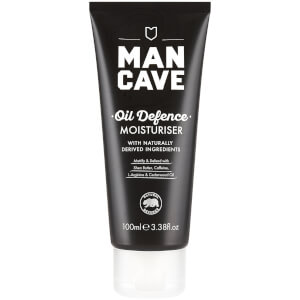
“Oil Defence Moisturiser”
This product can help improve hydration of the skin with the two types of ingredients.
The first type is called “humectants”:
these ingredients help attract water.
When humectants are on the surface of the skin, they “pull in” the moisture from the outside environment, or from
within deeper layers of the skin. The following ingredients in this product do the job:
arginine, glycerin.
This product also contains ingredients called “occlusives”. They help reduce the speed with which our skin loses moisture to the outside environment. These ingredients also help soften the upper layer of the skin, so it feels less tight and nicer to the touch. The following ingredients in this product do the job: arginine, butyrospermum parkii butter.
Can it cause trouble?
Irritancy14 strong irritants: Parfum, Linalool + 12 more — patch-test recommendedHigh risk
Comedogenic2 ingredients rated 2 or more on the 0–5 pore-clogging scale2 flagged
User reviews
Be the first — your take helps the next person decide.
Ingredients
Filter by role to see what each ingredient is doing.
Water~45–55%
Glycerin~5.4–6.6%
- Irritation risk
- Low
One of the best moisturizing ingredients. Naturally present in skin. It attracts water to the upper layer of the skin working as a humectant
More about GlycerinCaprylic/capric triglyceride~4.5–5.5%
- Irritation risk
- Medium
A good mix of fatty acids that forms a protective layer on the skin. Improves the shelf life of products. Derived from coconut and glycerin
More about Caprylic/capric triglycerideButyrospermum parkii butter~3.2–3.9%
- Irritation risk
- Low
- Comedogenicity
- 3/5
A great moisturising ingredient that softens the skin and reduces water loss from its upper layer. It also can be helpful in protecting skin from free radicals
More about Butyrospermum parkii butterTapioca starch~2.4–3%
Cetearyl alcohol~2.1–2.5%
- Irritation risk
- Low
- Comedogenicity
- 2/5
A non-drying alcohol. Works as an emollient. Helps water and oil mix together and creates a nice product texture
More about Cetearyl alcoholArachidyl alcohol~1.7–2.1%
- Irritation risk
- Low
Used to soften the upper layer of the skin and create a thicker product consistency
More about Arachidyl alcoholPhenoxyethanol~0.5–1%
- Irritation risk
- Low
A preservative. It helps prevent bacterial growth in cosmetic products
More about PhenoxyethanolBehenyl alcohol~1.4–1.7%
- Irritation risk
- Low
Non-drying alcohol that helps water and oil mix together. Also serves as an emollient
More about Behenyl alcoholTocopherol~1–1.2%
- Irritation risk
- Low
Pure form of vitamin E. Can help moisturise and protect the skin from free radicals. Often used to help stabilise other ingredients or the formula itself
More about TocopherolCarbomer~0.7–1.1%
- Irritation risk
- Low
Helps create a thicker or gel-like product texture. It is not a surfactant but can be used in gentle cleansing formulations
More about CarbomerCetearyl glucoside~0.6–0.9%
- Irritation risk
- Medium
Helps water and oil in the product mix well together and improves product texture
More about Cetearyl glucosideArachidyl glucoside~0.55–0.85%
Epilobium fleischeri extract~0.5–0.75%
- Irritation risk
- Low
Parfum~0.45–0.65%
- Irritation risk
- High
An aromatic blend of unspecified and possibly irritating ingredients
More about ParfumSodium stearoyl glutamate~0.5–0.75%
- Irritation risk
- Medium
Helps oil and water mix together
More about Sodium stearoyl glutamateBenzoic acid~0.25–0.5%
Arginine~0.35–0.65%
- Irritation risk
- Low
An amino acid that is naturally present in skin and helps keep it hydrated. When used together with AHAs, it can reduce their irritating effect on the skin
More about ArginineCaffeine~0.3–0.6%
- Irritation risk
- Medium
Might be helpful in neutralizing free radicals. Can have a dehydration effect that might somewhat decrease the look of puffy eyes
More about CaffeineXanthan gum~0.3–0.6%
- Irritation risk
- Low
Used to create a thicker product consistency
More about Xanthan gumSodium hydroxide~0.3–0.55%
Dehydroacetic acid~0.3–0.55%
Linalool~0.25–0.45%
Phytic acid~0.3–0.55%
- Irritation risk
- Medium
An alpha-hydroxy acid (AHA), but is mostly used to stabilize product formulations in cosmetics
More about Phytic acidBulnesia sarmientoi wood oil~0.25–0.5%
- Irritation risk
- Low
Benzyl salicylate~0.25–0.45%
Hexyl cinnamal~0.25–0.45%
Abies sibirica oil~0.25–0.45%
- Irritation risk
- Low
Artemisia herba-alba oil~0.25–0.5%
- Irritation risk
- Low
Cedrus atlantica bark oil~0.25–0.45%
- Irritation risk
- Low
Citric acid~0.3–0.55%
- Irritation risk
- Medium
Can work as an exfoliant but is typically used to adjust the product pH
More about Citric acidCitrus aurantifolia oil~0.3–0.6%
- Irritation risk
- High
Eucalyptus globulus leaf oil~0.25–0.45%
- Irritation risk
- High
An essential oil that can be very irritating. Has some anti-bacterial properties
More about Eucalyptus globulus leaf oilLavandula hybrida oil~0.3–0.55%
- Irritation risk
- High
Plant extract that can be irritating and is a known allergen
More about Lavandula hybrida oilOriganum majorana herb oil~0.25–0.5%
- Irritation risk
- High
Rosmarinus officinalis leaf oil~0.25–0.5%
- Irritation risk
- High
A plant oil with high content of volatile compounds that can irritate the skin. Can be used as a fragrance. Has anti-bacterial properties and might help neutralize free radicals on the surface of the skin
More about Rosmarinus officinalis leaf oilCoumarin~0.25–0.45%
Glucose~0.25–0.45%
- Irritation risk
- Low
Helps attract water to the upper layer of the skin. Could be helpful in restoring the skin barrier function
More about GlucosePotassium sorbate~0.2–0.4%
Limonene~0.2–0.35%
- Irritation risk
- High
A common frangrance that can easily irritate skin, especially if exposed to air, light or heat
More about LimoneneAlpha-isomethyl ionone~0.15–0.3%
- Irritation risk
- High
A fragrance. Potential allergen and can be irritating
More about Alpha-isomethyl iononeRosa damascena extract~0.2–0.35%
- Irritation risk
- High
Oil of a very fragrant pink rose used as fragrance in cosmetics. Extensive research has shown it has mixed benefits. In the pro column, inhaling this flower’s scent seems to have relaxing properties and the plant’s petals contain skin-soothing and antioxidant compounds that can benefit skin. On the flipside, the numerous chemicals that create this rose’s distinctive fragrance pose a risk of causing skin aggravation.
More about Rosa damascena extractJuniperus communis fruit oil~0.15–0.3%
- Irritation risk
- Low
Piper nigrum fruit oil~0.1–0.25%
- Irritation risk
- Low
Thymus vulgaris flower/leaf oil~0.1–0.2%
- Irritation risk
- High
Ingredient list view
Water, Glycerin, Caprylic/capric triglyceride, Butyrospermum parkii butter, Tapioca starch, Cetearyl alcohol, Arachidyl alcohol, Phenoxyethanol, Behenyl alcohol, Tocopherol, Carbomer, Cetearyl glucoside, Arachidyl glucoside, Epilobium fleischeri extract, Parfum, Sodium stearoyl glutamate, Benzoic acid, Arginine, Caffeine, Xanthan gum, Sodium hydroxide, Dehydroacetic acid, Linalool, Phytic acid, Bulnesia sarmientoi wood oil, Benzyl salicylate, Hexyl cinnamal, Abies sibirica oil, Artemisia herba-alba oil, Cedrus atlantica bark oil, Citric acid, Citrus aurantifolia oil, Eucalyptus globulus leaf oil, Lavandula hybrida oil, Origanum majorana herb oil, Rosmarinus officinalis leaf oil, Coumarin, Glucose, Potassium sorbate, Limonene, Alpha-isomethyl ionone, Rosa damascena extract, Juniperus communis fruit oil, Piper nigrum fruit oil, Thymus vulgaris flower/leaf oil
Compare prices
Retailers ranked by price — lowest first.


.png)
Sources cited in this review
Every concentration estimate and effectiveness label is anchored to one of these 13 studies and safety reviews.
- 1
- 2Vitamin E in dermatologyncbi.nlm.nih.gov
- 3Vitamin E and Skin Healthlpi.oregonstate.edu
- 4
- 5Cosmetic and dermatologic use of alpha hydroxy acidsonlinelibrary.wiley.com
- 6

Affiliate links · As an Amazon Associate, WIMJ earns from qualifying purchases.