Works for
2 of 2 advertised claims delivered
Moisturizing25 ingredients credited for this claimStrong support
“Tests show long term benefits effects include increased hydration, improved plump-ness and a strengthened skin barrier.”
This product can help improve hydration of the skin with the two types of ingredients.
The first type is called “humectants”:
these ingredients help attract water.
When humectants are on the surface of the skin, they “pull in” the moisture from the outside environment, or from
within deeper layers of the skin. The following ingredients in this product do the job:
alcaligenes polysaccharides, algae extract.
This product also contains ingredients called “occlusives”. They help reduce the speed with which our skin loses moisture to the outside environment. These ingredients also help soften the upper layer of the skin, so it feels less tight and nicer to the touch. The following ingredients in this product do the job: cera alba, dimethicone.
The following ingredients in this product are especially good for supporting the skin barrier and helping with the hydration level: acetyl hexapeptide-8
Anti-aging5 ingredients credited for this claimModerate support
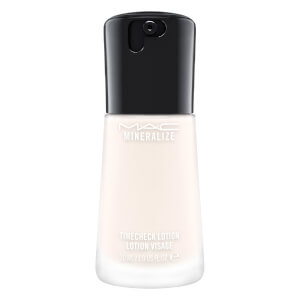
“Fight the signs of ageing with the Mineralize Time Check Lotion from MAC .”
This product contains acetyl hexapeptide-8. This ingredient might be able to help reduce and prevent fine lines and wrinkles, improve skin elasticity and firmness, but there is not enough evidence that it actually works.
Can it cause trouble?
Irritancy1 strong irritant: ParfumMedium risk
Comedogenic7 ingredients rated 2 or more on the 0–5 pore-clogging scale7 flagged
User reviews
Be the first — your take helps the next person decide.
Ingredients
Filter by role to see what each ingredient is doing.
Water~40–60%
Glycerin~4.8–7.3%
- Irritation risk
- Low
One of the best moisturizing ingredients. Naturally present in skin. It attracts water to the upper layer of the skin working as a humectant
More about GlycerinSodium polyacrylate crosspolymer-1~3.6–5.4%
- Irritation risk
- Low
Acetylated glycol stearate~2.5–3.8%
- Irritation risk
- Low
Vinyl dimethicone/methicone silsesquioxane crosspolymer~1.8–2.7%
- Irritation risk
- Low
A type of silicone that create a smooth product finish and can create an optical soft-focus effect on the skin. Helps to thicken the product consistency
More about Vinyl dimethicone/methicone silsesquioxane crosspolymerMyristyl myristate~1.6–2.3%
- Irritation risk
- Medium
- Comedogenicity
- 3/5
An emollient. Is not recommended for acne-prone skin as it can be comedogenic
More about Myristyl myristateDimethicone/vinyl dimethicone crosspolymer~1.2–1.8%
- Irritation risk
- Low
Used to stabilize product formulations and create a nice product texture
More about Dimethicone/vinyl dimethicone crosspolymerDimethicone~1.1–1.7%
- Irritation risk
- Low
A silicone that helps to reduce water loss from the surface of the skin. Can temporarily "fill in" lines and wrinkles, absorb oil, and create a nice product finish
More about DimethiconeButyrospermum parkii butter~0.9–1.4%
- Irritation risk
- Low
- Comedogenicity
- 3/5
A great moisturising ingredient that softens the skin and reduces water loss from its upper layer. It also can be helpful in protecting skin from free radicals
More about Butyrospermum parkii butterMangifera indica seed butter~0.45–1.05%
- Irritation risk
- Low
Helps to soften the upper layer of the skin and might have some anti-oxidant effect
More about Mangifera indica seed butterHypnea musciformis extract~0.3–0.75%
- Irritation risk
- Low
- Comedogenicity
- 3/5
Might help to attract water to the upper layer of the skin
More about Hypnea musciformis extractSodium hyaluronate~0.15–0.65%
- Irritation risk
- Low
One of the best moisturizing ingredients. Attracts water into the upper layer of the skin
More about Sodium hyaluronateSqualane~0.15–0.7%
- Irritation risk
- Low
An oil naturally present in skin. Works as an emollient to soften the skin and form a protective layer on its surface without a greasy feeling.
More about SqualaneLaminaria saccharina extract~0.1–0.5%
- Irritation risk
- Low
- Comedogenicity
- 3/5
A seaweed extract that contains sugars and can be helpful in attracting water to the upper layers of the skin if used in high enough concentrations
More about Laminaria saccharina extractAlgae extract~0.15–0.55%
- Irritation risk
- Low
- Comedogenicity
- 3/5
Plant extract that helps the skin to attract water and make it more smooth for touch. Also shows promise of anti-aging properties, but research is not extensive yet
More about Algae extractChlorella vulgaris extract~0.1–0.4%
- Irritation risk
- Medium
- Comedogenicity
- 3/5
A plant extract that can help to attract water to the upper layer of the skin and might have some anti-oxidant and anti-inflammatory properties
More about Chlorella vulgaris extractCentaurium erythraea extract~0.1–0.4%
- Irritation risk
- Medium
A plant extract that can help calm down inflammation in skin
More about Centaurium erythraea extractYeast extract~0.1–0.35%
- Irritation risk
- Low
Helps attract water to the upper layer of the skin and might have some anti-oxidant and skin lightening properties. It can help calm down inflammation in skin
More about Yeast extractFaex~0.05–0.25%
- Irritation risk
- Low
Yeast extract. Helps to attract water to the upper layer of the skin
More about FaexYeast extract~0.05–0.2%
- Irritation risk
- Low
Helps attract water to the upper layer of the skin and might have some anti-oxidant and skin lightening properties. It can help calm down inflammation in skin
More about Yeast extractCaffeine~0.05–0.2%
- Irritation risk
- Medium
Might be helpful in neutralizing free radicals. Can have a dehydration effect that might somewhat decrease the look of puffy eyes
More about CaffeineCeramide 3~0.05–0.25%
- Irritation risk
- Low
A type of lipid similar to ceramides naturally present in skin. Helps to soften the upper layer of the skin and supports the skin barrier function to keep it hydrated. Can help to prevent inflammation in skin
More about Ceramide 3Ethylhexylglycerin~0.05–0.15%
Trehalose~0.05–0.15%
- Irritation risk
- Low
A sugar that attracts water to the upper layer of the skin
More about TrehaloseSodium stearoyl glutamate~0.1–0.3%
- Irritation risk
- Medium
Helps oil and water mix together
More about Sodium stearoyl glutamateAminopropyl ascorbyl phosphate~0.05–0.1%
- Irritation risk
- Medium
A more stable but less potent derivative of vitamin C. It can help neautralize free radicals and even out the skin tone if used in high enough concentration (required levels are likely to be much higher than for pure vitamin C, and solid studies are lacking at the moment)
More about Aminopropyl ascorbyl phosphateLauryl peg-9 polydimethylsiloxyethyl dimethicone~0.05–0.15%
- Irritation risk
- Low
A type of silicone that helps to soften upper layer of the skin and create a nice product texture
More about Lauryl peg-9 polydimethylsiloxyethyl dimethiconeAlcaligenes polysaccharides~0.05–0.2%
- Irritation risk
- Low
Help attract water to the upper layer of the skin
More about Alcaligenes polysaccharidesAcetyl hexapeptide-8~0.05–0.1%
- Irritation risk
- Low
A type of peptide. Peptides are excellent moisturizers and might be able support collagen production reducing fine lines and wrinkles
More about Acetyl hexapeptide-8Magnesium chloride~0.05–0.15%
Rhodochrosite~0.05–0.1%
- Irritation risk
- Low
Beeswax~0.05–0.25%
- Irritation risk
- Low
Forms a protective barrier that holds water and keeps dry skin hydrated. Keeps an emulsion from separating into its oil and liquid components, and increases the thickness of a product. Can be an allergen
More about BeeswaxCera alba~0.1–0.4%
- Irritation risk
- Medium
Forms a protective barrier that holds water and keeps dry skin hydrated. Keeps an emulsion from separating into its oil and liquid components, and increases the thickness of a product. Can be an allergen
More about Cera albaBeeswax~0.05–0.25%
- Irritation risk
- Low
Forms a protective barrier that holds water and keeps dry skin hydrated. Keeps an emulsion from separating into its oil and liquid components, and increases the thickness of a product. Can be an allergen
More about BeeswaxDiamond powder~0.1–0.35%
- Irritation risk
- Low
Does not have known skin benefits. Might help create an optical illusion of smoother skin
More about Diamond powderLaureth-9~0.05–0.2%
Laureth-23~0.1–0.35%
- Irritation risk
- Medium
- Comedogenicity
- 2/5
Helps oil and water mix together
More about Laureth-23Silica~0.1–0.3%
Silica silylate~0.05–0.15%
Dimethicone crosspolymer~0.05–0.15%
- Irritation risk
- Low
Used to create a thicker product texture. Helps soften the upper layer of the skin and might be able to prevent moisture loss from its surface
More about Dimethicone crosspolymerPolysorbate 80~0.05–0.2%
Calcium chloride~0.05–0.15%
- Irritation risk
- Medium
Helps create a thicker product consistency. Might be irritating
More about Calcium chlorideSodium sulfate~0.01–0.1%
- Irritation risk
- Medium
Used to improve the product consistency and stabilize formulations
More about Sodium sulfatePotassium nitrate~0.05–0.2%
- Irritation risk
- Low
Potassium phosphate~0.05–0.2%
Tromethamine~0.05–0.15%
Caprylyl glycol~0.05–0.2%
- Irritation risk
- Medium
Helps preserve products and creates a nice product texture
More about Caprylyl glycolButylene glycol~0.05–0.15%
- Irritation risk
- Low
Used to create a nice product texture and help delivery of other ingredients. Might be somewhat helpful in attracting water to the upper layer of the skin
More about Butylene glycolPentylene glycol~0.05–0.25%
- Irritation risk
- Medium
Used to preserve products, dissolve other ingredients and create a nice product texture
More about Pentylene glycolSalicylic acid~0.01–0.1%
- Irritation risk
- High
Used for skin exfoliation. It has an anti-inflammatory and anti-bacterial effect, helps to unclog pores, prevent blemishes and speed up healing of the existing ones. Sometimes referred to as a BHA (beta-hydroxy acid)
More about Salicylic acidCitric acid~0.01–0.1%
- Irritation risk
- Medium
Can work as an exfoliant but is typically used to adjust the product pH
More about Citric acidHydrogenated lecithin~0.05–0.1%
- Irritation risk
- Low
Helps to retain moisture by creating a protective barrier on the skin. Rich in fatty acids. Improves product texture and helps with the penetration of other ingredients.
More about Hydrogenated lecithinHydrogenated polyisobutene~0.01–0.05%
- Irritation risk
- Low
Used to improve the product consistency and soften the upper layer of the skin
More about Hydrogenated polyisobuteneParfum~0.01–0.05%
- Irritation risk
- High
An aromatic blend of unspecified and possibly irritating ingredients
More about ParfumPhenoxyethanol~0.05–0.1%
- Irritation risk
- Low
A preservative. It helps prevent bacterial growth in cosmetic products
More about PhenoxyethanolChlorphenesin~0.01–0.05%
Sodium benzoate~0.01–0.05%
Sodium dehydroacetate~0.01–0.05%
Ingredient list view
Water, Glycerin, Sodium polyacrylate crosspolymer-1, Acetylated glycol stearate, Vinyl dimethicone/methicone silsesquioxane crosspolymer, Myristyl myristate, Dimethicone/vinyl dimethicone crosspolymer, Dimethicone, Butyrospermum parkii butter, Mangifera indica seed butter, Hypnea musciformis extract, Sodium hyaluronate, Squalane, Laminaria saccharina extract, Algae extract, Chlorella vulgaris extract, Centaurium erythraea extract, Yeast extract, Faex, Yeast extract, Caffeine, Ceramide 3, Ethylhexylglycerin, Trehalose, Sodium stearoyl glutamate, Aminopropyl ascorbyl phosphate, Lauryl peg-9 polydimethylsiloxyethyl dimethicone, Alcaligenes polysaccharides, Acetyl hexapeptide-8, Magnesium chloride, Rhodochrosite, Beeswax, Cera alba, Beeswax, Diamond powder, Laureth-9, Laureth-23, Silica, Silica silylate, Dimethicone crosspolymer, Polysorbate 80, Calcium chloride, Sodium sulfate, Potassium nitrate, Potassium phosphate, Tromethamine, Caprylyl glycol, Butylene glycol, Pentylene glycol, Salicylic acid, Citric acid, Hydrogenated lecithin, Hydrogenated polyisobutene, Parfum, Phenoxyethanol, Chlorphenesin, Sodium benzoate, Sodium dehydroacetate
Compare prices
Retailers ranked by price — lowest first.
Affiliate links · prices updated regularly · As an Amazon Associate, WIMJ earns from qualifying purchases.
Product summary
Judging from the ingredient list, "MAC - Mineralize Time Check Lotion" works well for improving skin hydration As we expect from a proper moisturizer, the formula includes a combo of effective humectants and emollients. These are the two different types of ingredients that are essential for improving the skin hydration and supporting a healthy skin barrier. Acetyl hexapeptide-8, alcaligenes polysaccharides, algae extract, faex and glycerin in this product (humectants) attract water molecules to the upper layer of the skin (the water comes from the outside air or from the deeper layers of the skin if the air is dry). Alcaligenes polysaccharides, algae extract, cera alba, dimethicone and myristyl myristate in this product help decrease the water evoporation from the skin, so that it stays hydrated for longer. These ingredients also soften the skin and take away the feeling of tightness and dryness.
Ingredient callouts
- Another benefit is that this moisturizer contain ceramides (ceramide 3 0.05% - 0.25%). Ceramides are an important part of our natural skin barrier. The Ceramides used in skincare are synthetic or come from plants. They help soften the skin and can help "fill the gaps" in the skin barrier, keeping the skin hydrated and resilient for longer.
- This moisturizer also contains Peptides (acetyl hexapeptide-8 0.05% - 0.10%). Peptides are a very big group of ingredients. They all consist of a different combination of aminoacids. Our skin produces Peptides naturally. Some of them work as natural antibiotics, promote wound-healing and production of collagen. The scientists are still studying how effective the topical application of Peptides is, but it is very likely that they are helpful. Peptides might be able to support skin barrier restoration and even have an anti-aging benefit. At the very least, they certainly help attract water to the skin and support the hydration in this way.
Irritation risk
There are some common irritants in this product, including ingredients that do not have benefits for the skin. We assess the overall irritancy of this moisturizer to be medium. For a detailed overview of all potential irritants: click here
You can see the detailed formula review with the breakdown of all actives in the product and the full ingredient list with estimated concentrations in the tables below.
Price
The product retails for 89.94CA$ in Canada, for 39.10$ in the United States and from 30.00£ up to 59.89£ in the United Kingdom.
For a detailed price comparison: click here.
Sources cited in this review
Every concentration estimate and effectiveness label is anchored to one of these 26 studies and safety reviews.
- 1
- 2
- 3Final Report on the Safety Assessment of Dimethicone Copolyoljournals.sagepub.com
- 4Extraction and Characteristics of Seed Kernel Oil from Mangopdfs.semanticscholar.org
- 5
- 6

Affiliate links · As an Amazon Associate, WIMJ earns from qualifying purchases.