Works for
1 of 2 advertised claims delivered
Moisturizing17 ingredients credited for this claimGood support
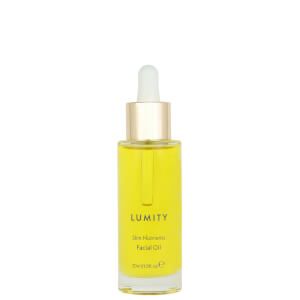
“What's Included The Lumity Skin Nutrients Facial Oil deeply nourishes, hydrates and boosts suppleness from the very first use.”
This product can help soften the skin and reduce its moisture loss with emollients and occlusives: helianthus annuus seed oil, argania spinosa kernel oil.
Keep in mind that this product does not contain effective ingredients to attract water to the upper layer of the skin. This is why an additional product with humectants like glycerin or hyaluronic acid can be helpful (apply it before this product for the best results).
Anti-aging4 ingredients credited for this claimLimited support
“Powered by 32 of the world's most nutritious plant oils and extracts, this anti-ageing facial oil quickly absorbs to support collagen and elastin production and protect your complexion from free radicals – like UV rays and pollution.”
This product does not contain ingredients that are able to reduce fine lines and wrinkles or help with skin elasticity, but it can improve the look of the skin temporarily through moisturization. Well-moisturized skin might also be able to repair the sun damage better.
This ingredient ginkgo biloba leaf extract might be able to help neutralize free radicals in skin and help it fight off some of the sun damage.
Anti-oxidationNot advertised by the brand · 15 ingredients credited for this claimModerate support
This product contains antioxidants (ginkgo biloba leaf extract) that might be able to help neutralize free radicals in skin to lessen the damage it gets from the UV light (sun). There is not enough evidence to confirm their effectiveness in skin though.
Can it cause trouble?
Irritancy13 strong irritants: Rosmarinus officinalis leaf extract, Citrus junos seed oil + 11 more — patch-test recommendedHigh risk
ComedogenicClean of flagged comedogenic ingredientsNone flagged
User reviews
Be the first — your take helps the next person decide.
Ingredients
Filter by role to see what each ingredient is doing.
Carthamus tinctorius seed oil~22–34%
- Irritation risk
- Low
An emollient that helps soften the skin and might help calm down inflammation
More about Carthamus tinctorius seed oilCamellia oleifera seed oil~4.3–6.5%
- Irritation risk
- Medium
An emollient that does not leave a greasy finish
More about Camellia oleifera seed oilPassiflora edulis seed oil~4.2–6.3%
- Irritation risk
- High
A good emollient helping to soften the skin. Might have some anti-oxidant properties. Adds a fragrance to the product
More about Passiflora edulis seed oilLimnanthes alba seed oil~3.5–5.3%
- Irritation risk
- Low
This oil's cmposition is closest to rapeseed oil. It is a very stable oil and serves as an emoillient
More about Limnanthes alba seed oilAdansonia digitata seed oil~2.7–4.1%
- Irritation risk
- Medium
Helps soften the upper layer of the skin
More about Adansonia digitata seed oilSclerocarya birrea seed oil~2–3%
- Irritation risk
- Medium
An emollient that helps to soften the skin. It has a high contetn of oleic acid that might weaken the skin barrier. Might have some anti-oxidant properties. It might be somewhat helpful against hyperpigmentation.
More about Sclerocarya birrea seed oilOenothera biennis oil~1.5–2.3%
- Irritation risk
- Medium
Helps soften the upper layer of the skin and can support skin barrier function
More about Oenothera biennis oilArgania spinosa kernel oil~1.3–1.9%
- Irritation risk
- Medium
An emollient that helps soften the upper layer of the skin. Might have some weak anti-oxidant properties
More about Argania spinosa kernel oilAleurites moluccanus seed oil~1–1.45%
- Irritation risk
- Low
Helps soften the upper layer of the skin
More about Aleurites moluccanus seed oilSimmondsia chinensis seed oil~0.8–1.2%
- Irritation risk
- Medium
Softens the upper layer of skin and helps restore the healthy skin barrier. Has shown to help calm down inflammation in skin. It is a stable oil, meaning that it retains its properties even when exposed to air.
More about Simmondsia chinensis seed oilSesamum indicum seed oil~0.45–1.05%
- Irritation risk
- Low
A good moisturizing plant oil. Due to the high linoleic acid content, it helps soften the upper layer of the skin, reduce water loss and support skin barrier function
More about Sesamum indicum seed oilHelianthus annuus seed oil~0.35–0.85%
- Irritation risk
- Low
A great emollient due to its high linoleic acid content. One of the most effective plant oils in helping skin hydration and repairing skin barrier function
More about Helianthus annuus seed oilMacadamia ternifolia seed oil~0.2–0.7%
- Irritation risk
- Medium
Plant oil from nuts that helps soften the upper layer of the skin. Contains a high concentration of oleic acid that can weaken skin's barrier function and increase water-loss while enhancing penetration of other ingredients
More about Macadamia ternifolia seed oilMauritia flexuosa fruit oil~0.1–0.45%
- Irritation risk
- Medium
Helps soften the upper layer of the skin
More about Mauritia flexuosa fruit oilRosmarinus officinalis leaf extract~0.1–0.4%
- Irritation risk
- High
Can be helpful in reducing inflammation in skin, including inflamed acne. It can be irritating
More about Rosmarinus officinalis leaf extractCitrus junos seed oil~0.15–0.6%
- Irritation risk
- High
Santalum spicata wood oil~0.1–0.4%
- Irritation risk
- High
Centella asiatica extract~0.15–0.6%
- Irritation risk
- Medium
A plant extract that has been shown to be able to reduce inflammation in skin, support restoration of skin barrier function, as well as support collagen production. Contains active compounds called centelloids: asiaticoside, madecasosside, asiatic acid and madecassic acid. Might be helpful in preventing stretch marks. It can be itself be irritating though.
More about Centella asiatica extractGinkgo biloba leaf extract~0.1–0.45%
- Irritation risk
- High
A plant extract that might help neutralize free radicals and reduce inflammation in skin. It can be irritating
More about Ginkgo biloba leaf extractEchinacea purpurea flower/leaf/stem extract~0.1–0.4%
- Irritation risk
- Low
Camellia sinensis leaf extract~0.1–0.35%
- Irritation risk
- Low
Can contain potent anti-oxidant compounds (abbreviated ECG, GCG, EGC, and EGCG) that might help protect the skin from free radicals. Can help calm down inflammation and has some anti-bacterial properties. Unfortunately, these antioxidants are unstable and lose their effectiveness very quickly in products. The concentration of the antioxidant compounds in the extract also tends to be low to be effective in topical formulation
More about Camellia sinensis leaf extractVaccinium macrocarpon fruit extract~0.1–0.3%
- Irritation risk
- High
A berry extract. Might have some anti-oxidant properties
More about Vaccinium macrocarpon fruit extractPanax ginseng root extract~0.1–0.4%
- Irritation risk
- High
A plant extract that might have some anti-inflammatory properties, but solid evidence is lacking. It can be irritating
More about Panax ginseng root extractVaccinium angustifolium fruit extract~0.05–0.25%
- Irritation risk
- Medium
A plant extract tha can have anti-oxidant properties, but evidence of effectiveness in skin is lacking
More about Vaccinium angustifolium fruit extractLycium barbarum fruit extract~0.05–0.25%
- Irritation risk
- Medium
A plant extract that can help neutralize free radicals in skin and attract water to its upper layer
More about Lycium barbarum fruit extractCinnamomum camphora linalooliferum wood oil~0.05–0.2%
- Irritation risk
- High
Litsea cubeba fruit oil~0.05–0.2%
- Irritation risk
- High
An essential oil with a lemon-like smell that is extracted from a fruit grown in Asia. Used as a fragrance
More about Litsea cubeba fruit oilCanarium commune gum oil~0.05–0.2%
- Irritation risk
- Low
Vetiveria zizanoides root oil~0.05–0.15%
- Irritation risk
- Low
Schinus terebinthifolius seed oil~0.05–0.25%
- Irritation risk
- Low
Leptospermum scoparium branch/leaf oil~0.05–0.25%
- Irritation risk
- Low
Coffea arabica seed oil~0.05–0.3%
- Irritation risk
- Medium
Might be helpful in neutralizing free radicals in skin
More about Coffea arabica seed oilLimonene~0.05–0.25%
- Irritation risk
- High
A common frangrance that can easily irritate skin, especially if exposed to air, light or heat
More about LimoneneLinalool~0.05–0.25%
Citral~0.05–0.25%
Farnesol~0.05–0.2%
Geraniol~0.05–0.2%
Isoeugenol~0.05–0.15%
- Irritation risk
- High
Citronellol~0.05–0.1%
Hexyl cinnamal~0.01–0.1%
Ingredient list view
Carthamus tinctorius seed oil, Camellia oleifera seed oil, Passiflora edulis seed oil, Limnanthes alba seed oil, Adansonia digitata seed oil, Sclerocarya birrea seed oil, Oenothera biennis oil, Argania spinosa kernel oil, Aleurites moluccanus seed oil, Simmondsia chinensis seed oil, Sesamum indicum seed oil, Helianthus annuus seed oil, Macadamia ternifolia seed oil, Mauritia flexuosa fruit oil, Rosmarinus officinalis leaf extract, Citrus junos seed oil, Santalum spicata wood oil, Centella asiatica extract, Ginkgo biloba leaf extract, Echinacea purpurea flower/leaf/stem extract, Camellia sinensis leaf extract, Vaccinium macrocarpon fruit extract, Panax ginseng root extract, Vaccinium angustifolium fruit extract, Lycium barbarum fruit extract, Cinnamomum camphora linalooliferum wood oil, Litsea cubeba fruit oil, Canarium commune gum oil, Vetiveria zizanoides root oil, Schinus terebinthifolius seed oil, Leptospermum scoparium branch/leaf oil, Coffea arabica seed oil, Limonene, Linalool, Citral, Farnesol, Geraniol, Isoeugenol, Citronellol, Hexyl cinnamal
Compare prices
Retailers ranked by price — lowest first.


Sources cited in this review
Every concentration estimate and effectiveness label is anchored to one of these 33 studies and safety reviews.
- 1
- 2
- 3
- 4
- 5
- 6Triglyceride composition of Sesamum indicum seed oilonlinelibrary.wiley.com

Affiliate links · As an Amazon Associate, WIMJ earns from qualifying purchases.