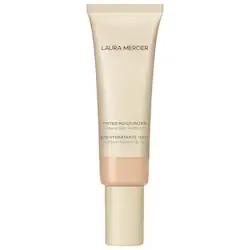
Laura Mercier Tinted Moisturizer Natural Skin Perfector
Works for
Sun protectionSPF 30 · 4 UV filtersBroad spectrum
This product offers a good level of protection against both UVB and UVA rays.
This sunscreen uses organic (so-called "chemical") sunscreen filters. Organic, or "chemical" filters usually provide reliable sun protection and rarely leave a white cast. Sunscreens with organic filters can sting eyes.
Anti-agingSide benefit the brand mentions · Magnesium aluminum silicate, Sodium ascorbateWorks well
“With SPF 30, skin will be protected from both UVB and UVA, warding off the ageing effects of the sun and softening fine lines with Glycerin.”
This product can help prevent early signs of skin aging because it offers a good level of broad spectrum sun protection. Sun damage is the main cause of premature skin aging, and protecting your skin from the sun is the best anti-aging strategy.
Evens skin toneSide benefit · Sodium ascorbateWorks well
This product offers broad spectrum sun protection. It means that it can prevent hyperpigmentation and help keep the skin tone even (sun damage is the main factor causing age spots, darkening of post-acne marks and other discolorations).
MoisturizingSide benefit the brand mentions · Dimethicone, Cyclomethicone + 6 moreWorks
“Tinted Moisturizer Natural Skin Perfector”
This product can help improve hydration of the skin with the two types of ingredients.
The first type is called “humectants”:
these ingredients help attract water.
When humectants are on the surface of the skin, they “pull in” the moisture from the outside environment, or from
within deeper layers of the skin. The following ingredients in this product do the job:
cyclomethicone, sodium hyaluronate.
This product also contains ingredients called “occlusives”. They help reduce the speed with which our skin loses moisture to the outside environment. These ingredients also help soften the upper layer of the skin, so it feels less tight and nicer to the touch. The following ingredients in this product do the job: dimethicone, cyclomethicone.
Can it cause trouble?
Irritancy10 flagged ingredients — patch-test recommendedHigh risk
Comedogenic4 ingredients rated 2 or more on the 0–5 pore-clogging scale4 flagged
User reviews
Be the first — your take helps the next person decide.
Ingredients
Filter by role to see what each ingredient is doing.
Ethylhexyl methoxycinnamate~25–30%
- Irritation risk
- High
Octinoxate. When used in higher concentrations, works as a sunscreen protecting the skin from UVB rays. When used in lower concentration, helps to preserve the product formulation. Is shown to be harmful to coral reefs - consider avoiding bathing in coral reef areas when wearing a product with this ingredient. It can be irritating
More about Ethylhexyl methoxycinnamateMenthyl anthranilate~4.2–5.1%
- Irritation risk
- Medium
Meradimate. A UV filter. Is effectives against UVA rays, but due to its chemical properties, it can lead to increase in free radicals. This is why the ingredients is almost never used in cosmetics, despite being approved by the FDA
More about Menthyl anthranilateWater~4.9–6%
Cetearyl alcohol~3.4–4.2%
- Irritation risk
- Low
- Comedogenicity
- 2/5
A non-drying alcohol. Works as an emollient. Helps water and oil mix together and creates a nice product texture
More about Cetearyl alcoholPeg-40 castor oil~2.9–3.6%
- Irritation risk
- Medium
Helps oil and water mix together
More about Peg-40 castor oilDimethicone~2.5–3%
- Irritation risk
- Low
A silicone that helps to reduce water loss from the surface of the skin. Can temporarily "fill in" lines and wrinkles, absorb oil, and create a nice product finish
More about DimethiconePolyglyceryl-4 isostearate~1.7–2.1%
- Irritation risk
- Medium
Helps water and oil mix together
More about Polyglyceryl-4 isostearateCyclomethicone~1.4–1.7%
- Irritation risk
- Low
A type of silicone that leaves a nice silky finish on the skin and can help soften its upper layer
More about CyclomethiconeDea-cetyl phosphate~1.2–1.4%
- Irritation risk
- Low
Hexyl laurate~1–1.3%
- Irritation risk
- Medium
Helps soften the upper layer of the skin and create a nice product consistency
More about Hexyl laurateTocopheryl acetate~0.8–1.15%
- Irritation risk
- Medium
A more stable but less bio-available form of vitamin E compared to Tocopherol. Might help moisturize and protect the skin from free radicals, but mostly used in low concentrations to stabilize other ingredients.
More about Tocopheryl acetateSodium dehydroacetate~0.3–0.6%
Sodium hyaluronate~0.55–0.85%
- Irritation risk
- Low
One of the best moisturizing ingredients. Attracts water into the upper layer of the skin
More about Sodium hyaluronateAllantoin~0.5–0.8%
- Irritation risk
- Low
Helps calm down inflammation in skin and can help reduce itching. Helps to repair the skin barrier and keep skin hydrated
More about AllantoinCarbomer~0.5–0.8%
- Irritation risk
- Low
Helps create a thicker or gel-like product texture. It is not a surfactant but can be used in gentle cleansing formulations
More about CarbomerMethylparaben~0.15–0.3%
Magnesium aluminum silicate~0.5–0.75%
- Irritation risk
- Low
Might be helpful in restoring skin barrier function and, when combined with zinc carbonate and malonic acid, reducing fine lines and wrinkles by stimulating elastin production. Also helps stabilize the product formulation
More about Magnesium aluminum silicateSodium ascorbate~0.55–0.8%
Propylparaben~0.2–0.4%
Titanium dioxide~0.5–0.7%
- Irritation risk
- Low
Works as a UV filter when used in high concentrations. It is photostable and is effective mostly against the UVB light, with some protection in the UVA range. In small concentrations, used for its ability to improve the color of cosmetic products. Is usually well tolerated by the skin
More about Titanium dioxideIron oxides~0.35–0.65%
- Irritation risk
- Low
An umbrella term for the following three colorants: CI 77491, CI 77492, CI 77499. They might be able to offer some protection against visible light, but the degree of the protection is not clear
More about Iron oxidesMica~0.35–0.6%
- Irritation risk
- Low
Creates an illusion of smoother and more radiant skin tone. Adds shimmer to the skin by reflecting light
More about MicaEthylhexyl methoxycinnamate~0.5–0.75%
- Irritation risk
- High
Octinoxate. When used in higher concentrations, works as a sunscreen protecting the skin from UVB rays. When used in lower concentration, helps to preserve the product formulation. Is shown to be harmful to coral reefs - consider avoiding bathing in coral reef areas when wearing a product with this ingredient. It can be irritating
More about Ethylhexyl methoxycinnamateButyl methoxydibenzoylmethane~0.5–0.75%
- Irritation risk
- Medium
Avobenzone. An organic, or so-called "chemical" UV filter. Protects against both UVA and UVB rays. Needs to be combined with other filters in a formulation to be stable.
More about Butyl methoxydibenzoylmethaneWater~0.3–0.55%
Cetearyl alcohol~0.45–0.65%
- Irritation risk
- Low
- Comedogenicity
- 2/5
A non-drying alcohol. Works as an emollient. Helps water and oil mix together and creates a nice product texture
More about Cetearyl alcoholPeg-40 castor oil~0.3–0.6%
- Irritation risk
- Medium
Helps oil and water mix together
More about Peg-40 castor oilDimethicone~0.45–0.65%
- Irritation risk
- Low
A silicone that helps to reduce water loss from the surface of the skin. Can temporarily "fill in" lines and wrinkles, absorb oil, and create a nice product finish
More about DimethiconePolyglyceryl-4 isostearate~0.3–0.6%
- Irritation risk
- Medium
Helps water and oil mix together
More about Polyglyceryl-4 isostearateCyclomethicone~0.35–0.65%
- Irritation risk
- Low
A type of silicone that leaves a nice silky finish on the skin and can help soften its upper layer
More about CyclomethiconePotassium cetyl phosphate~0.3–0.6%
- Irritation risk
- Medium
Helps oil and water mix together
More about Potassium cetyl phosphateHexyl laurate~0.35–0.65%
- Irritation risk
- Medium
Helps soften the upper layer of the skin and create a nice product consistency
More about Hexyl laurateDromiceius oil~0.4–0.6%
- Irritation risk
- Low
Tocopheryl acetate~0.45–0.65%
- Irritation risk
- Medium
A more stable but less bio-available form of vitamin E compared to Tocopherol. Might help moisturize and protect the skin from free radicals, but mostly used in low concentrations to stabilize other ingredients.
More about Tocopheryl acetateCetyl peg/ppg-10/1 dimethicone~0.3–0.55%
- Irritation risk
- Low
A type of silicone that helps water and oil mix together. Can help to soften upper layer of the skin
More about Cetyl peg/ppg-10/1 dimethiconePolysorbate 60~0.3–0.6%
Hydrogenated polyisobutene~0.35–0.65%
- Irritation risk
- Low
Used to improve the product consistency and soften the upper layer of the skin
More about Hydrogenated polyisobutenePeg-15 cocamine~0.3–0.6%
Phenoxyethanol~0.3–0.55%
- Irritation risk
- Low
A preservative. It helps prevent bacterial growth in cosmetic products
More about PhenoxyethanolSodium dehydroacetate~0.3–0.55%
Sodium hyaluronate~0.3–0.5%
- Irritation risk
- Low
One of the best moisturizing ingredients. Attracts water into the upper layer of the skin
More about Sodium hyaluronateAllantoin~0.25–0.5%
- Irritation risk
- Low
Helps calm down inflammation in skin and can help reduce itching. Helps to repair the skin barrier and keep skin hydrated
More about AllantoinCarbomer~0.3–0.55%
- Irritation risk
- Low
Helps create a thicker or gel-like product texture. It is not a surfactant but can be used in gentle cleansing formulations
More about CarbomerAminomethyl propanol~0.3–0.55%
Methylparaben~0.15–0.3%
Magnesium aluminum silicate~0.3–0.55%
- Irritation risk
- Low
Might be helpful in restoring skin barrier function and, when combined with zinc carbonate and malonic acid, reducing fine lines and wrinkles by stimulating elastin production. Also helps stabilize the product formulation
More about Magnesium aluminum silicateSodium ascorbate~0.4–0.65%
Isopropylparaben~0.2–0.4%
- Irritation risk
- Low
Isobutylparaben~0.3–0.55%
Butylparaben~0.2–0.4%
Propylparaben~0.2–0.4%
Titanium dioxide~0.45–0.65%
- Irritation risk
- Low
Works as a UV filter when used in high concentrations. It is photostable and is effective mostly against the UVB light, with some protection in the UVA range. In small concentrations, used for its ability to improve the color of cosmetic products. Is usually well tolerated by the skin
More about Titanium dioxideIron oxides~0.3–0.5%
- Irritation risk
- Low
An umbrella term for the following three colorants: CI 77491, CI 77492, CI 77499. They might be able to offer some protection against visible light, but the degree of the protection is not clear
More about Iron oxidesMica~0.3–0.6%
- Irritation risk
- Low
Creates an illusion of smoother and more radiant skin tone. Adds shimmer to the skin by reflecting light
More about MicaEthylhexyl methoxycinnamate~0.5–0.75%
- Irritation risk
- High
Octinoxate. When used in higher concentrations, works as a sunscreen protecting the skin from UVB rays. When used in lower concentration, helps to preserve the product formulation. Is shown to be harmful to coral reefs - consider avoiding bathing in coral reef areas when wearing a product with this ingredient. It can be irritating
More about Ethylhexyl methoxycinnamateButyl methoxydibenzoylmethane~0.5–0.75%
- Irritation risk
- Medium
Avobenzone. An organic, or so-called "chemical" UV filter. Protects against both UVA and UVB rays. Needs to be combined with other filters in a formulation to be stable.
More about Butyl methoxydibenzoylmethaneWater~0.3–0.55%
Cetearyl alcohol~0.4–0.65%
- Irritation risk
- Low
- Comedogenicity
- 2/5
A non-drying alcohol. Works as an emollient. Helps water and oil mix together and creates a nice product texture
More about Cetearyl alcoholPeg-40 castor oil~0.3–0.6%
- Irritation risk
- Medium
Helps oil and water mix together
More about Peg-40 castor oilDimethicone~0.45–0.65%
- Irritation risk
- Low
A silicone that helps to reduce water loss from the surface of the skin. Can temporarily "fill in" lines and wrinkles, absorb oil, and create a nice product finish
More about DimethiconePolyglyceryl-4 isostearate~0.3–0.6%
- Irritation risk
- Medium
Helps water and oil mix together
More about Polyglyceryl-4 isostearateCyclomethicone~0.35–0.65%
- Irritation risk
- Low
A type of silicone that leaves a nice silky finish on the skin and can help soften its upper layer
More about CyclomethiconePotassium cetyl phosphate~0.3–0.6%
- Irritation risk
- Medium
Helps oil and water mix together
More about Potassium cetyl phosphateHexyl laurate~0.35–0.65%
- Irritation risk
- Medium
Helps soften the upper layer of the skin and create a nice product consistency
More about Hexyl laurateDromiceius oil~0.4–0.6%
- Irritation risk
- Low
Tocopheryl acetate~0.45–0.65%
- Irritation risk
- Medium
A more stable but less bio-available form of vitamin E compared to Tocopherol. Might help moisturize and protect the skin from free radicals, but mostly used in low concentrations to stabilize other ingredients.
More about Tocopheryl acetateCetyl peg/ppg-10/1 dimethicone~0.3–0.55%
- Irritation risk
- Low
A type of silicone that helps water and oil mix together. Can help to soften upper layer of the skin
More about Cetyl peg/ppg-10/1 dimethiconePolysorbate 60~0.3–0.6%
Hydrogenated polyisobutene~0.35–0.65%
- Irritation risk
- Low
Used to improve the product consistency and soften the upper layer of the skin
More about Hydrogenated polyisobutenePeg-15 cocamine~0.3–0.6%
Phenoxyethanol~0.3–0.55%
- Irritation risk
- Low
A preservative. It helps prevent bacterial growth in cosmetic products
More about PhenoxyethanolSodium dehydroacetate~0.3–0.55%
Sodium hyaluronate~0.3–0.5%
- Irritation risk
- Low
One of the best moisturizing ingredients. Attracts water into the upper layer of the skin
More about Sodium hyaluronateAllantoin~0.25–0.5%
- Irritation risk
- Low
Helps calm down inflammation in skin and can help reduce itching. Helps to repair the skin barrier and keep skin hydrated
More about AllantoinCarbomer~0.3–0.55%
- Irritation risk
- Low
Helps create a thicker or gel-like product texture. It is not a surfactant but can be used in gentle cleansing formulations
More about CarbomerAminomethyl propanol~0.3–0.55%
Methylparaben~0.15–0.3%
Magnesium aluminum silicate~0.35–0.65%
- Irritation risk
- Low
Might be helpful in restoring skin barrier function and, when combined with zinc carbonate and malonic acid, reducing fine lines and wrinkles by stimulating elastin production. Also helps stabilize the product formulation
More about Magnesium aluminum silicateSodium ascorbate~0.45–0.7%
Isopropylparaben~0.2–0.4%
- Irritation risk
- Low
Isobutylparaben~0.3–0.6%
Butylparaben~0.2–0.4%
Propylparaben~0.2–0.4%
Titanium dioxide~0.45–0.7%
- Irritation risk
- Low
Works as a UV filter when used in high concentrations. It is photostable and is effective mostly against the UVB light, with some protection in the UVA range. In small concentrations, used for its ability to improve the color of cosmetic products. Is usually well tolerated by the skin
More about Titanium dioxideCi 77492~0.3–0.6%
Ci 77491~0.3–0.6%
- Irritation risk
- Low
A red colorant made of iron oxide. Typically is not irritating
More about Ci 77491Ci 77499~0.3–0.6%
Mica~0.4–0.6%
- Irritation risk
- Low
Creates an illusion of smoother and more radiant skin tone. Adds shimmer to the skin by reflecting light
More about MicaEthylhexyl methoxycinnamate~0.55–0.8%
- Irritation risk
- High
Octinoxate. When used in higher concentrations, works as a sunscreen protecting the skin from UVB rays. When used in lower concentration, helps to preserve the product formulation. Is shown to be harmful to coral reefs - consider avoiding bathing in coral reef areas when wearing a product with this ingredient. It can be irritating
More about Ethylhexyl methoxycinnamateButyl methoxydibenzoylmethane~0.55–0.8%
- Irritation risk
- Medium
Avobenzone. An organic, or so-called "chemical" UV filter. Protects against both UVA and UVB rays. Needs to be combined with other filters in a formulation to be stable.
More about Butyl methoxydibenzoylmethaneWater~0.3–0.6%
Cetearyl alcohol~0.45–0.7%
- Irritation risk
- Low
- Comedogenicity
- 2/5
A non-drying alcohol. Works as an emollient. Helps water and oil mix together and creates a nice product texture
More about Cetearyl alcoholPeg-40 castor oil~0.35–0.65%
- Irritation risk
- Medium
Helps oil and water mix together
More about Peg-40 castor oilDimethicone~0.45–0.7%
- Irritation risk
- Low
A silicone that helps to reduce water loss from the surface of the skin. Can temporarily "fill in" lines and wrinkles, absorb oil, and create a nice product finish
More about DimethiconePolyglyceryl-4 isostearate~0.35–0.65%
- Irritation risk
- Medium
Helps water and oil mix together
More about Polyglyceryl-4 isostearateCyclomethicone~0.45–0.65%
- Irritation risk
- Low
A type of silicone that leaves a nice silky finish on the skin and can help soften its upper layer
More about CyclomethiconePotassium cetyl phosphate~0.35–0.65%
- Irritation risk
- Medium
Helps oil and water mix together
More about Potassium cetyl phosphateHexyl laurate~0.45–0.65%
- Irritation risk
- Medium
Helps soften the upper layer of the skin and create a nice product consistency
More about Hexyl laurateDromiceius oil~0.45–0.65%
- Irritation risk
- Low
Tocopheryl acetate~0.45–0.7%
- Irritation risk
- Medium
A more stable but less bio-available form of vitamin E compared to Tocopherol. Might help moisturize and protect the skin from free radicals, but mostly used in low concentrations to stabilize other ingredients.
More about Tocopheryl acetateCetyl peg/ppg-10/1 dimethicone~0.35–0.6%
- Irritation risk
- Low
A type of silicone that helps water and oil mix together. Can help to soften upper layer of the skin
More about Cetyl peg/ppg-10/1 dimethiconePolysorbate 60~0.35–0.65%
Hydrogenated polyisobutene~0.45–0.65%
- Irritation risk
- Low
Used to improve the product consistency and soften the upper layer of the skin
More about Hydrogenated polyisobutenePeg-15 cocamine~0.35–0.65%
Phenoxyethanol~0.35–0.6%
- Irritation risk
- Low
A preservative. It helps prevent bacterial growth in cosmetic products
More about PhenoxyethanolSodium dehydroacetate~0.3–0.6%
Sodium hyaluronate~0.3–0.55%
- Irritation risk
- Low
One of the best moisturizing ingredients. Attracts water into the upper layer of the skin
More about Sodium hyaluronateAllantoin~0.2–0.4%
- Irritation risk
- Low
Helps calm down inflammation in skin and can help reduce itching. Helps to repair the skin barrier and keep skin hydrated
More about AllantoinCarbomer~0.2–0.4%
- Irritation risk
- Low
Helps create a thicker or gel-like product texture. It is not a surfactant but can be used in gentle cleansing formulations
More about CarbomerAminomethyl propanol~0.2–0.4%
Methylparaben~0.15–0.3%
Magnesium aluminum silicate~0.3–0.6%
- Irritation risk
- Low
Might be helpful in restoring skin barrier function and, when combined with zinc carbonate and malonic acid, reducing fine lines and wrinkles by stimulating elastin production. Also helps stabilize the product formulation
More about Magnesium aluminum silicateSodium ascorbate~0.3–0.55%
Isopropylparaben~0.2–0.4%
- Irritation risk
- Low
Isobutylparaben~0.25–0.4%
Butylparaben~0.2–0.35%
Propylparaben~0.15–0.25%
Titanium dioxide~0.25–0.5%
- Irritation risk
- Low
Works as a UV filter when used in high concentrations. It is photostable and is effective mostly against the UVB light, with some protection in the UVA range. In small concentrations, used for its ability to improve the color of cosmetic products. Is usually well tolerated by the skin
More about Titanium dioxideIron oxides~0.15–0.25%
- Irritation risk
- Low
An umbrella term for the following three colorants: CI 77491, CI 77492, CI 77499. They might be able to offer some protection against visible light, but the degree of the protection is not clear
More about Iron oxidesMica~0.15–0.25%
- Irritation risk
- Low
Creates an illusion of smoother and more radiant skin tone. Adds shimmer to the skin by reflecting light
More about MicaIngredient list view
Ethylhexyl methoxycinnamate, Menthyl anthranilate, Water, Cetearyl alcohol, Peg-40 castor oil, Dimethicone, Polyglyceryl-4 isostearate, Cyclomethicone, Dea-cetyl phosphate, Hexyl laurate, Tocopheryl acetate, Sodium dehydroacetate, Sodium hyaluronate, Allantoin, Carbomer, Methylparaben, Magnesium aluminum silicate, Sodium ascorbate, Propylparaben, Titanium dioxide, Iron oxides, Mica, Ethylhexyl methoxycinnamate, Butyl methoxydibenzoylmethane, Water, Cetearyl alcohol, Peg-40 castor oil, Dimethicone, Polyglyceryl-4 isostearate, Cyclomethicone, Potassium cetyl phosphate, Hexyl laurate, Dromiceius oil, Tocopheryl acetate, Cetyl peg/ppg-10/1 dimethicone, Polysorbate 60, Hydrogenated polyisobutene, Peg-15 cocamine, Phenoxyethanol, Sodium dehydroacetate, Sodium hyaluronate, Allantoin, Carbomer, Aminomethyl propanol, Methylparaben, Magnesium aluminum silicate, Sodium ascorbate, Isopropylparaben, Isobutylparaben, Butylparaben, Propylparaben, Titanium dioxide, Iron oxides, Mica, Ethylhexyl methoxycinnamate, Butyl methoxydibenzoylmethane, Water, Cetearyl alcohol, Peg-40 castor oil, Dimethicone, Polyglyceryl-4 isostearate, Cyclomethicone, Potassium cetyl phosphate, Hexyl laurate, Dromiceius oil, Tocopheryl acetate, Cetyl peg/ppg-10/1 dimethicone, Polysorbate 60, Hydrogenated polyisobutene, Peg-15 cocamine, Phenoxyethanol, Sodium dehydroacetate, Sodium hyaluronate, Allantoin, Carbomer, Aminomethyl propanol, Methylparaben, Magnesium aluminum silicate, Sodium ascorbate, Isopropylparaben, Isobutylparaben, Butylparaben, Propylparaben, Titanium dioxide, Ci 77492, Ci 77491, Ci 77499, Mica, Ethylhexyl methoxycinnamate, Butyl methoxydibenzoylmethane, Water, Cetearyl alcohol, Peg-40 castor oil, Dimethicone, Polyglyceryl-4 isostearate, Cyclomethicone, Potassium cetyl phosphate, Hexyl laurate, Dromiceius oil, Tocopheryl acetate, Cetyl peg/ppg-10/1 dimethicone, Polysorbate 60, Hydrogenated polyisobutene, Peg-15 cocamine, Phenoxyethanol, Sodium dehydroacetate, Sodium hyaluronate, Allantoin, Carbomer, Aminomethyl propanol, Methylparaben, Magnesium aluminum silicate, Sodium ascorbate, Isopropylparaben, Isobutylparaben, Butylparaben, Propylparaben, Titanium dioxide, Iron oxides, Mica
Worth comparing, line by line.
Match % combines shared ingredients, the first five ingredients, shared actives and hero ingredients, irritancy (lower counts in the alternative's favour), texture and body area. Only products in the same routine step are compared.
| Laura MercierTinted Moisturizer Natural Skin PerfectorYOUR PRODUCT | CHUDASheer Hydrating Lotion Broad Spectrum SPF 30 | ISDINFotoprotector Fusion Water Color SPF50 | Natura BisséDiamond Cocoon Sheer Cream SPF 30 | |
|---|---|---|---|---|
| Match | — | 41% | 40% | 39% |
| Price | $27.00 | $70.00+$43.00 | $23.13−$3.87 | $263.21+$236.21 |
| Shared key ingredients | — | 4 of 9 | 6 of 9 | 4 of 9 |
| Key difference | — | Panthenol | Uvinul T | Tripeptide-1 |
| Irritancy | High | Medium | Medium | Medium |
| SPF | SPF 30 | SPF 30 | SPF 50 | SPF 30 |
| Drying alcohol | — | — | — | — |
| View product | Shop | Shop | Shop |


More alternatives: Payot CC Expert Corrective Cream SPF 50+CeraVe Skin Renewing Day Cream SPF 30
Product summary
Based on the ingredient list, we assess that "Laura Mercier - Tinted Moisturizer Natural Skin Perfector" can provide reliable sun protection. We love that it can protect from both UVA and UVB rays (not all sunscreens with SPF ratings give UVA protection. UVA rays do not cause sunburn, but still damage our skin and lead to early aging).
Its formula is also hydrating, so you might not need an additional moistruizer during the day. Like all broad-spectrum sunscreens, this product has an anti-aging benefit.
Sunscreen filters
This sunscreen uses so-called "chemical", or organic UV filters (organic simply means that their molecules contain atoms of carbon). These filters typically give good sun protection and rarely leave a white cast, but they can be irritating for sensitive skin. The UV filters in this sunscreen are: oxybenzone 1.00% (declared), avobenzone 2.50% (declared), octinoxate 7.49% (declared) and octocrylene 2.00% (declared).
Irritation risk
There are actives in this product that can be irritating. We assess the overall irritancy of this moisturizer to be medium. For a detailed overview of all potential irritants: click here
You can see the detailed formula review with the breakdown of all actives in the product and the full ingredient list with estimated concentrations in the tables below.
Price
The product retails from 49.00$ up to 69.95$ in the United States, for 239.77A$ in Australia, from 16.15£ up to 55.72£ in the United Kingdom, from 33.00CA$ up to 63.00CA$ in Canada and for 440.00HK$ in Hong Kong.
For a detailed price comparison: click here.
Sources cited in this review
Every concentration estimate and effectiveness label is anchored to one of these 11 studies and safety reviews.
- 1
- 2
- 3Final Report on the Safety Assessment of Dimethicone Copolyoljournals.sagepub.com
- 4
- 5Hyaluronic acid: A key molecule in skin agingncbi.nlm.nih.gov
- 6
