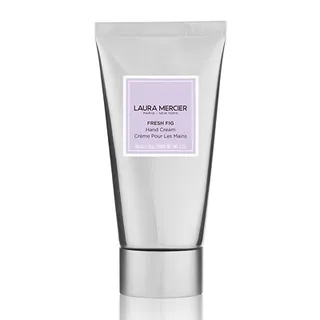
Works for
MoisturizingPanthenol, Caprylic/capric triglyceride + 19 moreWorks well
“This deeply moisturizing Hand Crème continues to nourish the hands well after it is absorbed into the skin.”
This product can help improve hydration of the skin with the two types of ingredients.
The first type is called “humectants”:
these ingredients help attract water.
When humectants are on the surface of the skin, they “pull in” the moisture from the outside environment, or from
within deeper layers of the skin. The following ingredients in this product do the job:
glycerin, sodium hyaluronate.
This product also contains ingredients called “occlusives”. They help reduce the speed with which our skin loses moisture to the outside environment. These ingredients also help soften the upper layer of the skin, so it feels less tight and nicer to the touch. The following ingredients in this product do the job: caprylic/capric triglyceride, myristyl myristate.
The following ingredients in this product are especially good for supporting the skin barrier and helping with the hydration level: panthenol
Anti-oxidationSide benefit · Ficus carica fruit extract, Vitis vinifera seed oil + 5 moreMay help
This product contains antioxidants (ficus carica fruit extract) that might be able to help neutralize free radicals in skin to lessen the damage it gets from the UV light (sun). There is not enough evidence to confirm their effectiveness in skin though.
Can it cause trouble?
Irritancy7 strong irritants: Parfum, Vanilla planifolia fruit extract + 5 more — patch-test recommendedHigh risk
Comedogenic5 ingredients rated 2 or more on the 0–5 pore-clogging scale5 flagged

User reviews
Be the first — your take helps the next person decide.
Ingredients
Filter by role to see what each ingredient is doing.
Water~45–55%
Caprylic/capric triglyceride~6–7.4%
- Irritation risk
- Medium
A good mix of fatty acids that forms a protective layer on the skin. Improves the shelf life of products. Derived from coconut and glycerin
More about Caprylic/capric triglycerideGlycerin~4.1–5.1%
- Irritation risk
- Low
One of the best moisturizing ingredients. Naturally present in skin. It attracts water to the upper layer of the skin working as a humectant
More about GlycerinC12-15 alkyl benzoate~3.2–3.9%
- Irritation risk
- Low
Enhances the product texture and makes it more spreadable. Helps reduce water loss from the outer layer of skin. Extands the shelf life by preventing bacteria growth
More about C12-15 alkyl benzoateParfum~1.9–2.3%
- Irritation risk
- High
An aromatic blend of unspecified and possibly irritating ingredients
More about ParfumCetearyl alcohol~1.9–2.4%
- Irritation risk
- Low
- Comedogenicity
- 2/5
A non-drying alcohol. Works as an emollient. Helps water and oil mix together and creates a nice product texture
More about Cetearyl alcoholGlyceryl stearate~1.6–2%
- Irritation risk
- Low
An emollient that softens the skin and forms a protective layer on its surface. Helps water and oil mix together
More about Glyceryl stearatePeg-100 stearate~1.5–1.8%
- Irritation risk
- Low
Helps oil and water mix togehter and creates a nice product texture
More about Peg-100 stearateMyristyl myristate~1.3–1.6%
- Irritation risk
- Medium
- Comedogenicity
- 3/5
An emollient. Is not recommended for acne-prone skin as it can be comedogenic
More about Myristyl myristateHydrogenated vegetable oil~0.95–1.15%
- Irritation risk
- Low
- Comedogenicity
- 2/5
An oil from a mixture of different vegetables. Helps soften the upper layer of the skin
More about Hydrogenated vegetable oilButylene glycol~0.65–0.95%
- Irritation risk
- Low
Used to create a nice product texture and help delivery of other ingredients. Might be somewhat helpful in attracting water to the upper layer of the skin
More about Butylene glycolIsododecane~0.55–0.8%
- Irritation risk
- Low
An emollient that helps soften the skin and can decrease moisture loss. Helps create a nice product texture
More about IsododecaneJojoba esters~0.5–0.75%
- Irritation risk
- Medium
An emollient made of jojoba oil. Helps soften the skin and support its barrier function
More about Jojoba estersButyrospermum parkii butter~0.5–0.7%
- Irritation risk
- Low
- Comedogenicity
- 3/5
A great moisturising ingredient that softens the skin and reduces water loss from its upper layer. It also can be helpful in protecting skin from free radicals
More about Butyrospermum parkii butterVitis vinifera seed oil~0.45–0.65%
- Irritation risk
- Medium
A great emollient that can also have anti-oxidant properties
More about Vitis vinifera seed oilOlea europaea fruit oil~0.4–0.6%
- Irritation risk
- Medium
An emollient that helps soften the skin but is not effective for restoring its barrier function. Might be helpful to calm down inflammation
More about Olea europaea fruit oilAluminum starch octenylsuccinate~0.35–0.6%
- Irritation risk
- Medium
Used to thicken the product's consistency
More about Aluminum starch octenylsuccinateAloe barbadensis leaf juice~0.3–0.55%
- Irritation risk
- Medium
Traditionally used to treat sunburns, dermatitis and inflammation, but evidence for its effectiveness is lacking. The extract can contain humectants that help attract water into the skin
More about Aloe barbadensis leaf juiceAmmonium acryloyldimethyltaurate/vp copolymer~0.3–0.5%
- Irritation risk
- Low
Increases thickness of a product. Texture enhancer for oil-in-water emulsions
More about Ammonium acryloyldimethyltaurate/vp copolymerPanthenol~0.25–0.5%
- Irritation risk
- Low
Helps attract water to the upper layer of the skin and can help improve skin barrier function
More about PanthenolSodium hyaluronate~0.25–0.45%
- Irritation risk
- Low
One of the best moisturizing ingredients. Attracts water into the upper layer of the skin
More about Sodium hyaluronateFicus carica fruit extract~0.25–0.45%
- Irritation risk
- Medium
A plant extract that can help neutralize free radicals. The concentrations typically used in cosmetics are too small to have an effect
More about Ficus carica fruit extractVanilla planifolia fruit extract~0.2–0.4%
- Irritation risk
- High
A plant extract used as a fragrance. Can be irritating
More about Vanilla planifolia fruit extractTheobroma cacao extract~0.2–0.4%
- Irritation risk
- Low
- Comedogenicity
- 3/5
Cinnamomum zeylanicum bark extract~0.2–0.4%
- Irritation risk
- High
Coffea arabica seed extract~0.2–0.4%
- Irritation risk
- Low
Might be helpful in neutralizing free radicals in skin
More about Coffea arabica seed extractMyristica fragrans extract~0.2–0.4%
- Irritation risk
- Low
Honey extract~0.2–0.4%
- Irritation risk
- Medium
Helps attract water to the upper layer of the skin
More about Honey extractPrunus amygdalus dulcis protein~0.2–0.4%
- Irritation risk
- Low
Hydrolyzed soy protein~0.2–0.4%
- Irritation risk
- Low
Helps attract water to the upper layer of the skin. Might have some anti-aging, anti-oxidant, and skin lightening properties, but solid evidence is missing
More about Hydrolyzed soy proteinHydrolyzed rice protein~0.2–0.4%
- Irritation risk
- Low
Helps attract water to the upper layer of the skin. Might have some anti-oxidant properties
More about Hydrolyzed rice proteinTocopheryl acetate~0.25–0.45%
- Irritation risk
- Medium
A more stable but less bio-available form of vitamin E compared to Tocopherol. Might help moisturize and protect the skin from free radicals, but mostly used in low concentrations to stabilize other ingredients.
More about Tocopheryl acetateSteareth-2~0.25–0.45%
Cetyl alcohol~0.25–0.5%
- Irritation risk
- Low
A non-drying alcohol that works to soften the skin and stabilize product formulations helping oil and water mix together
More about Cetyl alcoholStearyl alcohol~0.25–0.5%
- Irritation risk
- Low
An emollient that helps soften the skin
More about Stearyl alcoholXanthan gum~0.25–0.4%
- Irritation risk
- Low
Used to create a thicker product consistency
More about Xanthan gumPentaerythrityl tetra-di-t-butyl hydroxyhydrocinnamate~0.25–0.45%
- Irritation risk
- Low
Used to increase stability of product formulations
More about Pentaerythrityl tetra-di-t-butyl hydroxyhydrocinnamateBenzophenone-4~0.4–0.6%
- Irritation risk
- High
Sulisobenzone. A UV filter. Is typically used to improve the product stability under exposure to UV light. It is effective against both UVA and UVB rays. It can be used is larger concentrations as a sun protection ingredient for the skin, but can be irritating
More about Benzophenone-4Aminomethyl propanol~0.2–0.4%
Bht~0.2–0.4%
Disodium edta~0.2–0.35%
Caprylyl glycol~0.2–0.4%
- Irritation risk
- Medium
Helps preserve products and creates a nice product texture
More about Caprylyl glycolSorbic acid~0.2–0.35%
Chlorphenesin~0.15–0.3%
Phenoxyethanol~0.2–0.35%
- Irritation risk
- Low
A preservative. It helps prevent bacterial growth in cosmetic products
More about PhenoxyethanolBenzyl benzoate~0.15–0.25%
- Irritation risk
- High
Fragrance with sweet balsamic smell. Help to preserve products and dissolve other ingredients. Could trigger allergic reactions and be irritating
More about Benzyl benzoateCoumarin~0.15–0.25%
Linalool~0.1–0.2%
Ci 60730~0.1–0.2%
- Irritation risk
- Low
Ci 14700~0.05–0.1%
Ci 17200~0.05–0.1%
Ingredient list view
Water, Caprylic/capric triglyceride, Glycerin, C12-15 alkyl benzoate, Parfum, Cetearyl alcohol, Glyceryl stearate, Peg-100 stearate, Myristyl myristate, Hydrogenated vegetable oil, Butylene glycol, Isododecane, Jojoba esters, Butyrospermum parkii butter, Vitis vinifera seed oil, Olea europaea fruit oil, Aluminum starch octenylsuccinate, Aloe barbadensis leaf juice, Ammonium acryloyldimethyltaurate/vp copolymer, Panthenol, Sodium hyaluronate, Ficus carica fruit extract, Vanilla planifolia fruit extract, Theobroma cacao extract, Cinnamomum zeylanicum bark extract, Coffea arabica seed extract, Myristica fragrans extract, Honey extract, Prunus amygdalus dulcis protein, Hydrolyzed soy protein, Hydrolyzed rice protein, Tocopheryl acetate, Steareth-2, Cetyl alcohol, Stearyl alcohol, Xanthan gum, Pentaerythrityl tetra-di-t-butyl hydroxyhydrocinnamate, Benzophenone-4, Aminomethyl propanol, Bht, Disodium edta, Caprylyl glycol, Sorbic acid, Chlorphenesin, Phenoxyethanol, Benzyl benzoate, Coumarin, Linalool, Ci 60730, Ci 14700, Ci 17200
Compare prices
Retailers ranked by price — lowest first.
Worth comparing, line by line.
Match % combines shared ingredients, the first five ingredients, shared actives and hero ingredients, irritancy (lower counts in the alternative's favour), texture and body area. Only products in the same routine step are compared.
| Laura MercierFresh Fig Hand CrmeYOUR PRODUCT | OribeCôte d'Azur Nourishing Hand Créme | La ChênaieRepairing Hand Balm | Elizabeth GrantIntensive Hand & Foot Cream | |
|---|---|---|---|---|
| Match | — | 56% | 56% | 56% |
| Price | — | $57.12 | $12.24 | $29.00 |
| Shared key ingredients | — | 6 of 10 | 5 of 10 | 5 of 10 |
| Key difference | — | Meadowfoam Seed Oil | — | Lanolin |
| Irritancy | High | High | Medium | Medium |
| Drying alcohol | — | — | — | — |
| View product | Shop | Shop | Shop |


More alternatives: Klairs Daily Comfort Hand CreamDerma E Vitamin E Fragrance-Free Therapeutic Shea Hand Repair Cream
Sources cited in this review
Every concentration estimate and effectiveness label is anchored to one of these 15 studies and safety reviews.
- 1
- 2Use of “natural” oils for moisturization: Review of olive, coconut, and sunflower seed oilonlinelibrary.wiley.com
- 3Skin moisturizing effects of panthenol-based formulationspdfs.semanticscholar.org
- 4
- 5Hyaluronic acid: A key molecule in skin agingncbi.nlm.nih.gov
- 6

Affiliate links · As an Amazon Associate, WIMJ earns from qualifying purchases.