Works for:
based on ingredients and %- Moisturizing
- Anti-oxidation
Doesn't work for:
based on ingredients and %- Anti-aging
Can it cause trouble?
- Irritation risk: high
- Comedogenic risk ingredients: 0
Key actives
Anti-oxidation
This product contains antioxidants (lycium barbarum fruit extract) that might be able to help neutralize free radicals in skin to lessen the damage it gets from the UV light (sun). There is not enough evidence to confirm their effectiveness in skin though.
A plant extract that can help neutralize free radicals in skin and attract water to its upper layer
Pure form of vitamin E. Can help moisturise and protect the skin from free radicals. Often used to help stabilise other ingredients or the formula itself
A vitamin C derivative that is more stable but less potent than pure form of vitamin C. Has a potential to boost collagen production, nutralise free radicals and reduce hyperpigmentation, but the required concentration is likely to be much higher than for the pure form of vitamin C, limiting the ingredient's effectiveness in products
A more stable but less bio-available form of vitamin E compared to Tocopherol. Might help moisturize and protect the skin from free radicals, but mostly used in low concentrations to stabilize other ingredients.
Moisturizing
What does the product description say?
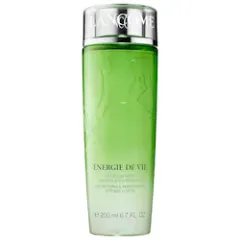
nergie De Vie Refining & Invigorating Intense Lotion
Source: From product name
This product contains good ingredients to attract water to the upper layer of the skin. These ingredients are called "humectants": glycerin, sodium hyaluronate.
When humectants are on the surface of the skin, they “pull in” the moisture from the outside environment, or from within deeper layers of the skin. If the air is dry, humectants can speed up the moisture loss from the skin. This is why it is a good idea to use another product on top of this one to help "seal in" the moisture (look for ingredients like dimethicone, squalane, oils and butters).
One of the best moisturizing ingredients. Attracts water into the upper layer of the skin
One of the best moisturizing ingredients. Naturally present in skin. It attracts water to the upper layer of the skin working as a humectant
Helps soften the upper layer of the skin
A plant extract that can help neutralize free radicals in skin and attract water to its upper layer
Helps create a nice product texture and attract water to the upper layer of the skin
Helps to attract water to the upper layer of the skin and create a nice product finish on the skin
Used to create a nice product texture and help delivery of other ingredients. Might be somewhat helpful in attracting water to the upper layer of the skin
Used to preserve products, dissolve other ingredients and create a nice product texture
An exfoliating and moisturizing alpha-hydroxy acid (AHA). Typically causes less irritation than other AHAs, for example, glycolic acid. At high concentrations (about 15%), lactic acid can help reduce lines and wrinkles. Recent studies show that lactic acid can support the "good" bacteria living on skin's surface (healthy skin microbiome)
A plant extract that can help strengthen the skin barrier function and improve skin moisture levels
Pure form of vitamin E. Can help moisturise and protect the skin from free radicals. Often used to help stabilise other ingredients or the formula itself
Anti-aging
What does the product description say?
Today's signs of fatigue could turn into tomorrow's visible signs of aging.
Source: Sephora CA
This product does not contain ingredients that are able to reduce fine lines and wrinkles or help with skin elasticity, but it can improve the look of the skin temporarily through moisturization. Well-moisturized skin might also be able to repair the sun damage better.This ingredient - lycium barbarum fruit extract - could be helpful for preventing or repairing signs of aging in theory, but there is no evidence that it actually works.
This ingredient lycium barbarum fruit extract might be able to help neutralize free radicals in skin and help it fight off some of the sun damage.
A plant extract that can help neutralize free radicals in skin and attract water to its upper layer
A vitamin C derivative that is more stable but less potent than pure form of vitamin C. Has a potential to boost collagen production, nutralise free radicals and reduce hyperpigmentation, but the required concentration is likely to be much higher than for the pure form of vitamin C, limiting the ingredient's effectiveness in products
An exfoliating and moisturizing alpha-hydroxy acid (AHA). Typically causes less irritation than other AHAs, for example, glycolic acid. At high concentrations (about 15%), lactic acid can help reduce lines and wrinkles. Recent studies show that lactic acid can support the "good" bacteria living on skin's surface (healthy skin microbiome)
Pure form of vitamin E. Can help moisturise and protect the skin from free radicals. Often used to help stabilise other ingredients or the formula itself
How honest is this product?
| Promise | Can it deliver? |
|---|---|
| Moisturizing | |
| Anti-aging |
Total Promises Fulfilled score: 62/100.
Potential irritants
Comedogenic ingredients
No comedogenic ingredients detected
User reviews (0)
Averages from community submissions.
No reviews yet for this product.
Be the first to share your experience!
Tried this product?
Help capture what the ingredient list can't—texture, finish, pilling, scent, and more. Answer what you can, skip the rest.
Takes ~30 seconds.
Reviews are shown in aggregate. No personal details.
| Product | Similarity | Price | Irritancy |
|---|---|---|---|
 Lancôme nergie De Vie Refining & Invigorating Intense Lotion | Current | - | |
 Mila Moursi Refining Lotion | 49% | $160.00 | |
 Logona Kosmetik FREE Body Lotion | 49% | $26.90 | |
 Derma E Vitamin E Lavender & Neroli Skin Smoothing Shea Body Lotion | 48% | $12.95 | |
 BIHAKU JOSHI White Mask | 47% | $12.70 | |
 Shani Darden Skin Care Lactic Acid Exfoliating Serum | 46% | ≈ $82.17 |
Key Actives
A plant extract that can help neutralize free radicals in skin and attract water to its upper layer
An exfoliating and moisturizing alpha-hydroxy acid (AHA). Typically causes less irritation than other AHAs, for example, glycolic acid. At high concentrations (about 15%), lactic acid can help reduce lines and wrinkles. Recent studies show that lactic acid can support the "good" bacteria living on skin's surface (healthy skin microbiome)
Pure form of vitamin E. Can help moisturise and protect the skin from free radicals. Often used to help stabilise other ingredients or the formula itself
A vitamin C derivative that is more stable but less potent than pure form of vitamin C. Has a potential to boost collagen production, nutralise free radicals and reduce hyperpigmentation, but the required concentration is likely to be much higher than for the pure form of vitamin C, limiting the ingredient's effectiveness in products
One of the best moisturizing ingredients. Naturally present in skin. It attracts water to the upper layer of the skin working as a humectant
Used to regulate product's pH, but can be also used as an exfoliator when included in higher concentrations. There is a controversy about whether it can generate free radicals and induce skin cell damage when used in topical products
One of the best moisturizing ingredients. Attracts water into the upper layer of the skin
Potential irritants
Produces temporary toning effect. Can help dissolve other ingredients or preserve products
A common frangrance that can easily irritate skin, especially if exposed to air, light or heat
An aromatic blend of unspecified and possibly irritating ingredients
Used to regulate product's pH, but can be also used as an exfoliator when included in higher concentrations. There is a controversy about whether it can generate free radicals and induce skin cell damage when used in topical products
Helps to attract water to the upper layer of the skin and create a nice product finish on the skin
A plant extract that can help neutralize free radicals in skin and attract water to its upper layer
Helps to control the skin's pH level. Maintains the skin's natural film of amino-lactic acids and oils. Helps to preserve products
A vitamin C derivative that is more stable but less potent than pure form of vitamin C. Has a potential to boost collagen production, nutralise free radicals and reduce hyperpigmentation, but the required concentration is likely to be much higher than for the pure form of vitamin C, limiting the ingredient's effectiveness in products
Can work as an exfoliant but is typically used to adjust the product pH
An exfoliating and moisturizing alpha-hydroxy acid (AHA). Typically causes less irritation than other AHAs, for example, glycolic acid. At high concentrations (about 15%), lactic acid can help reduce lines and wrinkles. Recent studies show that lactic acid can support the "good" bacteria living on skin's surface (healthy skin microbiome)
A plant extract that can help strengthen the skin barrier function and improve skin moisture levels
Used to preserve products, dissolve other ingredients and create a nice product texture
Used to dissolve other ingredients and to improve smell of products. It could be irritating
A more stable but less bio-available form of vitamin E compared to Tocopherol. Might help moisturize and protect the skin from free radicals, but mostly used in low concentrations to stabilize other ingredients.
Comedogenic ingredients
We couldn't find any comedogenic ingredients in this product
All ingredients
Used to create a nice product texture and help delivery of other ingredients. Might be somewhat helpful in attracting water to the upper layer of the skin
Helps to dissolve other ingredients in a formulation. Slows down the rate of product drying
Produces temporary toning effect. Can help dissolve other ingredients or preserve products
One of the best moisturizing ingredients. Naturally present in skin. It attracts water to the upper layer of the skin working as a humectant
Used to regulate product's pH, but can be also used as an exfoliator when included in higher concentrations. There is a controversy about whether it can generate free radicals and induce skin cell damage when used in topical products
Helps to attract water to the upper layer of the skin and create a nice product finish on the skin
A plant extract that can help neutralize free radicals in skin and attract water to its upper layer
Helps create a nice product texture and attract water to the upper layer of the skin
Helps create a thicker or gel-like product texture. It is not a surfactant but can be used in gentle cleansing formulations
Helps to control the skin's pH level. Maintains the skin's natural film of amino-lactic acids and oils. Helps to preserve products
One of the best moisturizing ingredients. Attracts water into the upper layer of the skin
A vitamin C derivative that is more stable but less potent than pure form of vitamin C. Has a potential to boost collagen production, nutralise free radicals and reduce hyperpigmentation, but the required concentration is likely to be much higher than for the pure form of vitamin C, limiting the ingredient's effectiveness in products
Used to create a thicker product consistency
Can work as an exfoliant but is typically used to adjust the product pH
An exfoliating and moisturizing alpha-hydroxy acid (AHA). Typically causes less irritation than other AHAs, for example, glycolic acid. At high concentrations (about 15%), lactic acid can help reduce lines and wrinkles. Recent studies show that lactic acid can support the "good" bacteria living on skin's surface (healthy skin microbiome)
A plant extract that can help strengthen the skin barrier function and improve skin moisture levels
Used to preserve products, dissolve other ingredients and create a nice product texture
Used to dissolve other ingredients and to improve smell of products. It could be irritating
Pure form of vitamin E. Can help moisturise and protect the skin from free radicals. Often used to help stabilise other ingredients or the formula itself
A more stable but less bio-available form of vitamin E compared to Tocopherol. Might help moisturize and protect the skin from free radicals, but mostly used in low concentrations to stabilize other ingredients.
A preservative. It helps prevent bacterial growth in cosmetic products
A common frangrance that can easily irritate skin, especially if exposed to air, light or heat
An aromatic blend of unspecified and possibly irritating ingredients
Ingredient list view
Water, Butylene glycol, Dipropylene glycol, Alcohol denat., Glycerin, Hydroxyethylpiperazine ethane sulfonic acid, Tamarindus indica seed gum, Lycium barbarum fruit extract, Melissa officinalis leaf oil, Ppg-6-decyltetradeceth-30, Peg/ppg/polybutylene glycol-8/5/3 glycerin, Carbomer, Sodium citrate, Sodium hyaluronate, Sodium hydroxide, Ascorbyl glucoside, Ammonium polyacryloyldimethyl taurate, Disodium edta, Citric acid, Dioscorea villosa root extract, Lactic acid, Gentiana lutea root extract, Pentylene glycol, T-butyl alcohol, Hexyldecanol, Tocopherol, Tocopheryl acetate, Potassium sorbate, Sodium benzoate, Phenoxyethanol, Benzoic acid, Limonene, Parfum
- Glycerol and the skin: holistic approach to its origin and functions
- Oxidative DNA damage induced by HEPES (2-[4-(2-hydroxyethyl)-1-piperazinyl]ethanesulfonic acid) buffer in the presence of Au(III)
- Safety Assessment of Polysaccharide Gums as Used in Cosmetics
- Water-soluble polysaccharide from dried Lycium barbarum fruits: Isolation, structural features and antioxidant activity
- Lycium barbarum polysaccharide protects human keratinocytes against UVB-induced photo-damage
- Lycium Barbarum and Human Health
- Hyaluronic acid: A key molecule in skin aging
- Hyaluronan (Hyaluronic Acid): a natural moisturizer for skin care
- The Roles of Vitamin C in Skin Health
- Stability, transdermal penetration, and cutaneous effects of ascorbic acid and its derivatives
- Safety Assessment of Acryloyldimethyltaurate Polymers as Used in Cosmetics
- Epidermal and dermal effects of topical lactic acid
- Dual Effects of Alpha-Hydroxy Acids on the Skin
- The Herbal Bitter Drug Gentiana lutea Modulates Lipid Synthesis in Human Keratinocytes In Vitro and In Vivo
- Amended final report of the safety assessment of t-Butyl Alcohol as used in cosmetics
- Vitamin E in dermatology
- Vitamin E and Skin Health