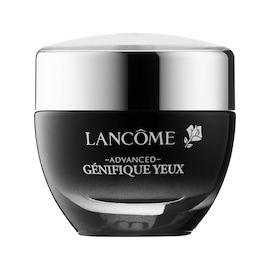
Lancôme Advanced Gnifique Anti-Aging Eye Cream
Works for
2 of 2 advertised claims delivered
Anti-aging3 ingredients credited for this claimStrong support
“Advanced Gnifique Anti-Aging Eye Cream”
This product can help reduce and prevent fine lines and wrinkles, improve skin elasticity and firmness because it contains adenosine.
Keep in mind that it typically takes at least 6 weeks to notice any results because the changes that are needed to improve fine lines and elasticity happen in the deeper layers of the skin. No topical anti-aging product can “erase” wrinkles or fully reverse signs of aging.
Moisturizing23 ingredients credited for this claimStrong support
“Advanced Gnifique Anti-Aging Eye Cream”
This product can help improve hydration of the skin with the two types of ingredients.
The first type is called “humectants”:
these ingredients help attract water.
When humectants are on the surface of the skin, they “pull in” the moisture from the outside environment, or from
within deeper layers of the skin. The following ingredients in this product do the job:
arginine, biosaccharide gum-1.
This product also contains ingredients called “occlusives”. They help reduce the speed with which our skin loses moisture to the outside environment. These ingredients also help soften the upper layer of the skin, so it feels less tight and nicer to the touch. The following ingredients in this product do the job: arginine, dimethicone.
The following ingredients in this product are especially good for supporting the skin barrier and helping with the hydration level: salicyloyl phytosphingosine
Anti-oxidationNot advertised by the brand · 6 ingredients credited for this claimModerate support
This product contains antioxidants (bifida ferment lysate) that might be able to help neutralize free radicals in skin to lessen the damage it gets from the UV light (sun). There is not enough evidence to confirm their effectiveness in skin though.
Can it cause trouble?
Irritancy6 strong irritants: Alcohol denat., Limonene + 4 more — patch-test recommendedHigh risk
Comedogenic4 ingredients rated 2 or more on the 0–5 pore-clogging scale4 flagged


User reviews
Be the first — your take helps the next person decide.
Ingredients
Filter by role to see what each ingredient is doing.
Water~45–55%
Cyclohexasiloxane~6–7.3%
- Irritation risk
- Low
A silicone that serves as an emollient. Helps create a nice non-greasy feels
More about CyclohexasiloxaneBifida ferment lysate~4.4–5.4%
- Irritation risk
- Low
Consists of remains of dead yeast bacteria cells. Helps to hydrate the skin and reduce irritation. Might has some anti-oxidant effect
More about Bifida ferment lysateGlycerin~3.1–3.8%
- Irritation risk
- Low
One of the best moisturizing ingredients. Naturally present in skin. It attracts water to the upper layer of the skin working as a humectant
More about GlycerinPropanediol~2.4–2.9%
- Irritation risk
- Low
Acts as a solvent for other ingredients. Speeds up the absorption of other ingredients into the skin
More about PropanediolAlcohol denat.~1.9–2.4%
- Irritation risk
- High
Produces temporary toning effect. Can help dissolve other ingredients or preserve products
More about Alcohol denat.Polysilicone-11~1.7–2.1%
- Irritation risk
- Low
A silicone that forms a light film on the skin surface helping to bind water and temporarily absorb oils creating a matt and powdery feel
More about Polysilicone-11Dimethicone~1.5–1.8%
- Irritation risk
- Low
A silicone that helps to reduce water loss from the surface of the skin. Can temporarily "fill in" lines and wrinkles, absorb oil, and create a nice product finish
More about DimethiconePolymethylsilsesquioxane~1.2–1.5%
- Irritation risk
- Low
A silicone that improves product texture and helps dissolve other ingredients. Can form a non-greasy film on the skin to prevent moisture loss
More about PolymethylsilsesquioxaneDi-c12-13 alkyl malate~0.95–1.2%
- Irritation risk
- Low
Helps soften the upper layer of the skin
More about Di-c12-13 alkyl malateAmmonium polyacryloyldimethyl taurate~0.65–1%
- Irritation risk
- Low
Used to create a thicker product consistency
More about Ammonium polyacryloyldimethyl taurateCi 77891~0.6–0.9%
- Irritation risk
- Low
Titanium dioxide~0.7–1.05%
- Irritation risk
- Low
Works as a UV filter when used in high concentrations. It is photostable and is effective mostly against the UVB light, with some protection in the UVA range. In small concentrations, used for its ability to improve the color of cosmetic products. Is usually well tolerated by the skin
More about Titanium dioxideAscorbyl glucoside~0.45–0.65%
- Irritation risk
- Medium
A vitamin C derivative that is more stable but less potent than pure form of vitamin C. Has a potential to boost collagen production, nutralise free radicals and reduce hyperpigmentation, but the required concentration is likely to be much higher than for the pure form of vitamin C, limiting the ingredient's effectiveness in products
More about Ascorbyl glucosideMica~0.5–0.7%
- Irritation risk
- Low
Creates an illusion of smoother and more radiant skin tone. Adds shimmer to the skin by reflecting light
More about MicaLactobacillus ferment~0.4–0.6%
- Irritation risk
- Low
A fermentation product created by bacteria Lactobacillus. The fermented product has anti-bacterial properties and might be helpful in calming down inflammation, but studies are lacking. Helps attract water to the upper layer of the skin. Can be used as a preservative
More about Lactobacillus fermentHydrogenated vegetable oil~0.45–0.65%
- Irritation risk
- Low
- Comedogenicity
- 2/5
An oil from a mixture of different vegetables. Helps soften the upper layer of the skin
More about Hydrogenated vegetable oilSodium hyaluronate~0.35–0.6%
- Irritation risk
- Low
One of the best moisturizing ingredients. Attracts water into the upper layer of the skin
More about Sodium hyaluronateSodium benzoate~0.25–0.5%
Hydrolyzed wheat protein~0.3–0.5%
- Irritation risk
- Medium
Can help attract water to the upper layer of the skin. Avoid if sensitive to gluten
More about Hydrolyzed wheat proteinSodium dehydroacetate~0.25–0.5%
Sodium succinate~0.25–0.5%
- Irritation risk
- Low
Phenoxyethanol~0.25–0.5%
- Irritation risk
- Low
A preservative. It helps prevent bacterial growth in cosmetic products
More about PhenoxyethanolAdenosine~0.25–0.45%
- Irritation risk
- Low
Might help improve cell turnover and reduce inflammation in skin. One study shows that the ingredients might be able to help reduce dynamic wrinkles (for example, in the corners of the eyes or on the forehead)
More about AdenosineFaex extract~0.25–0.45%
- Irritation risk
- Low
Yeast extract. Helps attract water to the upper layer of the skin
More about Faex extractYeast extract~0.25–0.45%
- Irritation risk
- Low
Helps attract water to the upper layer of the skin and might have some anti-oxidant and skin lightening properties. It can help calm down inflammation in skin
More about Yeast extractPtfe~0.25–0.5%
Peg-10 dimethicone~0.3–0.55%
- Irritation risk
- Low
A silicone that works to soften the upper layer of the skin and reduce its water loss
More about Peg-10 dimethiconeArginine~0.25–0.45%
- Irritation risk
- Low
An amino acid that is naturally present in skin and helps keep it hydrated. When used together with AHAs, it can reduce their irritating effect on the skin
More about ArginineTriethanolamine~0.25–0.5%
- Irritation risk
- Medium
Used to adjust pH of the product and can help improve the product's smell
More about TriethanolamineChlorphenesin~0.16–0.32%
Chlorhexidine digluconate~0.15–0.3%
Polygonum fagopyrum seed extract~0.25–0.45%
- Irritation risk
- Low
Triticum vulgare seed extract~0.25–0.45%
- Irritation risk
- Low
- Comedogenicity
- 2/5
Silica~0.4–0.6%
Salicyloyl phytosphingosine~0.25–0.45%
- Irritation risk
- Low
Helps attract water to the upper layer of the skin. Might have anti-aging benefits but solid study data is lacking
More about Salicyloyl phytosphingosineChlorella vulgaris extract~0.25–0.45%
- Irritation risk
- Medium
- Comedogenicity
- 3/5
A plant extract that can help to attract water to the upper layer of the skin and might have some anti-oxidant and anti-inflammatory properties
More about Chlorella vulgaris extractDimethiconol~0.3–0.55%
- Irritation risk
- Low
A silicone that makes products more spreadable and keeps skin smooth. Helps to add gloss to skin and may visually fill in fine lines/wrinkles for short time
More about DimethiconolLimonene~0.2–0.4%
- Irritation risk
- High
A common frangrance that can easily irritate skin, especially if exposed to air, light or heat
More about LimonenePentylene glycol~0.3–0.55%
- Irritation risk
- Medium
Used to preserve products, dissolve other ingredients and create a nice product texture
More about Pentylene glycolSynthetic fluorphlogopite~0.25–0.5%
- Irritation risk
- Low
A mineral that is used as an optical filter (makes the skin looks nicer through light reflection) and to improve the texture of cosmetic products
More about Synthetic fluorphlogopiteLinalool~0.2–0.4%
Pentaerythrityl tetra-di-t-butyl hydroxyhydrocinnamate~0.25–0.5%
- Irritation risk
- Low
Used to increase stability of product formulations
More about Pentaerythrityl tetra-di-t-butyl hydroxyhydrocinnamateBiosaccharide gum-1~0.25–0.45%
- Irritation risk
- Low
Helps attract water to the upper layer of the skin and is claimed to provide a longer-lasting hydration because of its ability to create a water-binding film on the surface of the skin
More about Biosaccharide gum-1Caprylic/capric triglyceride~0.3–0.55%
- Irritation risk
- Medium
A good mix of fatty acids that forms a protective layer on the skin. Improves the shelf life of products. Derived from coconut and glycerin
More about Caprylic/capric triglycerideCarbomer~0.25–0.45%
- Irritation risk
- Low
Helps create a thicker or gel-like product texture. It is not a surfactant but can be used in gentle cleansing formulations
More about CarbomerBoron nitride~0.25–0.45%
- Irritation risk
- Low
Helps to absord oil and evenly disperse other ingredients (for example, pigment) in product formulation
More about Boron nitrideAcrylates/c10-30 alkyl acrylate crosspolymer~0.25–0.45%
- Irritation risk
- Medium
Maintains the texture of skincare products. Allows the product to spread evenly. Helps oil and water mix together
More about Acrylates/c10-30 alkyl acrylate crosspolymerGeraniol~0.2–0.35%
Bis-peg/ppg-16/16 peg/ppg-16/16 dimethicone~0.25–0.5%
Disodium edta~0.2–0.35%
Ceteareth-20~0.3–0.6%
- Irritation risk
- Medium
- Comedogenicity
- 2/5
Helps oil and water mix together. Has some emollient properties
More about Ceteareth-20Potassium cetyl phosphate~0.2–0.35%
- Irritation risk
- Medium
Helps oil and water mix together
More about Potassium cetyl phosphateCitronellol~0.1–0.2%
Methionine~0.15–0.3%
- Irritation risk
- Low
Potassium sorbate~0.15–0.3%
Glycine~0.1–0.15%
- Irritation risk
- Low
Helps to attract water to the upper layer of the skin and can help restore the skin barrier function
More about GlycineParfum~0.05–0.15%
- Irritation risk
- High
An aromatic blend of unspecified and possibly irritating ingredients
More about ParfumIngredient list view
Water, Cyclohexasiloxane, Bifida ferment lysate, Glycerin, Propanediol, Alcohol denat., Polysilicone-11, Dimethicone, Polymethylsilsesquioxane, Di-c12-13 alkyl malate, Ammonium polyacryloyldimethyl taurate, Ci 77891, Titanium dioxide, Ascorbyl glucoside, Mica, Lactobacillus ferment, Hydrogenated vegetable oil, Sodium hyaluronate, Sodium benzoate, Hydrolyzed wheat protein, Sodium dehydroacetate, Sodium succinate, Phenoxyethanol, Adenosine, Faex extract, Yeast extract, Ptfe, Peg-10 dimethicone, Arginine, Triethanolamine, Chlorphenesin, Chlorhexidine digluconate, Polygonum fagopyrum seed extract, Triticum vulgare seed extract, Silica, Salicyloyl phytosphingosine, Chlorella vulgaris extract, Dimethiconol, Limonene, Pentylene glycol, Synthetic fluorphlogopite, Linalool, Pentaerythrityl tetra-di-t-butyl hydroxyhydrocinnamate, Biosaccharide gum-1, Caprylic/capric triglyceride, Carbomer, Boron nitride, Acrylates/c10-30 alkyl acrylate crosspolymer, Geraniol, Bis-peg/ppg-16/16 peg/ppg-16/16 dimethicone, Disodium edta, Ceteareth-20, Potassium cetyl phosphate, Citronellol, Methionine, Potassium sorbate, Glycine, Parfum
Compare prices
Retailers ranked by price — lowest first.
Worth comparing, line by line.
Match % combines shared ingredients, the first five ingredients, shared actives and hero ingredients, irritancy (lower counts in the alternative's favour), texture and body area. Only products in the same routine step are compared.
| LancômeAdvanced Gnifique Anti-Aging Eye CreamYOUR PRODUCT | L'Oréal ParisL'Oréal Paris Revitalift Cicacrem Anti-Wrinkle Eye Cream | BIOTHERMLIFE PLANKTON™ EYE CREAM | |
|---|---|---|---|
| Match | — | 59% | 59% |
| Price | $68.00 | $17.17−$50.83 | $50.00−$18.00 |
| Shared key ingredients | — | 8 of 19 | 12 of 19 |
| Key difference | — | Retinyl Palmitate | — |
| Irritancy | High | Medium | Medium |
| Drying alcohol | Contains drying alcohol | — | Contains drying alcohol |
| View product | Shop | Shop |
Product summary
Based on the ingredient list, "Lancôme - Advanced Gnifique Anti-Aging Eye Cream" can work well for skin moisturization. As we expect from a proper moisturizer, the formula includes a combo of effective humectants and emollients. These are the two different types of ingredients that are essential for improving the skin hydration and supporting a healthy skin barrier. Humectants in this product (salicyloyl phytosphingosine, arginine, biosaccharide gum-1, glycerin and glycine) help to increase the water content in the upper layer of the skin. (These ingredients do so by "capturing" water molecules from the outside air or from within the deeper layers of the skin). Arginine, dimethicone, dimethiconol, peg-10 dimethicone and hydrogenated vegetable oil in this product help decrease the water evoporation from the skin, so that it stays hydrated for longer. These ingredients also soften the skin and take away the feeling of tightness and dryness.
Ingredient callouts
- As a plus, this moisturizer also contains ceramides (salicyloyl phytosphingosine 0.25% - 0.45%). Ceramides are a type of lipids that our skin produces itself. They are a building block of the skin's barrier. Ceramides used in skincare are synthetic or extracted from plants. They work well for softening the skin surface and "patch holes" in the skin's barrier.
- Adenosine 0.25% - 0.45% in this product adds an anti-aging property to it. Adenosine is a chemical present inside our skin cells. A clinical trial confirmed that topical application of adenosine in a low concentration reduce dynamic wrinkles (these are the wrinkles that appear with age in a places where we our mimic is the most active, for example, in the corners of the eyes or on the forehead).
Irritation risk
This moisturizer contains a bunch of common irritants, including ingredients that do not provide any known benefit for the skin. It might not be the best choice if your skin is sensitive. We assess the overall irritancy of this moisturizer to be high. For a detailed overview of all potential irritants: click here
You can see the detailed formula review with the breakdown of all actives in the product and the full ingredient list with estimated concentrations in the tables below.
Sources cited in this review
Every concentration estimate and effectiveness label is anchored to one of these 25 studies and safety reviews.
- 1Bifidobacterium longumlysate, a new ingredient forreactive skinonlinelibrary.wiley.com
- 2Use of Probiotics for Dermal Applicationsresearchgate.net
- 3
- 4
- 5Final Report on the Safety Assessment of Dimethicone Copolyoljournals.sagepub.com
- 6

Affiliate links · As an Amazon Associate, WIMJ earns from qualifying purchases.