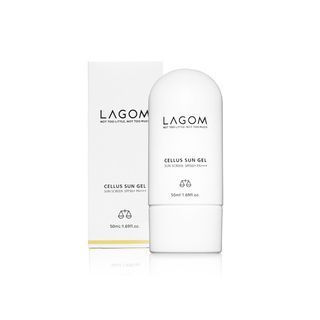
LAGOM Cellus Sun Gel SPF50+ PA+++
Works for
1 of 1 advertised claim delivered
Sun protectionSPF 50 · 5 UV filtersBroad spectrum
This product offers a good level of protection against both UVB and UVA rays.
This sunscreen uses organic (so-called "chemical") sunscreen filters. Organic, or "chemical" filters usually provide reliable sun protection and rarely leave a white cast. Sunscreens with organic filters can sting eyes.
Evens skin toneNot advertised by the brand · No ingredient credited for this claimStrong support
This product offers broad spectrum sun protection. It means that it can prevent hyperpigmentation and help keep the skin tone even (sun damage is the main factor causing age spots, darkening of post-acne marks and other discolorations).
Anti-agingNot advertised by the brand · No ingredient credited for this claimStrong support
This product can help prevent early signs of skin aging because it offers a good level of broad spectrum sun protection. Sun damage is the main cause of premature skin aging, and protecting your skin from the sun is the best anti-aging strategy.
MoisturizingNot advertised by the brand · 7 ingredients credited for this claimStrong support
This product can help improve hydration of the skin with the two types of ingredients.
The first type is called “humectants”:
these ingredients help attract water.
When humectants are on the surface of the skin, they “pull in” the moisture from the outside environment, or from
within deeper layers of the skin. The following ingredients in this product do the job:
panthenol, urea.
This product also contains ingredients called “occlusives”. They help reduce the speed with which our skin loses moisture to the outside environment. These ingredients also help soften the upper layer of the skin, so it feels less tight and nicer to the touch. The following ingredients in this product do the job: dimethicone, caprylyl glycol.
The following ingredients in this product are especially good for supporting the skin barrier and helping with the hydration level: panthenol, urea
Can it cause trouble?
Irritancy9 strong irritants: Alcohol denat., Citrus aurantium dulcis oil + 7 more — patch-test recommendedHigh risk
Comedogenic1 ingredient rated 2 or more on the 0–5 pore-clogging scale1 flagged

User reviews
Be the first — your take helps the next person decide.
Ingredients
Filter by role to see what each ingredient is doing.
Water~45–55%
Ethylhexyl methoxycinnamate~6.4–7.8%
- Irritation risk
- High
Octinoxate. When used in higher concentrations, works as a sunscreen protecting the skin from UVB rays. When used in lower concentration, helps to preserve the product formulation. Is shown to be harmful to coral reefs - consider avoiding bathing in coral reef areas when wearing a product with this ingredient. It can be irritating
More about Ethylhexyl methoxycinnamateOctocrylene~4.7–5.7%
- Irritation risk
- Medium
A weak sunscreen that protects against the sun rays that cause sunburn (UVB) and is somewhat effective against the UVA rays. It is quite stable and can help stabilize other, more vulnerable, sunscreen ingredients like Avobenzone. It is an organic, or so called "chemical" sunscreen
More about OctocryleneAlcohol denat.~3.2–3.9%
- Irritation risk
- High
Produces temporary toning effect. Can help dissolve other ingredients or preserve products
More about Alcohol denat.Ethylhexyl salicylate~3.3–4%
- Irritation risk
- Low
Octisalate. A UV filter. It offers some protection against the sun rays that cause sunburn (UVB), but does not protect against the most aging sun rays (UVA). It loses its effectiveness quickly when exposed to sunlight. It is an organic, or so called "chemical" sunscreen
More about Ethylhexyl salicylateButyl methoxydibenzoylmethane~2.6–3.2%
- Irritation risk
- Medium
Avobenzone. An organic, or so-called "chemical" UV filter. Protects against both UVA and UVB rays. Needs to be combined with other filters in a formulation to be stable.
More about Butyl methoxydibenzoylmethanePropanediol~1.7–2.1%
- Irritation risk
- Low
Acts as a solvent for other ingredients. Speeds up the absorption of other ingredients into the skin
More about PropanediolMethyl methacrylate crosspolymer~1.5–1.9%
- Irritation risk
- Low
Helps thicken the product consistency
More about Methyl methacrylate crosspolymerBis-ethylhexyloxyphenol methoxyphenyl triazine~1.7–2.1%
- Irritation risk
- Medium
Tinosorb S. One of the most effective broad spectrum sunscreen ingredients. Protects from both UVA and UVB rays. It is photostable. Unfortunately, not approved by FDA (US) yet.
More about Bis-ethylhexyloxyphenol methoxyphenyl triazineUrea~0.95–1.15%
- Irritation risk
- Low
Naturally present in skin (urea makes up about 7% of natural moisturizing factors in skin). Attracts water to the upper layer of the skin. Also has a positive effect on the skin barrier beyond the humectant action. Can enhance penetration of other ingredients. Is an exfoliating ingredient when used in high concentrations
More about UreaHydrolyzed vegetable protein~0.65–1%
Maltodextrin~0.6–0.9%
- Irritation risk
- Low
Used to stabilize the product formulation and can help absorb oil
More about MaltodextrinIndole acetic acid~0.5–0.75%
- Irritation risk
- Low
Bis-peg/ppg-20/5 peg/ppg-20/5 dimethicone~0.5–0.75%
Methoxy peg/ppg-25/4 dimethicone~0.45–0.7%
Caprylic/capric triglyceride~0.5–0.75%
- Irritation risk
- Medium
A good mix of fatty acids that forms a protective layer on the skin. Improves the shelf life of products. Derived from coconut and glycerin
More about Caprylic/capric triglycerideDimethicone~0.5–0.75%
- Irritation risk
- Low
A silicone that helps to reduce water loss from the surface of the skin. Can temporarily "fill in" lines and wrinkles, absorb oil, and create a nice product finish
More about DimethiconeAcrylates/c10-30 alkyl acrylate crosspolymer~0.4–0.65%
- Irritation risk
- Medium
Maintains the texture of skincare products. Allows the product to spread evenly. Helps oil and water mix together
More about Acrylates/c10-30 alkyl acrylate crosspolymerCitrus aurantium dulcis oil~0.3–0.6%
- Irritation risk
- High
Used as a fragrance. It can be irritating and cause photosensitivity
More about Citrus aurantium dulcis oilPanthenol~0.3–0.55%
- Irritation risk
- Low
Helps attract water to the upper layer of the skin and can help improve skin barrier function
More about PanthenolSodium acrylate/sodium acryloyldimethyl taurate copolymer~0.3–0.5%
- Irritation risk
- Low
Used to create a thicker product consistency
More about Sodium acrylate/sodium acryloyldimethyl taurate copolymerBht~0.25–0.5%
Sodium hydroxide~0.25–0.5%
Isohexadecane~0.4–0.65%
- Irritation risk
- Low
Improves the texture of the product and helps soften the skin. Helps oil and water mix together and can be used as a cleansing agent
More about IsohexadecaneLavandula angustifolia oil~0.25–0.45%
- Irritation risk
- High
An essential oil. Potential allergen and can be irritating. It has some anti-bacterial properties
More about Lavandula angustifolia oilPolysorbate 80~0.3–0.55%
Geranium maculatum extract~0.25–0.45%
- Irritation risk
- High
Contains an essential oil. Can be irritating
More about Geranium maculatum extractCitrus aurantium bergamia fruit oil~0.2–0.4%
- Irritation risk
- High
A plant oil with a high content of volatile compounds that can irritate the skin and lead to allergic reactions. Can lead to photosensitivity
More about Citrus aurantium bergamia fruit oilSantalum album oil~0.2–0.4%
Sorbitan oleate~0.25–0.45%
- Irritation risk
- Medium
- Comedogenicity
- 2/5
Helps oil and water mix together
More about Sorbitan oleateRose flower oil~0.2–0.4%
- Irritation risk
- High
Flower oil that is used as a fragrance
More about Rose flower oilChamomilla recutita flower oil~0.2–0.35%
- Irritation risk
- High
Plant oil that can have healing and anti-inflammatory properties. It contains volatile compouunds that are potential allergens and can be irritating
More about Chamomilla recutita flower oilStyrax benzoin gum~0.2–0.35%
- Irritation risk
- Low
Commiphora myrrha oil~0.15–0.25%
Disodium edta~0.1–0.25%
Caprylyl glycol~0.15–0.25%
- Irritation risk
- Medium
Helps preserve products and creates a nice product texture
More about Caprylyl glycolEthylhexylglycerin~0.1–0.15%
1,2-hexanediol~0.1–0.2%
Ingredient list view
Water, Ethylhexyl methoxycinnamate, Octocrylene, Alcohol denat., Ethylhexyl salicylate, Butyl methoxydibenzoylmethane, Propanediol, Methyl methacrylate crosspolymer, Bis-ethylhexyloxyphenol methoxyphenyl triazine, Urea, Hydrolyzed vegetable protein, Maltodextrin, Indole acetic acid, Bis-peg/ppg-20/5 peg/ppg-20/5 dimethicone, Methoxy peg/ppg-25/4 dimethicone, Caprylic/capric triglyceride, Dimethicone, Acrylates/c10-30 alkyl acrylate crosspolymer, Citrus aurantium dulcis oil, Panthenol, Sodium acrylate/sodium acryloyldimethyl taurate copolymer, Bht, Sodium hydroxide, Isohexadecane, Lavandula angustifolia oil, Polysorbate 80, Geranium maculatum extract, Unknown, Citrus aurantium bergamia fruit oil, Santalum album oil, Sorbitan oleate, Rose flower oil, Chamomilla recutita flower oil, Styrax benzoin gum, Commiphora myrrha oil, Disodium edta, Caprylyl glycol, Ethylhexylglycerin, 1,2-hexanediol
Compare prices
Retailers ranked by price — lowest first.

Affiliate links · prices updated regularly
Worth comparing, line by line.
Match % combines shared ingredients, the first five ingredients, shared actives and hero ingredients, irritancy (lower counts in the alternative's favour), texture and body area. Only products in the same routine step are compared.
| LAGOMCellus Sun Gel SPF50+ PA+++YOUR PRODUCT | A'PIEUPower Block Aqua Sun Gel SPF50+ PA++++ | White FormulaCPAQUA UV Protective Gel With Hyaluronic Acid SPF 50+ PA++++ | Dr. RussoOnce a Day SPF30 Sun Protective Face Gel Tan Accelerator | |
|---|---|---|---|---|
| Match | — | 53% | 53% | 50% |
| Price | $16.61 | $10.90−$5.71 | $22.47+$5.86 | $28.95+$12.34 |
| Shared key ingredients | — | 6 of 9 | 5 of 9 | 4 of 9 |
| Key difference | — | Madecassoside | Chondrus Crispus Extract | Ferulic Acid |
| Irritancy | High | Medium | Low | Medium |
| SPF | SPF 50 | SPF 50 | SPF 50 | SPF 30 |
| Drying alcohol | Contains drying alcohol | Contains drying alcohol | — | Contains drying alcohol |
| View product | Shop | Shop | Shop |


Product summary
The ingredient list suggests that "LAGOM - Cellus Sun Gel SPF50+ PA+++" can provide reliable sun protection. It can protect from both UVA and UVB rays. This is great news because not all sunscreens with SPF ratings give UVA protection. (UVA rays do not cause sunburn, but still damage our skin and lead to early aging).
Because it includes good moisturizing ingredients, it can also work as a hydrating day cream. This product prevents early signs of aging by protecting against sun damage (all broad spectrum sunscreens do that).
Sunscreen filters
This sunscreen uses so-called "chemical", or organic UV filters (organic simply means that their molecules contain atoms of carbon). These filters typically give good sun protection and rarely leave a white cast, but they can be irritating for sensitive skin. The UV filters in this sunscreen are: tinosorb s 1.70% - 2.10%, avobenzone 2.60% - 3.20%, octinoxate 6.40% - 7.80%, octisalate 3.30% - 4.00% and octocrylene 4.70% - 5.70%.
Irritation risk
There are quite a few common irritants in this product, including ingredients without particular skin benefits. We would not recommend it for sensitive skin. We assess the overall irritancy of this sunscreen to be high. For a detailed overview of all potential irritants: click here
You can see the detailed formula review with the breakdown of all actives in the product and the full ingredient list with estimated concentrations in the tables below.
Price
The product retails for 16.61$ in the United States.
For a detailed price comparison: click here.
Sources cited in this review
Every concentration estimate and effectiveness label is anchored to one of these 11 studies and safety reviews.
- 1Topical urea in skincare: A reviewpubmed.ncbi.nlm.nih.gov
- 2
- 3Final Report on the Safety Assessment of Dimethicone Copolyoljournals.sagepub.com
- 4
- 5
- 6Air oxidation increases skin irritation from fragrance terpenesonlinelibrary.wiley.com

Affiliate links · As an Amazon Associate, WIMJ earns from qualifying purchases.