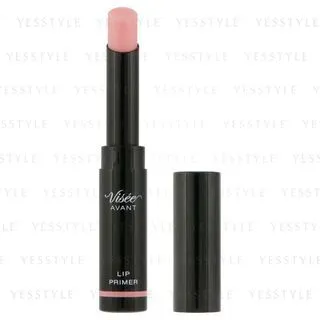
Kose Visee Avant Lip Primer SPF 20 PA+
Works for
Sun protectionSPF 20 · 3 UV filters · Partial spectrumWeak protectionSPF under 30
This product does not offer good protection against UVA rays.
MoisturizingHoney, Simmondsia chinensis seed oil + 9 moreWorks
“There is no dry feeling and the lips become plump.”
This product can help improve hydration of the skin with the two types of ingredients.
The first type is called “humectants”:
these ingredients help attract water.
When humectants are on the surface of the skin, they “pull in” the moisture from the outside environment, or from
within deeper layers of the skin. The following ingredients in this product do the job:
sodium hyaluronate, honey.
This product also contains ingredients called “occlusives”. They help reduce the speed with which our skin loses moisture to the outside environment. These ingredients also help soften the upper layer of the skin, so it feels less tight and nicer to the touch. The following ingredients in this product do the job: cocos nucifera oil, dimethicone.
Anti-agingTocopherolNot delivered
“Flatten your lips and your wrinkles will not stand out.”
This product does not contain ingredients that are able to reduce fine lines and wrinkles or help with skin elasticity, but it can improve the look of the skin temporarily through moisturization. Well-moisturized skin might also be able to repair the sun damage better.
The biggest anti-aging effect in this product comes from sun protection. Sun damage is the main factor causing early signs of skin aging. We, however, do not recommend using this product as a sunscreen because the protection it offers is not strong enough).
Can it cause trouble?
Irritancy5 flagged ingredientsLow risk
Comedogenic1 ingredient rated 2 or more on the 0–5 pore-clogging scale1 flagged
User reviews
Be the first — your take helps the next person decide.
Ingredients
Filter by role to see what each ingredient is doing.
Polyglyceryl-2 triisostearate~22–33%
- Irritation risk
- Low
Helps to soften the upper layer of the skin and create a nice product texture
More about Polyglyceryl-2 triisostearatePolybutene~4.4–6.7%
Phytosteryl isostearyl dimer dilinoleate~4.5–6.7%
- Irritation risk
- Low
Ethylhexyl methoxycinnamate~3.7–5.5%
- Irritation risk
- High
Octinoxate. When used in higher concentrations, works as a sunscreen protecting the skin from UVB rays. When used in lower concentration, helps to preserve the product formulation. Is shown to be harmful to coral reefs - consider avoiding bathing in coral reef areas when wearing a product with this ingredient. It can be irritating
More about Ethylhexyl methoxycinnamateMicrocrystalline wax~2.4–3.6%
Synthetic wax~1.9–2.9%
- Irritation risk
- Low
Used to stabilize product formulations and thicken product consistency
More about Synthetic waxParaffin~1.6–2.3%
- Irritation risk
- Low
Prevents water loss from the skin surface and thickens the product consistency
More about ParaffinSilica dimethyl silylate~1.3–2%
Tocopherol~0.9–1.35%
- Irritation risk
- Low
Pure form of vitamin E. Can help moisturise and protect the skin from free radicals. Often used to help stabilise other ingredients or the formula itself
More about TocopherolHoney~0.8–1.2%
- Irritation risk
- Low
Helps attract water to the skin and might have some anti-bacterial properties. Can be an allergen
More about HoneySodium hyaluronate~0.5–1.15%
- Irritation risk
- Low
One of the best moisturizing ingredients. Attracts water into the upper layer of the skin
More about Sodium hyaluronateSimmondsia chinensis seed oil~0.5–1.15%
- Irritation risk
- Medium
Softens the upper layer of skin and helps restore the healthy skin barrier. Has shown to help calm down inflammation in skin. It is a stable oil, meaning that it retains its properties even when exposed to air.
More about Simmondsia chinensis seed oilBht~0.4–0.9%
Dipropylene glycol~0.35–0.8%
- Irritation risk
- Low
Helps to dissolve other ingredients in a formulation. Slows down the rate of product drying
More about Dipropylene glycolEthylene/propylene copolymer~0.55–1.3%
- Irritation risk
- Low
Aminopropyl triethoxysilane~0.35–0.8%
Dimethiconol~0.4–0.9%
- Irritation risk
- Low
A silicone that makes products more spreadable and keeps skin smooth. Helps to add gloss to skin and may visually fill in fine lines/wrinkles for short time
More about DimethiconolDimethicone~0.4–0.9%
- Irritation risk
- Low
A silicone that helps to reduce water loss from the surface of the skin. Can temporarily "fill in" lines and wrinkles, absorb oil, and create a nice product finish
More about DimethiconeSqualane~0.35–0.8%
- Irritation risk
- Low
An oil naturally present in skin. Works as an emollient to soften the skin and form a protective layer on its surface without a greasy feeling.
More about SqualaneIsopropyl titanium triisostearate~0.35–0.8%
- Irritation risk
- Medium
Helps water and oil mix together
More about Isopropyl titanium triisostearateTriethoxycaprylylsilane~0.15–0.7%
- Irritation risk
- Low
A type of silicone that helps oil and water mix well together. Helps to disperse other ingredients, e.g. pigments, evenly in a formulation
More about TriethoxycaprylylsilaneHydrogen dimethicone~0.35–0.85%
- Irritation risk
- Low
Helps the function of sunscreen and pigment ingredients in the formulation
More about Hydrogen dimethiconePolyethylene~0.4–1%
Methicone~0.2–0.75%
- Irritation risk
- Low
A type of silicone that helps soften the upper layer of the skin and reduces the water loss from the skin surface
More about MethiconeCocos nucifera oil~0.15–0.65%
- Irritation risk
- Low
- Comedogenicity
- 3/5
An emollient. Found to be as effective as a moisturizer for dry skin as mineral oil. Could be comedogenic
More about Cocos nucifera oilAluminum hydroxide~0.3–0.7%
- Irritation risk
- Low
Is used to add opaque (non-transparent) appearance to formulations. Can be used to coat other ingredients for even dispersion. This is a different ingredient compared to the ones used in antipersperants (aluminium chloride and aluminium chlorohydrate)
More about Aluminum hydroxideHydrogenated microcrystalline wax~0.15–0.5%
- Irritation risk
- Low
Mica~0.15–0.65%
- Irritation risk
- Low
Creates an illusion of smoother and more radiant skin tone. Adds shimmer to the skin by reflecting light
More about MicaTitanium dioxide~0.2–0.7%
- Irritation risk
- Low
Works as a UV filter when used in high concentrations. It is photostable and is effective mostly against the UVB light, with some protection in the UVA range. In small concentrations, used for its ability to improve the color of cosmetic products. Is usually well tolerated by the skin
More about Titanium dioxideZinc oxide~0.2–0.7%
- Irritation risk
- Low
A broad spectrum sunblock (protects from both UVA and UVB rays). Is suitable for most sensitive skins. In small concentrations, can be used as a colorant
More about Zinc oxideIron oxides~0.05–0.25%
- Irritation risk
- Low
An umbrella term for the following three colorants: CI 77491, CI 77492, CI 77499. They might be able to offer some protection against visible light, but the degree of the protection is not clear
More about Iron oxidesBarium sulfate~0.1–0.35%
- Irritation risk
- Low
Ci 19140~0.05–0.2%
Ingredient list view
Polyglyceryl-2 triisostearate, Polybutene, Phytosteryl isostearyl dimer dilinoleate, Unknown, Ethylhexyl methoxycinnamate, Microcrystalline wax, Synthetic wax, Paraffin, Silica dimethyl silylate, Tocopherol, Honey, Sodium hyaluronate, Simmondsia chinensis seed oil, Bht, Dipropylene glycol, Ethylene/propylene copolymer, Aminopropyl triethoxysilane, Dimethiconol, Dimethicone, Squalane, Isopropyl titanium triisostearate, Triethoxycaprylylsilane, Hydrogen dimethicone, Polyethylene, Methicone, Cocos nucifera oil, Aluminum hydroxide, Hydrogenated microcrystalline wax, Mica, Titanium dioxide, Zinc oxide, Iron oxides, Barium sulfate, Ci 19140, Unknown, Unknown
Compare prices
Retailers ranked by price — lowest first.

Worth comparing, line by line.
Match % combines shared ingredients, the first five ingredients, shared actives and hero ingredients, irritancy (lower counts in the alternative's favour), texture and body area. Only products in the same routine step are compared.
| KoseVisee Avant Lip Primer SPF 20 PA+YOUR PRODUCT | Supergoop!Shine On Lip Screen SPF 40 | devganbeautyPlatinum Lip Plump SPF 30 | Naked SundaysPoutScreen™ Lip Sunscreen SPF50 - Love Letter | |
|---|---|---|---|---|
| Match | — | 21% | 19% | 17% |
| Price | — | — | $43.95 | $28.00 |
| Shared key ingredients | — | 3 of 10 | 1 of 10 | 5 of 10 |
| Key difference | — | Avobenzone | Ceramide 1 | Palmitoyl Hexapeptide-12 |
| Irritancy | Low | Low | Low | Medium |
| SPF | SPF 20 | SPF 40 | SPF 30 | SPF 50 |
| Drying alcohol | — | — | — | — |
| View product | Shop | Shop | Shop |

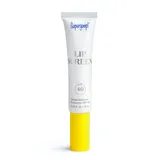

More alternatives: CHIFURE Sunscreen Milk SPF 50+ PA++++Sun Bum Signature SPF 30 Sunscreen Face Stick
Product summary
"Kose - Visee Avant Lip Primer SPF 20 PA+" does not provide enough UVA protection. UVA rays do not cause sunburn, but still damage the skin, leading to early signs of aging and pigmentation issues.
Sunscreen filters
This sunscreen uses a mixture of both mineral and organic (so-called "chemical") UV filters. The organic filters in the product are: octinoxate. As for the mineral filters, this sunscreen uses both titanium dioxide and zinc oxide.
Irritation risk
This lip sunscreen contains some common irritants, including those without a benefit for the skin. We assess the overall irritancy of it to be medium. For a detailed overview of all potential irritants: click here
You can see the detailed formula review with the breakdown of all actives in the product and the full ingredient list with estimated concentrations in the tables below.
Price
The product retails for 19.21$ in the United States.
For a detailed price comparison: click here.
Sources cited in this review
Every concentration estimate and effectiveness label is anchored to one of these 15 studies and safety reviews.
- 1
- 2
- 3Vitamin E in dermatologyncbi.nlm.nih.gov
- 4Vitamin E and Skin Healthlpi.oregonstate.edu
- 5Hyaluronic acid: A key molecule in skin agingncbi.nlm.nih.gov
- 6

Affiliate links · As an Amazon Associate, WIMJ earns from qualifying purchases.