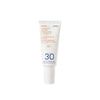
KORRES Yoghurt Face Sunscreen SPF30
Works for
1 of 1 advertised claim delivered
Sun protectionSPF 30 · 6 UV filtersBroad spectrum
This product offers a good level of protection against both UVB and UVA rays.
This sunscreen uses organic (so-called "chemical") sunscreen filters. Organic, or "chemical" filters usually provide reliable sun protection and rarely leave a white cast. Sunscreens with organic filters can sting eyes.
This product can be considered "reef safe" because it does not contain the UV filters (oxybenzone and octinoxate) that can be harmful to coral reefs when present in the water in high concentrations.
Anti-agingNot advertised by the brand · 1 ingredient credited for this claimStrong support
This product can help prevent early signs of skin aging because it offers a good level of broad spectrum sun protection. Sun damage is the main cause of premature skin aging, and protecting your skin from the sun is the best anti-aging strategy.
Evens skin toneNot advertised by the brand · 1 ingredient credited for this claimStrong support
This product offers broad spectrum sun protection. It means that it can prevent hyperpigmentation and help keep the skin tone even (sun damage is the main factor causing age spots, darkening of post-acne marks and other discolorations).
MoisturizingNot advertised by the brand · 9 ingredients credited for this claimGood support
This product contains good ingredients to attract water to the upper layer of the skin. These ingredients are called "humectants": glycerin, butylene glycol.
When humectants are on the surface of the skin, they “pull in” the moisture from the outside environment, or from within deeper layers of the skin. If the air is dry, humectants can speed up the moisture loss from the skin. This is why it is a good idea to use another product on top of this one to help "seal in" the moisture (look for ingredients like dimethicone, squalane, oils and butters).
Can it cause trouble?
Irritancy3 strong irritants: Sclareolide, Zingiber officinale root extract + 1 more — patch-test recommendedHigh risk
Comedogenic1 ingredient rated 2 or more on the 0–5 pore-clogging scale1 flagged
User reviews
Be the first — your take helps the next person decide.
Ingredients
Filter by role to see what each ingredient is doing.
Water~45–55%
Dibutyl adipate~5.8–7%
- Irritation risk
- Low
Helps soften the upper layer of the skin and create a nice product consistency
More about Dibutyl adipateIsoamyl laurate~4.4–5.4%
- Irritation risk
- Medium
Helps stabilize emulsions and create a nice product texture
More about Isoamyl laurateDiethylamino hydroxybenzoyl hexyl benzoate~3.6–4.4%
- Irritation risk
- Medium
Uvinul A Plus. A new generation broad spectrum sunscreen that offers an effective protection especially in the UVA range. It is stable in formulations. Unfortunately, is not approved by the FDA (US) yet
More about Diethylamino hydroxybenzoyl hexyl benzoateEthylhexyl salicylate~3.3–4%
- Irritation risk
- Low
Octisalate. A UV filter. It offers some protection against the sun rays that cause sunburn (UVB), but does not protect against the most aging sun rays (UVA). It loses its effectiveness quickly when exposed to sunlight. It is an organic, or so called "chemical" sunscreen
More about Ethylhexyl salicylateGlycerin~2.1–2.5%
- Irritation risk
- Low
One of the best moisturizing ingredients. Naturally present in skin. It attracts water to the upper layer of the skin working as a humectant
More about GlycerinUndecane~1.7–2.1%
- Irritation risk
- Medium
Helps create a non-greasy finish on the skin
More about UndecaneTris-biphenyl triazine~1.5–1.8%
- Irritation risk
- Medium
Tinosorb A2B. A UV filter. It is effective against both UVA and UVB rays. It is photostable. Soluble in water, which helps to create lighter sunscreen formulations. Unfortunately, not approved by the FDA in the US yet
More about Tris-biphenyl triazineTridecane~1.2–1.5%
Bis-ethylhexyloxyphenol methoxyphenyl triazine~1.5–1.8%
- Irritation risk
- Medium
Tinosorb S. One of the most effective broad spectrum sunscreen ingredients. Protects from both UVA and UVB rays. It is photostable. Unfortunately, not approved by FDA (US) yet.
More about Bis-ethylhexyloxyphenol methoxyphenyl triazinePolymethyl methacrylate~0.8–1.2%
- Irritation risk
- Low
Is used to enhance product texture and can help to optically mask skin imperfections
More about Polymethyl methacrylateDiethylhexyl butamido triazone~0.95–1.15%
- Irritation risk
- Medium
Uvasorb HEB. A UV filter. Is effective against UVB and UVA II rays (but not UVA I). It is photostable. Unfortunately, is not approved by FDA (US) yet
More about Diethylhexyl butamido triazoneEthylhexyl triazone~0.75–1.15%
- Irritation risk
- Medium
Uvinul T. A UV filter. Effective against UVB rays. It is photostable. Can increase water resistance properties of the sunscreen. Unfortunately, not approved by the FDA (US) yet
More about Ethylhexyl triazonePolyamide-3~0.55–0.8%
- Irritation risk
- Low
Acrylates/c10-30 alkyl acrylate crosspolymer~0.5–0.75%
- Irritation risk
- Medium
Maintains the texture of skincare products. Allows the product to spread evenly. Helps oil and water mix together
More about Acrylates/c10-30 alkyl acrylate crosspolymerArgania spinosa kernel oil~0.5–0.75%
- Irritation risk
- Medium
An emollient that helps soften the upper layer of the skin. Might have some weak anti-oxidant properties
More about Argania spinosa kernel oilBisabolol~0.4–0.6%
- Irritation risk
- Low
An active component of chamomile plant that historically has been used to calm down irritated skin. A recent study shows that bisabolol indeed can have some anti-inflammatory effect on skin, even though conclusive data is lacking. Bisabolol has a sweet floral scent and can be added to products for its aromatic properties
More about BisabololButylene glycol~0.4–0.65%
- Irritation risk
- Low
Used to create a nice product texture and help delivery of other ingredients. Might be somewhat helpful in attracting water to the upper layer of the skin
More about Butylene glycolCetearyl alcohol~0.45–0.65%
- Irritation risk
- Low
- Comedogenicity
- 2/5
A non-drying alcohol. Works as an emollient. Helps water and oil mix together and creates a nice product texture
More about Cetearyl alcoholDecyl glucoside~0.45–0.7%
- Irritation risk
- High
Helps oil and water mix together. Can be irritating
More about Decyl glucosideDisodium cetearyl sulfosuccinate~0.45–0.65%
Disodium phosphate~0.3–0.55%
- Irritation risk
- Low
Helps adjust the product pH and stabilize the formulation
More about Disodium phosphateEthylhexylglycerin~0.3–0.55%
Glyceryl stearate~0.35–0.6%
- Irritation risk
- Low
An emollient that softens the skin and forms a protective layer on its surface. Helps water and oil mix together
More about Glyceryl stearateLactic acid~0.25–0.5%
- Irritation risk
- Medium
An exfoliating and moisturizing alpha-hydroxy acid (AHA). Typically causes less irritation than other AHAs, for example, glycolic acid. At high concentrations (about 15%), lactic acid can help reduce lines and wrinkles. Recent studies show that lactic acid can support the "good" bacteria living on skin's surface (healthy skin microbiome)
More about Lactic acidLonicera caprifolium flower extract~0.25–0.45%
- Irritation risk
- High
A plant extract that might help neutralize free radicals in skin. Can contain volalite oils and be irritating
More about Lonicera caprifolium flower extractLonicera japonica flower extract~0.25–0.5%
- Irritation risk
- High
A plant extract that might help neutralize free radicals in skin. Can contain volalite oils and be irritating
More about Lonicera japonica flower extractPanthenol~0.25–0.5%
- Irritation risk
- Low
Helps attract water to the upper layer of the skin and can help improve skin barrier function
More about PanthenolPentaerythrityl tetra-di-t-butyl hydroxyhydrocinnamate~0.3–0.5%
- Irritation risk
- Low
Used to increase stability of product formulations
More about Pentaerythrityl tetra-di-t-butyl hydroxyhydrocinnamateSclareolide~0.2–0.4%
- Irritation risk
- High
Derived from clary sage. Used as a fragrance. Can be irritating
More about SclareolideSilica~0.4–0.65%
Sodium carboxymethyl beta-glucan~0.65–1%
- Irritation risk
- Low
Helps thicken the product formulation and create a gel-like texture
More about Sodium carboxymethyl beta-glucanSodium hydroxide~0.25–0.45%
Sodium phytate~0.2–0.4%
Tocopheryl acetate~0.2–0.4%
- Irritation risk
- Medium
A more stable but less bio-available form of vitamin E compared to Tocopherol. Might help moisturize and protect the skin from free radicals, but mostly used in low concentrations to stabilize other ingredients.
More about Tocopheryl acetateXanthan gum~0.2–0.35%
- Irritation risk
- Low
Used to create a thicker product consistency
More about Xanthan gumYogurt powder~0.15–0.3%
- Irritation risk
- Low
Zingiber officinale root extract~0.1–0.2%
- Irritation risk
- High
A plant extract that can contain an irritating essential oil. Might have some anti-oxidant effect, but evidence is lacking
More about Zingiber officinale root extractPhenoxyethanol~0.15–0.3%
- Irritation risk
- Low
A preservative. It helps prevent bacterial growth in cosmetic products
More about PhenoxyethanolParfum~0.1–0.15%
- Irritation risk
- High
An aromatic blend of unspecified and possibly irritating ingredients
More about ParfumIngredient list view
Water, Dibutyl adipate, Isoamyl laurate, Diethylamino hydroxybenzoyl hexyl benzoate, Ethylhexyl salicylate, Glycerin, Undecane, Tris-biphenyl triazine, Tridecane, Bis-ethylhexyloxyphenol methoxyphenyl triazine, Polymethyl methacrylate, Diethylhexyl butamido triazone, Ethylhexyl triazone, Polyamide-3, Acrylates/c10-30 alkyl acrylate crosspolymer, Argania spinosa kernel oil, Bisabolol, Butylene glycol, Cetearyl alcohol, Decyl glucoside, Disodium cetearyl sulfosuccinate, Disodium phosphate, Ethylhexylglycerin, Glyceryl stearate, Lactic acid, Lonicera caprifolium flower extract, Lonicera japonica flower extract, Panthenol, Pentaerythrityl tetra-di-t-butyl hydroxyhydrocinnamate, Sclareolide, Silica, Sodium carboxymethyl beta-glucan, Sodium hydroxide, Sodium phytate, Tocopheryl acetate, Xanthan gum, Yogurt powder, Zingiber officinale root extract, Phenoxyethanol, Parfum
Compare prices
Retailers ranked by price — lowest first.

Worth comparing, line by line.
Match % combines shared ingredients, the first five ingredients, shared actives and hero ingredients, irritancy (lower counts in the alternative's favour), texture and body area. Only products in the same routine step are compared.
| KORRESYoghurt Face Sunscreen SPF30YOUR PRODUCT | RiemannP20 Sensitive Face SPF50+ Suncream | BABORDoctor Babor Protect Cellular: Mattifying Protector SPF30 | SuperdrugSolait Anti-Ageing Sensitive Face Sun Cream SPF50 | |
|---|---|---|---|---|
| Match | — | 51% | 51% | 50% |
| Price | $27.76 | $33.04+$5.28 | $30.80+$3.04 | $6.67−$21.09 |
| Shared key ingredients | — | 6 of 10 | 6 of 10 | 6 of 10 |
| Key difference | — | Squalene | Caprylic/Capric Triglyceride | Avobenzone |
| Irritancy | High | Medium | Low | Medium |
| SPF | SPF 30 | SPF 50 | SPF 30 | SPF 50 |
| Drying alcohol | — | — | — | — |
| View product | Shop | Shop | Shop |


Product summary
We believe that "KORRES - Yoghurt Face Sunscreen SPF30" can provide reliable sun protection based on the ingredients listed. We love that it can protect from both UVA and UVB rays (not all sunscreens with SPF ratings give UVA protection. UVA rays do not cause sunburn, but still damage our skin and lead to early aging).
This product should also be hydrating enough to use without an additional moisturizer during the day. Like all broad-spectrum sunscreens, this product helps prevent early signs of aging.
Sunscreen filters
This sunscreen uses so-called "chemical", or organic UV filters (organic simply means that their molecules contain atoms of carbon). These filters typically give good sun protection and rarely leave a white cast, but they can be irritating for sensitive skin. These are the sun protection ingredients in this sunscreen: tinosorb s 1.50% - 1.80%, uvinul a plus 3.60% - 4.40%, uvasorb heb 0.95% - 1.15%, octisalate 3.30% - 4.00%, uvinul t 0.75% - 1.15% and tinosrob a2b 1.50% - 1.80%.
Irritation risk
This formulation includes some common irritants, including ingredients that do not provide a benefit for the skin. We assess the overall irritancy of this sunscreen to be high. For a detailed overview of all potential irritants: click here
You can see the detailed formula review with the breakdown of all actives in the product and the full ingredient list with estimated concentrations in the tables below.
About the brand
According to Cruelty-Free Kitty "KORRES" is cruelty free, but its parent company is not.
Price
The product retails from 18.97£ up to 21.00£ in the United Kingdom.
For a detailed price comparison: click here.
Sources cited in this review
Every concentration estimate and effectiveness label is anchored to one of these 13 studies and safety reviews.
- 1
- 2
- 3
- 4
- 5
- 6Epidermal and dermal effects of topical lactic acidncbi.nlm.nih.gov

Affiliate links · As an Amazon Associate, WIMJ earns from qualifying purchases.