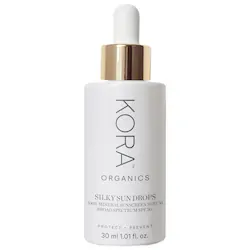
KORA Organics Silky Sun Drops Organic Sunscreen Serum with SPF 30 for Skin Barrier Repair

KORA Organics Silky Sun Drops Organic Sunscreen Serum with SPF 30 for Skin Barrier Repair

SPF 30Efficacy90/100IrritancyHigh·1 UV filter
Edit

Works for

1 of 1 advertised claim delivered

Sun protection
SPF 30 · 1 UV filter
Broad spectrum
SPF 30Broad spectrumMineral + chemical filtersNo white cast

This product offers a good level of protection against both UVB and UVA rays.

It is a mineral sunscreen. In other words, it contains non-organic UV filters. It will probably not sting your eyes but might leave a white cast.

This product can be considered "reef safe" because it does not contain the UV filters (oxybenzone and octinoxate) that can be harmful to coral reefs when present in the water in high concentrations.

UV spectrum
UVB290–320 nmUVA II320–340 nmUVA I340–400 nm
Zinc Oxide
FilterCoverageWhat it doesEst. amount
Zinc Oxide Mineral UVBUVA Photo-stable A broad spectrum sunblock (protects from both UVA and UVB rays). Is suitable for most sensitive skins. In small concentrations, can be used as a colorant17%
Reef-safe
No oxybenzone or octinoxate — the two filters banned in Hawaii, Florida Keys and Aruba.
Anti-aging
Not advertised by the brand · Tocopherol, Aloe barbadensis leaf juice
Strong evidence

This product can help prevent early signs of skin aging because it offers a good level of broad spectrum sun protection. Sun damage is the main cause of premature skin aging, and protecting your skin from the sun is the best anti-aging strategy.

TocopherolEffect: Low, below effective dosePure form of vitamin E. Can help moisturise and protect the skin from free radicals. Often used to help stabilise other ingredients or the formula itself~0.15–0.55%
Aloe barbadensis leaf juiceEffect: Low, below effective doseTraditionally used to treat sunburns, dermatitis and inflammation, but evidence for its effectiveness is lacking. The extract can contain humectants that help attract water into the skin~0.2–0.75%
Evens skin tone
Not advertised by the brand · No ingredient credited for this claim
Strong evidence

This product offers broad spectrum sun protection. It means that it can prevent hyperpigmentation and help keep the skin tone even (sun damage is the main factor causing age spots, darkening of post-acne marks and other discolorations).

Anti-oxidation
Not advertised by the brand · Rubus idaeus seed oil, Squalene + 6 more
Moderate evidence

This product contains antioxidants (rubus idaeus seed oil, squalene) that might be able to help neutralize free radicals in skin to lessen the damage it gets from the UV light (sun). There is not enough evidence to confirm their effectiveness in skin though.

Rubus idaeus seed oilKey activeEffect: MediumA plant oil that might be able to help neutralize free radicals in skin~1.2–1.9%
SqualeneKey activeEffect: MediumAn oil that is naturally part of skin sebum that helps to soften its upper layer, reduce water loss and neutralize free radicals. It might be comedogenic. Avoid applying large concentrations (or pure oil) before sun exposure as oxidized squalene can clog pores and lead to skin irritation. Today squalene is mostly derived from vegetable oils or synthetized by yeast~0.1–0.3%
Tocopheryl acetateEffect: LowA more stable but less bio-available form of vitamin E compared to Tocopherol. Might help moisturize and protect the skin from free radicals, but mostly used in low concentrations to stabilize other ingredients.~0.6–1.4%
Lactobacillus fermentEffect: LowA fermentation product created by bacteria Lactobacillus. The fermented product has anti-bacterial properties and might be helpful in calming down inflammation, but studies are lacking. Helps attract water to the upper layer of the skin. Can be used as a preservative~0.85–1.25%
Pelargonium graveolens flower oilEffect: LowAn essential oil. Can be irritating. Can become an allergen with oxidation~0.15–0.65%
Argania spinosa kernel oilEffect: LowAn emollient that helps soften the upper layer of the skin. Might have some weak anti-oxidant properties~1–1.6%
TocopherolUnder-dosedEffect: HighPure form of vitamin E. Can help moisturise and protect the skin from free radicals. Often used to help stabilise other ingredients or the formula itself~0.15–0.55%
BisabololEffect: Low, below effective doseAn active component of chamomile plant that historically has been used to calm down irritated skin. A recent study shows that bisabolol indeed can have some anti-inflammatory effect on skin, even though conclusive data is lacking. Bisabolol has a sweet floral scent and can be added to products for its aromatic properties~0.3–0.7%
Moisturizing
Not advertised by the brand · Lactobacillus, Salvia hispanica seed oil + 12 more
Good evidence

This product can help improve hydration of the skin with the two types of ingredients.

The first type is called “humectants”:
these ingredients help attract water. When humectants are on the surface of the skin, they “pull in” the moisture from the outside environment, or from within deeper layers of the skin. The following ingredients in this product do the job: anhydroxylitol, glycerin.

This product also contains ingredients called “occlusives”. They help reduce the speed with which our skin loses moisture to the outside environment. These ingredients also help soften the upper layer of the skin, so it feels less tight and nicer to the touch. The following ingredients in this product do the job: cocos nucifera oil, helianthus annuus seed oil.

LactobacillusKey activeEffect: HighA non-living ingredient made by fermentation with the bacteria Lactobacillus. It can help attract water to the upper layer of the skin and might help reduce inflammation~0.45–1.05%
Salvia hispanica seed oilKey active· EmollientEffect: HighChia seed oil. Helps to soften the upper layer of the skin and might be helpful in repairing skin barrier~25–37%
SqualeneKey active· Emollient, OcclusiveEffect: HighAn oil that is naturally part of skin sebum that helps to soften its upper layer, reduce water loss and neutralize free radicals. It might be comedogenic. Avoid applying large concentrations (or pure oil) before sun exposure as oxidized squalene can clog pores and lead to skin irritation. Today squalene is mostly derived from vegetable oils or synthetized by yeast~0.1–0.3%
Helianthus annuus seed oilKey active· Emollient, OcclusiveEffect: HighA great emollient due to its high linoleic acid content. One of the most effective plant oils in helping skin hydration and repairing skin barrier function~3–4.5%
Lactobacillus fermentKey active· HumectantEffect: HighA fermentation product created by bacteria Lactobacillus. The fermented product has anti-bacterial properties and might be helpful in calming down inflammation, but studies are lacking. Helps attract water to the upper layer of the skin. Can be used as a preservative~0.85–1.25%
Beta-sitosterolKey active· EmollientEffect: HighA phytosterol that can support skin's barrier function and help the skin stay hydrated~0.1–0.45%
AnhydroxylitolKey active· HumectantEffect: HighHelps attract water to the upper layer of the skin and repair the skin barrir function~0.35–0.75%
Argania spinosa kernel oilKey active· EmollientEffect: HighAn emollient that helps soften the upper layer of the skin. Might have some weak anti-oxidant properties~1–1.6%
Cocos nucifera fruit extractKey active· EmollientEffect: HighAn emollient. Found to be as effective as a moisturizer for dry skin as mineral oil. Could be comedogenic~0.3–0.75%
Cocos nucifera oilKey active· Emollient, OcclusiveEffect: HighAn emollient. Found to be as effective as a moisturizer for dry skin as mineral oil. Could be comedogenic~2.4–3.5%
EctoinKey activeEffect: HighSoftens the upper layer of the skin and can support skin barrier function~0.5–1.2%
GlycerinKey active· HumectantEffect: HighOne of the best moisturizing ingredients. Naturally present in skin. It attracts water to the upper layer of the skin working as a humectant~2–3%
TocopherolEffect: Low, below effective dosePure form of vitamin E. Can help moisturise and protect the skin from free radicals. Often used to help stabilise other ingredients or the formula itself~0.15–0.55%
Aloe barbadensis leaf juiceEffect: Low, below effective doseTraditionally used to treat sunburns, dermatitis and inflammation, but evidence for its effectiveness is lacking. The extract can contain humectants that help attract water into the skin~0.2–0.75%

Can it cause trouble?

Irritancy
5 strong irritants: Pelargonium graveolens flower oil, Citronellol + 3 more — patch-test recommended
High risk
We flagged 12 ingredients with irritancy potential. Severity depends on your sensitivity threshold; the table lists the worst offenders first.
IngredientFunctionIrritationEst. amount
Pelargonium graveolens flower oilAn essential oil. Can be irritating. Can become an allergen with oxidationHigh~0.15–0.65%est.
CitronellolA fragrance. Can be irritatingHigh~0.1–0.4%est.
Ocimum basilicum oilUsed as a fragranceHigh~0.1–0.35%est.
Rosa centifolia flower oilAn essential oil. Can be irritatingHigh~0.1–0.3%est.
GeraniolA fragrance. Can be irritatingHigh~0.05–0.2%est.
Isoamyl laurateHelps stabilize emulsions and create a nice product textureMedium~3.8–5.7%est.
Polyglyceryl-3 polyricinoleateHelps oil and water mix togetherMedium~1.7–2.5%est.
Rubus idaeus seed oilA plant oil that might be able to help neutralize free radicals in skinMedium~1.2–1.9%est.
Argania spinosa kernel oilAn emollient that helps soften the upper layer of the skin. Might have some weak anti-oxidant propertiesMedium~1–1.6%est.
Tocopheryl acetateA more stable but less bio-available form of vitamin E compared to Tocopherol. Might help moisturize and protect the skin from free radicals, but mostly used in low concentrations to stabilize other ingredients.Medium~0.6–1.4%est.
Polyhydroxystearic acidUsed to create a thicker product consistency and stabilize the formulationMedium~0.55–1.25%est.
Aloe barbadensis leaf juiceTraditionally used to treat sunburns, dermatitis and inflammation, but evidence for its effectiveness is lacking. The extract can contain humectants that help attract water into the skinMedium~0.2–0.75%est.
Comedogenic
3 ingredients rated 2 or more on the 0–5 pore-clogging scale
3 flagged
These ingredients have a comedogenic rating of 2 or more on a 0–5 scale; the table shows each one's rating. In leave-on products they can clog pores in acne-prone skin.
IngredientFunctionRatingEst. amount
Cocos nucifera oilAn emollient. Found to be as effective as a moisturizer for dry skin as mineral oil. Could be comedogenic3/5~2.4–3.5%est.
Cocos nucifera fruit extractAn emollient. Found to be as effective as a moisturizer for dry skin as mineral oil. Could be comedogenic3/5~0.3–0.75%est.
SqualeneAn oil that is naturally part of skin sebum that helps to soften its upper layer, reduce water loss and neutralize free radicals. It might be comedogenic. Avoid applying large concentrations (or pure oil) before sun exposure as oxidized squalene can clog pores and lead to skin irritation. Today squalene is mostly derived from vegetable oils or synthetized by yeast2/5~0.1–0.3%est.
Edit

User reviews

Would you recommend?
No community reviews yet.

Be the first — your take helps the next person decide.

Write a review · ~30s

Ingredients

Filter by role to see what each ingredient is doing.

Zinc oxide17%
UV filterKey active
Irritation risk
Low
Works for
Sun protection

A broad spectrum sunblock (protects from both UVA and UVB rays). Is suitable for most sensitive skins. In small concentrations, can be used as a colorant

More about Zinc oxide
Salvia hispanica seed oil~25–37%
Key active
Irritation risk
Low
Works for
Moisturizing

Chia seed oil. Helps to soften the upper layer of the skin and might be helpful in repairing skin barrier

More about Salvia hispanica seed oil
Water~10–15%
Formula
Irritation risk
Low

Plain old water

More about Water
Isoamyl laurate~3.8–5.7%
Irritant · medium
Irritation risk
Medium

Helps stabilize emulsions and create a nice product texture

More about Isoamyl laurate
Helianthus annuus seed oil~3–4.5%
Key active
Irritation risk
Low
Works for
Moisturizing

A great emollient due to its high linoleic acid content. One of the most effective plant oils in helping skin hydration and repairing skin barrier function

More about Helianthus annuus seed oil
Cocos nucifera oil~2.4–3.5%
Key activeComedogenic 3/5
Irritation risk
Low
Comedogenicity
3/5
Works for
Moisturizing

An emollient. Found to be as effective as a moisturizer for dry skin as mineral oil. Could be comedogenic

More about Cocos nucifera oil
Glycerin~2–3%
Key active
Irritation risk
Low
Works for
Moisturizing

One of the best moisturizing ingredients. Naturally present in skin. It attracts water to the upper layer of the skin working as a humectant

More about Glycerin
Polyglyceryl-3 polyricinoleate~1.7–2.5%
Irritant · medium
Irritation risk
Medium
Works for
Cleansing

Helps oil and water mix together

More about Polyglyceryl-3 polyricinoleate
Alumina~1.5–2.3%
Formula
Irritation risk
Low

The same compound that is used safely in dental implants and bone cements. In cosmetics, it is used to improve the consistency of products

More about Alumina
Rubus idaeus seed oil~1.2–1.9%
Key activeIrritant · medium
Irritation risk
Medium
Works for
Anti-oxidation

A plant oil that might be able to help neutralize free radicals in skin

More about Rubus idaeus seed oil
Argania spinosa kernel oil~1–1.6%
Key activeIrritant · medium
Irritation risk
Medium
Works for
MoisturizingAnti-oxidation

An emollient that helps soften the upper layer of the skin. Might have some weak anti-oxidant properties

More about Argania spinosa kernel oil
Lactobacillus ferment~0.85–1.25%
Key active
Irritation risk
Low
Works for
MoisturizingAnti-oxidationAnti-inflammatoryReduces irritation

A fermentation product created by bacteria Lactobacillus. The fermented product has anti-bacterial properties and might be helpful in calming down inflammation, but studies are lacking. Helps attract water to the upper layer of the skin. Can be used as a preservative

More about Lactobacillus ferment
Tocopheryl acetate~0.6–1.4%
Irritant · medium
Irritation risk
Medium
Works for
Anti-oxidation

A more stable but less bio-available form of vitamin E compared to Tocopherol. Might help moisturize and protect the skin from free radicals, but mostly used in low concentrations to stabilize other ingredients.

More about Tocopheryl acetate
Isostearic acid~0.8–1.25%
Formula
Irritation risk
Low
Works for
Cleansing

Used to create a nice product texture

More about Isostearic acid
Xylityl sesquicaprylate~0.55–1.25%
Formula
Irritation risk
Low
Works for
Cleansing
More about Xylityl sesquicaprylate
Ectoin~0.5–1.2%
Key active
Irritation risk
Low
Works for
Moisturizing

Softens the upper layer of the skin and can support skin barrier function

More about Ectoin
Polyhydroxystearic acid~0.55–1.25%
Irritant · medium
Irritation risk
Medium
Works for
Cleansing

Used to create a thicker product consistency and stabilize the formulation

More about Polyhydroxystearic acid
Polyricinoleic acid~0.5–1.2%
Formula
Lactobacillus~0.45–1.05%
Key active
Irritation risk
Low
Works for
Moisturizing

A non-living ingredient made by fermentation with the bacteria Lactobacillus. It can help attract water to the upper layer of the skin and might help reduce inflammation

More about Lactobacillus
Silica~0.5–1.1%
Formula
Irritation risk
Low

Used to absorb oil and can temporarily mattify skin

More about Silica
Polyglyceryl-3 ricinoleate~0.35–0.85%
Formula
Irritation risk
Low
Works for
Cleansing
More about Polyglyceryl-3 ricinoleate
Anhydroxylitol~0.35–0.75%
Key active
Irritation risk
Low
Works for
Moisturizing

Helps attract water to the upper layer of the skin and repair the skin barrir function

More about Anhydroxylitol
Bisabolol~0.3–0.7%
Formula
Irritation risk
Low
Works for
Reduces irritationAnti-inflammatoryAnti-oxidation

An active component of chamomile plant that historically has been used to calm down irritated skin. A recent study shows that bisabolol indeed can have some anti-inflammatory effect on skin, even though conclusive data is lacking. Bisabolol has a sweet floral scent and can be added to products for its aromatic properties

More about Bisabolol
Cocos nucifera fruit extract~0.3–0.75%
Key activeComedogenic 3/5
Irritation risk
Low
Comedogenicity
3/5
Works for
Moisturizing

An emollient. Found to be as effective as a moisturizer for dry skin as mineral oil. Could be comedogenic

More about Cocos nucifera fruit extract
Aloe barbadensis leaf juice~0.2–0.75%
Irritant · medium
Irritation risk
Medium
Works for
MoisturizingReduces rednessAntibacterialAnti-inflammatoryReduces irritationAnti-agingAnti-blemish

Traditionally used to treat sunburns, dermatitis and inflammation, but evidence for its effectiveness is lacking. The extract can contain humectants that help attract water into the skin

More about Aloe barbadensis leaf juice
Morinda citrifolia fruit extract~0.2–0.7%
Formula
Pelargonium graveolens flower oil~0.15–0.65%
Irritant · high
Irritation risk
High
Works for
Anti-oxidation

An essential oil. Can be irritating. Can become an allergen with oxidation

More about Pelargonium graveolens flower oil
Sparassis crispa extract~0.15–0.55%
Formula
Tocopherol~0.15–0.55%
Under-dosed
Irritation risk
Low
Works for
Anti-oxidationMoisturizingAnti-inflammatoryAnti-aging

Pure form of vitamin E. Can help moisturise and protect the skin from free radicals. Often used to help stabilise other ingredients or the formula itself

More about Tocopherol
Citronellol~0.1–0.4%
Irritant · high
Irritation risk
High

A fragrance. Can be irritating

More about Citronellol
Beta-sitosterol~0.1–0.45%
Key active
Irritation risk
Low
Works for
Moisturizing

A phytosterol that can support skin's barrier function and help the skin stay hydrated

More about Beta-sitosterol
Ocimum basilicum oil~0.1–0.35%
Irritant · high
Irritation risk
High

Used as a fragrance

More about Ocimum basilicum oil
Rosa centifolia flower oil~0.1–0.3%
Irritant · high
Irritation risk
High

An essential oil. Can be irritating

More about Rosa centifolia flower oil
Geraniol~0.05–0.2%
Irritant · high
Irritation risk
High

A fragrance. Can be irritating

More about Geraniol
Squalene~0.1–0.3%
Key activeComedogenic 2/5
Irritation risk
Low
Comedogenicity
2/5
Works for
MoisturizingAnti-oxidation

An oil that is naturally part of skin sebum that helps to soften its upper layer, reduce water loss and neutralize free radicals. It might be comedogenic. Avoid applying large concentrations (or pure oil) before sun exposure as oxidized squalene can clog pores and lead to skin irritation. Today squalene is mostly derived from vegetable oils or synthetized by yeast

More about Squalene
Ingredient list view

Zinc oxide, Salvia hispanica seed oil, Water, Isoamyl laurate, Helianthus annuus seed oil, Cocos nucifera oil, Glycerin, Polyglyceryl-3 polyricinoleate, Alumina, Rubus idaeus seed oil, Argania spinosa kernel oil, Lactobacillus ferment, Tocopheryl acetate, Isostearic acid, Xylityl sesquicaprylate, Ectoin, Polyhydroxystearic acid, Polyricinoleic acid, Lactobacillus, Silica, Polyglyceryl-3 ricinoleate, Anhydroxylitol, Bisabolol, Cocos nucifera fruit extract, Aloe barbadensis leaf juice, Morinda citrifolia fruit extract, Pelargonium graveolens flower oil, Sparassis crispa extract, Tocopherol, Citronellol, Beta-sitosterol, Ocimum basilicum oil, Rosa centifolia flower oil, Geraniol, Squalene

Compare prices

Retailers ranked by price — lowest first.

Sephora
$58.00
Buy

Affiliate links · prices updated regularly

Worth comparing, line by line.

Match % combines shared ingredients, the first five ingredients, shared actives and hero ingredients, irritancy (lower counts in the alternative's favour), texture and body area. Only products in the same routine step are compared.

Side-by-side comparison of this product against its closest alternatives
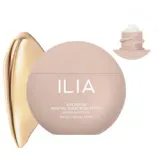
KORA OrganicsSilky Sun Drops Organic Sunscreen Serum with SPF 30 for Skin Barrier RepairYOUR PRODUCTILIASun Serum Mineral Sunscreen SPF 50 with 8-Hour Oil Control
Match—51%
Price$58.00$40.00−$18.00
Shared key ingredients—2 of 15
Key difference—Butyloctyl Salicylate
Irritancy High Low
SPFSPF 30SPF 50
Drying alcohol——
View product Shop
Cheaper alternatives? See how this stacks up against similar formulas.
We compare ingredient profiles across our catalog — pick the closest match for your budget.
Open dupe finder

Sources cited in this review

Every concentration estimate and effectiveness label is anchored to one of these 25 studies and safety reviews.

  1. 1
  2. 2
  3. 3
  4. 4
  5. 5
  6. 6
KORA Organics Silky Sun Drops Organic Sunscreen Serum with SPF 30 for Skin Barrier Repair
KORA OrganicsSilky Sun Drops Organic Sunscreen Serum with SPF 30 for Skin Barrier Repair

Affiliate links · As an Amazon Associate, WIMJ earns from qualifying purchases.

As an Amazon Associate, WIMJ earns from qualifying purchases.