Works for:
based on ingredients and %- Moisturizing
Doesn't work for:
based on ingredients and %- Evens skin tone
Can it cause trouble?
- Irritation risk: high
- Comedogenic risk ingredients: 0
Key actives
Product Summary
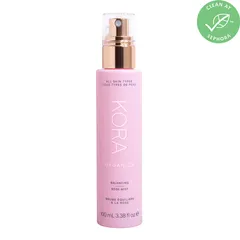
"KORA Organics - Balancing Rose Mist" could be helpful for: Moisturizing, but its actives are not the most effective or are not well-studied.
Ingredient callouts
- Humectants (sodium pca 1.60% - 2.30% and glycerin 4.20% - 6.30%). These ingredients help attract water to the upper layer of the skin and improve the skin hydration.
About the brand
According to Cruelty-Free Kitty "KORA Organics" is cruelty free and so is its parent company.
Price
The product retails from 35.00$ up to 37.00$ in the United States, from 24.80£ up to 242.00£ in the United Kingdom and for 36.80A$ in Australia.
For a detailed price comparison: click here.
Moisturizing
What does the product description say?
Balancing Rose Mist
Source: From product name
This product contains good ingredients to attract water to the upper layer of the skin. These ingredients are called "humectants": glycerin, sodium pca.
When humectants are on the surface of the skin, they “pull in” the moisture from the outside environment, or from within deeper layers of the skin. If the air is dry, humectants can speed up the moisture loss from the skin. This is why it is a good idea to use another product on top of this one to help "seal in" the moisture (look for ingredients like dimethicone, squalane, oils and butters).
One of the best moisturizing ingredients. Naturally present in skin. It attracts water to the upper layer of the skin working as a humectant
Naturally present in skin and helps to attract water to its upper layer
An emollient that can also help water and oil mix together, as well as prevent bacteria growth in products
Traditionally used to treat sunburns, dermatitis and inflammation, but evidence for its effectiveness is lacking. The extract can contain humectants that help attract water into the skin
Used to add a nice rose smell to the product. Might help attract water to the upper layer of the skin and have some anti-oxidant effect. Can be irritating
An exfoliating and moisturizing alpha-hydroxy acid (AHA). Typically causes less irritation than other AHAs, for example, glycolic acid. At high concentrations (about 15%), lactic acid can help reduce lines and wrinkles. Recent studies show that lactic acid can support the "good" bacteria living on skin's surface (healthy skin microbiome)
Pure form of vitamin E. Can help moisturise and protect the skin from free radicals. Often used to help stabilise other ingredients or the formula itself
Evens skin tone
What does the product description say?
It also replenishes the skin’s moisture levels and rebalances for a clear and even skin tone.
Source: Sephora Hong Kong
Effective ingredients missing or their concentration is too low
An exfoliating and moisturizing alpha-hydroxy acid (AHA). Typically causes less irritation than other AHAs, for example, glycolic acid. At high concentrations (about 15%), lactic acid can help reduce lines and wrinkles. Recent studies show that lactic acid can support the "good" bacteria living on skin's surface (healthy skin microbiome)
How honest is this product?
| Promise | Can it deliver? |
|---|---|
| Moisturizing | |
| Evens skin tone |
Total Promises Fulfilled score: 37/100.
We receive a small commission for purchases made through these links at no cost for you. Thank you for your support! Learn more
Potential irritants
Comedogenic ingredients
No comedogenic ingredients detected
User reviews (0)
Averages from community submissions.
No reviews yet for this product.
Be the first to share your experience!
Tried this product?
Help capture what the ingredient list can't—texture, finish, pilling, scent, and more. Answer what you can, skip the rest.
Takes ~30 seconds.
Reviews are shown in aggregate. No personal details.
Key Actives
Pure form of vitamin E. Can help moisturise and protect the skin from free radicals. Often used to help stabilise other ingredients or the formula itself
One of the best moisturizing ingredients. Naturally present in skin. It attracts water to the upper layer of the skin working as a humectant
Naturally present in skin and helps to attract water to its upper layer
Potential irritants
Used to add a nice rose smell to the product. Might help attract water to the upper layer of the skin and have some anti-oxidant effect. Can be irritating
A plant extract that can be irritating. It might contain a compound anthocyanin that could be helpful in neutralizing free radicals
An essential oil. Can be irritating. Can become an allergen with oxidation
A common frangrance that can easily irritate skin, especially if exposed to air, light or heat
Traditionally used to treat sunburns, dermatitis and inflammation, but evidence for its effectiveness is lacking. The extract can contain humectants that help attract water into the skin
A plant extract that might help neutralize free radicals in skin, but research on its effectiveness is lacking
Used to thicken the product formulation and might help to add minerals to the surface of the skin. It is used in scrubs as a physical exfoliant. Can increase sensitivity to other ingredients if left on the skin or used in high concentration
Used to thicken the product formulation and might help to add minerals to the surface of the skin. It is used in scrubs as a physical exfoliant. Can increase sensitivity to other ingredients if left on the skin or used in high concentration
An exfoliating and moisturizing alpha-hydroxy acid (AHA). Typically causes less irritation than other AHAs, for example, glycolic acid. At high concentrations (about 15%), lactic acid can help reduce lines and wrinkles. Recent studies show that lactic acid can support the "good" bacteria living on skin's surface (healthy skin microbiome)
Comedogenic ingredients
We couldn't find any comedogenic ingredients in this product
All ingredients
Traditionally used to treat sunburns, dermatitis and inflammation, but evidence for its effectiveness is lacking. The extract can contain humectants that help attract water into the skin
One of the best moisturizing ingredients. Naturally present in skin. It attracts water to the upper layer of the skin working as a humectant
Used to add a nice rose smell to the product. Might help attract water to the upper layer of the skin and have some anti-oxidant effect. Can be irritating
Naturally present in skin and helps to attract water to its upper layer
An emollient that can also help water and oil mix together, as well as prevent bacteria growth in products
A plant extract that can be irritating. It might contain a compound anthocyanin that could be helpful in neutralizing free radicals
A plant extract that might help neutralize free radicals in skin, but research on its effectiveness is lacking
An essential oil. Can be irritating. Can become an allergen with oxidation
Pure form of vitamin E. Can help moisturise and protect the skin from free radicals. Often used to help stabilise other ingredients or the formula itself
Used to stabilize the product formulation and can help absorb oil
Used to thicken the product formulation and might help to add minerals to the surface of the skin. It is used in scrubs as a physical exfoliant. Can increase sensitivity to other ingredients if left on the skin or used in high concentration
Used to thicken the product formulation and might help to add minerals to the surface of the skin. It is used in scrubs as a physical exfoliant. Can increase sensitivity to other ingredients if left on the skin or used in high concentration
An exfoliating and moisturizing alpha-hydroxy acid (AHA). Typically causes less irritation than other AHAs, for example, glycolic acid. At high concentrations (about 15%), lactic acid can help reduce lines and wrinkles. Recent studies show that lactic acid can support the "good" bacteria living on skin's surface (healthy skin microbiome)
A common frangrance that can easily irritate skin, especially if exposed to air, light or heat
Ingredient list view
Aloe barbadensis leaf juice, Water, Glycerin, Polyglycerin-10, Unknown, Rosa damascena flower water, Sodium pca, Glyceryl caprylate, Morinda citrifolia fruit extract, Hibiscus sabdariffa flower extract, Malpighia glabra fruit extract, Pelargonium graveolens flower oil, Tocopherol, Sodium levulinate, Sodium anisate, Maltodextrin, Sea salt, Maris sal, Lactic acid, Potassium sorbate, Quartz, Citral, Citronellol, Geraniol, Limonene, Linalool
- Glycerol and the skin: holistic approach to its origin and functions
- Annex I: Clinical evidence regarding sensitisation to individual fragrance chemicals and to natural extracts
- Anthocyanin-rich extract from Hibiscus sabdariffa calyx counteracts UVC-caused impairments in rats
- Hibiscus sabdariffa L. – A phytochemical and pharmacological review
- Liposome-containing Hibiscus sabdariffa calyx extract formulations with increased antioxidant activity, improved dermal penetration and reduced dermal toxicity
- Acerola, an untapped functional superfruit: a review on latest frontiers
- Fragrance Compound Geraniol Forms Contact Allergens on Air Exposure. Identification and Quantification of Oxidation Products and Effect on Skin Sensitization
- Vitamin E in dermatology
- Vitamin E and Skin Health
- Epidermal and dermal effects of topical lactic acid
- Dual Effects of Alpha-Hydroxy Acids on the Skin