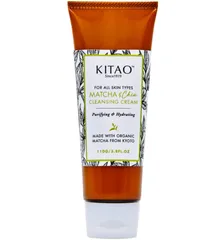
Works for:
based on ingredients and %- Cleansing
Can it cause trouble?
- Irritation risk: high
- Comedogenic risk ingredients: 5
Key actives

Works for
Cleansing
What does the product description say?
Matcha + Chia Cleansing Cream
Source: From product name
This product works by removing dirt and oil from the surface of the skin. It uses a combination of mild cleansing agents (carbomer, cetearyl alcohol, cholesterol, glyceryl stearate se, hydroxypropyl methylcellulose, polysorbate 60, sodium laureth-4 phosphate, sodium lauroyl lactylate, xanthan gum) and should be able to cleanse the skin gently. Still keep in mind that any cleansing can disrupt the skin barrier, and most people do not need to cleanse their skin more than once per day.
Helps create a thicker or gel-like product texture. It is not a surfactant but can be used in gentle cleansing formulations
A non-drying alcohol. Works as an emollient. Helps water and oil mix together and creates a nice product texture
An emollient that is naturally found in skin
Used to stabilize the product formulations and works as an emollient
Used to create a thicker product consistency and stabilize the formulation
Helps oil and water mix together
Helps water and oil mix together
Used to create a thicker product consistency
How honest is this product?
| Promise | Can it deliver? |
|---|---|
| Cleansing |
Total Promises Fulfilled score: 100/100.
We receive a small commission for purchases made through these links at no cost for you. Thank you for your support! Learn more
Potential irritants
Comedogenic ingredients
User reviews (0)
Averages from community submissions.
No reviews yet for this product.
Be the first to share your experience!
Tried this product?
Help capture what the ingredient list can't—texture, finish, pilling, scent, and more. Answer what you can, skip the rest.
Takes ~30 seconds.
Reviews are shown in aggregate. No personal details.
Key Actives
Can contain potent anti-oxidant compounds (abbreviated ECG, GCG, EGC, and EGCG) that might help protect the skin from free radicals. Can help calm down inflammation and has some anti-bacterial properties. Unfortunately, these antioxidants are unstable and lose their effectiveness very quickly in products. The concentration of the antioxidant compounds in the extract also tends to be low to be effective in topical formulation
Pure form of vitamin E. Can help moisturise and protect the skin from free radicals. Often used to help stabilise other ingredients or the formula itself
Three steps removed from the active form of vitamin A - retinoic acid. To have an effect in the skin, it first needs to be converted twice to become the retinoic acid. This means it is less potent than retinol, but could also be less irritating. Once converted to the retinoic acid in the skin, it helps against all signs of aging, improves skin cell turnover and helps fight blemishes and clogged pores. However, in many cosmetic formulations, it is used in a concentration that is too low to have the full effect
Helps soften the upper layer of the skin and can be helpful in restoring the skin barrier function. Might have some anti-oxidant effect
A type of lipid similar to ceramides naturally present in skin. Helps to soften the upper layer of the skin and supports the skin barrier function to keep it hydrated. Can help to prevent inflammation in skin
A type of lipid similar to ceramides naturally present in skin. Helps to soften the upper layer of the skin and supports the skin barrier function to keep it hydrated. Can help to prevent inflammation in skin
A type of lipid similar to ceramides naturally present in skin. Helps to soften the upper layer of the skin and supports the skin barrier function to keep it hydrated. Can help to prevent inflammation in skin
A type of lipid that is naturally present in skin. It might help in repairing skin barrier function and has anti-bacterial effect
A non-drying alcohol. Works as an emollient. Helps water and oil mix together and creates a nice product texture
Used to stabilize the product formulations and works as an emollient
A silicone that helps to reduce water loss from the surface of the skin. Can temporarily "fill in" lines and wrinkles, absorb oil, and create a nice product finish
Helps attract water to the upper layer of the skin. Might have some anti-oxidant properties
An emollient that is naturally found in skin
An oil naturally present in skin. Works as an emollient to soften the skin and form a protective layer on its surface without a greasy feeling.
One of the best moisturizing ingredients. Naturally present in skin. It attracts water to the upper layer of the skin working as a humectant
One of the most effective and the most studied occlusive ingredients that creates a protective layer on top of the skin preventing moisture loss
Chia seed oil. Helps to soften the upper layer of the skin and might be helpful in repairing skin barrier
Helps soften the upper layer of the skin
One of the best moisturizing ingredients. Attracts water into the upper layer of the skin
A typically plant-derived compound that is supposed mimic human collagen. Cannot penetrate the skin barrier so is not particularly useful in skincare products beyond attracting water to the upper layer of the skin
Helps water and oil mix together
Helps create a thicker or gel-like product texture. It is not a surfactant but can be used in gentle cleansing formulations
Used to create a thicker product consistency and stabilize the formulation
A typically plant-derived compound that is supposed mimic human collagen. Cannot penetrate the skin barrier so is not particularly useful in skincare products beyond attracting water to the upper layer of the skin
Used to create a thicker product consistency
Potential irritants
Can be drying and contribute to skin irritation. Used in formulars to dissolve other ingredients, create a thinner product consistency or for its antibacterial properties
Three steps removed from the active form of vitamin A - retinoic acid. To have an effect in the skin, it first needs to be converted twice to become the retinoic acid. This means it is less potent than retinol, but could also be less irritating. Once converted to the retinoic acid in the skin, it helps against all signs of aging, improves skin cell turnover and helps fight blemishes and clogged pores. However, in many cosmetic formulations, it is used in a concentration that is too low to have the full effect
An aromatic blend of unspecified and possibly irritating ingredients
A plant extract that might help neutralize free radicals in skin, but research on its effectiveness is lacking
A derivative of vitamin C that is more stable, but less bioavailable than the pure form of vitamin C. It does not penetrate the skin well, but has been shown to convert to pure vitamin C once in skin. It can be helpful in stimulating collagen production and lightening the skin tone, but the required concentration is likely to be very high
A fruit extract that might help neutralize free radicals in skin, but evidence of effectiveness is missing
Helps preserve products and creates a nice product texture
Used to create a thicker product consistency and stabilize the formulation
Helps to control the skin's pH level. Maintains the skin's natural film of amino-lactic acids and oils. Helps to preserve products
Can work as an exfoliant but is typically used to adjust the product pH
Comedogenic ingredients
A non-drying alcohol. Works as an emollient. Helps water and oil mix together and creates a nice product texture
Used to stabilize the product formulations and works as an emollient
Helps soften the upper layer of the skin and can be helpful in restoring the skin barrier function. Might have some anti-oxidant effect
Used to thicken product formulation. Can help attract water to the upper layer of the skin
All ingredients
An oil naturally present in skin. Works as an emollient to soften the skin and form a protective layer on its surface without a greasy feeling.
Used to create a nice product texture and help delivery of other ingredients. Might be somewhat helpful in attracting water to the upper layer of the skin
One of the best moisturizing ingredients. Naturally present in skin. It attracts water to the upper layer of the skin working as a humectant
A non-drying alcohol. Works as an emollient. Helps water and oil mix together and creates a nice product texture
Used to stabilize the product formulations and works as an emollient
A silicone that helps to reduce water loss from the surface of the skin. Can temporarily "fill in" lines and wrinkles, absorb oil, and create a nice product finish
Non-drying alcohol that helps water and oil mix together. Also serves as an emollient
One of the most effective and the most studied occlusive ingredients that creates a protective layer on top of the skin preventing moisture loss
Chia seed oil. Helps to soften the upper layer of the skin and might be helpful in repairing skin barrier
Helps soften the upper layer of the skin
Can contain potent anti-oxidant compounds (abbreviated ECG, GCG, EGC, and EGCG) that might help protect the skin from free radicals. Can help calm down inflammation and has some anti-bacterial properties. Unfortunately, these antioxidants are unstable and lose their effectiveness very quickly in products. The concentration of the antioxidant compounds in the extract also tends to be low to be effective in topical formulation
A plant extract that might help neutralize free radicals in skin, but research on its effectiveness is lacking
A derivative of vitamin C that is more stable, but less bioavailable than the pure form of vitamin C. It does not penetrate the skin well, but has been shown to convert to pure vitamin C once in skin. It can be helpful in stimulating collagen production and lightening the skin tone, but the required concentration is likely to be very high
Helps soften the upper layer of the skin and can be helpful in restoring the skin barrier function. Might have some anti-oxidant effect
A fruit extract that might help neutralize free radicals in skin, but evidence of effectiveness is missing
One of the best moisturizing ingredients. Attracts water into the upper layer of the skin
A typically plant-derived compound that is supposed mimic human collagen. Cannot penetrate the skin barrier so is not particularly useful in skincare products beyond attracting water to the upper layer of the skin
A type of lipid similar to ceramides naturally present in skin. Helps to soften the upper layer of the skin and supports the skin barrier function to keep it hydrated. Can help to prevent inflammation in skin
A type of lipid similar to ceramides naturally present in skin. Helps to soften the upper layer of the skin and supports the skin barrier function to keep it hydrated. Can help to prevent inflammation in skin
A type of lipid similar to ceramides naturally present in skin. Helps to soften the upper layer of the skin and supports the skin barrier function to keep it hydrated. Can help to prevent inflammation in skin
Helps attract water to the upper layer of the skin. Might have some anti-oxidant properties
Helps preserve products and creates a nice product texture
Helps create a thicker or gel-like product texture. It is not a surfactant but can be used in gentle cleansing formulations
Used to create a thicker product consistency and stabilize the formulation
Used to thicken product formulation. Can help attract water to the upper layer of the skin
Pure form of vitamin E. Can help moisturise and protect the skin from free radicals. Often used to help stabilise other ingredients or the formula itself
A typically plant-derived compound that is supposed mimic human collagen. Cannot penetrate the skin barrier so is not particularly useful in skincare products beyond attracting water to the upper layer of the skin
Helps to control the skin's pH level. Maintains the skin's natural film of amino-lactic acids and oils. Helps to preserve products
Can work as an exfoliant but is typically used to adjust the product pH
Can be drying and contribute to skin irritation. Used in formulars to dissolve other ingredients, create a thinner product consistency or for its antibacterial properties
Acts as a solvent for other ingredients. Speeds up the absorption of other ingredients into the skin
Three steps removed from the active form of vitamin A - retinoic acid. To have an effect in the skin, it first needs to be converted twice to become the retinoic acid. This means it is less potent than retinol, but could also be less irritating. Once converted to the retinoic acid in the skin, it helps against all signs of aging, improves skin cell turnover and helps fight blemishes and clogged pores. However, in many cosmetic formulations, it is used in a concentration that is too low to have the full effect
A type of lipid that is naturally present in skin. It might help in repairing skin barrier function and has anti-bacterial effect
A preservative. It helps prevent bacterial growth in cosmetic products
An aromatic blend of unspecified and possibly irritating ingredients
Ingredient list view
Water, Squalane, Butylene glycol, Glycerin, Cetearyl alcohol, Glyceryl stearate se, Oleyl alcohol, Sodium laureth-4 phosphate, Dimethicone, Behenyl alcohol, Petrolatum, (euterpe oleracea/euterpe precatoria/theobroma grandiflorum) fruit extract, Salvia hispanica seed oil, Chenopodium quinoa seed extract, Camellia sinensis leaf powder, Camellia sinensis leaf extract, Myrciaria dubia fruit extract, Magnesium ascorbyl phosphate, Theobroma cacao seed butter, Rosa roxburghii fruit extract, Oryza sativa lees extract, Sodium hyaluronate, Hydrolyzed collagen, Sodium lauroyl lactylate, Ceramide np, Ceramide 1, Unknown, Ceramide eop, Rice ferment filtrate, Iris florentina root extract, 1,2-hexanediol, Caprylyl glycol, Polysorbate 60, Carbomer, Potassium hydroxide, Hydroxypropyl methylcellulose, Algin, Tocopherol, Hydrolyzed collagen, Sodium citrate, Citric acid, Alcohol, Propanediol, Zinc sulfate, Retinyl palmitate, Phytosphingosine, Cholesterol, Xanthan gum, Phenoxyethanol, Parfum
- Glycerol and the skin: holistic approach to its origin and functions
- Dimethicone as a protective ingredient in topical medications
- Final Report on the Safety Assessment of Dimethicone Copolyol
- Antioxidant and Associated Capacities of Camu Camu (Myrciaria dubia): A Systematic Review
- Stability, transdermal penetration, and cutaneous effects of ascorbic acid and its derivatives
- Topical L-ascorbic acid: percutaneous absorption studies
- Cocoa polyphenols and their influence on parameters involved in ex vivo skin restructuring
- Nutritional constituents, health benefits and processing of Rosa Roxburghii: A review
- Hyaluronic acid: A key molecule in skin aging
- Hyaluronan (Hyaluronic Acid): a natural moisturizer for skin care
- Skin hydration is significantly increased by a cream formulated to mimic the skin’s own natural moisturizing systems
- Topically Applied Ceramides Interact with the Stratum Corneum Lipid Matrix in Compromised Ex Vivo Skin
- Topical emulsions containing ceramides: Effects on the skin barrier function and anti‐inflammatory properties
- The influence of alkane chain length on the skin irritation potential of 1,2-alkanediols
- Vitamin E in dermatology
- Vitamin E and Skin Health
- Safety Assessment of Zinc Salts as Used in Cosmetics