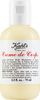
Kiehl's Creme de Corps All-Over Body Moisturiser
Works for
1 of 1 advertised claim delivered
Moisturizing23 ingredients credited for this claimGood support
“Creme de Corps All-Over Body Moisturiser”
This product can help improve hydration of the skin with the two types of ingredients.
The first type is called “humectants”:
these ingredients help attract water.
When humectants are on the surface of the skin, they “pull in” the moisture from the outside environment, or from
within deeper layers of the skin. The following ingredients in this product do the job:
glycerin, sodium pca.
This product also contains ingredients called “occlusives”. They help reduce the speed with which our skin loses moisture to the outside environment. These ingredients also help soften the upper layer of the skin, so it feels less tight and nicer to the touch. The following ingredients in this product do the job: dimethicone, squalane.
Can it cause trouble?
Irritancy2 strong irritants: Benzophenone-3, Arnica montana extractMedium risk
Comedogenic5 ingredients rated 2 or more on the 0–5 pore-clogging scale5 flagged
User reviews
Be the first — your take helps the next person decide.
Ingredients
Filter by role to see what each ingredient is doing.
Water~45–55%
Squalane~4.8–5.8%
- Irritation risk
- Low
An oil naturally present in skin. Works as an emollient to soften the skin and form a protective layer on its surface without a greasy feeling.
More about SqualaneHydrogenated polyisobutene~4.4–5.4%
- Irritation risk
- Low
Used to improve the product consistency and soften the upper layer of the skin
More about Hydrogenated polyisobuteneGlycerin~3.2–3.9%
- Irritation risk
- Low
One of the best moisturizing ingredients. Naturally present in skin. It attracts water to the upper layer of the skin working as a humectant
More about GlycerinPropylene glycol~2.4–2.9%
- Irritation risk
- High
Helps oil and water mix together and can enhance the penetration of other ingredients into the skin. It can be irritating
More about Propylene glycolPeg-100 stearate~2.1–2.6%
- Irritation risk
- Low
Helps oil and water mix togehter and creates a nice product texture
More about Peg-100 stearateGlyceryl stearate~1.7–2.1%
- Irritation risk
- Low
An emollient that softens the skin and forms a protective layer on its surface. Helps water and oil mix together
More about Glyceryl stearateStearyl alcohol~1.6–1.9%
- Irritation risk
- Low
An emollient that helps soften the skin
More about Stearyl alcoholMyristyl alcohol~1.3–1.6%
- Irritation risk
- High
Helps to stabilize the product formulation while softening the upper layer of the skin. Can be irritating
More about Myristyl alcoholDimethicone~1.1–1.3%
- Irritation risk
- Low
A silicone that helps to reduce water loss from the surface of the skin. Can temporarily "fill in" lines and wrinkles, absorb oil, and create a nice product finish
More about DimethiconePpg-5 pentaerythrityl ether~0.9–1.1%
- Irritation risk
- Low
Peg-5 pentaerythrityl ether~0.7–1.05%
- Irritation risk
- Low
Sesamum indicum seed oil~0.6–0.95%
- Irritation risk
- Low
A good moisturizing plant oil. Due to the high linoleic acid content, it helps soften the upper layer of the skin, reduce water loss and support skin barrier function
More about Sesamum indicum seed oilPhenoxyethanol~0.55–0.85%
- Irritation risk
- Low
A preservative. It helps prevent bacterial growth in cosmetic products
More about PhenoxyethanolIsopropyl palmitate~0.55–0.8%
- Irritation risk
- Medium
- Comedogenicity
- 3/5
Helps soften the upper layer of the skin and create a thicker product consistency
More about Isopropyl palmitateOzokerite~0.55–0.85%
Benzophenone-3~0.65–1%
- Irritation risk
- High
Same as oxybenzone. Protects in the UVB and short UVA range. In small concentrations, used to stabilize product formulation. Can be irritating. Is shown to be harmful to coral reefs - consider avoiding bathing in coral reef areas when wearing a product with this ingredient. It can penetrate the skin and get absorbed into bloodstream faster than other popular filters available in the US. The study that produced this finding did not address any potential health effects of the absorption
More about Benzophenone-3Butyrospermum parkii butter~0.55–0.8%
- Irritation risk
- Low
- Comedogenicity
- 3/5
A great moisturising ingredient that softens the skin and reduces water loss from its upper layer. It also can be helpful in protecting skin from free radicals
More about Butyrospermum parkii butterMethylparaben~0.15–0.3%
Magnesium aluminum silicate~0.45–0.65%
- Irritation risk
- Low
Might be helpful in restoring skin barrier function and, when combined with zinc carbonate and malonic acid, reducing fine lines and wrinkles by stimulating elastin production. Also helps stabilize the product formulation
More about Magnesium aluminum silicateXanthan gum~0.4–0.65%
- Irritation risk
- Low
Used to create a thicker product consistency
More about Xanthan gumGlycine soja extract~0.35–0.65%
- Irritation risk
- Low
Glycine soja sterols~0.45–0.65%
- Irritation risk
- Low
An emollient that helps soften the skin
More about Glycine soja sterolsSodium pca~0.35–0.6%
- Irritation risk
- Low
Naturally present in skin and helps to attract water to its upper layer
More about Sodium pcaPropylparaben~0.2–0.4%
Allantoin~0.3–0.6%
- Irritation risk
- Low
Helps calm down inflammation in skin and can help reduce itching. Helps to repair the skin barrier and keep skin hydrated
More about AllantoinOlea europaea fruit oil~0.35–0.65%
- Irritation risk
- Medium
An emollient that helps soften the skin but is not effective for restoring its barrier function. Might be helpful to calm down inflammation
More about Olea europaea fruit oilPrunus amygdalus dulcis seed~0.3–0.6%
- Irritation risk
- Low
Helps soften the upper layer of the skin
More about Prunus amygdalus dulcis seedArnica montana extract~0.3–0.6%
- Irritation risk
- High
Prunus armeniaca kernel oil~0.35–0.65%
- Irritation risk
- Medium
An emollient that helps soften the skin
More about Prunus armeniaca kernel oilTheobroma cacao seed butter~0.35–0.65%
- Irritation risk
- Low
- Comedogenicity
- 3/5
Helps soften the upper layer of the skin and can be helpful in restoring the skin barrier function. Might have some anti-oxidant effect
More about Theobroma cacao seed butterPersea gratissima oil~0.35–0.65%
- Irritation risk
- Medium
An emollient that helps soften the skin and could be helpful in repairing its barrier function
More about Persea gratissima oilTocopherol~0.3–0.55%
- Irritation risk
- Low
Pure form of vitamin E. Can help moisturise and protect the skin from free radicals. Often used to help stabilise other ingredients or the formula itself
More about TocopherolBht~0.25–0.45%
Lecithin~0.3–0.55%
- Irritation risk
- Low
Used mostly for creating emulsions - helping oil and water mix together. Helps soften the upper layer of the skin
More about LecithinButylparaben~0.2–0.35%
Zea mays starch~0.2–0.35%
- Irritation risk
- Medium
- Comedogenicity
- 3/5
Used to thicken the product's consistency
More about Zea mays starchZea mays oil~0.1–0.25%
- Irritation risk
- Low
- Comedogenicity
- 3/5
A good moisturizing plant oil. Due to the high linoleic acid content, it helps soften the upper layer of the skin, reduce water loss and support skin barrier function
More about Zea mays oilAloe barbadensis extract~0.15–0.25%
- Irritation risk
- Medium
Traditionally used to treat sunburns, dermatitis and inflammation, but evidence for its effectiveness is lacking. The extract can contain humectants that help attract water into the skin
More about Aloe barbadensis extractAloe barbadensis leaf juice~0.15–0.25%
- Irritation risk
- Medium
Traditionally used to treat sunburns, dermatitis and inflammation, but evidence for its effectiveness is lacking. The extract can contain humectants that help attract water into the skin
More about Aloe barbadensis leaf juiceCi 75130~0.1–0.15%
- Irritation risk
- Low
Beta-carotene~0.1–0.15%
Ingredient list view
Water, Squalane, Hydrogenated polyisobutene, Glycerin, Propylene glycol, Peg-100 stearate, Glyceryl stearate, Stearyl alcohol, Myristyl alcohol, Dimethicone, Ppg-5 pentaerythrityl ether, Peg-5 pentaerythrityl ether, Sesamum indicum seed oil, Phenoxyethanol, Isopropyl palmitate, Ozokerite, Benzophenone-3, Butyrospermum parkii butter, Methylparaben, Magnesium aluminum silicate, Xanthan gum, Glycine soja extract, Glycine soja sterols, Sodium pca, Propylparaben, Allantoin, Olea europaea fruit oil, Prunus amygdalus dulcis seed, Unknown, Arnica montana extract, Prunus armeniaca kernel oil, Theobroma cacao seed butter, Persea gratissima oil, Tocopherol, Bht, Lecithin, Butylparaben, Zea mays starch, Zea mays oil, Aloe barbadensis extract, Aloe barbadensis leaf juice, Ci 75130, Beta-carotene
Compare prices
Retailers ranked by price — lowest first.
Affiliate links · prices updated regularly
Sources cited in this review
Every concentration estimate and effectiveness label is anchored to one of these 25 studies and safety reviews.
- 1
- 2
- 3Surfactants and experimental irritant contact dermatitisncbi.nlm.nih.gov
- 4Propylene Glycolpubmed.ncbi.nlm.nih.gov
- 5Skin-sensitizing and irritant properties of propylene glycolonlinelibrary.wiley.com
- 6Cosmetic allergy from myristyl alcoholncbi.nlm.nih.gov

Affiliate links · As an Amazon Associate, WIMJ earns from qualifying purchases.