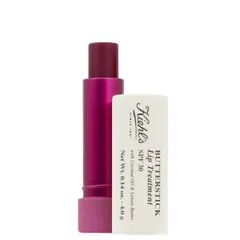
Works for:
based on ingredients and %- Sun protection
- Anti-aging
- Moisturizing
Can it cause trouble?
- Irritation risk: high
- Comedogenic risk ingredients: 7
Key actives
Product Summary
"Kiehl's - Butterstick Lip Treatment SPF30" is using UV filters in a relatively low concentration. Because of this, it might not be able to provide reliable sun protection.
Sunscreen filters
This is a "mixed" sunscreen in the sense that it uses both mineral and organic (so-called "chemical") sun filters. The organic filters in the product are: avobenzone, octinoxate and octocrylene. As for the mineral filters, this sunscreen uses titanium dioxide.
Irritation risk
This lip sunscreen contains a bunch of common irritants, including ingredients that do not provide any known benefit for the skin. It might not be the best choice if your skin is sensitive. We assess the overall irritancy of this lip sunscreen to be high. For a detailed overview of all potential irritants: click here
You can see the detailed formula review with the breakdown of all actives in the product and the full ingredient list with estimated concentrations in the tables below.
Price
The product retails for 15.80£ in the United Kingdom.
For a detailed price comparison: click here.
Works for
Anti-aging
This product can help prevent early signs of skin aging because it offers a good level of broad spectrum sun protection. Sun damage is the main cause of premature skin aging, and protecting your skin from the sun is the best anti-aging strategy.
A great moisturising ingredient that softens the skin and reduces water loss from its upper layer. It also can be helpful in protecting skin from free radicals
This oil's cmposition is closest to rapeseed oil. It is a very stable oil and serves as an emoillient
An emollient that softens the skin
The most well-researched antioxidant that works in skin. Helps neutralize free radicals supporting collagen production, helping to even out the skin tone and preventing early signs of aging
Pure form of vitamin E. Can help moisturise and protect the skin from free radicals. Often used to help stabilise other ingredients or the formula itself
Being a lipid soluble form of vitamin C, it is more stable and can penetrate the skin better than L-Ascorbic acid. It is effective in protecting the skin from free radicals, as well as evening the skin tone, but is less effective in stimulating collagen production compared to L-Ascorbic acid.
Sun protection
What does the product description say?
Butterstick Lip Treatment SPF30
Source: Lookfantastic
This product offers a good level of protection against both UVB and UVA rays.
This sunscreen uses organic (so-called "chemical") sunscreen filters. Organic, or "chemical" filters usually provide reliable sun protection and rarely leave a white cast. Sunscreens with organic filters can sting eyes.
Avobenzone. An organic, or so-called "chemical" UV filter. Protects against both UVA and UVB rays. Needs to be combined with other filters in a formulation to be stable.
A weak sunscreen that protects against the sun rays that cause sunburn (UVB) and is somewhat effective against the UVA rays. It is quite stable and can help stabilize other, more vulnerable, sunscreen ingredients like Avobenzone. It is an organic, or so called "chemical" sunscreen
Octinoxate. When used in higher concentrations, works as a sunscreen protecting the skin from UVB rays. When used in lower concentration, helps to preserve the product formulation. Is shown to be harmful to coral reefs - consider avoiding bathing in coral reef areas when wearing a product with this ingredient. It can be irritating
Moisturizing
What does the product description say?
A boost of fairly-traded coconut oil, rich in fatty acids, works to drench your lips in moisture.
Source: Lookfantastic
This product can help soften the skin and reduce its moisture loss with emollients and occlusives: butyrospermum parkii butter, cera alba.
Keep in mind that this product does not contain effective ingredients to attract water to the upper layer of the skin. This is why an additional product with humectants like glycerin or hyaluronic acid can be helpful (apply it before this product for the best results).
Helps soften the upper layer of the skin and can be helpful in restoring the skin barrier function. Might have some anti-oxidant effect
An emollient. Found to be as effective as a moisturizer for dry skin as mineral oil. Could be comedogenic
Forms a protective barrier that holds water and keeps dry skin hydrated. Keeps an emulsion from separating into its oil and liquid components, and increases the thickness of a product. Can be an allergen
A great moisturising ingredient that softens the skin and reduces water loss from its upper layer. It also can be helpful in protecting skin from free radicals
This oil's cmposition is closest to rapeseed oil. It is a very stable oil and serves as an emoillient
A great emollient due to its high linoleic acid content. One of the most effective plant oils in helping skin hydration and repairing skin barrier function
A plant oil that can help soften the skin. It might be helpful in calming down inflammation, but solid research is lacking. Is often used in lip products to create the needed product consistency
An oil naturally present in skin. Works as an emollient to soften the skin and form a protective layer on its surface without a greasy feeling.
A good emollient that helps soften the skin and helps repair its barrier function. It can clog pores if used in high concentrations.
Helps soften the upper layer of the skin. It mostly contains oleic acid which is not the most effective emollient to prevent water loss, but might have an anti-inflammatory effect
An oil from a mixture of different vegetables. Helps soften the upper layer of the skin
Helps soften the upper layer of the skin and creates a nice product texture
An emollient that softens the skin
Brazilian palm wax. Helps soften the upper layer of the skin
A plant extract that adds a sweat taste to products (for example, for lip products). Might help to attract water to the upper layer of the skin and have some anti-oxidant effect
Used to create a nice product consistency
Pure form of vitamin E. Can help moisturise and protect the skin from free radicals. Often used to help stabilise other ingredients or the formula itself
How honest is this product?
| Promise | Can it deliver? |
|---|---|
| Sun protection |
Total Promises Fulfilled score: 95/100.
We receive a small commission for purchases made through these links at no cost for you. Thank you for your support! Learn more
Affiliate link · supports WIMJ at no cost to you
Potential irritants
Comedogenic ingredients
User reviews (0)
Averages from community submissions.
No reviews yet for this product.
Be the first to share your experience!
Tried this product?
Help capture what the ingredient list can't—texture, finish, pilling, scent, and more. Answer what you can, skip the rest.
Takes ~30 seconds.
Reviews are shown in aggregate. No personal details.
| Product | Similarity | Price | Irritancy |
|---|---|---|---|
 Kiehl's Butterstick Lip Treatment SPF30 | Current | ≈ $21.12 | |
 Matter Company Substance Baby Suncare Stick SPF 30 | 36% | ≈ $6.43 | |
 Lavozon Octocrylene-Free Sun Stick - SPF 50 | 35% | - | |
 Lanolips Lip Ointment SPF30 - Rhubarb | 34% | - | |
 O'Keeffe's OKeeffes Lip Repair Stick, SPF 35 | 34% | $14.28 | |
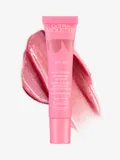 Ultra Violette Bejewelled Sheen Screen™ SPF 50 Hydrating Lip Balm | 33% | - |
Key Actives
Pure form of vitamin E. Can help moisturise and protect the skin from free radicals. Often used to help stabilise other ingredients or the formula itself
A great moisturising ingredient that softens the skin and reduces water loss from its upper layer. It also can be helpful in protecting skin from free radicals
Helps soften the upper layer of the skin and can be helpful in restoring the skin barrier function. Might have some anti-oxidant effect
This oil's cmposition is closest to rapeseed oil. It is a very stable oil and serves as an emoillient
Forms a protective barrier that holds water and keeps dry skin hydrated. Keeps an emulsion from separating into its oil and liquid components, and increases the thickness of a product. Can be an allergen
A plant oil that can help soften the skin. It might be helpful in calming down inflammation, but solid research is lacking. Is often used in lip products to create the needed product consistency
An emollient. Found to be as effective as a moisturizer for dry skin as mineral oil. Could be comedogenic
A great emollient due to its high linoleic acid content. One of the most effective plant oils in helping skin hydration and repairing skin barrier function
A weak sunscreen that protects against the sun rays that cause sunburn (UVB) and is somewhat effective against the UVA rays. It is quite stable and can help stabilize other, more vulnerable, sunscreen ingredients like Avobenzone. It is an organic, or so called "chemical" sunscreen
Octinoxate. When used in higher concentrations, works as a sunscreen protecting the skin from UVB rays. When used in lower concentration, helps to preserve the product formulation. Is shown to be harmful to coral reefs - consider avoiding bathing in coral reef areas when wearing a product with this ingredient. It can be irritating
Avobenzone. An organic, or so-called "chemical" UV filter. Protects against both UVA and UVB rays. Needs to be combined with other filters in a formulation to be stable.
An oil naturally present in skin. Works as an emollient to soften the skin and form a protective layer on its surface without a greasy feeling.
A good emollient that helps soften the skin and helps repair its barrier function. It can clog pores if used in high concentrations.
Potential irritants
Octinoxate. When used in higher concentrations, works as a sunscreen protecting the skin from UVB rays. When used in lower concentration, helps to preserve the product formulation. Is shown to be harmful to coral reefs - consider avoiding bathing in coral reef areas when wearing a product with this ingredient. It can be irritating
A common frangrance that can easily irritate skin, especially if exposed to air, light or heat
The most well-researched antioxidant that works in skin. Helps neutralize free radicals supporting collagen production, helping to even out the skin tone and preventing early signs of aging
Forms a protective barrier that holds water and keeps dry skin hydrated. Keeps an emulsion from separating into its oil and liquid components, and increases the thickness of a product. Can be an allergen
A plant oil that can help soften the skin. It might be helpful in calming down inflammation, but solid research is lacking. Is often used in lip products to create the needed product consistency
A weak sunscreen that protects against the sun rays that cause sunburn (UVB) and is somewhat effective against the UVA rays. It is quite stable and can help stabilize other, more vulnerable, sunscreen ingredients like Avobenzone. It is an organic, or so called "chemical" sunscreen
Helps oil and water mix together while creating a nice finish on the skin
Avobenzone. An organic, or so-called "chemical" UV filter. Protects against both UVA and UVB rays. Needs to be combined with other filters in a formulation to be stable.
A plant extract that adds a sweat taste to products (for example, for lip products). Might help to attract water to the upper layer of the skin and have some anti-oxidant effect
A good emollient that helps soften the skin and helps repair its barrier function. It can clog pores if used in high concentrations.
Being a lipid soluble form of vitamin C, it is more stable and can penetrate the skin better than L-Ascorbic acid. It is effective in protecting the skin from free radicals, as well as evening the skin tone, but is less effective in stimulating collagen production compared to L-Ascorbic acid.
Can work as an exfoliant but is typically used to adjust the product pH
Comedogenic ingredients
An emollient. Found to be as effective as a moisturizer for dry skin as mineral oil. Could be comedogenic
A great moisturising ingredient that softens the skin and reduces water loss from its upper layer. It also can be helpful in protecting skin from free radicals
Helps soften the upper layer of the skin and can be helpful in restoring the skin barrier function. Might have some anti-oxidant effect
An oil from a mixture of different vegetables. Helps soften the upper layer of the skin
A good emollient that helps soften the skin and helps repair its barrier function. It can clog pores if used in high concentrations.
All ingredients
An emollient. Found to be as effective as a moisturizer for dry skin as mineral oil. Could be comedogenic
A great emollient due to its high linoleic acid content. One of the most effective plant oils in helping skin hydration and repairing skin barrier function
Forms a protective barrier that holds water and keeps dry skin hydrated. Keeps an emulsion from separating into its oil and liquid components, and increases the thickness of a product. Can be an allergen
A plant oil that can help soften the skin. It might be helpful in calming down inflammation, but solid research is lacking. Is often used in lip products to create the needed product consistency
A weak sunscreen that protects against the sun rays that cause sunburn (UVB) and is somewhat effective against the UVA rays. It is quite stable and can help stabilize other, more vulnerable, sunscreen ingredients like Avobenzone. It is an organic, or so called "chemical" sunscreen
Octinoxate. When used in higher concentrations, works as a sunscreen protecting the skin from UVB rays. When used in lower concentration, helps to preserve the product formulation. Is shown to be harmful to coral reefs - consider avoiding bathing in coral reef areas when wearing a product with this ingredient. It can be irritating
A great moisturising ingredient that softens the skin and reduces water loss from its upper layer. It also can be helpful in protecting skin from free radicals
Helps soften the upper layer of the skin and can be helpful in restoring the skin barrier function. Might have some anti-oxidant effect
Helps oil and water mix together while creating a nice finish on the skin
Avobenzone. An organic, or so-called "chemical" UV filter. Protects against both UVA and UVB rays. Needs to be combined with other filters in a formulation to be stable.
Brazilian palm wax. Helps soften the upper layer of the skin
Helps soften the upper layer of the skin. It mostly contains oleic acid which is not the most effective emollient to prevent water loss, but might have an anti-inflammatory effect
An oil naturally present in skin. Works as an emollient to soften the skin and form a protective layer on its surface without a greasy feeling.
This oil's cmposition is closest to rapeseed oil. It is a very stable oil and serves as an emoillient
An oil from a mixture of different vegetables. Helps soften the upper layer of the skin
A common frangrance that can easily irritate skin, especially if exposed to air, light or heat
Pure form of vitamin E. Can help moisturise and protect the skin from free radicals. Often used to help stabilise other ingredients or the formula itself
A plant extract that adds a sweat taste to products (for example, for lip products). Might help to attract water to the upper layer of the skin and have some anti-oxidant effect
The same compound that is used safely in dental implants and bone cements. In cosmetics, it is used to improve the consistency of products
Helps soften the upper layer of the skin and creates a nice product texture
A good emollient that helps soften the skin and helps repair its barrier function. It can clog pores if used in high concentrations.
Being a lipid soluble form of vitamin C, it is more stable and can penetrate the skin better than L-Ascorbic acid. It is effective in protecting the skin from free radicals, as well as evening the skin tone, but is less effective in stimulating collagen production compared to L-Ascorbic acid.
Can work as an exfoliant but is typically used to adjust the product pH
The most well-researched antioxidant that works in skin. Helps neutralize free radicals supporting collagen production, helping to even out the skin tone and preventing early signs of aging
Creates an illusion of smoother and more radiant skin tone. Adds shimmer to the skin by reflecting light
Ingredient list view
Cocos nucifera oil, Helianthus annuus seed oil, Cera alba, Candelilla cera, Ricinus communis seed oil, Octocrylene, Ethylhexyl methoxycinnamate, Butyrospermum parkii butter, Theobroma cacao seed butter, Hydrogenated coco-glycerides, Butyl methoxydibenzoylmethane, Copernicia cerifera cera, Garcinia indica seed butter, Squalane, Limnanthes alba seed oil, Hydrogenated vegetable oil, Citrus limon peel oil, Prunus amygdalus dulcis oil, Limonene, Tocopherol, Ximenia americana seed oil, Citrus limon peel extract, Stevia rebaudiana extract, Alumina, Peg-8, Lauroyl lysine, Glycine soja oil, Citral, Ascorbyl palmitate, Citric acid, Ascorbic acid, Ci 77891, Mica, Ci 77491, Ci 77492, Ci 77499, Ci 45410, Ci 73360, Ci 15850, Ci 17200, Ci 77120, Ci 19140
- Effect of Olive and Sunflower Seed Oil on the Adult Skin Barrier: Implications for Neonatal Skin Care
- Topically Applied Sunflower Seed Oil Prevents Invasive Bacterial Infections in Preterm Infants in Egypt
- Effect of topically applied lipids on surfactant-irritated skin
- Impact of topical oils on the skin barrier: possible implications for neonatal health in developing countries
- Efficacy of barrier creams in comparison to skin care products in dental laboratory technicians--a controlled trial
- Final report on the safety assessment of Ricinus Communis (Castor) Seed Oil, Hydrogenated Castor Oil, Glyceryl Ricinoleate, Glyceryl Ricinoleate SE, Ricinoleic Acid, Potassium Ricinoleate, Sodium Ricinoleate, Zinc Ricinoleate, Cetyl Ricinoleate, Ethyl Ricinoleate, Glycol Ricinoleate, Isopropyl Ricinoleate, Methyl Ricinoleate, and Octyldodecyl Ricinoleate
- Castor Oil: Properties, Uses, and Optimization of Processing Parameters in Commercial Production
- Effect of ricinoleic acid in acute and subchronic experimental models of inflammation
- Cocoa polyphenols and their influence on parameters involved in ex vivo skin restructuring
- TECHNICAL DATA SHEET KOKUM FAT
- Anti-Inflammatory and Skin Barrier Repair Effects of Topical Application of Some Plant Oils
- Vitamin E in dermatology
- Vitamin E and Skin Health
- Stevia Rebaudiana Bert. Leaf Extracts as a Multifunctional Source of Natural Antioxidants
- Safety Assessment of Alumina and Aluminum Hydroxide as Used in Cosmetics
- Scientific Committee on Consumer Safety Opinion on Acid Red 92
- Analysis of Dyes in Cosmetics: Challenges and Recent Developments