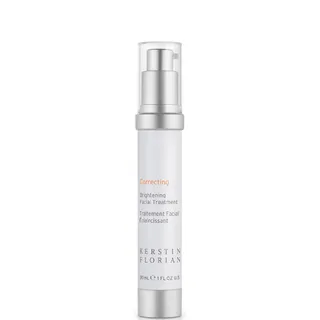
Kerstin Florian Correcting Brightening Facial Serum

Kerstin Florian Correcting Brightening Facial Serum

Efficacy0/100IrritancyMedium

Works for

Evens skin tone
Tetrahexyldecyl ascorbate ~0.2–0.4%, below the ~4% it needs
Under-dosed
What the product description says
“The potent formula is enriched with Red Algae and Brassica Napus, which work in synergy to prevent the overproduction of melanin in skin, whilst visibly lightening and reducing the appearance of dark spots.”
Source: Lookfantastic US

Effective ingredients missing or their concentration is too low

Hydrolyzed rice extractEffect: LowA plant extract that is claimed to be helpful in moisturizing and lightening the skin, but evidence is missing~0.2–0.4%
Trametes versicolor extractEffect: Low, below effective doseA mushroom extract that might have some skin-lightening and moisturizing properties, but solid research is lacking. It is unlikely to be effective in the concentration used in skincare products~0.55–0.85%
Tetrahexyldecyl ascorbateUnder-dosedBeing a lipid soluble form of vitamin C, it is more stable than ascorbic acid, but still degrades quickly and needs to be stabilized in a formulation with another ingredient. It is claimed to penetrate skin better than pure vitamin C and have the the similar benefits, but solid studies of its effectiveness are lacking. Is likely to require a higher concentration in a product than pure vitamin C to be effective. It might be able to help reduce pore clogging.~0.2–0.4%
Anti-oxidation
Side benefit · Ubiquinone, Palmaria palmata extract + 3 more
Works well

This product contains antioxidants (ubiquinone) that can help neutralize free radicals in skin. By doing so, they can lessen the damage the skin gets from the UV light (sun).

UbiquinoneKey activeEffect: HighCoenzyme Q10. It helps neutralize free radicals in skin, improves skin hydration and might be helpful agains fine lines and wrinkles. It can be an allergen~0.2–0.4%
Palmaria palmata extractEffect: LowRed algae extract that helps attract water to the upper layer of the skin~0.45–0.7%
Chlorella vulgaris extractEffect: LowA plant extract that can help to attract water to the upper layer of the skin and might have some anti-oxidant and anti-inflammatory properties~0.3–0.6%
Tocopheryl acetateEffect: Low, below effective doseA more stable but less bio-available form of vitamin E compared to Tocopherol. Might help moisturize and protect the skin from free radicals, but mostly used in low concentrations to stabilize other ingredients.~0.2–0.4%
Tetrahexyldecyl ascorbateUnder-dosedBeing a lipid soluble form of vitamin C, it is more stable than ascorbic acid, but still degrades quickly and needs to be stabilized in a formulation with another ingredient. It is claimed to penetrate skin better than pure vitamin C and have the the similar benefits, but solid studies of its effectiveness are lacking. Is likely to require a higher concentration in a product than pure vitamin C to be effective. It might be able to help reduce pore clogging.~0.2–0.4%
Moisturizing
Side benefit · Hexapeptide-2, Dimethicone + 12 more
Works well

This product can help improve hydration of the skin with the two types of ingredients.

The first type is called “humectants”:
these ingredients help attract water. When humectants are on the surface of the skin, they “pull in” the moisture from the outside environment, or from within deeper layers of the skin. The following ingredients in this product do the job: glycerin, sodium hyaluronate.

This product also contains ingredients called “occlusives”. They help reduce the speed with which our skin loses moisture to the outside environment. These ingredients also help soften the upper layer of the skin, so it feels less tight and nicer to the touch. The following ingredients in this product do the job: dimethicone, squalane.

The following ingredients in this product are especially good for supporting the skin barrier and helping with the hydration level: hexapeptide-2

Hexapeptide-2HeroEffect: HighA type of peptide. Peptides are excellent moisturizers and might be able support collagen production reducing fine lines and wrinkles~0.2–0.4%
DimethiconeKey active· Emollient, OcclusiveEffect: HighA silicone that helps to reduce water loss from the surface of the skin. Can temporarily "fill in" lines and wrinkles, absorb oil, and create a nice product finish~3.1–3.8%
Saccharomyces/xylinum/black tea fermentKey activeEffect: HighA fermented sweet black tea. There is no studies on particular benefits of this ingredient in skin. It can help attract water to the upper layer of the skin, and might have some anti-oxidant effect. It is used in skincare for mostly marketing purposes because of the popularity of kombucha drinks~2.2–2.7%
Sodium hyaluronateKey active· HumectantEffect: HighOne of the best moisturizing ingredients. Attracts water into the upper layer of the skin~1.8–2.2%
GlycerinKey active· HumectantEffect: HighOne of the best moisturizing ingredients. Naturally present in skin. It attracts water to the upper layer of the skin working as a humectant~1.6–1.9%
Palmaria palmata extractKey activeEffect: HighRed algae extract that helps attract water to the upper layer of the skin~0.45–0.7%
Hydrolyzed alginKey active· HumectantEffect: MediumDerived from brown algae. Helps attract water to the upper layer of the skin~0.35–0.6%
Chlorella vulgaris extractKey activeEffect: MediumA plant extract that can help to attract water to the upper layer of the skin and might have some anti-oxidant and anti-inflammatory properties~0.3–0.6%
SqualaneKey active· Emollient, OcclusiveEffect: HighAn oil naturally present in skin. Works as an emollient to soften the skin and form a protective layer on its surface without a greasy feeling.~0.25–0.5%
UbiquinoneKey activeEffect: HighCoenzyme Q10. It helps neutralize free radicals in skin, improves skin hydration and might be helpful agains fine lines and wrinkles. It can be an allergen~0.2–0.4%
Butylene glycol· HumectantEffect: LowUsed to create a nice product texture and help delivery of other ingredients. Might be somewhat helpful in attracting water to the upper layer of the skin~5.7–6.9%
Isopropyl palmitate· EmollientEffect: LowHelps soften the upper layer of the skin and create a thicker product consistency~4.2–5.2%
Hydrolyzed rice extractEffect: LowA plant extract that is claimed to be helpful in moisturizing and lightening the skin, but evidence is missing~0.2–0.4%
Trametes versicolor extractEffect: Low, below effective doseA mushroom extract that might have some skin-lightening and moisturizing properties, but solid research is lacking. It is unlikely to be effective in the concentration used in skincare products~0.55–0.85%
Anti-aging
Side benefit · Hexapeptide-2, Ubiquinone + 1 more
May help

This product contains hexapeptide-2. There is some human evidence that this ingredient helps reduce and prevent fine lines and wrinkles and improve skin elasticity and firmness, though it is smaller or less consistent than the evidence for the best anti-aging ingredients.

Hexapeptide-2Key activeEffect: MediumA type of peptide. Peptides are excellent moisturizers and might be able support collagen production reducing fine lines and wrinkles~0.2–0.4%
UbiquinoneEffect: LowCoenzyme Q10. It helps neutralize free radicals in skin, improves skin hydration and might be helpful agains fine lines and wrinkles. It can be an allergen~0.2–0.4%
Tetrahexyldecyl ascorbateUnder-dosedBeing a lipid soluble form of vitamin C, it is more stable than ascorbic acid, but still degrades quickly and needs to be stabilized in a formulation with another ingredient. It is claimed to penetrate skin better than pure vitamin C and have the the similar benefits, but solid studies of its effectiveness are lacking. Is likely to require a higher concentration in a product than pure vitamin C to be effective. It might be able to help reduce pore clogging.~0.2–0.4%

Can it cause trouble?

Irritancy
2 strong irritants: Citrus grandis peel oil, Citrus aurantium amara peel oil
Medium risk
We flagged 16 ingredients with irritancy potential. Severity depends on your sensitivity threshold; the table lists the worst offenders first.
IngredientFunctionIrritationEst. amount
Citrus grandis peel oilA plant oil with high content of volatile compounds that, especially when exposed to air, can cause allergic reactions and irritate the skinHigh~0.45–0.7%est.
Citrus aurantium amara peel oil—High~0.4–0.6%est.
Curcuma longa root extractA plant extract that can contain an active compound curcumin, that may have some anti-inflammatory properties when applied to the skin, but solid research is lacking and the typical concentration used in skincare products is too low. Can be an irritantHigh~0.3–0.6%est.
Isopropyl palmitateHelps soften the upper layer of the skin and create a thicker product consistencyMedium~4.2–5.2%est.
Trametes versicolor extractA mushroom extract that might have some skin-lightening and moisturizing properties, but solid research is lacking. It is unlikely to be effective in the concentration used in skincare productsMedium~0.55–0.85%est.
Chlorella vulgaris extractA plant extract that can help to attract water to the upper layer of the skin and might have some anti-oxidant and anti-inflammatory propertiesMedium~0.3–0.6%est.
Tocopheryl acetateA more stable but less bio-available form of vitamin E compared to Tocopherol. Might help moisturize and protect the skin from free radicals, but mostly used in low concentrations to stabilize other ingredients.Medium~0.2–0.4%est.
Hydroxyethyl acrylate/sodium acryloyldimethyl taurate copolymerA gelling agent that thickens the product consistency and leaves the skin with a velvety finishMedium~0.2–0.4%est.
Acrylates/c10-30 alkyl acrylate crosspolymerMaintains the texture of skincare products. Allows the product to spread evenly. Helps oil and water mix togetherMedium~0.25–0.45%est.
ChlorphenesinA preservativeMedium~0.16–0.32%est.
EthylhexylglycerinA preservativeMedium~0.25–0.4%est.
Disodium edtaStabilizes the product formulationMedium~0.2–0.4%est.
Tetrahexyldecyl ascorbateBeing a lipid soluble form of vitamin C, it is more stable than ascorbic acid, but still degrades quickly and needs to be stabilized in a formulation with another ingredient. It is claimed to penetrate skin better than pure vitamin C and have the the similar benefits, but solid studies of its effectiveness are lacking. Is likely to require a higher concentration in a product than pure vitamin C to be effective. It might be able to help reduce pore clogging.Medium~0.2–0.4%est.
Polysorbate 60Helps oil and water mix togetherMedium~0.2–0.4%est.
Laureth-12Helps water and oil mix togetherMedium~0.15–0.3%est.
Potassium sorbateA preservativeMedium~0.15–0.25%est.
Comedogenic
4 ingredients rated 2 or more on the 0–5 pore-clogging scale
4 flagged
These ingredients have a comedogenic rating of 2 or more on a 0–5 scale; the table shows each one's rating. In leave-on products they can clog pores in acne-prone skin.
IngredientFunctionRatingEst. amount
Isopropyl palmitateHelps soften the upper layer of the skin and create a thicker product consistency3/5~4.2–5.2%est.
Palmaria palmata extractRed algae extract that helps attract water to the upper layer of the skin3/5~0.45–0.7%est.
Hydrolyzed alginDerived from brown algae. Helps attract water to the upper layer of the skin3/5~0.35–0.6%est.
Chlorella vulgaris extractA plant extract that can help to attract water to the upper layer of the skin and might have some anti-oxidant and anti-inflammatory properties3/5~0.3–0.6%est.

User reviews

Would you recommend?
No community reviews yet.

Be the first — your take helps the next person decide.

Ingredients

Filter by role to see what each ingredient is doing.

Water~45–55%
Formula
Irritation risk
Low

Plain old water

More about Water
Butylene glycol~5.7–6.9%
Formula
Irritation risk
Low
Works for
Moisturizing

Used to create a nice product texture and help delivery of other ingredients. Might be somewhat helpful in attracting water to the upper layer of the skin

More about Butylene glycol
Isopropyl palmitate~4.2–5.2%
Comedogenic 3/5Irritant · medium
Irritation risk
Medium
Comedogenicity
3/5
Works for
Moisturizing

Helps soften the upper layer of the skin and create a thicker product consistency

More about Isopropyl palmitate
Dimethicone~3.1–3.8%
Key active
Irritation risk
Low
Works for
MoisturizingMattifying

A silicone that helps to reduce water loss from the surface of the skin. Can temporarily "fill in" lines and wrinkles, absorb oil, and create a nice product finish

More about Dimethicone
Saccharomyces/xylinum/black tea ferment~2.2–2.7%
Key active
Irritation risk
Low
Works for
Moisturizing

A fermented sweet black tea. There is no studies on particular benefits of this ingredient in skin. It can help attract water to the upper layer of the skin, and might have some anti-oxidant effect. It is used in skincare for mostly marketing purposes because of the popularity of kombucha drinks

More about Saccharomyces/xylinum/black tea ferment
Sodium hyaluronate~1.8–2.2%
Key active
Irritation risk
Low
Works for
Moisturizing

One of the best moisturizing ingredients. Attracts water into the upper layer of the skin

More about Sodium hyaluronate
Glycerin~1.6–1.9%
Key active
Irritation risk
Low
Works for
Moisturizing

One of the best moisturizing ingredients. Naturally present in skin. It attracts water to the upper layer of the skin working as a humectant

More about Glycerin
Peg-40 stearate~1.3–1.6%
Formula
Irritation risk
Low
Works for
Cleansing

Helps oil and water mix together

More about Peg-40 stearate
Dimethicone/divinyldimethicone/silsesquioxane crosspolymer~1–1.3%
Formula
Cordyceps sinensis extract~0.75–1.1%
Formula
Trametes versicolor extract~0.55–0.85%
Irritant · medium
Irritation risk
Medium
Works for
MoisturizingEvens skin tone

A mushroom extract that might have some skin-lightening and moisturizing properties, but solid research is lacking. It is unlikely to be effective in the concentration used in skincare products

More about Trametes versicolor extract
Citrus grandis peel oil~0.45–0.7%
Irritant · high
Irritation risk
High

A plant oil with high content of volatile compounds that, especially when exposed to air, can cause allergic reactions and irritate the skin

More about Citrus grandis peel oil
Palmaria palmata extract~0.45–0.7%
Key activeComedogenic 3/5
Irritation risk
Low
Comedogenicity
3/5
Works for
MoisturizingAnti-oxidation

Red algae extract that helps attract water to the upper layer of the skin

More about Palmaria palmata extract
Citrus aurantium amara peel oil~0.4–0.6%
Irritant · high
Curcuma longa root extract~0.3–0.6%
Irritant · high
Irritation risk
High
Works for
Anti-inflammatory

A plant extract that can contain an active compound curcumin, that may have some anti-inflammatory properties when applied to the skin, but solid research is lacking and the typical concentration used in skincare products is too low. Can be an irritant

More about Curcuma longa root extract
Hydrolyzed algin~0.35–0.6%
Key activeComedogenic 3/5
Irritation risk
Low
Comedogenicity
3/5
Works for
Moisturizing

Derived from brown algae. Helps attract water to the upper layer of the skin

More about Hydrolyzed algin
Chlorella vulgaris extract~0.3–0.6%
Key activeComedogenic 3/5Irritant · medium
Irritation risk
Medium
Comedogenicity
3/5
Works for
MoisturizingAnti-oxidationAnti-inflammatory

A plant extract that can help to attract water to the upper layer of the skin and might have some anti-oxidant and anti-inflammatory properties

More about Chlorella vulgaris extract
Maris aqua~0.3–0.55%
Formula
Irritation risk
Low

Sea water. Helps dissolve other ingredients in a product

More about Maris aqua
Sea water~0.25–0.5%
Formula
Irritation risk
Low

Dissolves other ingredients. It does not have additional skin benefits compared to plain water

More about Sea water
Hydrolyzed brassica napus seedcake extract~0.25–0.45%
Formula
Hydrolyzed rice extract~0.2–0.4%
Formula
Irritation risk
Low
Works for
MoisturizingEvens skin tone

A plant extract that is claimed to be helpful in moisturizing and lightening the skin, but evidence is missing

More about Hydrolyzed rice extract
Hexapeptide-2~0.2–0.4%
Hero · Moisturizing
Irritation risk
Low
Works for
MoisturizingAnti-aging

A type of peptide. Peptides are excellent moisturizers and might be able support collagen production reducing fine lines and wrinkles

More about Hexapeptide-2
Tocopheryl acetate~0.2–0.4%
Irritant · medium
Irritation risk
Medium
Works for
Anti-oxidation

A more stable but less bio-available form of vitamin E compared to Tocopherol. Might help moisturize and protect the skin from free radicals, but mostly used in low concentrations to stabilize other ingredients.

More about Tocopheryl acetate
Ubiquinone~0.2–0.4%
Key active
Irritation risk
Low
Works for
Anti-oxidationMoisturizingAnti-aging

Coenzyme Q10. It helps neutralize free radicals in skin, improves skin hydration and might be helpful agains fine lines and wrinkles. It can be an allergen

More about Ubiquinone
Squalane~0.25–0.5%
Key active
Irritation risk
Low
Works for
Moisturizing

An oil naturally present in skin. Works as an emollient to soften the skin and form a protective layer on its surface without a greasy feeling.

More about Squalane
Sorbitan stearate~0.2–0.4%
Formula
Irritation risk
Low
Works for
Cleansing

Helps water and oil mix together

More about Sorbitan stearate
Hydroxyethyl acrylate/sodium acryloyldimethyl taurate copolymer~0.2–0.4%
Irritant · medium
Irritation risk
Medium

A gelling agent that thickens the product consistency and leaves the skin with a velvety finish

More about Hydroxyethyl acrylate/sodium acryloyldimethyl taurate copolymer
Acrylates/c10-30 alkyl acrylate crosspolymer~0.25–0.45%
Irritant · medium
Irritation risk
Medium

Maintains the texture of skincare products. Allows the product to spread evenly. Helps oil and water mix together

More about Acrylates/c10-30 alkyl acrylate crosspolymer
Chlorphenesin~0.16–0.32%
Irritant · medium
Irritation risk
Medium

A preservative

More about Chlorphenesin
Ethylhexylglycerin~0.25–0.4%
Irritant · medium
Irritation risk
Medium

A preservative

More about Ethylhexylglycerin
Mica~0.25–0.45%
Formula
Irritation risk
Low

Creates an illusion of smoother and more radiant skin tone. Adds shimmer to the skin by reflecting light

More about Mica
Disodium edta~0.2–0.4%
Irritant · medium
Irritation risk
Medium

Stabilizes the product formulation

More about Disodium edta
Tetrahexyldecyl ascorbate~0.2–0.4%
Under-dosedIrritant · medium
Irritation risk
Medium
Works for
Anti-oxidationEvens skin toneAnti-aging

Being a lipid soluble form of vitamin C, it is more stable than ascorbic acid, but still degrades quickly and needs to be stabilized in a formulation with another ingredient. It is claimed to penetrate skin better than pure vitamin C and have the the similar benefits, but solid studies of its effectiveness are lacking. Is likely to require a higher concentration in a product than pure vitamin C to be effective. It might be able to help reduce pore clogging.

More about Tetrahexyldecyl ascorbate
Titanium dioxide~0.3–0.55%
Formula
Irritation risk
Low
Works for
Sun protection

Works as a UV filter when used in high concentrations. It is photostable and is effective mostly against the UVB light, with some protection in the UVA range. In small concentrations, used for its ability to improve the color of cosmetic products. Is usually well tolerated by the skin

More about Titanium dioxide
Polysorbate 60~0.2–0.4%
Irritant · medium
Irritation risk
Medium
Works for
Cleansing

Helps oil and water mix together

More about Polysorbate 60
Hydroxyethylcellulose~0.15–0.3%
Formula
Irritation risk
Low

Used to thicken product formulations and create gel-like textures

More about Hydroxyethylcellulose
Laureth-12~0.15–0.3%
Irritant · medium
Irritation risk
Medium
Works for
Cleansing

Helps water and oil mix together

More about Laureth-12
Potassium sorbate~0.15–0.25%
Irritant · medium
Irritation risk
Medium

A preservative

More about Potassium sorbate
Sodium benzoate~0.1–0.2%
Formula
Irritation risk
Low

A preservative

More about Sodium benzoate
Sodium hydroxide~0.1–0.15%
Formula
Irritation risk
Low

Used to adjust the product's pH

More about Sodium hydroxide
Phenoxyethanol~0.15–0.25%
Formula
Irritation risk
Low

A preservative. It helps prevent bacterial growth in cosmetic products

More about Phenoxyethanol
Ingredient list view

Water, Butylene glycol, Isopropyl palmitate, Dimethicone, Saccharomyces/xylinum/black tea ferment, Sodium hyaluronate, Glycerin, Peg-40 stearate, Dimethicone/divinyldimethicone/silsesquioxane crosspolymer, Cordyceps sinensis extract, Trametes versicolor extract, Citrus grandis peel oil, Palmaria palmata extract, Citrus aurantium amara peel oil, Curcuma longa root extract, Hydrolyzed algin, Chlorella vulgaris extract, Maris aqua, Sea water, Hydrolyzed brassica napus seedcake extract, Hydrolyzed rice extract, Hexapeptide-2, Tocopheryl acetate, Ubiquinone, Squalane, Sorbitan stearate, Hydroxyethyl acrylate/sodium acryloyldimethyl taurate copolymer, Acrylates/c10-30 alkyl acrylate crosspolymer, Chlorphenesin, Ethylhexylglycerin, Mica, Disodium edta, Tetrahexyldecyl ascorbate, Titanium dioxide, Polysorbate 60, Hydroxyethylcellulose, Laureth-12, Potassium sorbate, Sodium benzoate, Sodium hydroxide, Phenoxyethanol

Compare prices

Retailers ranked by price — lowest first.

Amazon USPrice as of 11/14 12:47 GMT
$171.00
Buy

Affiliate links · As an Amazon Associate, WIMJ earns from qualifying purchases.

Cheaper alternatives? See how this stacks up against similar formulas.
We compare ingredient profiles across our catalog — pick the closest match for your budget.
Open dupe finder
Kerstin Florian Correcting Brightening Facial Serum
Kerstin FlorianCorrecting Brightening Facial Serum

Affiliate links · As an Amazon Associate, WIMJ earns from qualifying purchases.

As an Amazon Associate, WIMJ earns from qualifying purchases.