Works for
2 of 3 advertised claims delivered
Moisturizing24 ingredients credited for this claimStrong support
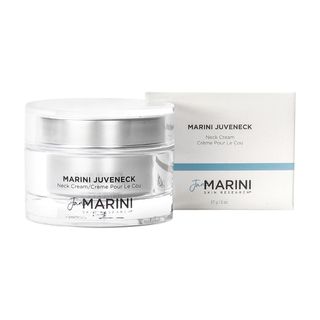
“Marini Juveneck Cream”
This product can help improve hydration of the skin with the two types of ingredients.
The first type is called “humectants”:
these ingredients help attract water.
When humectants are on the surface of the skin, they “pull in” the moisture from the outside environment, or from
within deeper layers of the skin. The following ingredients in this product do the job:
dipotassium glycyrrhizate, glycerin.
This product also contains ingredients called “occlusives”. They help reduce the speed with which our skin loses moisture to the outside environment. These ingredients also help soften the upper layer of the skin, so it feels less tight and nicer to the touch. The following ingredients in this product do the job: dimethicone, squalane.
The following ingredients in this product are especially good for supporting the skin barrier and helping with the hydration level: acetyl decapeptide-3, avena sativa kernel extract, oligopeptide-24, panthenol
Anti-aging5 ingredients credited for this claimModerate support
“13 Key ingredients including Oat and Rye extract, glaucine, aminophylline, peptides, DMAE, hyaluronic acid, licorice root extra and more help to increase hydration and decrease the appearance of uneven texture, wrinkles, and discoloration on the neck, to restore a youthful appearance.”
This product contains acetyl decapeptide-3, oligopeptide-24. These ingredients might be able to help reduce and prevent fine lines and wrinkles, improve skin elasticity and firmness, but there is not enough evidence that it actually works.
Evens skin tone1 ingredient credited for this claimLimited support
“In a study published in the Journal of Drugs & Dermatology, Marini Juveneck was shown to significantly improve satisfaction with hydration, texture, wrinkles and laxity with extremely high satisfaction and 94% of subjects noting improvement in one or more categories.Key Benefits Smoothing Reduces the appearance of fine lines and wrinkles.Brighterning Reduces the appearance of discoloration and dark spots.Hydrating Improves hydration and the appearance of texture.”
This product contains ingredients (dipotassium glycyrrhizate) that could help reduce hyperpigmentation (for example, post-acne marks or age spots) in theory, but there is not enough evidence that they actually work.
Can it cause trouble?
Irritancy1 strong irritant: AlcoholMedium risk
Comedogenic3 ingredients rated 2 or more on the 0–5 pore-clogging scale3 flagged
User reviews
Be the first — your take helps the next person decide.
Ingredients
Filter by role to see what each ingredient is doing.
Avena sativa kernel extract~23–34%
- Irritation risk
- Low
An effective moisturizing and skin barrier repair ingredient. Helps calm down inflammation and has some anti-oxidant properties
More about Avena sativa kernel extractGlaucine~4.1–6.2%
- Irritation risk
- Low
Aminophylline~4.7–7%
Acetyl decapeptide-3~3.8–5.7%
- Irritation risk
- Low
A type of peptide. Peptides are excellent moisturizers and might be able support collagen production reducing fine lines and wrinkles
More about Acetyl decapeptide-3Oligopeptide-24~2.8–4.2%
- Irritation risk
- Low
A type of peptide. Peptides are excellent moisturizers and might be able support collagen production reducing fine lines and wrinkles
More about Oligopeptide-24Dipotassium glycyrrhizate~2–3.1%
- Irritation risk
- Low
A salt derived from licorice. Works as an emollient to soften the upper layer of the skin and can help calm down inflammation. Might be helpful for skin lightening
More about Dipotassium glycyrrhizateBisabolol~1.5–2.2%
- Irritation risk
- Low
An active component of chamomile plant that historically has been used to calm down irritated skin. A recent study shows that bisabolol indeed can have some anti-inflammatory effect on skin, even though conclusive data is lacking. Bisabolol has a sweet floral scent and can be added to products for its aromatic properties
More about BisabololTocopherol~1.3–2%
- Irritation risk
- Low
Pure form of vitamin E. Can help moisturise and protect the skin from free radicals. Often used to help stabilise other ingredients or the formula itself
More about TocopherolBiotin~1.1–1.7%
- Irritation risk
- Low
Might have some moisturising properties. Is not effective when applied topically beyond some moisturizing effect
More about BiotinPanthenol~0.9–1.35%
- Irritation risk
- Low
Helps attract water to the upper layer of the skin and can help improve skin barrier function
More about PanthenolHyaluronic acid~0.6–1.35%
- Irritation risk
- Low
One of the best moisturizing ingredients. Attracts water into the upper layer of the skin. Naturally present in skin. Typically has large molecule size unless advertised otherwise on the product label. Helps support skin's barrier function and may help to reduce inflammation
More about Hyaluronic acidWater~0.5–1.15%
Glycerin~0.5–1.1%
- Irritation risk
- Low
One of the best moisturizing ingredients. Naturally present in skin. It attracts water to the upper layer of the skin working as a humectant
More about GlycerinCaprylic/capric triglyceride~0.5–1.15%
- Irritation risk
- Medium
A good mix of fatty acids that forms a protective layer on the skin. Improves the shelf life of products. Derived from coconut and glycerin
More about Caprylic/capric triglycerideGlyceryl stearate~0.45–1.1%
- Irritation risk
- Low
An emollient that softens the skin and forms a protective layer on its surface. Helps water and oil mix together
More about Glyceryl stearateButyrospermum parkii butter~0.45–1.1%
- Irritation risk
- Low
- Comedogenicity
- 3/5
A great moisturising ingredient that softens the skin and reduces water loss from its upper layer. It also can be helpful in protecting skin from free radicals
More about Butyrospermum parkii butterCetyl alcohol~0.45–1.1%
- Irritation risk
- Low
A non-drying alcohol that works to soften the skin and stabilize product formulations helping oil and water mix together
More about Cetyl alcoholDimethicone~0.45–1%
- Irritation risk
- Low
A silicone that helps to reduce water loss from the surface of the skin. Can temporarily "fill in" lines and wrinkles, absorb oil, and create a nice product finish
More about DimethiconeDimethyl mea~0.35–0.8%
- Irritation risk
- Low
Cyclopentasiloxane~0.4–0.9%
- Irritation risk
- Low
A silicone that helps improve the product texture and spreadability. Can absorb oil creating a short-term mattifying effect on the skin
More about CyclopentasiloxaneCitric acid~0.3–0.75%
- Irritation risk
- Medium
Can work as an exfoliant but is typically used to adjust the product pH
More about Citric acidDipotassium glycyrrhizate~0.2–0.8%
- Irritation risk
- Low
A salt derived from licorice. Works as an emollient to soften the upper layer of the skin and can help calm down inflammation. Might be helpful for skin lightening
More about Dipotassium glycyrrhizateAminophylline~0.2–0.8%
Triticum vulgare germ oil~0.35–0.8%
- Irritation risk
- Low
- Comedogenicity
- 3/5
A good emoillient. Contains vitamin E which can help neutralise free radicals, however the oil is unstable. Avoid if you have gluten or wheat sensitivity (including food allergies).
More about Triticum vulgare germ oilPrunus amygdalus dulcis seed~0.2–0.8%
- Irritation risk
- Low
Helps soften the upper layer of the skin
More about Prunus amygdalus dulcis seedCyclohexasiloxane~0.35–0.8%
- Irritation risk
- Low
A silicone that serves as an emollient. Helps create a nice non-greasy feels
More about CyclohexasiloxaneAvena sativa kernel extract~0.3–0.75%
- Irritation risk
- Low
An effective moisturizing and skin barrier repair ingredient. Helps calm down inflammation and has some anti-oxidant properties
More about Avena sativa kernel extractGlycine soja oil~0.35–0.8%
- Irritation risk
- Medium
- Comedogenicity
- 2/5
A good emollient that helps soften the skin and helps repair its barrier function. It can clog pores if used in high concentrations.
More about Glycine soja oilSecale cereale seed extract~0.4–0.9%
- Irritation risk
- Medium
Rye seed extract. Helps soften the upper layer of the skin
More about Secale cereale seed extractPanthenol~0.2–0.75%
- Irritation risk
- Low
Helps attract water to the upper layer of the skin and can help improve skin barrier function
More about PanthenolSodium hyaluronate~0.2–0.75%
- Irritation risk
- Low
One of the best moisturizing ingredients. Attracts water into the upper layer of the skin
More about Sodium hyaluronateSodium stearoyl glutamate~0.45–1%
- Irritation risk
- Medium
Helps oil and water mix together
More about Sodium stearoyl glutamateTocopherol~0.2–0.75%
- Irritation risk
- Low
Pure form of vitamin E. Can help moisturise and protect the skin from free radicals. Often used to help stabilise other ingredients or the formula itself
More about TocopherolTocopheryl acetate~0.2–0.75%
- Irritation risk
- Medium
A more stable but less bio-available form of vitamin E compared to Tocopherol. Might help moisturize and protect the skin from free radicals, but mostly used in low concentrations to stabilize other ingredients.
More about Tocopheryl acetateSqualane~0.35–0.85%
- Irritation risk
- Low
An oil naturally present in skin. Works as an emollient to soften the skin and form a protective layer on its surface without a greasy feeling.
More about SqualaneBisabolol~0.15–0.6%
- Irritation risk
- Low
An active component of chamomile plant that historically has been used to calm down irritated skin. A recent study shows that bisabolol indeed can have some anti-inflammatory effect on skin, even though conclusive data is lacking. Bisabolol has a sweet floral scent and can be added to products for its aromatic properties
More about BisabololOligopeptide-24~0.2–0.8%
- Irritation risk
- Low
A type of peptide. Peptides are excellent moisturizers and might be able support collagen production reducing fine lines and wrinkles
More about Oligopeptide-24Aluminum starch octenylsuccinate~0.2–0.8%
- Irritation risk
- Medium
Used to thicken the product's consistency
More about Aluminum starch octenylsuccinatePentylene glycol~0.35–0.85%
- Irritation risk
- Medium
Used to preserve products, dissolve other ingredients and create a nice product texture
More about Pentylene glycolSodium oleate~0.6–1.4%
- Irritation risk
- Medium
Helps oil and water mix together and create a thicker product consistency
More about Sodium oleateHydrogenated lecithin~0.3–0.7%
- Irritation risk
- Low
Helps to retain moisture by creating a protective barrier on the skin. Rich in fatty acids. Improves product texture and helps with the penetration of other ingredients.
More about Hydrogenated lecithinAcetyl decapeptide-3~0.2–0.8%
- Irritation risk
- Low
A type of peptide. Peptides are excellent moisturizers and might be able support collagen production reducing fine lines and wrinkles
More about Acetyl decapeptide-3Alcohol~0.2–0.75%
- Irritation risk
- High
Can be drying and contribute to skin irritation. Used in formulars to dissolve other ingredients, create a thinner product consistency or for its antibacterial properties
More about AlcoholGlaucine~0.2–0.75%
- Irritation risk
- Low
Coco-glucoside~0.4–0.9%
- Irritation risk
- High
Used as a cleansing agent (surfactant) in cleansers. Helps water and oil mix together in lotions. Can be irritating
More about Coco-glucosideCaprylyl glycol~0.3–0.75%
- Irritation risk
- Medium
Helps preserve products and creates a nice product texture
More about Caprylyl glycolSodium citrate~0.15–0.7%
- Irritation risk
- Medium
Helps to control the skin's pH level. Maintains the skin's natural film of amino-lactic acids and oils. Helps to preserve products
More about Sodium citrateBiotin~0.15–0.6%
- Irritation risk
- Low
Might have some moisturising properties. Is not effective when applied topically beyond some moisturizing effect
More about BiotinEthylhexylglycerin~0.15–0.5%
Hexylene glycol~0.1–0.4%
- Irritation risk
- Medium
Helps create a more spreadable product texture
More about Hexylene glycolAcrylates/c10-30 alkyl acrylate crosspolymer~0.15–0.6%
- Irritation risk
- Medium
Maintains the texture of skincare products. Allows the product to spread evenly. Helps oil and water mix together
More about Acrylates/c10-30 alkyl acrylate crosspolymerXanthan gum~0.15–0.5%
- Irritation risk
- Low
Used to create a thicker product consistency
More about Xanthan gumTriethanolamine~0.15–0.5%
- Irritation risk
- Medium
Used to adjust pH of the product and can help improve the product's smell
More about TriethanolamineDisodium edta~0.1–0.35%
Phenoxyethanol~0.15–0.5%
- Irritation risk
- Low
A preservative. It helps prevent bacterial growth in cosmetic products
More about PhenoxyethanolIngredient list view
Unknown, Avena sativa kernel extract, Glaucine, Aminophylline, Unknown, Acetyl decapeptide-3, Oligopeptide-24, Dipotassium glycyrrhizate, Bisabolol, Tocopherol, Biotin, Panthenol, Hyaluronic acid, Water, Glycerin, Caprylic/capric triglyceride, Glyceryl stearate, Butyrospermum parkii butter, Cetyl alcohol, Dimethicone, Dimethyl mea, Cyclopentasiloxane, Citric acid, Dipotassium glycyrrhizate, Aminophylline, Triticum vulgare germ oil, Prunus amygdalus dulcis seed, Cyclohexasiloxane, Avena sativa kernel extract, Glycine soja oil, Secale cereale seed extract, Panthenol, Sodium hyaluronate, Sodium stearoyl glutamate, Tocopherol, Tocopheryl acetate, Squalane, Bisabolol, Oligopeptide-24, Aluminum starch octenylsuccinate, Pentylene glycol, Sodium oleate, Hydrogenated lecithin, Acetyl decapeptide-3, Alcohol, Glaucine, Coco-glucoside, Caprylyl glycol, Sodium citrate, Biotin, Ethylhexylglycerin, Hexylene glycol, Acrylates/c10-30 alkyl acrylate crosspolymer, Xanthan gum, Triethanolamine, Disodium edta, Phenoxyethanol
Compare prices
Retailers ranked by price — lowest first.

Product summary
"Jan Marini - Marini Juveneck Cream" has a good moisturizing formula. This moisturizer uses a good combo of humectants and emollients. These both types of ingredients are essentials for improving the skin hydration and keeping the skin barrier healthy. Humectants in this product (panthenol, dipotassium glycyrrhizate, glycerin, hyaluronic acid and sodium hyaluronate) help to increase the water content in the upper layer of the skin. (These ingredients do so by "capturing" water molecules from the outside air or from within the deeper layers of the skin). Emollients in this formulation (avena sativa kernel extract, glycine soja oil, triticum vulgare germ oil, dimethicone and squalane) help to reduce the moisture loss from the skin. They also soften the skin surface and relieve the feeling of dryness and tightness.
Ingredient callouts
- We like that this moisturizer contains peptides (acetyl decapeptide-3 0.20% - 0.80%, oligopeptide-24 0.20% - 0.80%, oligopeptide-24 2.80% - 4.20% and acetyl decapeptide-3 3.80% - 5.70%). There are many different kind of Peptides and they are naturally present in our skin. They all are a combination of aminoacids. Some of them work as natural antibiotics, promote wound-healing and production of collagen. The science is still not settled on how effective Peptides are in skincare, but it is very likely that they have a benefit. Peptides might help restore the skin barrier and fight the signs of aging. At the very least, Peptides work as humectants: they attract water to the upper layer of the skin and improve its hydration.
- Panthenol (pro-vitamin B5) at about 0.90% - 1.35% concentration. In this concentration, Panthenol works effectively to improve the skin barrier and reduce inflammation.
- Dipotassium Glycyrrhizate in this product (2.00% - 3.10%) can also further help improve the skin barrier. It might be able to calm down inflammation and reduce sensitivity. Dipotassium Glycyrrhizate is an active compound from the licorice root.
Irritation risk
There are some common irritants in this product, including ingredients that do not have benefits for the skin. We assess the overall irritancy of this moisturizer to be medium. For a detailed overview of all potential irritants: click here
You can see the detailed formula review with the breakdown of all actives in the product and the full ingredient list with estimated concentrations in the tables below.
Price
The product retails for 100.00$ in the United States and for 156.21A$ in Australia.
For a detailed price comparison: click here.
Sources cited in this review
Every concentration estimate and effectiveness label is anchored to one of these 16 studies and safety reviews.
- 1
- 2
- 3
- 4Vitamin E in dermatologyncbi.nlm.nih.gov
- 5Vitamin E and Skin Healthlpi.oregonstate.edu
- 6Skin moisturizing effects of panthenol-based formulationspdfs.semanticscholar.org

Affiliate links · As an Amazon Associate, WIMJ earns from qualifying purchases.