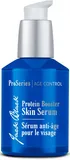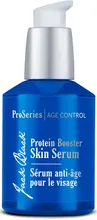
Jack Black Protein Booster Skin Serum

Jack Black Protein Booster Skin Serum

Efficacy83/100IrritancyHigh·100% recommend (1 review)

Works for

Moisturizing
Palmitoyl oligopeptide, Palmitoyl tetrapeptide-7 + 14 more
Works well
What the product description says
“- Dryness”
Source: Sephora

This product can help improve hydration of the skin with the two types of ingredients.

The first type is called “humectants”:
these ingredients help attract water. When humectants are on the surface of the skin, they “pull in” the moisture from the outside environment, or from within deeper layers of the skin. The following ingredients in this product do the job: glycerin, sodium hyaluronate.

This product also contains ingredients called “occlusives”. They help reduce the speed with which our skin loses moisture to the outside environment. These ingredients also help soften the upper layer of the skin, so it feels less tight and nicer to the touch. The following ingredients in this product do the job: caprylic/capric triglyceride, cocos nucifera oil.

The following ingredients in this product are especially good for supporting the skin barrier and helping with the hydration level: dipeptide diaminobutyroyl benzylamide diacetate, palmitoyl oligopeptide, palmitoyl tetrapeptide-7

Palmitoyl oligopeptideHeroEffect: HighA type of peptide. Peptides are excellent moisturizers and might be able support collagen production reducing fine lines and wrinkles~1.7–2.6%
Palmitoyl tetrapeptide-7Hero· EmollientEffect: HighA type of peptide. Peptides are excellent moisturizers and might be able support collagen production reducing fine lines and wrinkles~1.4–2.1%
Dipeptide diaminobutyroyl benzylamide diacetateHeroEffect: HighA type of peptide. Peptides are excellent moisturizers and might be able support collagen production reducing fine lines and wrinkles~0.95–1.45%
GlycerinKey active· HumectantEffect: HighOne of the best moisturizing ingredients. Naturally present in skin. It attracts water to the upper layer of the skin working as a humectant~4.2–6.3%
Caprylic/capric triglycerideKey active· Emollient, OcclusiveEffect: HighA good mix of fatty acids that forms a protective layer on the skin. Improves the shelf life of products. Derived from coconut and glycerin~3.8–5.6%
Sodium hyaluronateKey active· HumectantEffect: HighOne of the best moisturizing ingredients. Attracts water into the upper layer of the skin~0.35–0.8%
Glycine soja oilKey active· EmollientEffect: HighA good emollient that helps soften the skin and helps repair its barrier function. It can clog pores if used in high concentrations.~0.15–0.55%
Zea mays oilKey activeEffect: HighA good moisturizing plant oil. Due to the high linoleic acid content, it helps soften the upper layer of the skin, reduce water loss and support skin barrier function~0.1–0.45%
Cocos nucifera oilKey active· Emollient, OcclusiveEffect: HighAn emollient. Found to be as effective as a moisturizer for dry skin as mineral oil. Could be comedogenic~0.1–0.5%
Linum usitatissimum seed oilEffect: Low~0.55–1.3%
Camellia sinensis leaf extractEffect: LowCan contain potent anti-oxidant compounds (abbreviated ECG, GCG, EGC, and EGCG) that might help protect the skin from free radicals. Can help calm down inflammation and has some anti-bacterial properties. Unfortunately, these antioxidants are unstable and lose their effectiveness very quickly in products. The concentration of the antioxidant compounds in the extract also tends to be low to be effective in topical formulation~0.45–1.05%
Caprylyl glycol· Humectant, EmollientEffect: LowHelps preserve products and creates a nice product texture~0.1–0.35%
Butylene glycol· HumectantEffect: LowUsed to create a nice product texture and help delivery of other ingredients. Might be somewhat helpful in attracting water to the upper layer of the skin~0.1–0.45%
TocopherolEffect: Low, below effective dosePure form of vitamin E. Can help moisturise and protect the skin from free radicals. Often used to help stabilise other ingredients or the formula itself~0.2–0.8%
Aloe barbadensis leaf juiceEffect: Low, below effective doseTraditionally used to treat sunburns, dermatitis and inflammation, but evidence for its effectiveness is lacking. The extract can contain humectants that help attract water into the skin~0.15–0.6%
Simmondsia chinensis seed oilUnder-dosedSoftens the upper layer of skin and helps restore the healthy skin barrier. Has shown to help calm down inflammation in skin. It is a stable oil, meaning that it retains its properties even when exposed to air.~0.2–0.8%
Evens skin tone
Retinyl palmitate, Camellia sinensis leaf extract + 1 more
May help
What the product description says
“Blending peptides, antioxidants, and other efficacious active ingredients, Protein Booster Skin Serum penetrates the skin to help improve skintone and texture, reduce fine lines and wrinkles, and protect from future damage.”
Source: Sephora Hong Kong

The following ingredient (ingredients) in this product might be helpful, but there is no evidence to confirm that it actually works: retinyl palmitate.

Retinyl palmitateKey activeEffect: MediumThree steps removed from the active form of vitamin A - retinoic acid. To have an effect in the skin, it first needs to be converted twice to become the retinoic acid. This means it is less potent than retinol, but could also be less irritating. Once converted to the retinoic acid in the skin, it helps against all signs of aging, improves skin cell turnover and helps fight blemishes and clogged pores. However, in many cosmetic formulations, it is used in a concentration that is too low to have the full effect~0.2–0.7%
Camellia sinensis leaf extractEffect: LowCan contain potent anti-oxidant compounds (abbreviated ECG, GCG, EGC, and EGCG) that might help protect the skin from free radicals. Can help calm down inflammation and has some anti-bacterial properties. Unfortunately, these antioxidants are unstable and lose their effectiveness very quickly in products. The concentration of the antioxidant compounds in the extract also tends to be low to be effective in topical formulation~0.45–1.05%
TaurineEffect: LowCould be helpful in reducing inflammation in skin, evening out the skin tone and neutralizing free radicals, but more research is needed to confirm its effectiveness~0.3–0.75%
Anti-aging
Palmitoyl oligopeptide, Palmitoyl tetrapeptide-7 + 6 more
May help
What the product description says
“An advanced anti-aging serum that offers a daily-dose of anti-aging defense.”
Source: Sephora

This product contains dipeptide diaminobutyroyl benzylamide diacetate, palmitoyl oligopeptide, palmitoyl tetrapeptide-7, retinyl palmitate. There is some human evidence that these ingredients help reduce and prevent fine lines and wrinkles and improve skin elasticity and firmness, though it is smaller or less consistent than the evidence for the best anti-aging ingredients.

Palmitoyl oligopeptideKey activeEffect: MediumA type of peptide. Peptides are excellent moisturizers and might be able support collagen production reducing fine lines and wrinkles~1.7–2.6%
Palmitoyl tetrapeptide-7Key activeEffect: MediumA type of peptide. Peptides are excellent moisturizers and might be able support collagen production reducing fine lines and wrinkles~1.4–2.1%
Dipeptide diaminobutyroyl benzylamide diacetateKey activeEffect: MediumA type of peptide. Peptides are excellent moisturizers and might be able support collagen production reducing fine lines and wrinkles~0.95–1.45%
Retinyl palmitateKey activeEffect: MediumThree steps removed from the active form of vitamin A - retinoic acid. To have an effect in the skin, it first needs to be converted twice to become the retinoic acid. This means it is less potent than retinol, but could also be less irritating. Once converted to the retinoic acid in the skin, it helps against all signs of aging, improves skin cell turnover and helps fight blemishes and clogged pores. However, in many cosmetic formulations, it is used in a concentration that is too low to have the full effect~0.2–0.7%
Camellia sinensis leaf extractEffect: LowCan contain potent anti-oxidant compounds (abbreviated ECG, GCG, EGC, and EGCG) that might help protect the skin from free radicals. Can help calm down inflammation and has some anti-bacterial properties. Unfortunately, these antioxidants are unstable and lose their effectiveness very quickly in products. The concentration of the antioxidant compounds in the extract also tends to be low to be effective in topical formulation~0.45–1.05%
TocopherolEffect: Low, below effective dosePure form of vitamin E. Can help moisturise and protect the skin from free radicals. Often used to help stabilise other ingredients or the formula itself~0.2–0.8%
Aloe barbadensis leaf juiceEffect: Low, below effective doseTraditionally used to treat sunburns, dermatitis and inflammation, but evidence for its effectiveness is lacking. The extract can contain humectants that help attract water into the skin~0.15–0.6%
Ascorbyl palmitateEffect: Low, below effective doseBeing a lipid soluble form of vitamin C, it is more stable and can penetrate the skin better than L-Ascorbic acid. It is effective in protecting the skin from free radicals, as well as evening the skin tone, but is less effective in stimulating collagen production compared to L-Ascorbic acid.~0.05–0.15%
Anti-oxidation
Side benefit · Camellia sinensis leaf extract, Plantago lanceolata leaf extract + 7 more
May help

This product contains antioxidants (camellia sinensis leaf extract) that can help neutralize free radicals in skin to lessen the damage it gets from the UV light (sun). There is some human evidence for this effect in skin, though it is smaller or less consistent than the evidence for the best antioxidants.

Camellia sinensis leaf extractKey activeEffect: MediumCan contain potent anti-oxidant compounds (abbreviated ECG, GCG, EGC, and EGCG) that might help protect the skin from free radicals. Can help calm down inflammation and has some anti-bacterial properties. Unfortunately, these antioxidants are unstable and lose their effectiveness very quickly in products. The concentration of the antioxidant compounds in the extract also tends to be low to be effective in topical formulation~0.45–1.05%
Plantago lanceolata leaf extractEffect: LowA plant extract that might have anti-oxidant properties~0.4–0.95%
TaurineEffect: LowCould be helpful in reducing inflammation in skin, evening out the skin tone and neutralizing free radicals, but more research is needed to confirm its effectiveness~0.3–0.75%
Rosmarinus officinalis leaf oilEffect: LowA plant oil with high content of volatile compounds that can irritate the skin. Can be used as a fragrance. Has anti-bacterial properties and might help neutralize free radicals on the surface of the skin~0.15–0.55%
Pelargonium graveolens flower oilEffect: LowAn essential oil. Can be irritating. Can become an allergen with oxidation~0.15–0.6%
Lonicera caprifolium flower extractEffect: LowA plant extract that might help neutralize free radicals in skin. Can contain volalite oils and be irritating~0.1–0.5%
Lonicera japonica flower extractEffect: LowA plant extract that might help neutralize free radicals in skin. Can contain volalite oils and be irritating~0.1–0.5%
Ascorbyl palmitateEffect: Low, below effective doseBeing a lipid soluble form of vitamin C, it is more stable and can penetrate the skin better than L-Ascorbic acid. It is effective in protecting the skin from free radicals, as well as evening the skin tone, but is less effective in stimulating collagen production compared to L-Ascorbic acid.~0.05–0.15%
TocopherolUnder-dosedPure form of vitamin E. Can help moisturise and protect the skin from free radicals. Often used to help stabilise other ingredients or the formula itself~0.2–0.8%

Can it cause trouble?

Irritancy
3 strong irritants: Retinyl palmitate, Pelargonium graveolens flower oil + 1 more — patch-test recommended
High risk
We flagged 15 ingredients with irritancy potential. Severity depends on your sensitivity threshold; the table lists the worst offenders first.
IngredientFunctionIrritationEst. amount
Retinyl palmitateThree steps removed from the active form of vitamin A - retinoic acid. To have an effect in the skin, it first needs to be converted twice to become the retinoic acid. This means it is less potent than retinol, but could also be less irritating. Once converted to the retinoic acid in the skin, it helps against all signs of aging, improves skin cell turnover and helps fight blemishes and clogged pores. However, in many cosmetic formulations, it is used in a concentration that is too low to have the full effectHigh~0.2–0.7%est.
Pelargonium graveolens flower oilAn essential oil. Can be irritating. Can become an allergen with oxidationHigh~0.15–0.6%est.
Rosmarinus officinalis leaf oilA plant oil with high content of volatile compounds that can irritate the skin. Can be used as a fragrance. Has anti-bacterial properties and might help neutralize free radicals on the surface of the skinHigh~0.15–0.55%est.
Lonicera caprifolium flower extractA plant extract that might help neutralize free radicals in skin. Can contain volalite oils and be irritatingHigh~0.1–0.5%est.
Lonicera japonica flower extractA plant extract that might help neutralize free radicals in skin. Can contain volalite oils and be irritatingHigh~0.1–0.5%est.
Caprylic/capric triglycerideA good mix of fatty acids that forms a protective layer on the skin. Improves the shelf life of products. Derived from coconut and glycerinMedium~3.8–5.6%est.
Plantago lanceolata leaf extractA plant extract that might have anti-oxidant propertiesMedium~0.4–0.95%est.
TaurineCould be helpful in reducing inflammation in skin, evening out the skin tone and neutralizing free radicals, but more research is needed to confirm its effectivenessMedium~0.3–0.75%est.
Ascorbyl palmitateBeing a lipid soluble form of vitamin C, it is more stable and can penetrate the skin better than L-Ascorbic acid. It is effective in protecting the skin from free radicals, as well as evening the skin tone, but is less effective in stimulating collagen production compared to L-Ascorbic acid.Medium~0.2–0.7%est.
Simmondsia chinensis seed oilSoftens the upper layer of skin and helps restore the healthy skin barrier. Has shown to help calm down inflammation in skin. It is a stable oil, meaning that it retains its properties even when exposed to air.Medium~0.2–0.8%est.
Aloe barbadensis leaf juiceTraditionally used to treat sunburns, dermatitis and inflammation, but evidence for its effectiveness is lacking. The extract can contain humectants that help attract water into the skinMedium~0.15–0.6%est.
Glycine soja oilA good emollient that helps soften the skin and helps repair its barrier function. It can clog pores if used in high concentrations.Medium~0.15–0.55%est.
Citric acidCan work as an exfoliant but is typically used to adjust the product pHMedium~0.1–0.5%est.
Potassium sorbateA preservativeMedium~0.1–0.45%est.
Caprylyl glycolHelps preserve products and creates a nice product textureMedium~0.1–0.35%est.
Comedogenic
3 ingredients rated 2 or more on the 0–5 pore-clogging scale
3 flagged
These ingredients have a comedogenic rating of 2 or more on a 0–5 scale; the table shows each one's rating. In leave-on products they can clog pores in acne-prone skin.
IngredientFunctionRatingEst. amount
Cocos nucifera oilAn emollient. Found to be as effective as a moisturizer for dry skin as mineral oil. Could be comedogenic3/5~0.1–0.5%est.
Zea mays oilA good moisturizing plant oil. Due to the high linoleic acid content, it helps soften the upper layer of the skin, reduce water loss and support skin barrier function3/5~0.1–0.45%est.
Glycine soja oilA good emollient that helps soften the skin and helps repair its barrier function. It can clog pores if used in high concentrations.2/5~0.15–0.55%est.

User reviews

Would you recommend?
100%·yes

1 of 1 community members would buy it again.

100% would0% wouldn't
  • iynque· Dec 2023Recommends

    This causes the most instant and noticeable positive change in the appearance of my skin compared to anything else I've tried. I use it every morning to brighten and smooth. Dull, ruddy skin with deep creases and big pores will become suddenly bright and smooth. It's WILD. I'm not really sure how it works though, so it may just be irritating my skin to produce the plump, tight, smooth effect, but... can't argue with the results, so I keep buying it. Effect only lasts 2, maybe 3, days after each use before it completely disappears, so it is a daily-use product. Kind of like instant retinol instead of waiting weeks or months to see results, but it also dissipates just as fast. A single pump of this watery stuff spreads all over my face; I use it every day and a 3oz lasts about 6 months. So far I haven't found anything that comes close, though I keep looking for a cheaper alternative. The price is the one downside.

What reviewers noticed
Marker shows the average response

Ingredients

Filter by role to see what each ingredient is doing.

Water~40–60%
Formula
Irritation risk
Low

Plain old water

More about Water
Glycerin~4.2–6.3%
Key active
Irritation risk
Low
Works for
Moisturizing

One of the best moisturizing ingredients. Naturally present in skin. It attracts water to the upper layer of the skin working as a humectant

More about Glycerin
Caprylic/capric triglyceride~3.8–5.6%
Key activeIrritant · medium
Irritation risk
Medium
Works for
Moisturizing

A good mix of fatty acids that forms a protective layer on the skin. Improves the shelf life of products. Derived from coconut and glycerin

More about Caprylic/capric triglyceride
Sodium polystyrene sulfonate~2.7–4%
Formula
Irritation risk
Low
Works for
Cleansing
More about Sodium polystyrene sulfonate
Sorghum bicolor stalk juice~2–3%
Formula
Palmitoyl oligopeptide~1.7–2.6%
Hero · Moisturizing
Irritation risk
Low
Works for
CleansingMoisturizingAnti-aging

A type of peptide. Peptides are excellent moisturizers and might be able support collagen production reducing fine lines and wrinkles

More about Palmitoyl oligopeptide
Palmitoyl tetrapeptide-7~1.4–2.1%
Hero · Moisturizing
Irritation risk
Low
Works for
MoisturizingAnti-aging

A type of peptide. Peptides are excellent moisturizers and might be able support collagen production reducing fine lines and wrinkles

More about Palmitoyl tetrapeptide-7
Teprenone~1.2–1.8%
Formula
Irritation risk
Low
More about Teprenone
Dipeptide diaminobutyroyl benzylamide diacetate~0.95–1.45%
Hero · Moisturizing
Irritation risk
Low
Works for
MoisturizingAnti-aging

A type of peptide. Peptides are excellent moisturizers and might be able support collagen production reducing fine lines and wrinkles

More about Dipeptide diaminobutyroyl benzylamide diacetate
Linum usitatissimum seed oil~0.55–1.3%
Formula
Irritation risk
Low
Works for
Moisturizing
More about Linum usitatissimum seed oil
Camellia sinensis leaf extract~0.45–1.05%
Key active
Irritation risk
Low
Works for
AntibacterialAnti-oxidationAnti-agingAnti-blemishEvens skin toneMoisturizing

Can contain potent anti-oxidant compounds (abbreviated ECG, GCG, EGC, and EGCG) that might help protect the skin from free radicals. Can help calm down inflammation and has some anti-bacterial properties. Unfortunately, these antioxidants are unstable and lose their effectiveness very quickly in products. The concentration of the antioxidant compounds in the extract also tends to be low to be effective in topical formulation

More about Camellia sinensis leaf extract
Plantago lanceolata leaf extract~0.4–0.95%
Irritant · medium
Irritation risk
Medium
Works for
Anti-inflammatoryAnti-oxidation

A plant extract that might have anti-oxidant properties

More about Plantago lanceolata leaf extract
Sodium hyaluronate~0.35–0.8%
Key active
Irritation risk
Low
Works for
Moisturizing

One of the best moisturizing ingredients. Attracts water into the upper layer of the skin

More about Sodium hyaluronate
Taurine~0.3–0.75%
Irritant · medium
Irritation risk
Medium
Works for
Anti-inflammatoryAnti-oxidationAnti-blemishEvens skin tone

Could be helpful in reducing inflammation in skin, evening out the skin tone and neutralizing free radicals, but more research is needed to confirm its effectiveness

More about Taurine
Tocopherol~0.2–0.8%
Under-dosed
Irritation risk
Low
Works for
Anti-oxidationAnti-agingAnti-inflammatoryMoisturizing

Pure form of vitamin E. Can help moisturise and protect the skin from free radicals. Often used to help stabilise other ingredients or the formula itself

More about Tocopherol
Retinyl palmitate~0.2–0.7%
Key activeIrritant · high
Irritation risk
High
Works for
Anti-agingAnti-blemishEvens skin toneExfoliation

Three steps removed from the active form of vitamin A - retinoic acid. To have an effect in the skin, it first needs to be converted twice to become the retinoic acid. This means it is less potent than retinol, but could also be less irritating. Once converted to the retinoic acid in the skin, it helps against all signs of aging, improves skin cell turnover and helps fight blemishes and clogged pores. However, in many cosmetic formulations, it is used in a concentration that is too low to have the full effect

More about Retinyl palmitate
Ascorbyl palmitate~0.2–0.7%
Irritant · medium
Irritation risk
Medium
Works for
Anti-oxidationAnti-aging

Being a lipid soluble form of vitamin C, it is more stable and can penetrate the skin better than L-Ascorbic acid. It is effective in protecting the skin from free radicals, as well as evening the skin tone, but is less effective in stimulating collagen production compared to L-Ascorbic acid.

More about Ascorbyl palmitate
Simmondsia chinensis seed oil~0.2–0.8%
Under-dosedIrritant · medium
Irritation risk
Medium
Works for
Moisturizing

Softens the upper layer of skin and helps restore the healthy skin barrier. Has shown to help calm down inflammation in skin. It is a stable oil, meaning that it retains its properties even when exposed to air.

More about Simmondsia chinensis seed oil
Aloe barbadensis leaf juice~0.15–0.6%
Irritant · medium
Irritation risk
Medium
Works for
MoisturizingAntibacterialAnti-inflammatoryReduces irritationReduces rednessAnti-blemishAnti-aging

Traditionally used to treat sunburns, dermatitis and inflammation, but evidence for its effectiveness is lacking. The extract can contain humectants that help attract water into the skin

More about Aloe barbadensis leaf juice
Pelargonium graveolens flower oil~0.15–0.6%
Irritant · high
Irritation risk
High
Works for
Anti-oxidation

An essential oil. Can be irritating. Can become an allergen with oxidation

More about Pelargonium graveolens flower oil
Rosmarinus officinalis leaf oil~0.15–0.55%
Irritant · high
Irritation risk
High
Works for
Anti-oxidationAntibacterial

A plant oil with high content of volatile compounds that can irritate the skin. Can be used as a fragrance. Has anti-bacterial properties and might help neutralize free radicals on the surface of the skin

More about Rosmarinus officinalis leaf oil
Lonicera caprifolium flower extract~0.1–0.5%
Irritant · high
Irritation risk
High
Works for
Anti-oxidation

A plant extract that might help neutralize free radicals in skin. Can contain volalite oils and be irritating

More about Lonicera caprifolium flower extract
Lonicera japonica flower extract~0.1–0.5%
Irritant · high
Irritation risk
High
Works for
Anti-oxidation

A plant extract that might help neutralize free radicals in skin. Can contain volalite oils and be irritating

More about Lonicera japonica flower extract
Cocos nucifera oil~0.1–0.5%
Key activeComedogenic 3/5
Irritation risk
Low
Comedogenicity
3/5
Works for
Moisturizing

An emollient. Found to be as effective as a moisturizer for dry skin as mineral oil. Could be comedogenic

More about Cocos nucifera oil
Zea mays oil~0.1–0.45%
Key activeComedogenic 3/5
Irritation risk
Low
Comedogenicity
3/5
Works for
CleansingMoisturizing

A good moisturizing plant oil. Due to the high linoleic acid content, it helps soften the upper layer of the skin, reduce water loss and support skin barrier function

More about Zea mays oil
Glycine soja oil~0.15–0.55%
Key activeComedogenic 2/5Irritant · medium
Irritation risk
Medium
Comedogenicity
2/5
Works for
Moisturizing

A good emollient that helps soften the skin and helps repair its barrier function. It can clog pores if used in high concentrations.

More about Glycine soja oil
Ormenis multicaulis oil~0.1–0.5%
Formula
Citric acid~0.1–0.5%
Irritant · medium
Irritation risk
Medium

Can work as an exfoliant but is typically used to adjust the product pH

More about Citric acid
Xanthan gum~0.1–0.5%
Formula
Irritation risk
Low
Works for
Cleansing

Used to create a thicker product consistency

More about Xanthan gum
Potassium sorbate~0.1–0.45%
Irritant · medium
Irritation risk
Medium

A preservative

More about Potassium sorbate
Butylene glycol~0.1–0.45%
Formula
Irritation risk
Low
Works for
Moisturizing

Used to create a nice product texture and help delivery of other ingredients. Might be somewhat helpful in attracting water to the upper layer of the skin

More about Butylene glycol
Carbomer~0.1–0.4%
Formula
Irritation risk
Low
Works for
Cleansing

Helps create a thicker or gel-like product texture. It is not a surfactant but can be used in gentle cleansing formulations

More about Carbomer
Polysorbate 20~0.1–0.45%
Formula
Irritation risk
Low
Works for
Cleansing

Helps oil and water mix together

More about Polysorbate 20
Benzylamide diacetate
Not recognized
Caprylyl glycol~0.1–0.35%
Irritant · medium
Irritation risk
Medium
Works for
Moisturizing

Helps preserve products and creates a nice product texture

More about Caprylyl glycol
Ascorbyl palmitate~0.05–0.15%
Irritant · medium
Irritation risk
Medium
Works for
Anti-oxidationAnti-aging

Being a lipid soluble form of vitamin C, it is more stable and can penetrate the skin better than L-Ascorbic acid. It is effective in protecting the skin from free radicals, as well as evening the skin tone, but is less effective in stimulating collagen production compared to L-Ascorbic acid.

More about Ascorbyl palmitate
Phenoxyethanol~0.05–0.2%
Formula
Irritation risk
Low

A preservative. It helps prevent bacterial growth in cosmetic products

More about Phenoxyethanol
Ingredient list view

Water, Glycerin, Caprylic/capric triglyceride, Sodium polystyrene sulfonate, Sorghum bicolor stalk juice, Palmitoyl oligopeptide, Palmitoyl tetrapeptide-7, Teprenone, Dipeptide diaminobutyroyl benzylamide diacetate, Linum usitatissimum seed oil, Camellia sinensis leaf extract, Plantago lanceolata leaf extract, Sodium hyaluronate, Taurine, Tocopherol, Retinyl palmitate, Ascorbyl palmitate, Simmondsia chinensis seed oil, Aloe barbadensis leaf juice, Pelargonium graveolens flower oil, Rosmarinus officinalis leaf oil, Lonicera caprifolium flower extract, Lonicera japonica flower extract, Cocos nucifera oil, Zea mays oil, Glycine soja oil, Ormenis multicaulis oil, Citric acid, Xanthan gum, Potassium sorbate, Butylene glycol, Carbomer, Polysorbate 20, Unknown, Caprylyl glycol, Ascorbyl palmitate, Phenoxyethanol

Worth comparing, line by line.

Match % combines shared ingredients, the first five ingredients, shared actives and hero ingredients, irritancy (lower counts in the alternative's favour), texture and body area. Only products in the same routine step are compared.

Side-by-side comparison of this product against its closest alternatives
Jack BlackProtein Booster Skin SerumYOUR PRODUCTPeter Thomas RothPeptide 21 Wrinkle Resist SerumDermaquestPeptide Line CorrectorEveline CosmeticsSerum Shot Multi Peptides & Collagen Serum Rejuvenation
Match—59%58%55%
Price≈ $52.48$125.00≈ +$72.52——
Shared key ingredients—6 of 136 of 136 of 13
Key difference—Acetyl Octapeptide-3Acetyl Octapeptide-3N-Prolyl Palmitoyl Tripeptide-56 Acetate
Irritancy High Medium Medium Medium
Drying alcohol—— Contains drying alcohol —
View product Shop Shop Shop

More alternatives: Environ Focus Care Youth+ Tri-Peptide Complex+ Avance ElixirVENeffect Firming Phyto-Lift Serum

Cheaper alternatives? See how this stacks up against similar formulas.
We compare ingredient profiles across our catalog — pick the closest match for your budget.
Open dupe finder

Product summary

"Jack Black - Protein Booster Skin Serum" is effective for: Moisturizing

This product could be helpful for: Anti-aging and Evens skin tone, but its actives are not the most effective or are not well-studied.

Ingredient callouts

  • this product includes a form of Retinoids (vitamin A) - retinyl palmitate 0.50% - 0.75%, but this type of vitamin A is not very effective. It could in theory help with fine lines and wrinkles, but the effect is most likely minimal.
  • Peptides (palmitoyl tetrapeptide-7 0.20% - 0.40%, palmitoyl oligopeptide 0.30% - 0.55% and dipeptide diaminobutyroyl benzylamide diacetate 1.50% - 1.80%). Peptides are a very big group of ingredients. They all consist of a different combination of aminoacids. Our skin produces Peptides naturally. Some of them work as natural antibiotics, promote wound-healing and production of collagen. The scientists are still studying how effective the topical application of Peptides is, but it is very likely that theynare helpful. Peptides might be able to support skin barrier restoration and even have an anti-aging benefit. At the very least, they certainly help attract water to the skin and support the hydration in this way.
  • Humectants (sodium hyaluronate 0.25% - 0.45% and glycerin 4.50% - 5.50%). These ingredients help attract water to the upper layer of the skin and improve the skin hydration.

Price

The product retails from 50.00$ up to 69.00$ in the United States, for 179.99A$ in Australia, from 45.67£ up to 50.00£ in the United Kingdom, for 74.00CA$ in Canada and for 598.00HK$ in Hong Kong.

For a detailed price comparison: click here.

Sources cited in this review

Every concentration estimate and effectiveness label is anchored to one of these 16 studies and safety reviews.

  1. 1
  2. 2
  3. 3
  4. 4
  5. 5
    Vitamin E in dermatologyncbi.nlm.nih.gov
  6. 6
    Vitamin E and Skin Healthlpi.oregonstate.edu
Jack Black Protein Booster Skin Serum
Jack BlackProtein Booster Skin Serum