Works for
1 of 1 advertised claim delivered
Moisturizing29 ingredients credited for this claimStrong support
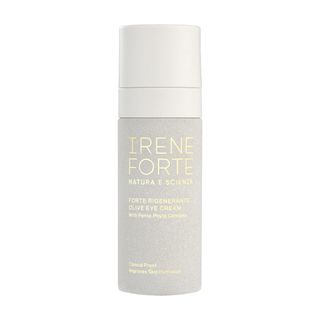
“An eye cream clinically proven to improve skin hydration, driven by a B Vitamin Complex, Hyaluronic Acid and Aloe Leaf Juice.”
This product can help improve hydration of the skin with the two types of ingredients.
The first type is called “humectants”:
these ingredients help attract water.
When humectants are on the surface of the skin, they “pull in” the moisture from the outside environment, or from
within deeper layers of the skin. The following ingredients in this product do the job:
glycerin, glycine.
This product also contains ingredients called “occlusives”. They help reduce the speed with which our skin loses moisture to the outside environment. These ingredients also help soften the upper layer of the skin, so it feels less tight and nicer to the touch. The following ingredients in this product do the job: caprylic/capric triglyceride, simmondsia chinensis seed oil.
The following ingredients in this product are especially good for supporting the skin barrier and helping with the hydration level: urea
Anti-agingNot advertised by the brand · 6 ingredients credited for this claimModerate support
This product contains centella asiatica leaf extract. This ingredient might be able to help reduce and prevent fine lines and wrinkles, improve skin elasticity and firmness, but there is not enough evidence that it actually works.
Can it cause trouble?
Irritancy2 strong irritants: Calendula officinalis flower extract, ParfumMedium risk
Comedogenic2 ingredients rated 2 or more on the 0–5 pore-clogging scale2 flagged


User reviews
Be the first — your take helps the next person decide.
Ingredients
Filter by role to see what each ingredient is doing.
Olea europaea seed~23–34%
- Irritation risk
- Low
Olea europaea fruit oil~4.5–6.7%
- Irritation risk
- Medium
An emollient that helps soften the skin but is not effective for restoring its barrier function. Might be helpful to calm down inflammation
More about Olea europaea fruit oilHyaluronic acid~4.4–6.5%
- Irritation risk
- Low
One of the best moisturizing ingredients. Attracts water into the upper layer of the skin. Naturally present in skin. Typically has large molecule size unless advertised otherwise on the product label. Helps support skin's barrier function and may help to reduce inflammation
More about Hyaluronic acidAloe barbadensis leaf juice~3.4–5.1%
- Irritation risk
- Medium
Traditionally used to treat sunburns, dermatitis and inflammation, but evidence for its effectiveness is lacking. The extract can contain humectants that help attract water into the skin
More about Aloe barbadensis leaf juiceSimmondsia chinensis seed oil~3–4.6%
- Irritation risk
- Medium
Softens the upper layer of skin and helps restore the healthy skin barrier. Has shown to help calm down inflammation in skin. It is a stable oil, meaning that it retains its properties even when exposed to air.
More about Simmondsia chinensis seed oilWater~2–3%
Caprylic/capric triglyceride~1.8–2.7%
- Irritation risk
- Medium
A good mix of fatty acids that forms a protective layer on the skin. Improves the shelf life of products. Derived from coconut and glycerin
More about Caprylic/capric triglyceridePrunus amygdalus dulcis seed~1.3–2%
- Irritation risk
- Low
Helps soften the upper layer of the skin
More about Prunus amygdalus dulcis seedDicaprylyl ether~1.2–1.8%
- Irritation risk
- Low
Helps soften the upper layer of the skin while creating a non-greasy feel on the skin. Helps to dissolve other ingredients
More about Dicaprylyl etherGlycerin~0.95–1.4%
- Irritation risk
- Low
One of the best moisturizing ingredients. Naturally present in skin. It attracts water to the upper layer of the skin working as a humectant
More about GlycerinCetearyl alcohol~0.85–1.3%
- Irritation risk
- Low
- Comedogenicity
- 2/5
A non-drying alcohol. Works as an emollient. Helps water and oil mix together and creates a nice product texture
More about Cetearyl alcoholButylene glycol~0.45–1.1%
- Irritation risk
- Low
Used to create a nice product texture and help delivery of other ingredients. Might be somewhat helpful in attracting water to the upper layer of the skin
More about Butylene glycolAloe barbadensis leaf juice~0.45–1%
- Irritation risk
- Medium
Traditionally used to treat sunburns, dermatitis and inflammation, but evidence for its effectiveness is lacking. The extract can contain humectants that help attract water into the skin
More about Aloe barbadensis leaf juiceGlyceryl stearate~0.5–1.15%
- Irritation risk
- Low
An emollient that softens the skin and forms a protective layer on its surface. Helps water and oil mix together
More about Glyceryl stearateCetearyl glucoside~0.4–0.95%
- Irritation risk
- Medium
Helps water and oil in the product mix well together and improves product texture
More about Cetearyl glucosideHydrogenated olive oil~0.4–0.9%
- Irritation risk
- Low
Olea europaea fruit oil~0.4–0.95%
- Irritation risk
- Medium
An emollient that helps soften the skin but is not effective for restoring its barrier function. Might be helpful to calm down inflammation
More about Olea europaea fruit oilNiacinamide~0.35–0.85%
- Irritation risk
- Low
Is proven to be effective in reducing blemishes, evening out skin tone and helping to improve lines and wrinkles. It helps the skin to repair sun damage, calm down inflammation and keep maintain good levels of moisture. The concentration of about 2% is effective for supporting the skin barrier and evening out the skin tone. Concentration of 4-6% is better for helping with acne and balancing the sebum production
More about NiacinamideGlycine soja sterols~0.4–0.9%
- Irritation risk
- Low
An emollient that helps soften the skin
More about Glycine soja sterolsOlea europaea oil unsaponifiables~0.3–0.75%
- Irritation risk
- Low
Help soften the upper layer of the skin
More about Olea europaea oil unsaponifiablesCalendula officinalis flower extract~0.2–0.75%
- Irritation risk
- High
A plant extract that has some anti-oxidant and anti-bacterial properties. Can be irritating
More about Calendula officinalis flower extractEscin~0.2–0.75%
- Irritation risk
- High
A compound obtained from horse chestnut. It is claimed that this chemical can improve circulation, but there is no evidence available that it works in skin
More about EscinCentella asiatica leaf extract~0.2–0.75%
- Irritation risk
- Medium
A plant extract that has been shown to be able to reduce inflammation in skin, support restoration of skin barrier function, as well as support collagen production. It can be irritating to sensitive skin. Might be helpful in preventing stretch marks. It could, however, itself be irritating.
More about Centella asiatica leaf extractRuscus aculeatus root extract~0.2–0.7%
- Irritation risk
- Low
Hydrolyzed wheat protein~0.2–0.75%
- Irritation risk
- Medium
Can help attract water to the upper layer of the skin. Avoid if sensitive to gluten
More about Hydrolyzed wheat proteinTocopherol~0.2–0.75%
- Irritation risk
- Low
Pure form of vitamin E. Can help moisturise and protect the skin from free radicals. Often used to help stabilise other ingredients or the formula itself
More about TocopherolPanthenol~0.2–0.75%
- Irritation risk
- Low
Helps attract water to the upper layer of the skin and can help improve skin barrier function
More about PanthenolGlycine soja oil~0.3–0.75%
- Irritation risk
- Medium
- Comedogenicity
- 2/5
A good emollient that helps soften the skin and helps repair its barrier function. It can clog pores if used in high concentrations.
More about Glycine soja oilCaprylyl glycol~0.3–0.75%
- Irritation risk
- Medium
Helps preserve products and creates a nice product texture
More about Caprylyl glycol1,2-hexanediol~0.2–0.75%
Behenyl alcohol~0.35–0.8%
- Irritation risk
- Low
Non-drying alcohol that helps water and oil mix together. Also serves as an emollient
More about Behenyl alcoholSodium lauroyl glutamate~0.2–0.75%
- Irritation risk
- Medium
Used as a cleansing agent. It creates foam
More about Sodium lauroyl glutamateGlucose~0.2–0.75%
- Irritation risk
- Low
Helps attract water to the upper layer of the skin. Could be helpful in restoring the skin barrier function
More about GlucoseSodium glutamate~0.2–0.75%
- Irritation risk
- Low
Urea~0.2–0.7%
- Irritation risk
- Low
Naturally present in skin (urea makes up about 7% of natural moisturizing factors in skin). Attracts water to the upper layer of the skin. Also has a positive effect on the skin barrier beyond the humectant action. Can enhance penetration of other ingredients. Is an exfoliating ingredient when used in high concentrations
More about UreaAmmonium glycyrrhizate~0.2–0.7%
- Irritation risk
- Low
Sodium hyaluronate~0.15–0.65%
- Irritation risk
- Low
One of the best moisturizing ingredients. Attracts water into the upper layer of the skin
More about Sodium hyaluronateHydrolyzed yeast protein~0.15–0.7%
- Irritation risk
- Low
Sodium pca~0.15–0.6%
- Irritation risk
- Low
Naturally present in skin and helps to attract water to its upper layer
More about Sodium pcaStearic acid~0.35–0.85%
- Irritation risk
- Low
Helps oil and water mix together and works as an emollient
More about Stearic acidLactic acid~0.15–0.6%
- Irritation risk
- Medium
An exfoliating and moisturizing alpha-hydroxy acid (AHA). Typically causes less irritation than other AHAs, for example, glycolic acid. At high concentrations (about 15%), lactic acid can help reduce lines and wrinkles. Recent studies show that lactic acid can support the "good" bacteria living on skin's surface (healthy skin microbiome)
More about Lactic acidGlycine~0.15–0.5%
- Irritation risk
- Low
Helps to attract water to the upper layer of the skin and can help restore the skin barrier function
More about GlycineSorbitol~0.1–0.4%
- Irritation risk
- Low
Helps attract water to the upper layer of the skin and improves the product texture
More about SorbitolSodium citrate~0.1–0.4%
- Irritation risk
- Medium
Helps to control the skin's pH level. Maintains the skin's natural film of amino-lactic acids and oils. Helps to preserve products
More about Sodium citrateHydroxyacetophenone~0.1–0.4%
Lecithin~0.15–0.65%
- Irritation risk
- Low
Used mostly for creating emulsions - helping oil and water mix together. Helps soften the upper layer of the skin
More about LecithinTropolone~0.1–0.3%
- Irritation risk
- Low
Parfum~0.05–0.25%
- Irritation risk
- High
An aromatic blend of unspecified and possibly irritating ingredients
More about ParfumIngredient list view
Olea europaea seed, Unknown, Olea europaea fruit oil, Unknown, Hyaluronic acid, Aloe barbadensis leaf juice, Simmondsia chinensis seed oil, Water, Caprylic/capric triglyceride, Prunus amygdalus dulcis seed, Dicaprylyl ether, Glycerin, Cetearyl alcohol, Butylene glycol, Aloe barbadensis leaf juice, Glyceryl stearate, Cetearyl glucoside, Hydrogenated olive oil, Olea europaea fruit oil, Niacinamide, Glycine soja sterols, Olea europaea oil unsaponifiables, Calendula officinalis flower extract, Escin, Centella asiatica leaf extract, Ruscus aculeatus root extract, Hydrolyzed wheat protein, Tocopherol, Panthenol, Glycine soja oil, Caprylyl glycol, 1,2-hexanediol, Behenyl alcohol, Sodium lauroyl glutamate, Glucose, Sodium glutamate, Urea, Ammonium glycyrrhizate, Sodium hyaluronate, Hydrolyzed yeast protein, Sodium pca, Stearic acid, Lactic acid, Glycine, Sorbitol, Sodium citrate, Hydroxyacetophenone, Lecithin, Tropolone, Parfum
Compare prices
Retailers ranked by price — lowest first.
Affiliate links · prices updated regularly · As an Amazon Associate, WIMJ earns from qualifying purchases.
Worth comparing, line by line.
Match % combines shared ingredients, the first five ingredients, shared actives and hero ingredients, irritancy (lower counts in the alternative's favour), texture and body area. Only products in the same routine step are compared.
| Irene ForteOlive Eye CreamYOUR PRODUCT | BiossanceSqualane + Peptide Eye Gel | KLAVUURejuve Pearlsation Multi Pearl Peptide Eye Cream | CELLBNA - One Cell Cream | |
|---|---|---|---|---|
| Match | — | 71% | 68% | 65% |
| Price | $190.00 | $43.22−$146.78 | $16.85−$173.15 | $26.89−$163.11 |
| Shared key ingredients | — | 5 of 15 | 7 of 15 | 4 of 15 |
| Key difference | — | Acetyl Tetrapeptide-5 | Retinol | Adenosine |
| Irritancy | Medium | Low | Medium | Low |
| Drying alcohol | — | — | — | — |
| View product | Shop | Shop | Shop |


Product summary
Based on the ingredient list, "Irene Forte - Olive Eye Cream" can work well for skin moisturization. To work well, any moisturizer needs to include a combination of water-binding and emollient ingredients. Irene Forte - Olive Eye Cream ticks this box. Urea, glycerin, glycine, hyaluronic acid and sodium hyaluronate in this product (humectants) attract water molecules to the upper layer of the skin (the water comes from the outside air or from the deeper layers of the skin if the air is dry). Glycine soja oil, glycine soja sterols, caprylic/capric triglyceride, simmondsia chinensis seed oil and cetearyl alcohol in this product help decrease the water evoporation from the skin, so that it stays hydrated for longer. These ingredients also soften the skin and take away the feeling of tightness and dryness.
This product contains ingredients that could be beneficial, but their concentrations are too low in this formulation: lecithin, lactic acid, stearic acid, vitamin e and niacinamideIrritation risk
There are some common irritants in this product, including ingredients that do not have benefits for the skin. We assess the overall irritancy of this moisturizer to be medium. For a detailed overview of all potential irritants: click here
You can see the detailed formula review with the breakdown of all actives in the product and the full ingredient list with estimated concentrations in the tables below.
Price
The product retails for 190.00$ in the United States.
For a detailed price comparison: click here.
Sources cited in this review
Every concentration estimate and effectiveness label is anchored to one of these 26 studies and safety reviews.
- 1Use of “natural” oils for moisturization: Review of olive, coconut, and sunflower seed oilonlinelibrary.wiley.com
- 2Efficacy of a New Topical Nano-hyaluronic Acid in Humansncbi.nlm.nih.gov
- 3Physiochemical properties and application of hyaluronic acid: a systematic reviewonlinelibrary.wiley.com
- 4
- 5
- 6

Affiliate links · As an Amazon Associate, WIMJ earns from qualifying purchases.