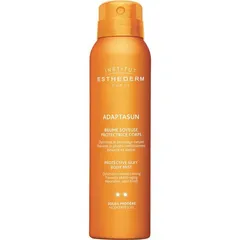
Works for:
based on ingredients and %- Moisturizing
Doesn't work for:
based on ingredients and %- Anti-aging
Can it cause trouble?
- Irritation risk: high
- Comedogenic risk ingredients: 0
Key actives
Product Summary
"Institut Esthederm - Protective Silky Body Mist" could be helpful for: Moisturizing, but its actives are not the most effective or are not well-studied.
Price
The product retails from 42.00£ up to 44.05£ in the United Kingdom.
For a detailed price comparison: click here.
Moisturizing
What does the product description say?
Create a bright, fast and durable tan with this unique body mist for moisturised, supple and glowing skin.
Source: Face the future
This product can help soften the skin and reduce its moisture loss with emollients and occlusives: limnanthes alba seed oil, oryza sativa bran oil.
Keep in mind that this product does not contain effective ingredients to attract water to the upper layer of the skin. This is why an additional product with humectants like glycerin or hyaluronic acid can be helpful (apply it before this product for the best results).
This oil's cmposition is closest to rapeseed oil. It is a very stable oil and serves as an emoillient
Helps soften the upper layer of the skin and might have some anti-oxidant properties
Helps to soften the upper layer of the skin without creating a greasy texture
Helps soften the upper layer of the skin. At the same time, it can weaken the skin's barrier enhancing penetration of other ingredients and increasing the risk of skin dryness
Helps soften the upper layer of the skin and create a nice product consistency
Pure form of vitamin E. Can help moisturise and protect the skin from free radicals. Often used to help stabilise other ingredients or the formula itself
Anti-aging
What does the product description say?
Read More Containing Global Cellular Protection, this patented intra-cellular formula prevents the following; photo-aging and brown spots by neutralising free radicals and protecting the cellular DNA, appearance of wrinkles by fighting against collagen degradation factors, excess sun damage.
Source: Face the future
Effective ingredients missing or their concentration is too low.
This oil's cmposition is closest to rapeseed oil. It is a very stable oil and serves as an emoillient
Pure form of vitamin E. Can help moisturise and protect the skin from free radicals. Often used to help stabilise other ingredients or the formula itself
How honest is this product?
| Promise | Can it deliver? |
|---|---|
| Moisturizing | |
| Anti-aging |
Total Promises Fulfilled score: 37/100.
We receive a small commission for purchases made through these links at no cost for you. Thank you for your support! Learn more
Affiliate link · supports WIMJ at no cost to you
Potential irritants
Comedogenic ingredients
No comedogenic ingredients detected
User reviews (0)
Averages from community submissions.
No reviews yet for this product.
Be the first to share your experience!
Tried this product?
Help capture what the ingredient list can't—texture, finish, pilling, scent, and more. Answer what you can, skip the rest.
Takes ~30 seconds.
Reviews are shown in aggregate. No personal details.
| Product | Similarity | Price | Irritancy |
|---|---|---|---|
 Institut Esthederm Protective Silky Body Mist | Current | ≈ $56.15 | |
 Abib Airy clear sunscreen gel | 30% | $11.00 | |
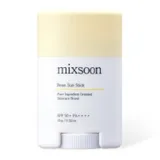 mixsoon Bean Sun Stick | 29% | ≈ $15.41 | |
 ESPA Optimal Body Tri-Serum | 28% | ≈ $54.81 | |
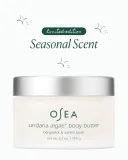 Osea Malibu Undaria Algae™ Body Butter Bergamot & Vanilla Bean | 26% | $54.00 | |
 Ren Skincare Evercalm Barrier Support Body Balm Targeted Treatment for Senstive Skin | 26% | ≈ $43.59 |
Key Actives
This oil's cmposition is closest to rapeseed oil. It is a very stable oil and serves as an emoillient
A weak sunscreen that offers some protection against the sun rays that cause sunburn (UVB), but does not offer meaningful protection against protect against the most aging sun rays (UVA). It loses its effectiveness quickly when exposed to sunlight. It is an organic, or so called "chemical" sunscreen. When used in low concentrations, helps to stabilize the product formulation
Helps soften the upper layer of the skin and might have some anti-oxidant properties
A synthetic ester of salicylic acid that is used to help disperse pigments and boost effectiveness of sunscreen ingredients. It is able to absorb UV light (working as an organic, or chemical filter), but is not approved as a sunscreen ingredient on its own
Potential irritants
An aromatic blend of unspecified and possibly irritating ingredients
A self-tanning agent. It reacts with amino-acids in the surface of the skin to produce a brown pigment. Often used together with another self-tanning ingredient, dihydroxyacetone
A common frangrance that can easily irritate skin, especially if exposed to air, light or heat
Fragrance with sweet balsamic smell. Help to preserve products and dissolve other ingredients. Could trigger allergic reactions and be irritating
A weak sunscreen that offers some protection against the sun rays that cause sunburn (UVB), but does not offer meaningful protection against protect against the most aging sun rays (UVA). It loses its effectiveness quickly when exposed to sunlight. It is an organic, or so called "chemical" sunscreen. When used in low concentrations, helps to stabilize the product formulation
Helps improve stability of sunscreen filters and boost their effectiveness
A synthetic ester of salicylic acid that is used to help disperse pigments and boost effectiveness of sunscreen ingredients. It is able to absorb UV light (working as an organic, or chemical filter), but is not approved as a sunscreen ingredient on its own
Used to stabilize the product formulation protecting it from sun light
A more stable but less bio-available form of vitamin E compared to Tocopherol. Might help moisturize and protect the skin from free radicals, but mostly used in low concentrations to stabilize other ingredients.
Helps soften the upper layer of the skin. At the same time, it can weaken the skin's barrier enhancing penetration of other ingredients and increasing the risk of skin dryness
Comedogenic ingredients
We couldn't find any comedogenic ingredients in this product
All ingredients
Helps soften the upper layer of the skin and create a nice product consistency
Helps to soften the upper layer of the skin without creating a greasy texture
A weak sunscreen that offers some protection against the sun rays that cause sunburn (UVB), but does not offer meaningful protection against protect against the most aging sun rays (UVA). It loses its effectiveness quickly when exposed to sunlight. It is an organic, or so called "chemical" sunscreen. When used in low concentrations, helps to stabilize the product formulation
Helps improve stability of sunscreen filters and boost their effectiveness
Helps soften the upper layer of the skin and might have some anti-oxidant properties
This oil's cmposition is closest to rapeseed oil. It is a very stable oil and serves as an emoillient
A synthetic ester of salicylic acid that is used to help disperse pigments and boost effectiveness of sunscreen ingredients. It is able to absorb UV light (working as an organic, or chemical filter), but is not approved as a sunscreen ingredient on its own
Used to stabilize the product formulation protecting it from sun light
An aromatic blend of unspecified and possibly irritating ingredients
A more stable but less bio-available form of vitamin E compared to Tocopherol. Might help moisturize and protect the skin from free radicals, but mostly used in low concentrations to stabilize other ingredients.
Helps soften the upper layer of the skin. At the same time, it can weaken the skin's barrier enhancing penetration of other ingredients and increasing the risk of skin dryness
A self-tanning agent. It reacts with amino-acids in the surface of the skin to produce a brown pigment. Often used together with another self-tanning ingredient, dihydroxyacetone
Used to increase stability of product formulations
A common frangrance that can easily irritate skin, especially if exposed to air, light or heat
Fragrance with sweet balsamic smell. Help to preserve products and dissolve other ingredients. Could trigger allergic reactions and be irritating
Pure form of vitamin E. Can help moisturise and protect the skin from free radicals. Often used to help stabilise other ingredients or the formula itself
Ingredient list view
Butane, Dibutyl adipate, Coco-caprylate/caprate, Homosalate, Propane, Ethylhexyl methoxycrylene, Oryza sativa bran oil, Limnanthes alba seed oil, Butyloctyl salicylate, Isobutane, Benzotriazolyl dodecyl p-cresol, Parfum, Oleoyl tyrosine, Tocopheryl acetate, Unknown, Potassium glycyrrhetinate, Luffa cylindrica seed oil, Oleic acid, Linalool, Hexyl cinnamal, Dihydroxy methylchromonyl palmitate, Pentaerythrityl tetra-di-t-butyl hydroxyhydrocinnamate, Hydroxycitronellal, Limonene, Benzyl benzoate, Tocopherol, Geraniol, Citronellol, Isoeugenol, Coumarin, Citral
- Safety Assessment of Alkyl Esters as Used in Cosmetics
- Opinion on Homosalate - Scientific Committee on Consumer Products
- Study on the Composition of Rice Bran Oil and Its Higher Free Fatty Acids Value
- Safety assessment of Salicylic Acid, Butyloctyl Salicylate, Calcium Salicylate, C12-15 Alkyl Salicylate, Capryloyl Salicylic Acid, Hexyldodecyl Salicylate, Isocetyl Salicylate, Isodecyl Salicylate, Magnesium Salicylate, MEA-Salicylate, Ethylhexyl Salicylate, Potassium Salicylate, Methyl Salicylate, Myristyl Salicylate, Sodium Salicylate, TEA-Salicylate, and Tridecyl Salicylate
- Anti-Inflammatory and Skin Barrier Repair Effects of Topical Application of Some Plant Oils
- https://www.sciencedirect.com/science/article/pii/0168365995000887
- Safety Assessment of Pentaerythrityl Tetra-Di-t-Butyl Hydroxyhydrocinnamate as Used in Cosmetics
- Vitamin E in dermatology
- Vitamin E and Skin Health
- Annex I: Clinical evidence regarding sensitisation to individual fragrance chemicals and to natural extracts