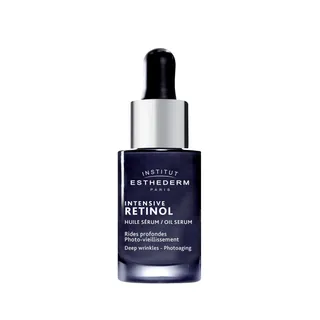
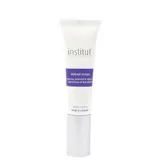
Institut Esthederm Intensive Retinol Serum
Works for
Anti-agingRetinol, Carnosine + 3 moreWorks well
“Treat your skin to the smoothing properties of Institut Esthederm Intensive Retinol Serum, an anti-ageing formula that targets wrinkles and loss of elasticity to promote a firmer-looking complexion.”
This product can help reduce and prevent fine lines and wrinkles, improve skin elasticity and firmness because it contains retinol.
These ingredients in the product can also be helpful, even though there is less evidence for their effectiveness: carnosine.
Keep in mind that it typically takes at least 6 weeks to notice any results because the changes that are needed to improve fine lines and elasticity happen in the deeper layers of the skin. No topical anti-aging product can “erase” wrinkles or fully reverse signs of aging.
Anti-oxidationSide benefit · Superoxide dismutase, Carnosine + 6 moreWorks well
This product contains antioxidants (carnosine, retinol, superoxide dismutase) that can help neutralize free radicals in skin. By doing so, they can lessen the damage the skin gets from the UV light (sun).
The following ingredients - squalene also can have an antioxidant effect, but there is less evidence to confirm their effectiveness in skin.
ExfoliationSide benefit · RetinolWorks well
This product can help exfoliate the skin. In other words, it helps break down the bonds between dead cells on the surface of the skin and speed up the skin turnover. Skin often appears softer and brighter after exfoliation, but overdoing it can result in disrupted skin barrier. The following ingredient is doing the exfoliating job in this product: retinol.
Evens skin toneSide benefit · RetinolWorks well
This product can help reduce hypepigmentation and even out the skin tone because it contains the following effective ingredients: retinol.
Keep in mind that you would need to apply any topical skincare targetted at hypigmentation consistently for a couple of months to get a result. No topical skincare product can help get rid of hyperpigmentation (including post-acne marks and age spots) instantly.
Anti-blemishSide benefit · RetinolWorks well
This product can help reduce breakouts and clogged pores because it contains the following ingredient: retinol. This ingredient is used for treating acne and can have a noticeable effect.
MoisturizingSide benefit · Algae extract, Limnanthes alba seed oil + 13 moreWorks
This product can help improve hydration of the skin with the two types of ingredients.
The first type is called “humectants”:
these ingredients help attract water.
When humectants are on the surface of the skin, they “pull in” the moisture from the outside environment, or from
within deeper layers of the skin. The following ingredients in this product do the job:
algae extract, artemia extract.
This product also contains ingredients called “occlusives”. They help reduce the speed with which our skin loses moisture to the outside environment. These ingredients also help soften the upper layer of the skin, so it feels less tight and nicer to the touch. The following ingredients in this product do the job: squalene, algae extract.
Can it cause trouble?
Irritancy3 strong irritants: Retinol, Parfum + 1 more — patch-test recommendedHigh risk
Comedogenic4 ingredients rated 2 or more on the 0–5 pore-clogging scale4 flagged

User reviews
Be the first — your take helps the next person decide.
Ingredients
Filter by role to see what each ingredient is doing.
Water~45–55%
Propylene glycol~4.1–5%
- Irritation risk
- High
Helps oil and water mix together and can enhance the penetration of other ingredients into the skin. It can be irritating
More about Propylene glycolCitric acid~4.1–5%
- Irritation risk
- Medium
Can work as an exfoliant but is typically used to adjust the product pH
More about Citric acidGlucose~3–3.7%
- Irritation risk
- Low
Helps attract water to the upper layer of the skin. Could be helpful in restoring the skin barrier function
More about GlucoseMannitol~2.3–2.8%
- Irritation risk
- Low
Helps to attract water to the upper layer of the skin
More about MannitolDisodium phosphate~1.9–2.3%
- Irritation risk
- Low
Helps adjust the product pH and stabilize the formulation
More about Disodium phosphatePotassium chloride~1.6–2%
- Irritation risk
- Low
Calcium chloride~1.4–1.7%
- Irritation risk
- Medium
Helps create a thicker product consistency. Might be irritating
More about Calcium chlorideCarnosine~1.1–1.4%
- Irritation risk
- Low
A type of peptide. It attracts water to the upper layer of the skin. It can help neutralize free radicals in skin combatting the sun damage
More about CarnosineMagnesium chloride~0.95–1.15%
Magnesium sulfate~0.75–1.15%
Potassium phosphate~0.6–0.9%
Algae extract~0.6–0.9%
- Irritation risk
- Low
- Comedogenicity
- 3/5
Plant extract that helps the skin to attract water and make it more smooth for touch. Also shows promise of anti-aging properties, but research is not extensive yet
More about Algae extractDisodium adenosine triphosphate~0.5–0.75%
- Irritation risk
- Low
Superoxide dismutase~0.45–0.7%
- Irritation risk
- Low
An antioxidant enzyme that is naturally present in skin. It can help support skin barrier function and reduce inflammation in skin. It is used in topical medications for inflammatory skin conditions including atopic dermatitis (eczema) and psoriasis. There are three types of natural Superoxide Dismutase in human skin. The compound used in topical treatments and cosmetics are mimics of typically one of these natural variants
More about Superoxide dismutaseArtemia extract~0.45–0.65%
- Irritation risk
- Low
Zooplankton extract that can attract water to the upper level of the skin and might have some anti-oxidant effect
More about Artemia extractSodium citrate~0.45–0.65%
- Irritation risk
- Medium
Helps to control the skin's pH level. Maintains the skin's natural film of amino-lactic acids and oils. Helps to preserve products
More about Sodium citrateSodium chloride~0.45–0.65%
- Irritation risk
- Low
Used to stabilize mixtures of oil and water, and create thicker, gel-like product textures
More about Sodium chlorideSodium bicarbonate~0.45–0.7%
Nitrogen~0.3–0.6%
Water~0.3–0.55%
Propylene glycol~0.3–0.5%
- Irritation risk
- High
Helps oil and water mix together and can enhance the penetration of other ingredients into the skin. It can be irritating
More about Propylene glycolCitric acid~0.25–0.5%
- Irritation risk
- Medium
Can work as an exfoliant but is typically used to adjust the product pH
More about Citric acidGlucose~0.25–0.5%
- Irritation risk
- Low
Helps attract water to the upper layer of the skin. Could be helpful in restoring the skin barrier function
More about GlucoseMannitol~0.25–0.5%
- Irritation risk
- Low
Helps to attract water to the upper layer of the skin
More about MannitolDisodium phosphate~0.3–0.5%
- Irritation risk
- Low
Helps adjust the product pH and stabilize the formulation
More about Disodium phosphatePotassium chloride~0.3–0.55%
- Irritation risk
- Low
Calcium chloride~0.3–0.5%
- Irritation risk
- Medium
Helps create a thicker product consistency. Might be irritating
More about Calcium chlorideCarnosine~0.25–0.5%
- Irritation risk
- Low
A type of peptide. It attracts water to the upper layer of the skin. It can help neutralize free radicals in skin combatting the sun damage
More about CarnosineMagnesium chloride~0.3–0.5%
Magnesium sulfate~0.3–0.55%
Potassium phosphate~0.3–0.55%
Algae extract~0.35–0.6%
- Irritation risk
- Low
- Comedogenicity
- 3/5
Plant extract that helps the skin to attract water and make it more smooth for touch. Also shows promise of anti-aging properties, but research is not extensive yet
More about Algae extractDisodium adenosine triphosphate~0.25–0.5%
- Irritation risk
- Low
Superoxide dismutase~0.25–0.5%
- Irritation risk
- Low
An antioxidant enzyme that is naturally present in skin. It can help support skin barrier function and reduce inflammation in skin. It is used in topical medications for inflammatory skin conditions including atopic dermatitis (eczema) and psoriasis. There are three types of natural Superoxide Dismutase in human skin. The compound used in topical treatments and cosmetics are mimics of typically one of these natural variants
More about Superoxide dismutaseArtemia extract~0.25–0.5%
- Irritation risk
- Low
Zooplankton extract that can attract water to the upper level of the skin and might have some anti-oxidant effect
More about Artemia extractSodium citrate~0.25–0.5%
- Irritation risk
- Medium
Helps to control the skin's pH level. Maintains the skin's natural film of amino-lactic acids and oils. Helps to preserve products
More about Sodium citrateSodium chloride~0.3–0.55%
- Irritation risk
- Low
Used to stabilize mixtures of oil and water, and create thicker, gel-like product textures
More about Sodium chlorideSodium bicarbonate~0.4–0.6%
Nitrogen~0.25–0.5%
Limnanthes alba seed oil~0.3–0.55%
- Irritation risk
- Low
This oil's cmposition is closest to rapeseed oil. It is a very stable oil and serves as an emoillient
More about Limnanthes alba seed oilCaprylic/capric triglyceride~0.3–0.55%
- Irritation risk
- Medium
A good mix of fatty acids that forms a protective layer on the skin. Improves the shelf life of products. Derived from coconut and glycerin
More about Caprylic/capric triglyceridePropylheptyl caprylate~0.3–0.55%
- Irritation risk
- Low
Helps soften the upper layer of the skin
More about Propylheptyl caprylateGlycine soja oil~0.25–0.5%
- Irritation risk
- Medium
- Comedogenicity
- 2/5
A good emollient that helps soften the skin and helps repair its barrier function. It can clog pores if used in high concentrations.
More about Glycine soja oilPrunus armeniaca kernel oil~0.25–0.5%
- Irritation risk
- Medium
An emollient that helps soften the skin
More about Prunus armeniaca kernel oilCyperus esculentus root oil~0.2–0.4%
- Irritation risk
- Low
Bht~0.15–0.3%
Retinol~0.15–0.3%
- Irritation risk
- High
Two steps removed from the active form of vitamin A - retinoic acid. Once converted to the retinoic acid in the skin, retinol is proven to be effective against all signs of aging. It improves skin cell turnover, helps fight blemishes and clogged pores, can regulate excess oil production and even skin tone. It can, however, be quite irritating
More about RetinolParfum~0.1–0.2%
- Irritation risk
- High
An aromatic blend of unspecified and possibly irritating ingredients
More about ParfumTocopherol~0.15–0.3%
- Irritation risk
- Low
Pure form of vitamin E. Can help moisturise and protect the skin from free radicals. Often used to help stabilise other ingredients or the formula itself
More about TocopherolBeta-sitosterol~0.2–0.35%
- Irritation risk
- Low
A phytosterol that can support skin's barrier function and help the skin stay hydrated
More about Beta-sitosterolSqualene~0.15–0.3%
- Irritation risk
- Low
- Comedogenicity
- 2/5
An oil that is naturally part of skin sebum that helps to soften its upper layer, reduce water loss and neutralize free radicals. It might be comedogenic. Avoid applying large concentrations (or pure oil) before sun exposure as oxidized squalene can clog pores and lead to skin irritation. Today squalene is mostly derived from vegetable oils or synthetized by yeast
More about SqualeneEugenol~0.05–0.15%
Ingredient list view
Water, Propylene glycol, Citric acid, Glucose, Mannitol, Disodium phosphate, Potassium chloride, Calcium chloride, Carnosine, Magnesium chloride, Magnesium sulfate, Potassium phosphate, Algae extract, Disodium adenosine triphosphate, Superoxide dismutase, Artemia extract, Sodium citrate, Sodium chloride, Sodium bicarbonate, Nitrogen, Water, Propylene glycol, Citric acid, Glucose, Mannitol, Disodium phosphate, Potassium chloride, Calcium chloride, Carnosine, Magnesium chloride, Magnesium sulfate, Potassium phosphate, Algae extract, Disodium adenosine triphosphate, Superoxide dismutase, Artemia extract, Sodium citrate, Sodium chloride, Sodium bicarbonate, Nitrogen, Limnanthes alba seed oil, Caprylic/capric triglyceride, Propylheptyl caprylate, Glycine soja oil, Prunus armeniaca kernel oil, Cyperus esculentus root oil, Bht, Retinol, Parfum, Tocopherol, Beta-sitosterol, Squalene, Eugenol
Compare prices
Retailers ranked by price — lowest first.
Affiliate links · As an Amazon Associate, WIMJ earns from qualifying purchases.
Worth comparing, line by line.
Match % combines shared ingredients, the first five ingredients, shared actives and hero ingredients, irritancy (lower counts in the alternative's favour), texture and body area. Only products in the same routine step are compared.
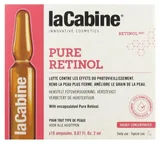
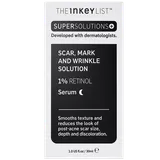
| Institut EsthedermIntensive Retinol SerumYOUR PRODUCT | The INKEY List CAScar, Mark and Wrinkle Solution | MALIN + GOETZHinoki Aroma Oil | InstitutRetinol | |
|---|---|---|---|---|
| Match | — | 84% | 83% | 82% |
| Price | — | — | $74.00 | $68.93 |
| Shared key ingredients | — | 4 of 12 | 3 of 12 | 2 of 12 |
| Key difference | — | Glycerin | 3-O-Ethyl Ascorbic Acid | Dipeptide-4 |
| Irritancy | High | Medium | Medium | Medium |
| Drying alcohol | — | — | — | — |
| View product | Shop | Shop | Shop |

More alternatives: Dior Capture Totale Retishot Retinol Night TreatmentIOPE Retinol Expert 0.3%
Product summary
"Institut Esthederm - Intensive Retinol Serum" is effective for: Anti-inflammatory, Evens skin tone, Exfoliation, Anti-aging and Anti-blemish
This product could be helpful for: Moisturizing, but its actives are not the most effective or are not well-studied.
Ingredient callouts
- this product contains an effective form of Retinoids (vitamin A): retinol 0.20% - 0.35%. Retinoids are potent multitasking actives. They work to improve and prevent early signs of aging, reduce hyperpigmentation (age spots and post-acne marks), and prevent inflamed blemishes and clogged pores. The downside of Retinoids is that they can be irritating. If you are not already using a Retinoid in your routine, it is best to start slowly and apply the Retinoid product only a few times per week. If your skin tolerates it well, you can gradually increase the frequency to daily.
- Humectants (mannitol 0.25% - 0.50%, mannitol 2.30% - 2.80%, carnosine 0.25% - 0.50%, carnosine 1.10% - 1.40%, artemia extract 0.25% - 0.50%, algae extract 0.35% - 0.60%, artemia extract 0.45% - 0.65% and algae extract 0.60% - 0.90%). These ingredients help attract water to the upper layer of the skin and improve the skin hydration.
Price
The product retails for 122.57A$ in Australia and from 52.19£ up to 54.00£ in the United Kingdom.
For a detailed price comparison: click here.
Sources cited in this review
Every concentration estimate and effectiveness label is anchored to one of these 24 studies and safety reviews.
- 1Surfactants and experimental irritant contact dermatitisncbi.nlm.nih.gov
- 2Propylene Glycolpubmed.ncbi.nlm.nih.gov
- 3Skin-sensitizing and irritant properties of propylene glycolonlinelibrary.wiley.com
- 4
- 5
- 6Safety Assessment of Magnesium Sulfate as Used in Cosmeticsncbi.nlm.nih.gov

Affiliate links · As an Amazon Associate, WIMJ earns from qualifying purchases.