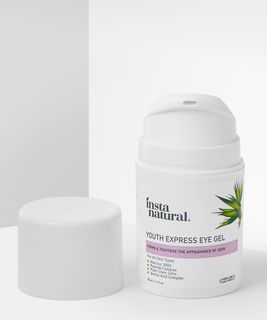
Works for
2 of 2 advertised claims delivered
MoisturizingPalmitoyl tripeptide-1, Palmitoyl tetrapeptide-7 + 21 moreStrong evidence
“This lightweight treatment contains Matrixyl 3000, a powerful peptide that visibly reduces fine lines, wrinkles and puffiness, while Hyaluronic Acid, Plant Stem Cells and Amino Acids hydrate and firm the skin.”
This product can help improve hydration of the skin with the two types of ingredients.
The first type is called “humectants”:
these ingredients help attract water.
When humectants are on the surface of the skin, they “pull in” the moisture from the outside environment, or from
within deeper layers of the skin. The following ingredients in this product do the job:
alanine, arginine.
This product also contains ingredients called “occlusives”. They help reduce the speed with which our skin loses moisture to the outside environment. These ingredients also help soften the upper layer of the skin, so it feels less tight and nicer to the touch. The following ingredients in this product do the job: arginine, simmondsia chinensis seed oil.
The following ingredients in this product are especially good for supporting the skin barrier and helping with the hydration level: palmitoyl tetrapeptide-7, palmitoyl tripeptide-1, palmitoyl tripeptide-5
Anti-agingThreonine, Palmitoyl tripeptide-1 + 7 moreModerate evidence
“This lightweight treatment contains Matrixyl 3000, a powerful peptide that visibly reduces fine lines, wrinkles and puffiness, while Hyaluronic Acid, Plant Stem Cells and Amino Acids hydrate and firm the skin.”
This product contains aspartic acid, palmitoyl tetrapeptide-7, palmitoyl tripeptide-1, palmitoyl tripeptide-5, serine, threonine. These ingredients might be able to help reduce and prevent fine lines and wrinkles, improve skin elasticity and firmness, but there is not enough evidence that it actually works.
Anti-oxidationNot advertised by the brand · Punica granatum extract, Ginkgo biloba leaf extract + 6 moreModerate evidence
This product contains antioxidants (ginkgo biloba leaf extract, punica granatum extract) that might be able to help neutralize free radicals in skin to lessen the damage it gets from the UV light (sun). There is not enough evidence to confirm their effectiveness in skin though.
Can it cause trouble?
Irritancy2 strong irritants: Equisetum arvense extract, Geranium maculatum extractMedium risk
Comedogenic2 ingredients rated 2 or more on the 0–5 pore-clogging scale2 flagged


User reviews
Be the first — your take helps the next person decide.
Ingredients
Filter by role to see what each ingredient is doing.
Water~45–55%
Aloe barbadensis leaf juice~6.5–8%
- Irritation risk
- Medium
Traditionally used to treat sunburns, dermatitis and inflammation, but evidence for its effectiveness is lacking. The extract can contain humectants that help attract water into the skin
More about Aloe barbadensis leaf juicePalmitoyl tripeptide-5~4.3–5.3%
- Irritation risk
- Low
A type of peptide. Peptides are excellent moisturizers and might be able support collagen production reducing fine lines and wrinkles
More about Palmitoyl tripeptide-5Glycerin~3–3.6%
- Irritation risk
- Low
One of the best moisturizing ingredients. Naturally present in skin. It attracts water to the upper layer of the skin working as a humectant
More about GlycerinGlobularia cordifolia callus culture extract~2.2–2.7%
- Irritation risk
- Low
An extract from plant stem cells that might help calm down inflammation in skin
More about Globularia cordifolia callus culture extractHydroxyethylcellulose~1.8–2.2%
- Irritation risk
- Low
Used to thicken product formulations and create gel-like textures
More about HydroxyethylcelluloseCucumis sativus fruit water~1.5–1.9%
Simmondsia chinensis seed oil~1.4–1.8%
- Irritation risk
- Medium
Softens the upper layer of skin and helps restore the healthy skin barrier. Has shown to help calm down inflammation in skin. It is a stable oil, meaning that it retains its properties even when exposed to air.
More about Simmondsia chinensis seed oilCarrageenan~1.1–1.4%
- Irritation risk
- Medium
- Comedogenicity
- 3/5
Helps thicken the product formula and create a nice product formulation
More about CarrageenanDimethyl sulfone~0.75–1.1%
Butylene glycol~0.6–0.85%
- Irritation risk
- Low
Used to create a nice product texture and help delivery of other ingredients. Might be somewhat helpful in attracting water to the upper layer of the skin
More about Butylene glycolCarbomer~0.5–0.75%
- Irritation risk
- Low
Helps create a thicker or gel-like product texture. It is not a surfactant but can be used in gentle cleansing formulations
More about CarbomerEthylhexylglycerin~0.45–0.65%
Potassium sorbate~0.3–0.6%
Sodium benzoate~0.25–0.5%
Glycyrrhiza glabra root extract~0.3–0.55%
- Irritation risk
- Medium
A plant extract that can help lighten the skin and calm down inflammation. Might be helpful in neutralizing free radicals
More about Glycyrrhiza glabra root extractPolysorbate 20~0.35–0.65%
Cassia angustifolia seed polysaccharide~0.3–0.5%
- Irritation risk
- Medium
Helps attract water to the upper layer of the skin. Is sometimes referred to as "natural" hyaluronic acid (even though hyaluronic acid is not unnatural and is present in human skin)
More about Cassia angustifolia seed polysaccharidePalmitoyl tetrapeptide-7~0.3–0.6%
- Irritation risk
- Low
A type of peptide. Peptides are excellent moisturizers and might be able support collagen production reducing fine lines and wrinkles
More about Palmitoyl tetrapeptide-7Palmitoyl tripeptide-1~0.3–0.55%
- Irritation risk
- Low
A type of peptide. Peptides are excellent moisturizers and might be able support collagen production reducing fine lines and wrinkles
More about Palmitoyl tripeptide-1Centella asiatica extract~0.3–0.55%
- Irritation risk
- Medium
A plant extract that has been shown to be able to reduce inflammation in skin, support restoration of skin barrier function, as well as support collagen production. Contains active compounds called centelloids: asiaticoside, madecasosside, asiatic acid and madecassic acid. Might be helpful in preventing stretch marks. It can be itself be irritating though.
More about Centella asiatica extractBoswellia serrata oil~0.25–0.45%
- Irritation risk
- Low
Euphrasia officinalis extract~0.2–0.4%
- Irritation risk
- Low
Ganoderma lucidum extract~0.25–0.45%
- Irritation risk
- Medium
Helps attract water to the upper layer of the skin
More about Ganoderma lucidum extractTocopheryl acetate~0.25–0.45%
- Irritation risk
- Medium
A more stable but less bio-available form of vitamin E compared to Tocopherol. Might help moisturize and protect the skin from free radicals, but mostly used in low concentrations to stabilize other ingredients.
More about Tocopheryl acetatePhenoxyethanol~0.25–0.45%
- Irritation risk
- Low
A preservative. It helps prevent bacterial growth in cosmetic products
More about PhenoxyethanolSodium pca~0.25–0.45%
- Irritation risk
- Low
Naturally present in skin and helps to attract water to its upper layer
More about Sodium pcaSodium lactate~0.25–0.45%
- Irritation risk
- Medium
Helps attract water to the upper layer of the skin. Is often used to adjust the pH level of the product
More about Sodium lactateEquisetum arvense extract~0.25–0.45%
- Irritation risk
- High
A plant extract that might have anti-oxidant properties. Can be irritating
More about Equisetum arvense extractGeranium maculatum extract~0.25–0.4%
- Irritation risk
- High
Contains an essential oil. Can be irritating
More about Geranium maculatum extractTaraxacum officinale extract~0.25–0.4%
- Irritation risk
- High
A plant extract that might have anti-oxidant and anti-inflammatory properties, but evidence of effectiveness in skin is lacking. Can be an allergen
More about Taraxacum officinale extractArginine~0.2–0.4%
- Irritation risk
- Low
An amino acid that is naturally present in skin and helps keep it hydrated. When used together with AHAs, it can reduce their irritating effect on the skin
More about ArginineArgania spinosa kernel oil~0.25–0.5%
- Irritation risk
- Medium
An emollient that helps soften the upper layer of the skin. Might have some weak anti-oxidant properties
More about Argania spinosa kernel oilCamellia sinensis leaf extract~0.25–0.45%
- Irritation risk
- Low
Can contain potent anti-oxidant compounds (abbreviated ECG, GCG, EGC, and EGCG) that might help protect the skin from free radicals. Can help calm down inflammation and has some anti-bacterial properties. Unfortunately, these antioxidants are unstable and lose their effectiveness very quickly in products. The concentration of the antioxidant compounds in the extract also tends to be low to be effective in topical formulation
More about Camellia sinensis leaf extractFucus vesiculosus extract~0.25–0.45%
- Irritation risk
- Low
- Comedogenicity
- 3/5
Ginkgo biloba leaf extract~0.25–0.45%
- Irritation risk
- High
A plant extract that might help neutralize free radicals and reduce inflammation in skin. It can be irritating
More about Ginkgo biloba leaf extractPunica granatum extract~0.25–0.45%
- Irritation risk
- Medium
A plant extract that can help neutralize free radicals in skin and even out the skin tone, but is typically used in products in a concentration that is too low to be effective
More about Punica granatum extractAspartic acid~0.25–0.45%
- Irritation risk
- Low
An amino-acid that helps increase skin hydration and might help to slightly improve skin firmness, potentially reducing lines and wrinkles
More about Aspartic acidGlycine~0.25–0.45%
- Irritation risk
- Low
Helps to attract water to the upper layer of the skin and can help restore the skin barrier function
More about GlycineAlanine~0.25–0.4%
- Irritation risk
- Low
An amino-acid that helps to attract water to the upper layer of the skin and might help to lighten the skin, but solid evidence is lacking
More about AlanineSerine~0.2–0.4%
- Irritation risk
- Low
An amino-acid that helps to attract water to the upper layer of the skin. In combination with other amino-acids, might help to reduce fine lines and wrinkles
More about SerineValine~0.2–0.4%
- Irritation risk
- Low
Isoleucine~0.2–0.35%
- Irritation risk
- Low
An amino acid that can help attract water to the upper layer of the skin and support skin's barrier function
More about IsoleucineProline~0.2–0.35%
Threonine~0.15–0.3%
- Irritation risk
- Low
An amino-acid that helps to attract water to the upper layer of the skin. In combination with other amino-acids, might help to reduce fine lines and wrinkles
More about ThreonineHistidine~0.15–0.3%
Phenylalanine~0.1–0.2%
- Irritation risk
- Low
Ingredient list view
Water, Aloe barbadensis leaf juice, Palmitoyl tripeptide-5, Glycerin, Globularia cordifolia callus culture extract, Hydroxyethylcellulose, Cucumis sativus fruit water, Simmondsia chinensis seed oil, Carrageenan, Dimethyl sulfone, Butylene glycol, Carbomer, Ethylhexylglycerin, Potassium sorbate, Sodium benzoate, Glycyrrhiza glabra root extract, Polysorbate 20, Unknown, Cassia angustifolia seed polysaccharide, Palmitoyl tetrapeptide-7, Palmitoyl tripeptide-1, Centella asiatica extract, Boswellia serrata oil, Euphrasia officinalis extract, Ganoderma lucidum extract, Tocopheryl acetate, Phenoxyethanol, Sodium pca, Sodium lactate, Equisetum arvense extract, Geranium maculatum extract, Taraxacum officinale extract, Arginine, Argania spinosa kernel oil, Camellia sinensis leaf extract, Fucus vesiculosus extract, Ginkgo biloba leaf extract, Punica granatum extract, Aspartic acid, Glycine, Alanine, Serine, Valine, Isoleucine, Proline, Threonine, Histidine, Phenylalanine
Compare prices
Retailers ranked by price — lowest first.
Affiliate links · prices updated regularly · As an Amazon Associate, WIMJ earns from qualifying purchases.
Worth comparing, line by line.
Match % combines shared ingredients, the first five ingredients, shared actives and hero ingredients, irritancy (lower counts in the alternative's favour), texture and body area. Only products in the same routine step are compared.
| InstaNaturalEye GelYOUR PRODUCT | Baebody BeautyEye Gel powerful blend | bionivaIntensive Treatment Eye Creme | GlowiestDREAM GLOW Collagen 82 Eye Cream | |
|---|---|---|---|---|
| Match | — | 55% | 55% | 51% |
| Price | — | $24.95 | — | $19.99 |
| Shared key ingredients | — | 20 of 22 | 17 of 22 | 12 of 22 |
| Key difference | — | Tea Extract | Panthenol | Niacinamide |
| Irritancy | Medium | High | Medium | Medium |
| Drying alcohol | — | — | — | — |
| View product | Shop | Shop | Shop |

Sources cited in this review
Every concentration estimate and effectiveness label is anchored to one of these 29 studies and safety reviews.
- 1
- 2
- 3
- 4Contact Burn with Blister Formation in Children Treated with Sennosidesonlinelibrary.wiley.com
- 5
- 6Centella asiatica in cosmetologyncbi.nlm.nih.gov

Affiliate links · As an Amazon Associate, WIMJ earns from qualifying purchases.