Works for
1 of 1 advertised claim delivered
MoisturizingSqualane, Camellia sinensis seed oil + 9 moreGood evidence
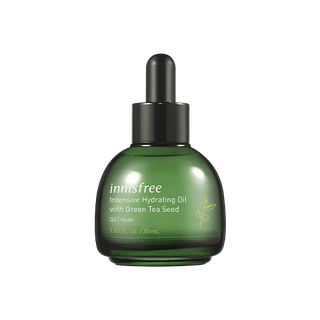
“Intensive hydrating oil”
This product can help improve hydration of the skin with the two types of ingredients.
The first type is called “humectants”:
these ingredients help attract water.
When humectants are on the surface of the skin, they “pull in” the moisture from the outside environment, or from
within deeper layers of the skin. The following ingredients in this product do the job:
camellia sinensis seed oil, glycerin.
This product also contains ingredients called “occlusives”. They help reduce the speed with which our skin loses moisture to the outside environment. These ingredients also help soften the upper layer of the skin, so it feels less tight and nicer to the touch. The following ingredients in this product do the job: caprylic/capric triglyceride, helianthus annuus seed oil.
Can it cause trouble?
Irritancy6 strong irritants: Parfum, Citrus unshiu peel extract + 4 more — patch-test recommendedHigh risk
Comedogenic1 ingredient rated 2 or more on the 0–5 pore-clogging scale1 flagged
User reviews
Be the first — your take helps the next person decide.
Ingredients
Filter by role to see what each ingredient is doing.
Camellia sinensis seed oil~23–34%
- Irritation risk
- Low
A plant oil that helps to soften the upper layer of the skin and can help restore the skin barrier. Might have some anti-oxidant effect
More about Camellia sinensis seed oilDicaprylyl carbonate~4.4–6.5%
- Irritation risk
- Low
Helps products spread more easily and works as an emollient to soften skin
More about Dicaprylyl carbonateCaprylic/capric triglyceride~4.7–7%
- Irritation risk
- Medium
A good mix of fatty acids that forms a protective layer on the skin. Improves the shelf life of products. Derived from coconut and glycerin
More about Caprylic/capric triglyceridePentaerythrityl tetraisostearate~3.4–5.1%
- Irritation risk
- Medium
Used to create a thicker product consistency
More about Pentaerythrityl tetraisostearateRicinus communis seed oil~3–4.4%
- Irritation risk
- Medium
A plant oil that can help soften the skin. It might be helpful in calming down inflammation, but solid research is lacking. Is often used in lip products to create the needed product consistency
More about Ricinus communis seed oilHelianthus annuus seed oil~2.2–3.4%
- Irritation risk
- Low
A great emollient due to its high linoleic acid content. One of the most effective plant oils in helping skin hydration and repairing skin barrier function
More about Helianthus annuus seed oilSqualane~1.8–2.7%
- Irritation risk
- Low
An oil naturally present in skin. Works as an emollient to soften the skin and form a protective layer on its surface without a greasy feeling.
More about SqualaneParfum~1.1–1.7%
- Irritation risk
- High
An aromatic blend of unspecified and possibly irritating ingredients
More about ParfumIsostearyl neopentanoate~1.1–1.6%
- Irritation risk
- Medium
- Comedogenicity
- 2/5
Used to create a nice product texture and helps soften the upper layer of the skin. Could be comedogenic
More about Isostearyl neopentanoateOryza sativa bran oil~0.85–1.3%
- Irritation risk
- Low
Helps soften the upper layer of the skin and might have some anti-oxidant properties
More about Oryza sativa bran oilWater~0.45–1.1%
Glycerin~0.4–0.95%
- Irritation risk
- Low
One of the best moisturizing ingredients. Naturally present in skin. It attracts water to the upper layer of the skin working as a humectant
More about GlycerinPropanediol~0.35–0.8%
- Irritation risk
- Low
Acts as a solvent for other ingredients. Speeds up the absorption of other ingredients into the skin
More about PropanediolCamellia sinensis leaf extract~0.4–0.9%
- Irritation risk
- Low
Can contain potent anti-oxidant compounds (abbreviated ECG, GCG, EGC, and EGCG) that might help protect the skin from free radicals. Can help calm down inflammation and has some anti-bacterial properties. Unfortunately, these antioxidants are unstable and lose their effectiveness very quickly in products. The concentration of the antioxidant compounds in the extract also tends to be low to be effective in topical formulation
More about Camellia sinensis leaf extractCamellia japonica leaf extract~0.35–0.8%
- Irritation risk
- Medium
A plant extract that might help neutralize free radicals in skin
More about Camellia japonica leaf extractCitrus unshiu peel extract~0.2–0.75%
- Irritation risk
- High
Opuntia coccinellifera fruit extract~0.2–0.7%
- Irritation risk
- High
A plant extract that might help neutralize free radicals in skin
More about Opuntia coccinellifera fruit extractOrchid extract~0.15–0.65%
Citrus aurantium bergamia fruit extract~0.15–0.6%
- Irritation risk
- High
Citrus aurantium dulcis fruit extract~0.15–0.5%
- Irritation risk
- High
A plant extract that is used as a fragrance. Can be irritating and lead to photosensitivity
More about Citrus aurantium dulcis fruit extractCitrus paradisi fruit extract~0.1–0.45%
- Irritation risk
- High
Citrus tangerina extract~0.1–0.4%
- Irritation risk
- High
Lactic acid~0.1–0.35%
- Irritation risk
- Medium
An exfoliating and moisturizing alpha-hydroxy acid (AHA). Typically causes less irritation than other AHAs, for example, glycolic acid. At high concentrations (about 15%), lactic acid can help reduce lines and wrinkles. Recent studies show that lactic acid can support the "good" bacteria living on skin's surface (healthy skin microbiome)
More about Lactic acidAscorbic acid~0.1–0.3%
- Irritation risk
- High
The most well-researched antioxidant that works in skin. Helps neutralize free radicals supporting collagen production, helping to even out the skin tone and preventing early signs of aging
More about Ascorbic acidCitric acid~0.05–0.2%
- Irritation risk
- Medium
Can work as an exfoliant but is typically used to adjust the product pH
More about Citric acidIngredient list view
Camellia sinensis seed oil, Dicaprylyl carbonate, Caprylic/capric triglyceride, Pentaerythrityl tetraisostearate, Ricinus communis seed oil, Helianthus annuus seed oil, Squalane, Parfum, Isostearyl neopentanoate, Oryza sativa bran oil, Water, Glycerin, Propanediol, Camellia sinensis leaf extract, Camellia japonica leaf extract, Citrus unshiu peel extract, Opuntia coccinellifera fruit extract, Orchid extract, Citrus aurantium bergamia fruit extract, Citrus aurantium dulcis fruit extract, Citrus paradisi fruit extract, Citrus tangerina extract, Lactic acid, Ascorbic acid, Citric acid
Compare prices
Retailers ranked by price — lowest first.
Sources cited in this review
Every concentration estimate and effectiveness label is anchored to one of these 17 studies and safety reviews.
- 1
- 2
- 3
- 4
- 5
- 6

Affiliate links · As an Amazon Associate, WIMJ earns from qualifying purchases.