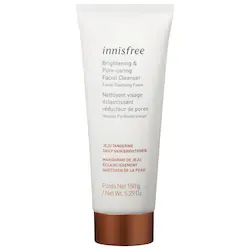
innisfree Brightening & Pore-Caring Facial Cleanser
Works for
CleansingPotassium cocoyl glycinate, Cocamidopropyl betaine + 3 moreCleanses gently
“Brightening & Pore-Caring Facial Cleanser”
This product works by removing dirt and oil from the surface of the skin. It uses a combination of mild cleansing agents (cocamidopropyl betaine, coco-glucoside, disodium cocoamphodiacetate, potassium cocoyl glycinate, sodium methyl cocoyl taurate) and should be able to cleanse the skin gently. Still keep in mind that any cleansing can disrupt the skin barrier, and most people do not need to cleanse their skin more than once per day.
Even though this formulation is mild, the following cleansing agents could trigger an irritation or allergy for some people: cocamidopropyl betaine, coco-glucoside, sodium methyl cocoyl taurate
Anti-blemishNiacinamide ~0.05–0.2%, below the ~1% it needsUnder-dosed
“Helps to improve the look of pigmentation and blemishes”
Effective ingredients missing or their concentration is too low.
Can it cause trouble?
Irritancy2 strong irritants: Parfum, Citrus reticulata peel extractMedium risk
ComedogenicClean of flagged comedogenic ingredientsNone flagged
User reviews
Be the first — your take helps the next person decide.
Ingredients
Filter by role to see what each ingredient is doing.
Water~40–60%
Potassium cocoyl glycinate~4.8–7.2%
Glycerin~3.3–5%
- Irritation risk
- Low
One of the best moisturizing ingredients. Naturally present in skin. It attracts water to the upper layer of the skin working as a humectant
More about GlycerinAcrylates copolymer~2.8–4.2%
- Irritation risk
- Medium
Used to stabilize product formulation, help create an even product layer over skin (for example, in sunscreen) and create a thicker product consistency
More about Acrylates copolymerPropanediol~2.1–3.1%
- Irritation risk
- Low
Acts as a solvent for other ingredients. Speeds up the absorption of other ingredients into the skin
More about PropanediolKaolin~1.8–2.7%
- Irritation risk
- Low
A type of clay that consists mainly of aluminum silicate. Helps absorb oil and creates a thicker product consistency. Can be used to add a white color
More about KaolinCoco-glucoside~1.6–2.4%
- Irritation risk
- High
Used as a cleansing agent (surfactant) in cleansers. Helps water and oil mix together in lotions. Can be irritating
More about Coco-glucosideCocamidopropyl betaine~1.7–2.6%
- Irritation risk
- High
Helps water and oil mix together. Used as a cleansing ingredient. Could be an allergen
More about Cocamidopropyl betaineDisodium cocoamphodiacetate~1.1–1.6%
- Irritation risk
- Medium
Helps oil and water mix together and works as a cleansing agent
More about Disodium cocoamphodiacetateSodium chloride~0.85–1.25%
- Irritation risk
- Low
Used to stabilize mixtures of oil and water, and create thicker, gel-like product textures
More about Sodium chlorideSodium methyl cocoyl taurate~0.9–1.35%
- Irritation risk
- High
Helps oil and water mix together. Can be used as cleansing agent
More about Sodium methyl cocoyl taurate1,2-hexanediol~0.35–0.85%
Titanium dioxide~0.5–1.15%
- Irritation risk
- Low
Works as a UV filter when used in high concentrations. It is photostable and is effective mostly against the UVB light, with some protection in the UVA range. In small concentrations, used for its ability to improve the color of cosmetic products. Is usually well tolerated by the skin
More about Titanium dioxideParfum~0.3–0.75%
- Irritation risk
- High
An aromatic blend of unspecified and possibly irritating ingredients
More about ParfumPotassium hydroxide~0.3–0.7%
Polyquaternium-7~0.15–0.7%
- Irritation risk
- Low
Helps soften the upper layer of the skin and create a nice product finish
More about Polyquaternium-7Sodium benzoate~0.1–0.45%
Disodium edta~0.1–0.4%
Ethylhexylglycerin~0.1–0.35%
Tetrasodium edta~0.05–0.25%
Panthenol~0.05–0.2%
- Irritation risk
- Low
Helps attract water to the upper layer of the skin and can help improve skin barrier function
More about PanthenolNiacinamide~0.05–0.2%
- Irritation risk
- Low
Is proven to be effective in reducing blemishes, evening out skin tone and helping to improve lines and wrinkles. It helps the skin to repair sun damage, calm down inflammation and keep maintain good levels of moisture. The concentration of about 2% is effective for supporting the skin barrier and evening out the skin tone. Concentration of 4-6% is better for helping with acne and balancing the sebum production
More about Niacinamide3-o-ethyl ascorbic acid~0.05–0.15%
- Irritation risk
- High
A vitamin C derivative that is more stable but less potent than pure form of vitamin C. Can help neutralize free radicals and help reduce hyperpigmentation, but the required concentration is likely to be much higher than for the pure form of vitamin C, limiting the ingredient's effectiveness in products
More about 3-o-ethyl ascorbic acidCitrus reticulata peel extract~0.01–0.1%
- Irritation risk
- High
A likely irritant. Might have some anti-oxidant activity, but is mostly used as a fragrance in cosmetic products
More about Citrus reticulata peel extractTocopherol~0.01–0.1%
- Irritation risk
- Low
Pure form of vitamin E. Can help moisturise and protect the skin from free radicals. Often used to help stabilise other ingredients or the formula itself
More about TocopherolIngredient list view
Water, Potassium cocoyl glycinate, Glycerin, Acrylates copolymer, Propanediol, Kaolin, Coco-glucoside, Cocamidopropyl betaine, Disodium cocoamphodiacetate, Sodium chloride, Sodium methyl cocoyl taurate, 1,2-hexanediol, Titanium dioxide, Parfum, Potassium hydroxide, Polyquaternium-7, Sodium benzoate, Disodium edta, Ethylhexylglycerin, Tetrasodium edta, Panthenol, Niacinamide, 3-o-ethyl ascorbic acid, Citrus reticulata peel extract, Tocopherol
Compare prices
Retailers ranked by price — lowest first.
Affiliate links · As an Amazon Associate, WIMJ earns from qualifying purchases.
Worth comparing, line by line.
Match % combines shared ingredients, the first five ingredients, shared actives and hero ingredients, irritancy (lower counts in the alternative's favour), texture and body area. Only products in the same routine step are compared.
| innisfreeBrightening & Pore-Caring Facial CleanserYOUR PRODUCT | NaturiumThe Calmer Ceramide Body Wash | REFYFace Cleanse Hydrating Cleanser + Makeup Remover | EveredenSteer Clear Balancing Cleanser | |
|---|---|---|---|---|
| Match | — | 35% | 34% | 34% |
| Price | — | $14.13 | $30.29 | $9.00 |
| Shared key ingredients | — | 5 of 9 | 4 of 9 | 3 of 9 |
| Key difference | — | Ceramide Eop | Dimethicone | Camellia Sinensis Leaf Extract |
| Irritancy | Medium | Low | Low | Low |
| Drying alcohol | — | — | — | — |
| View product | Shop | Shop | Shop |
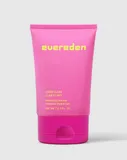
More alternatives: Hanskin Bubblepop CleanserAESTURA ATOBARRIER365 Gentle pH-Balancing Foaming Cleanser for Skin Moisture Barrier Repair
Sources cited in this review
Every concentration estimate and effectiveness label is anchored to one of these 14 studies and safety reviews.
- 1
- 2
- 3
- 4
- 5Allergen of the Year—Alkyl Glucosidepracticeupdate.com
- 6

Affiliate links · As an Amazon Associate, WIMJ earns from qualifying purchases.