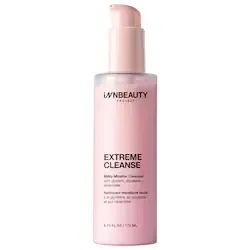
INNBEAUTY PROJECT Extreme Cleanse Milky Micellar Barrier-Repair Cleanser
Works for
CleansingSodium c14-16 olefin sulfonate, Coco-betaine + 14 moreCleanses gently
“Extreme Cleanse Milky Micellar Barrier-Repair Cleanser”
This product works by removing dirt and oil from the surface of the skin. It uses a combination of mild cleansing agents (cetearyl alcohol, cetyl alcohol, cholesterol, coco-betaine, glyceryl stearate, hydrogenated lecithin, polyglyceryl-10 diisostearate, polyglyceryl-2 caprate, polyglyceryl-2 triisostearate, sodium c14-16 olefin sulfonate, sodium cocoyl isethionate, sodium methyl cocoyl taurate, sorbitan oleate decylglucoside crosspolymer, xanthan gum) and should be able to cleanse the skin gently. Still keep in mind that any cleansing can disrupt the skin barrier, and most people do not need to cleanse their skin more than once per day.
Even though this formulation is mild, the following cleansing agents could trigger an irritation or allergy for some people: coco-betaine, sodium c14-16 olefin sulfonate, sodium methyl cocoyl taurate
Can it cause trouble?
Irritancy5 strong irritants: Lavandula angustifolia flower/leaf/stem extract, Vanilla planifolia fruit extract + 3 more — patch-test recommendedHigh risk
Comedogenic1 ingredient rated 2 or more on the 0–5 pore-clogging scale1 flagged
User reviews
Be the first — your take helps the next person decide.
Ingredients
Filter by role to see what each ingredient is doing.
Water~45–55%
Sodium c14-16 olefin sulfonate~9.6–11.8%
- Irritation risk
- High
Helps oil and water mix together and used as a cleansing agent. Can be irritating and is better avoided for sensitive skin
More about Sodium c14-16 olefin sulfonateGlycerin~4.2–5.1%
- Irritation risk
- Low
One of the best moisturizing ingredients. Naturally present in skin. It attracts water to the upper layer of the skin working as a humectant
More about GlycerinCoco-betaine~4.2–5.2%
- Irritation risk
- High
Helps oil and water mix together and works as a cleansing agent. Can be allergenic
More about Coco-betaineSodium cocoyl isethionate~2.4–2.9%
- Irritation risk
- Medium
Helps water and oil mix together. Can be used as a cleansing agent
More about Sodium cocoyl isethionatePolyglyceryl-10 diisostearate~1.8–2.2%
Polyglyceryl-2 triisostearate~1.5–1.9%
- Irritation risk
- Low
Helps to soften the upper layer of the skin and create a nice product texture
More about Polyglyceryl-2 triisostearateMethylpropanediol~1.3–1.6%
Polyglyceryl-2 caprate~1.1–1.3%
Glyceryl stearate~0.9–1.1%
- Irritation risk
- Low
An emollient that softens the skin and forms a protective layer on its surface. Helps water and oil mix together
More about Glyceryl stearateSodium chloride~0.7–1.05%
- Irritation risk
- Low
Used to stabilize mixtures of oil and water, and create thicker, gel-like product textures
More about Sodium chlorideAcrylates copolymer~0.55–0.85%
- Irritation risk
- Medium
Used to stabilize product formulation, help create an even product layer over skin (for example, in sunscreen) and create a thicker product consistency
More about Acrylates copolymerSorbitan oleate decylglucoside crosspolymer~0.55–0.8%
- Irritation risk
- Medium
Helps oil and water mix together. Used as a cleansing agent
More about Sorbitan oleate decylglucoside crosspolymerSqualane~0.5–0.7%
- Irritation risk
- Low
An oil naturally present in skin. Works as an emollient to soften the skin and form a protective layer on its surface without a greasy feeling.
More about SqualaneCetyl alcohol~0.45–0.7%
- Irritation risk
- Low
A non-drying alcohol that works to soften the skin and stabilize product formulations helping oil and water mix together
More about Cetyl alcoholCeramide ap~0.4–0.6%
- Irritation risk
- Low
A type of lipid similar to ceramides naturally present in skin. Helps to soften the upper layer of the skin and supports the skin barrier function to keep it hydrated. Can help to prevent inflammation in skin
More about Ceramide apCeramide np~0.4–0.6%
- Irritation risk
- Low
A type of lipid similar to ceramides naturally present in skin. Helps to soften the upper layer of the skin and supports the skin barrier function to keep it hydrated. Can help to prevent inflammation in skin
More about Ceramide npCeramide eop~0.3–0.6%
- Irritation risk
- Low
A type of lipid similar to ceramides naturally present in skin. Helps to soften the upper layer of the skin and supports the skin barrier function to keep it hydrated. Can help to prevent inflammation in skin
More about Ceramide eopCentella asiatica extract~0.4–0.6%
- Irritation risk
- Medium
A plant extract that has been shown to be able to reduce inflammation in skin, support restoration of skin barrier function, as well as support collagen production. Contains active compounds called centelloids: asiaticoside, madecasosside, asiatic acid and madecassic acid. Might be helpful in preventing stretch marks. It can be itself be irritating though.
More about Centella asiatica extractSh-oligopeptide-1~0.25–0.5%
- Irritation risk
- Low
A type of peptide. Peptides are excellent moisturizers and might be able support collagen production reducing fine lines and wrinkles
More about Sh-oligopeptide-1Sh-oligopeptide-2~0.25–0.5%
- Irritation risk
- Low
A type of peptide. Peptides are excellent moisturizers and might be able support collagen production reducing fine lines and wrinkles
More about Sh-oligopeptide-2Sh-polypeptide-1~0.25–0.45%
- Irritation risk
- Low
A lab-made copy of human basic fibroblast growth factor (bFGF), a protein that tells skin cells to multiply. It speeds up wound healing as a prescription drug, but it is too large to pass through intact skin easily, and there is no good evidence it reduces wrinkles in skincare.
More about Sh-polypeptide-1Sh-polypeptide-11~0.25–0.45%
- Irritation risk
- Low
A type of peptide. Peptides are excellent moisturizers and might be able support collagen production reducing fine lines and wrinkles
More about Sh-polypeptide-11Sh-polypeptide-9~0.25–0.45%
- Irritation risk
- Low
A type of peptide. Peptides are excellent moisturizers and might be able support collagen production reducing fine lines and wrinkles
More about Sh-polypeptide-9Urea~0.25–0.45%
- Irritation risk
- Low
Naturally present in skin (urea makes up about 7% of natural moisturizing factors in skin). Attracts water to the upper layer of the skin. Also has a positive effect on the skin barrier beyond the humectant action. Can enhance penetration of other ingredients. Is an exfoliating ingredient when used in high concentrations
More about UreaTremella fuciformis extract~0.25–0.45%
- Irritation risk
- Medium
A mushroom extract that might help attract water to the upper layer of the skin
More about Tremella fuciformis extractAllantoin~0.2–0.4%
- Irritation risk
- Low
Helps calm down inflammation in skin and can help reduce itching. Helps to repair the skin barrier and keep skin hydrated
More about AllantoinPanthenol~0.25–0.45%
- Irritation risk
- Low
Helps attract water to the upper layer of the skin and can help improve skin barrier function
More about PanthenolTrehalose~0.25–0.45%
- Irritation risk
- Low
A sugar that attracts water to the upper layer of the skin
More about TrehaloseRubus idaeus seed oil~0.3–0.5%
- Irritation risk
- Medium
A plant oil that might be able to help neutralize free radicals in skin
More about Rubus idaeus seed oilBetaine~0.25–0.45%
- Irritation risk
- Low
Helps attract water to the upper layer of the skin and improves the product texture
More about BetaineSaccharide isomerate~0.25–0.45%
- Irritation risk
- Low
Helps attract water to the upper layer of the skin
More about Saccharide isomerateHedychium spicatum extract~0.25–0.45%
- Irritation risk
- Low
Sodium hyaluronate~0.25–0.45%
- Irritation risk
- Low
One of the best moisturizing ingredients. Attracts water into the upper layer of the skin
More about Sodium hyaluronatePropanediol~0.25–0.5%
- Irritation risk
- Low
Acts as a solvent for other ingredients. Speeds up the absorption of other ingredients into the skin
More about PropanediolButylene glycol~0.25–0.45%
- Irritation risk
- Low
Used to create a nice product texture and help delivery of other ingredients. Might be somewhat helpful in attracting water to the upper layer of the skin
More about Butylene glycolBiosaccharide gum-1~0.25–0.45%
- Irritation risk
- Low
Helps attract water to the upper layer of the skin and is claimed to provide a longer-lasting hydration because of its ability to create a water-binding film on the surface of the skin
More about Biosaccharide gum-1Glycosphingolipids~0.25–0.5%
- Irritation risk
- Low
A type of lipids naturally present in skin. They can be converted to ceramides in skin
More about GlycosphingolipidsCholesterol~0.3–0.55%
- Irritation risk
- Low
An emollient that is naturally found in skin
More about CholesterolPhytosphingosine~0.3–0.55%
- Irritation risk
- Low
A type of lipid that is naturally present in skin. It might help in repairing skin barrier function and has anti-bacterial effect
More about PhytosphingosineTetraacetylphytosphingosine~0.25–0.45%
Lavandula angustifolia flower/leaf/stem extract~0.25–0.45%
Vanilla planifolia fruit extract~0.25–0.45%
- Irritation risk
- High
A plant extract used as a fragrance. Can be irritating
More about Vanilla planifolia fruit extractZingiber officinale root extract~0.2–0.35%
- Irritation risk
- High
A plant extract that can contain an irritating essential oil. Might have some anti-oxidant effect, but evidence is lacking
More about Zingiber officinale root extractCitrus aurantium dulcis peel extract~0.2–0.4%
Bacillus/folic acid ferment filtrate extract~0.25–0.4%
- Irritation risk
- Low
Sodium methyl cocoyl taurate~0.55–0.85%
- Irritation risk
- High
Helps oil and water mix together. Can be used as cleansing agent
More about Sodium methyl cocoyl taurateSorbitol~0.25–0.45%
- Irritation risk
- Low
Helps attract water to the upper layer of the skin and improves the product texture
More about SorbitolHydroxyethylcellulose~0.25–0.5%
- Irritation risk
- Low
Used to thicken product formulations and create gel-like textures
More about HydroxyethylcelluloseXanthan gum~0.25–0.45%
- Irritation risk
- Low
Used to create a thicker product consistency
More about Xanthan gumCyanocobalamin~0.25–0.45%
- Irritation risk
- Low
Can support skin barrier function and reduce inflammation in skin
More about CyanocobalaminHydrogenated polydecene~0.25–0.45%
- Irritation risk
- Low
Helps to soften the upper layer of the skin and create a nice product texture
More about Hydrogenated polydeceneSodium phosphate~0.25–0.45%
Acetyl glutamine~0.25–0.45%
- Irritation risk
- Low
Lecithin~0.3–0.6%
- Irritation risk
- Low
Used mostly for creating emulsions - helping oil and water mix together. Helps soften the upper layer of the skin
More about LecithinCetearyl alcohol~0.3–0.6%
- Irritation risk
- Low
- Comedogenicity
- 2/5
A non-drying alcohol. Works as an emollient. Helps water and oil mix together and creates a nice product texture
More about Cetearyl alcoholStearic acid~0.45–0.65%
- Irritation risk
- Low
Helps oil and water mix together and works as an emollient
More about Stearic acidCaprylyl glycol~0.3–0.55%
- Irritation risk
- Medium
Helps preserve products and creates a nice product texture
More about Caprylyl glycolSodium benzoate~0.25–0.45%
Tocopherol~0.25–0.45%
- Irritation risk
- Low
Pure form of vitamin E. Can help moisturise and protect the skin from free radicals. Often used to help stabilise other ingredients or the formula itself
More about Tocopherol1,2-hexanediol~0.2–0.4%
Tromethamine~0.2–0.4%
Hydrogenated lecithin~0.2–0.35%
- Irritation risk
- Low
Helps to retain moisture by creating a protective barrier on the skin. Rich in fatty acids. Improves product texture and helps with the penetration of other ingredients.
More about Hydrogenated lecithinEthylhexylglycerin~0.15–0.25%
Sodium citrate~0.15–0.25%
- Irritation risk
- Medium
Helps to control the skin's pH level. Maintains the skin's natural film of amino-lactic acids and oils. Helps to preserve products
More about Sodium citrateCitric acid~0.15–0.25%
- Irritation risk
- Medium
Can work as an exfoliant but is typically used to adjust the product pH
More about Citric acidDisodium phosphate~0.1–0.2%
- Irritation risk
- Low
Helps adjust the product pH and stabilize the formulation
More about Disodium phosphateHydroxyacetophenone~0.1–0.15%
Limonene~0.05–0.1%
- Irritation risk
- High
A common frangrance that can easily irritate skin, especially if exposed to air, light or heat
More about LimoneneIngredient list view
Water, Sodium c14-16 olefin sulfonate, Glycerin, Coco-betaine, Sodium cocoyl isethionate, Polyglyceryl-10 diisostearate, Polyglyceryl-2 triisostearate, Methylpropanediol, Polyglyceryl-2 caprate, Glyceryl stearate, Sodium chloride, Acrylates copolymer, Sorbitan oleate decylglucoside crosspolymer, Squalane, Cetyl alcohol, Ceramide ap, Ceramide np, Ceramide eop, Centella asiatica extract, Sh-oligopeptide-1, Sh-oligopeptide-2, Sh-polypeptide-1, Sh-polypeptide-11, Sh-polypeptide-9, Urea, Tremella fuciformis extract, Allantoin, Panthenol, Trehalose, Rubus idaeus seed oil, Betaine, Saccharide isomerate, Hedychium spicatum extract, Sodium hyaluronate, Propanediol, Butylene glycol, Biosaccharide gum-1, Glycosphingolipids, Cholesterol, Phytosphingosine, Tetraacetylphytosphingosine, Lavandula angustifolia flower/leaf/stem extract, Vanilla planifolia fruit extract, Zingiber officinale root extract, Citrus aurantium dulcis peel extract, Bacillus/folic acid ferment filtrate extract, Sodium methyl cocoyl taurate, Sorbitol, Hydroxyethylcellulose, Xanthan gum, Cyanocobalamin, Hydrogenated polydecene, Sodium phosphate, Acetyl glutamine, Lecithin, Cetearyl alcohol, Stearic acid, Caprylyl glycol, Sodium benzoate, Tocopherol, 1,2-hexanediol, Tromethamine, Hydrogenated lecithin, Ethylhexylglycerin, Sodium citrate, Citric acid, Disodium phosphate, Hydroxyacetophenone, Limonene
Compare prices
Retailers ranked by price — lowest first.

Worth comparing, line by line.
Match % combines shared ingredients, the first five ingredients, shared actives and hero ingredients, irritancy (lower counts in the alternative's favour), texture and body area. Only products in the same routine step are compared.
| INNBEAUTY PROJECTExtreme Cleanse Milky Micellar Barrier-Repair CleanserYOUR PRODUCT | CeraVeCream to Foam Cleanser | Kate SomervilleDeliKate Soothing Cleanser | skintificCeramide Low pH Cleanser Facial Wash | |
|---|---|---|---|---|
| Match | — | 40% | 36% | 36% |
| Price | $29.00 | $8.86−$20.14 | $13.12−$15.88 | $7.90−$21.10 |
| Shared key ingredients | — | 13 of 40 | 13 of 40 | 13 of 40 |
| Key difference | — | Salicylic Acid | Anhydroxylitol | Salicylic Acid |
| Irritancy | High | Medium | Medium | Low |
| Drying alcohol | — | — | — | — |
| View product | Shop | Shop | Shop |


More alternatives: Naturium The Calmer Ceramide Body WashPaula's choice Resist Perfectly Balanced Foaming Cleanser
Sources cited in this review
Every concentration estimate and effectiveness label is anchored to one of these 36 studies and safety reviews.
- 1Final Report On the Safety Assessment of Sodium Alpha-Olefin Sulfonatesjournals.sagepub.com
- 2
- 3Final Report on the Safety Assessment of Sodium Cocoyl Isethionatejournals.sagepub.com
- 4
- 5
- 6

Affiliate links · As an Amazon Associate, WIMJ earns from qualifying purchases.