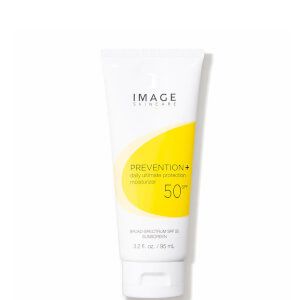
Image skincare PREVENTION+ SPF50 Daily Ultimate Protection Moisturizer
Works for
4 of 4 advertised claims delivered
Sun protectionSPF 50 · 4 UV filtersBroad spectrum
This product offers a good level of protection against both UVB and UVA rays.
This sunscreen uses organic (so-called "chemical") sunscreen filters. Organic, or "chemical" filters usually provide reliable sun protection and rarely leave a white cast. Sunscreens with organic filters can sting eyes.
This product can be considered "reef safe" because it does not contain the UV filters (oxybenzone and octinoxate) that can be harmful to coral reefs when present in the water in high concentrations.
Evens skin tone1 ingredient credited for this claimStrong support
“This daily tinted moisturizer with a built in broad spectrum uva/uvb high sun protection provides an even skin tone and healthy glow.”
This product offers broad spectrum sun protection. It means that it can prevent hyperpigmentation and help keep the skin tone even (sun damage is the main factor causing age spots, darkening of post-acne marks and other discolorations).
Moisturizing16 ingredients credited for this claimStrong support
“PREVENTION+ SPF50 Daily Ultimate Protection Moisturizer”
This product can help improve hydration of the skin with the two types of ingredients.
The first type is called “humectants”:
these ingredients help attract water.
When humectants are on the surface of the skin, they “pull in” the moisture from the outside environment, or from
within deeper layers of the skin. The following ingredients in this product do the job:
erythritol, glycerin.
This product also contains ingredients called “occlusives”. They help reduce the speed with which our skin loses moisture to the outside environment. These ingredients also help soften the upper layer of the skin, so it feels less tight and nicer to the touch. The following ingredients in this product do the job: caprylic/capric triglyceride, helianthus annuus seed oil.
The following ingredients in this product are especially good for supporting the skin barrier and helping with the hydration level: panthenol
Anti-aging4 ingredients credited for this claimStrong support
“Formulated with zinc oxide, this moisturizing sunscreen helps neutralize sunburn, sun damage and redness.Key Benefits Zinc Oxide shields skin against the sun's harmful UVA and UVB rays Plant Stem Cells nourish and thwart sun damage and wrinkles Key Benefits Delivers broad-spectrum protection Moisturizes the skin Defends against the effects of free radical damage”
This product can help prevent early signs of skin aging because it offers a good level of broad spectrum sun protection. Sun damage is the main cause of premature skin aging, and protecting your skin from the sun is the best anti-aging strategy.
These ingredients in the product might also be helpful for reducing and preventing fine lines, wrinkles, and skin elasticity, even though there is no conclusive evidence for their effectiveness: arabidopsis thaliana extract.
Can it cause trouble?
Irritancy4 strong irritants: Citrus aurantium dulcis peel oil, Limonene + 2 more — patch-test recommendedHigh risk
Comedogenic1 ingredient rated 2 or more on the 0–5 pore-clogging scale1 flagged
User reviews
Be the first — your take helps the next person decide.
Ingredients
Filter by role to see what each ingredient is doing.
Homosalate~26–31%
- Irritation risk
- Medium
A weak sunscreen that offers some protection against the sun rays that cause sunburn (UVB), but does not offer meaningful protection against protect against the most aging sun rays (UVA). It loses its effectiveness quickly when exposed to sunlight. It is an organic, or so called "chemical" sunscreen. When used in low concentrations, helps to stabilize the product formulation
More about HomosalateEthylhexyl salicylate~6.1–7.5%
- Irritation risk
- Low
Octisalate. A UV filter. It offers some protection against the sun rays that cause sunburn (UVB), but does not protect against the most aging sun rays (UVA). It loses its effectiveness quickly when exposed to sunlight. It is an organic, or so called "chemical" sunscreen
More about Ethylhexyl salicylateOctocrylene~6.3–7.7%
- Irritation risk
- Medium
A weak sunscreen that protects against the sun rays that cause sunburn (UVB) and is somewhat effective against the UVA rays. It is quite stable and can help stabilize other, more vulnerable, sunscreen ingredients like Avobenzone. It is an organic, or so called "chemical" sunscreen
More about OctocryleneZinc oxide~5.2–6.3%
- Irritation risk
- Low
A broad spectrum sunblock (protects from both UVA and UVB rays). Is suitable for most sensitive skins. In small concentrations, can be used as a colorant
More about Zinc oxideWater~3.4–4.1%
Caprylic/capric triglyceride~2.9–3.5%
- Irritation risk
- Medium
A good mix of fatty acids that forms a protective layer on the skin. Improves the shelf life of products. Derived from coconut and glycerin
More about Caprylic/capric triglycerideGlycerin~2.2–2.6%
- Irritation risk
- Low
One of the best moisturizing ingredients. Naturally present in skin. It attracts water to the upper layer of the skin working as a humectant
More about GlycerinCyclopentasiloxane~1.9–2.3%
- Irritation risk
- Low
A silicone that helps improve the product texture and spreadability. Can absorb oil creating a short-term mattifying effect on the skin
More about CyclopentasiloxaneCetyl peg/ppg-10/1 dimethicone~1.6–1.9%
- Irritation risk
- Low
A type of silicone that helps water and oil mix together. Can help to soften upper layer of the skin
More about Cetyl peg/ppg-10/1 dimethiconeThermus thermophillus ferment~1.1–1.3%
- Irritation risk
- Medium
Might be helpful in neutralising free radicals in skin and have some hydration properties
More about Thermus thermophillus fermentPolyacrylate-13~1–1.2%
- Irritation risk
- Low
Used to create a thicker product consistency and stabilize the product formulation
More about Polyacrylate-13Cetearyl ethylhexanoate~0.75–1.15%
- Irritation risk
- Low
An emollient that helps soften the skin
More about Cetearyl ethylhexanoatePhenoxyethanol~0.6–0.9%
- Irritation risk
- Low
A preservative. It helps prevent bacterial growth in cosmetic products
More about PhenoxyethanolPolyisobutene~0.65–0.95%
Polyglyceryl-6 polyricinoleate~0.55–0.85%
- Irritation risk
- Medium
Helps oil and water mix together
More about Polyglyceryl-6 polyricinoleateLecithin~0.6–0.95%
- Irritation risk
- Low
Used mostly for creating emulsions - helping oil and water mix together. Helps soften the upper layer of the skin
More about LecithinIsostearic acid~0.6–0.95%
- Irritation risk
- Low
Used to create a nice product texture
More about Isostearic acidPolyglyceryl-3 polyricinoleate~0.5–0.75%
- Irritation risk
- Medium
Helps oil and water mix together
More about Polyglyceryl-3 polyricinoleatePolyhydroxystearic acid~0.5–0.75%
- Irritation risk
- Medium
Used to create a thicker product consistency and stabilize the formulation
More about Polyhydroxystearic acidSodium chloride~0.5–0.7%
- Irritation risk
- Low
Used to stabilize mixtures of oil and water, and create thicker, gel-like product textures
More about Sodium chlorideCetearyl dimethicone~0.5–0.75%
- Irritation risk
- Low
Marrubium vulgare extract~0.35–0.65%
- Irritation risk
- Low
Helianthus annuus seed oil~0.45–0.7%
- Irritation risk
- Low
A great emollient due to its high linoleic acid content. One of the most effective plant oils in helping skin hydration and repairing skin barrier function
More about Helianthus annuus seed oilXanthan gum~0.45–0.65%
- Irritation risk
- Low
Used to create a thicker product consistency
More about Xanthan gumPolyglyceryl-2 isostearate~0.45–0.65%
Disteardimonium hectorite~0.4–0.6%
- Irritation risk
- Low
A type of clay that is used to thicken the product consistency
More about Disteardimonium hectoritePolysorbate 20~0.45–0.65%
Citrus aurantium dulcis peel oil~0.4–0.6%
- Irritation risk
- High
An essentil oil from orange peel. Potential allergen and can be irritating
More about Citrus aurantium dulcis peel oilLimonene~0.35–0.6%
- Irritation risk
- High
A common frangrance that can easily irritate skin, especially if exposed to air, light or heat
More about LimoneneSorbitan isostearate~0.4–0.65%
- Irritation risk
- Low
Helps oil and water mix together
More about Sorbitan isostearateEthylhexylglycerin~0.4–0.6%
Panthenol~0.4–0.6%
- Irritation risk
- Low
Helps attract water to the upper layer of the skin and can help improve skin barrier function
More about PanthenolCitrus nobilis peel oil~0.35–0.65%
- Irritation risk
- High
A plant oil with high content of volatile compounds that, especially when exposed to air, can cause allergic reactions and irritate the skin
More about Citrus nobilis peel oilDisodium edta~0.4–0.6%
Sodium hyaluronate~0.35–0.65%
- Irritation risk
- Low
One of the best moisturizing ingredients. Attracts water into the upper layer of the skin
More about Sodium hyaluronateMelanin~0.4–0.6%
- Irritation risk
- Low
Erythritol~0.35–0.65%
- Irritation risk
- Low
Helps to attract water to the upper layer of the skin
More about ErythritolCitric acid~0.4–0.6%
- Irritation risk
- Medium
Can work as an exfoliant but is typically used to adjust the product pH
More about Citric acidVanilla planifolia fruit extract~0.4–0.6%
- Irritation risk
- High
A plant extract used as a fragrance. Can be irritating
More about Vanilla planifolia fruit extractGlucose~0.4–0.6%
- Irritation risk
- Low
Helps attract water to the upper layer of the skin. Could be helpful in restoring the skin barrier function
More about GlucosePotassium sorbate~0.4–0.6%
Hydrolyzed pea protein~0.5–0.7%
- Irritation risk
- Low
Tocopherol~0.45–0.65%
- Irritation risk
- Low
Pure form of vitamin E. Can help moisturise and protect the skin from free radicals. Often used to help stabilise other ingredients or the formula itself
More about TocopherolPeg-8/smdi copolymer~0.5–0.75%
- Irritation risk
- Low
Tetrahexyldecyl ascorbate~0.45–0.65%
- Irritation risk
- Medium
Being a lipid soluble form of vitamin C, it is more stable than ascorbic acid, but still degrades quickly and needs to be stabilized in a formulation with another ingredient. It is claimed to penetrate skin better than pure vitamin C and have the the similar benefits, but solid studies of its effectiveness are lacking. Is likely to require a higher concentration in a product than pure vitamin C to be effective. It might be able to help reduce pore clogging.
More about Tetrahexyldecyl ascorbateTocopheryl acetate~0.45–0.65%
- Irritation risk
- Medium
A more stable but less bio-available form of vitamin E compared to Tocopherol. Might help moisturize and protect the skin from free radicals, but mostly used in low concentrations to stabilize other ingredients.
More about Tocopheryl acetateBarosma betulina leaf oil~0.4–0.6%
- Irritation risk
- Low
Sodium benzoate~0.25–0.5%
Homarine hcl~0.45–0.65%
- Irritation risk
- Medium
Might help to improve skin hydration levels
More about Homarine hclPentaerythrityl tetra-di-t-butyl hydroxyhydrocinnamate~0.4–0.65%
- Irritation risk
- Low
Used to increase stability of product formulations
More about Pentaerythrityl tetra-di-t-butyl hydroxyhydrocinnamateSodium succinate~0.3–0.6%
- Irritation risk
- Low
Malus domestica fruit cell culture extract~0.35–0.6%
- Irritation risk
- Low
Arabidopsis thaliana extract~0.3–0.55%
- Irritation risk
- Medium
Plant extract that might be helpful in repairing sun damage but evidence of effectiveness in skin are lacking
More about Arabidopsis thaliana extractMicrococcus lysate~0.3–0.55%
- Irritation risk
- Low
Consists of remains of dead bacteria cells. Is likely helpful in attracting water to the upper layer of the skin. Might be helpful in reducing inflammation and neutralizing free radicals in skin. It is claimed to be a "DNA repair enzyme"
More about Micrococcus lysatePlankton extract~0.2–0.35%
- Irritation risk
- Medium
- Comedogenicity
- 3/5
Can help attract water to the upper layer of the skin
More about Plankton extractErgothioneine~0.15–0.3%
- Irritation risk
- Low
Can help neutralize free radicals in skin. Preliminary studies show that it can be more effective than coenzyme Q10 but studies on effective concentration for topical applications are lacking
More about ErgothioneineIngredient list view
Homosalate, Ethylhexyl salicylate, Octocrylene, Zinc oxide, Water, Caprylic/capric triglyceride, Glycerin, Cyclopentasiloxane, Cetyl peg/ppg-10/1 dimethicone, Thermus thermophillus ferment, Polyacrylate-13, Cetearyl ethylhexanoate, Phenoxyethanol, Polyisobutene, Polyglyceryl-6 polyricinoleate, Lecithin, Isostearic acid, Polyglyceryl-3 polyricinoleate, Polyhydroxystearic acid, Sodium chloride, Cetearyl dimethicone, Marrubium vulgare extract, Helianthus annuus seed oil, Xanthan gum, Polyglyceryl-2 isostearate, Disteardimonium hectorite, Polysorbate 20, Citrus aurantium dulcis peel oil, Limonene, Sorbitan isostearate, Ethylhexylglycerin, Panthenol, Citrus nobilis peel oil, Disodium edta, Sodium hyaluronate, Melanin, Erythritol, Citric acid, Vanilla planifolia fruit extract, Glucose, Potassium sorbate, Hydrolyzed pea protein, Tocopherol, Peg-8/smdi copolymer, Tetrahexyldecyl ascorbate, Tocopheryl acetate, Barosma betulina leaf oil, Sodium benzoate, Homarine hcl, Pentaerythrityl tetra-di-t-butyl hydroxyhydrocinnamate, Sodium succinate, Malus domestica fruit cell culture extract, Arabidopsis thaliana extract, Micrococcus lysate, Plankton extract, Ergothioneine
Compare prices
Retailers ranked by price — lowest first.


Product summary
We believe that "Image skincare - PREVENTION+ SPF50 Daily Ultimate Protection Moisturizer" can provide reliable sun protection based on the ingredients listed. We love that it can protect from both UVA and UVB rays (not all sunscreens with SPF ratings give UVA protection. UVA rays do not cause sunburn, but still damage our skin and lead to early aging).
It also works as a moisturizer, so you do not have to use an additional hydrating product. Like all broad-spectrum sunscreens, this product helps prevent early signs of aging.
Sunscreen filters
This is a "mixed" sunscreen in the sense that it uses both mineral and organic (so-called "chemical") sun filters. Here are the organic filters this product uses: octisalate, homosalate and octocrylene. As for the mineral filters, this sunscreen uses zinc oxide.
Irritation risk
We assess the overall irritancy of this moisturizer to be high. For a detailed overview of all potential irritants: click here
You can see the detailed formula review with the breakdown of all actives in the product and the full ingredient list with estimated concentrations in the tables below.
Price
The product retails from 27.99$ up to 50.00$ in the United States and for 53.10£ in the United Kingdom.
For a detailed price comparison: click here.
Sources cited in this review
Every concentration estimate and effectiveness label is anchored to one of these 28 studies and safety reviews.
- 1
- 2A review of inorganic UV filters zinc oxide and titanium dioxideonlinelibrary.wiley.com
- 3
- 4
- 5
- 6

Affiliate links · As an Amazon Associate, WIMJ earns from qualifying purchases.