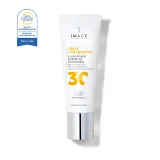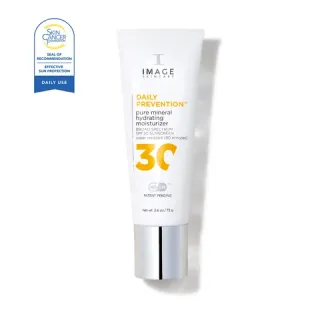
Image skincare DAILY PREVENTION pure mineral hydrating moisturizer SPF 30

Image skincare DAILY PREVENTION pure mineral hydrating moisturizer SPF 30

SPF 30Efficacy90/100IrritancyMedium·1 UV filter

Works for

Sun protection
SPF 30 · 1 UV filter
Broad spectrum
SPF 30Broad spectrumMineral filters

This product offers a good level of protection against both UVB and UVA rays.

It is a mineral sunscreen. In other words, it contains non-organic UV filters. It will probably not sting your eyes but might leave a white cast.

This product can be considered "reef safe" because it does not contain the UV filters (oxybenzone and octinoxate) that can be harmful to coral reefs when present in the water in high concentrations.

UV spectrum
UVB290–320 nmUVA II320–340 nmUVA I340–400 nm
Zinc Oxide
FilterCoverageWhat it doesEst. amount
Zinc Oxide Mineral UVBUVA Photo-stable A broad spectrum sunblock (protects from both UVA and UVB rays). Is suitable for most sensitive skins. In small concentrations, can be used as a colorant18.1%
Reef-safe
No oxybenzone or octinoxate — the two filters banned in Hawaii, Florida Keys and Aruba.
Anti-aging
Acetyl zingerone, Camellia sinensis leaf extract + 3 more
Works well
What the product description says
“This dual-defense daily moisturizer with SPF 30 prepares your skin to face the day with broad-spectrum sun protection while reinforcing the vital moisture barrier and fighting future signs of skin aging.”
Source: Image skincare

This product can help prevent early signs of skin aging because it offers a good level of broad spectrum sun protection. Sun damage is the main cause of premature skin aging, and protecting your skin from the sun is the best anti-aging strategy.

These ingredients in the product can also help reduce and prevent fine lines and wrinkles and improve skin elasticity. There is some human evidence for them, though it is smaller or less consistent than the evidence for the best anti-aging ingredients: acetyl zingerone.

Acetyl zingeroneKey activeEffect: MediumAn active compound sourced from ginger root. It can help neutralize free radicals in skin. It might be able to help reduce fine lines and wrinkles and improve the skin tone. In small concentrations, used as a chelating agent and helps preserve stability of product formulations.~0.65–0.95%
Camellia sinensis leaf extractEffect: LowCan contain potent anti-oxidant compounds (abbreviated ECG, GCG, EGC, and EGCG) that might help protect the skin from free radicals. Can help calm down inflammation and has some anti-bacterial properties. Unfortunately, these antioxidants are unstable and lose their effectiveness very quickly in products. The concentration of the antioxidant compounds in the extract also tends to be low to be effective in topical formulation~0.45–0.65%
Aloe barbadensis leaf juiceEffect: Low, below effective doseTraditionally used to treat sunburns, dermatitis and inflammation, but evidence for its effectiveness is lacking. The extract can contain humectants that help attract water into the skin~1.4–1.7%
TocopherolEffect: Low, below effective dosePure form of vitamin E. Can help moisturise and protect the skin from free radicals. Often used to help stabilise other ingredients or the formula itself~0.3–0.55%
Tetrahexyldecyl ascorbateUnder-dosedBeing a lipid soluble form of vitamin C, it is more stable than ascorbic acid, but still degrades quickly and needs to be stabilized in a formulation with another ingredient. It is claimed to penetrate skin better than pure vitamin C and have the the similar benefits, but solid studies of its effectiveness are lacking. Is likely to require a higher concentration in a product than pure vitamin C to be effective. It might be able to help reduce pore clogging.~0.15–0.3%
Anti-oxidation
Side benefit · Acetyl zingerone, Camellia sinensis leaf extract + 3 more
Works well

This product contains antioxidants (acetyl zingerone) that can help neutralize free radicals in skin. By doing so, they can lessen the damage the skin gets from the UV light (sun).

The following ingredients - camellia sinensis leaf extract, haematococcus pluvialis extract also can have an antioxidant effect, but there is less evidence to confirm their effectiveness in skin.

Acetyl zingeroneKey activeEffect: HighAn active compound sourced from ginger root. It can help neutralize free radicals in skin. It might be able to help reduce fine lines and wrinkles and improve the skin tone. In small concentrations, used as a chelating agent and helps preserve stability of product formulations.~0.65–0.95%
Camellia sinensis leaf extractKey activeEffect: MediumCan contain potent anti-oxidant compounds (abbreviated ECG, GCG, EGC, and EGCG) that might help protect the skin from free radicals. Can help calm down inflammation and has some anti-bacterial properties. Unfortunately, these antioxidants are unstable and lose their effectiveness very quickly in products. The concentration of the antioxidant compounds in the extract also tends to be low to be effective in topical formulation~0.45–0.65%
Haematococcus pluvialis extractKey activeEffect: MediumGreen algae extract that might contain antioxidant astaxanthin~0.2–0.35%
TocopherolUnder-dosedPure form of vitamin E. Can help moisturise and protect the skin from free radicals. Often used to help stabilise other ingredients or the formula itself~0.3–0.55%
Tetrahexyldecyl ascorbateUnder-dosedBeing a lipid soluble form of vitamin C, it is more stable than ascorbic acid, but still degrades quickly and needs to be stabilized in a formulation with another ingredient. It is claimed to penetrate skin better than pure vitamin C and have the the similar benefits, but solid studies of its effectiveness are lacking. Is likely to require a higher concentration in a product than pure vitamin C to be effective. It might be able to help reduce pore clogging.~0.15–0.3%
Evens skin tone
Side benefit · Camellia sinensis leaf extract, Tetrahexyldecyl ascorbate
Works well

This product offers broad spectrum sun protection. It means that it can prevent hyperpigmentation and help keep the skin tone even (sun damage is the main factor causing age spots, darkening of post-acne marks and other discolorations).

Camellia sinensis leaf extractEffect: LowCan contain potent anti-oxidant compounds (abbreviated ECG, GCG, EGC, and EGCG) that might help protect the skin from free radicals. Can help calm down inflammation and has some anti-bacterial properties. Unfortunately, these antioxidants are unstable and lose their effectiveness very quickly in products. The concentration of the antioxidant compounds in the extract also tends to be low to be effective in topical formulation~0.45–0.65%
Tetrahexyldecyl ascorbateUnder-dosedBeing a lipid soluble form of vitamin C, it is more stable than ascorbic acid, but still degrades quickly and needs to be stabilized in a formulation with another ingredient. It is claimed to penetrate skin better than pure vitamin C and have the the similar benefits, but solid studies of its effectiveness are lacking. Is likely to require a higher concentration in a product than pure vitamin C to be effective. It might be able to help reduce pore clogging.~0.15–0.3%
Moisturizing
Side benefit the brand mentions · Cyclopentasiloxane, Dimethicone + 16 more
Works
What the product description says
“DAILY PREVENTION™ pure mineral hydrating moisturizer SPF 30”
Source: Image skincare

This product can help improve hydration of the skin with the two types of ingredients.

The first type is called “humectants”:
these ingredients help attract water. When humectants are on the surface of the skin, they “pull in” the moisture from the outside environment, or from within deeper layers of the skin. The following ingredients in this product do the job: glycerin, mannitol.

This product also contains ingredients called “occlusives”. They help reduce the speed with which our skin loses moisture to the outside environment. These ingredients also help soften the upper layer of the skin, so it feels less tight and nicer to the touch. The following ingredients in this product do the job: caprylic/capric triglyceride, dimethicone.

CyclopentasiloxaneKey active· EmollientEffect: MediumA silicone that helps improve the product texture and spreadability. Can absorb oil creating a short-term mattifying effect on the skin~7–8.5%
DimethiconeKey active· Emollient, OcclusiveEffect: HighA silicone that helps to reduce water loss from the surface of the skin. Can temporarily "fill in" lines and wrinkles, absorb oil, and create a nice product finish~2.4–3%
GlycerinKey active· HumectantEffect: HighOne of the best moisturizing ingredients. Naturally present in skin. It attracts water to the upper layer of the skin working as a humectant~2–2.5%
Caprylic/capric triglycerideKey active· Emollient, OcclusiveEffect: HighA good mix of fatty acids that forms a protective layer on the skin. Improves the shelf life of products. Derived from coconut and glycerin~0.7–1%
SqualaneKey active· Emollient, OcclusiveEffect: HighAn oil naturally present in skin. Works as an emollient to soften the skin and form a protective layer on its surface without a greasy feeling.~0.55–0.85%
MannitolKey active· HumectantEffect: HighHelps to attract water to the upper layer of the skin~0.45–0.65%
Sodium hyaluronateKey active· HumectantEffect: HighOne of the best moisturizing ingredients. Attracts water into the upper layer of the skin~0.35–0.65%
EctoinKey activeEffect: HighSoftens the upper layer of the skin and can support skin barrier function~0.3–0.6%
Dicaprylyl carbonate· EmollientEffect: LowHelps products spread more easily and works as an emollient to soften skin~5.2–6.4%
Lecithin· EmollientEffect: LowUsed mostly for creating emulsions - helping oil and water mix together. Helps soften the upper layer of the skin~1.7–2.1%
Isohexadecane· EmollientEffect: LowImproves the texture of the product and helps soften the skin. Helps oil and water mix together and can be used as a cleansing agent~1.7–2.1%
Caprylyl glycol· Humectant, EmollientEffect: LowHelps preserve products and creates a nice product texture~0.65–0.95%
Camellia sinensis leaf extractEffect: LowCan contain potent anti-oxidant compounds (abbreviated ECG, GCG, EGC, and EGCG) that might help protect the skin from free radicals. Can help calm down inflammation and has some anti-bacterial properties. Unfortunately, these antioxidants are unstable and lose their effectiveness very quickly in products. The concentration of the antioxidant compounds in the extract also tends to be low to be effective in topical formulation~0.45–0.65%
Palmitic acid· EmollientEffect: LowAn emollient that is naturally present in skin and helps soften it~0.3–0.55%
Aloe barbadensis leaf juiceEffect: Low, below effective doseTraditionally used to treat sunburns, dermatitis and inflammation, but evidence for its effectiveness is lacking. The extract can contain humectants that help attract water into the skin~1.4–1.7%
Stearic acidEffect: Low, below effective doseHelps oil and water mix together and works as an emollient~0.45–0.65%
TocopherolEffect: Low, below effective dosePure form of vitamin E. Can help moisturise and protect the skin from free radicals. Often used to help stabilise other ingredients or the formula itself~0.3–0.55%
PanthenolUnder-dosedHelps attract water to the upper layer of the skin and can help improve skin barrier function~0.15–0.25%

Can it cause trouble?

Irritancy
1 strong irritant: Vanilla planifolia fruit extract
Medium risk
We flagged 18 ingredients with irritancy potential. Severity depends on your sensitivity threshold; the table lists the worst offenders first.
IngredientFunctionIrritationEst. amount
Vanilla planifolia fruit extractA plant extract used as a fragrance. Can be irritatingHigh~0.4–0.65%est.
PhenylpropanolHelps mask the smell of other ingredients and helps preserve the product formulationHigh~0.1–0.2%est.
Polyhydroxystearic acidUsed to create a thicker product consistency and stabilize the formulationMedium~2.9–3.5%est.
Aloe barbadensis leaf juiceTraditionally used to treat sunburns, dermatitis and inflammation, but evidence for its effectiveness is lacking. The extract can contain humectants that help attract water into the skinMedium~1.4–1.7%est.
Dimethicone/peg-10/15 crosspolymerHelps oil and water mix togetherMedium~1–1.2%est.
Acetyl zingeroneAn active compound sourced from ginger root. It can help neutralize free radicals in skin. It might be able to help reduce fine lines and wrinkles and improve the skin tone. In small concentrations, used as a chelating agent and helps preserve stability of product formulations.Medium~0.65–0.95%est.
Caprylic/capric triglycerideA good mix of fatty acids that forms a protective layer on the skin. Improves the shelf life of products. Derived from coconut and glycerinMedium~0.7–1%est.
Caprylyl glycolHelps preserve products and creates a nice product textureMedium~0.65–0.95%est.
EthylhexylglycerinA preservativeMedium~0.6–0.85%est.
Hexylene glycolHelps create a more spreadable product textureMedium~0.55–0.8%est.
Hydroxyethyl acrylate/sodium acryloyldimethyl taurate copolymerA gelling agent that thickens the product consistency and leaves the skin with a velvety finishMedium~0.5–0.8%est.
PhosphatidylcholineUsed to enhance the delivery of other ingredientsMedium~0.5–0.75%est.
MethylpropanediolHelps dissolve other ingredients in a formulationMedium~0.4–0.6%est.
Polysorbate 60Helps oil and water mix togetherMedium~0.4–0.6%est.
Sodium citrateHelps to control the skin's pH level. Maintains the skin's natural film of amino-lactic acids and oils. Helps to preserve productsMedium~0.3–0.6%est.
Haematococcus pluvialis extractGreen algae extract that might contain antioxidant astaxanthinMedium~0.2–0.35%est.
Tetrahexyldecyl ascorbateBeing a lipid soluble form of vitamin C, it is more stable than ascorbic acid, but still degrades quickly and needs to be stabilized in a formulation with another ingredient. It is claimed to penetrate skin better than pure vitamin C and have the the similar benefits, but solid studies of its effectiveness are lacking. Is likely to require a higher concentration in a product than pure vitamin C to be effective. It might be able to help reduce pore clogging.Medium~0.15–0.3%est.
Potassium sorbateA preservativeMedium~0.15–0.3%est.
Comedogenic
Clean of flagged comedogenic ingredients
None flagged

User reviews

Would you recommend?
No community reviews yet.

Be the first — your take helps the next person decide.

Ingredients

Filter by role to see what each ingredient is doing.

Zinc oxide18.1%
UV filterKey active
Irritation risk
Low
Works for
Sun protection

A broad spectrum sunblock (protects from both UVA and UVB rays). Is suitable for most sensitive skins. In small concentrations, can be used as a colorant

More about Zinc oxide
Water~45–55%
Formula
Irritation risk
Low

Plain old water

More about Water
Cyclopentasiloxane~7–8.5%
Key active
Irritation risk
Low
Works for
MattifyingMoisturizing

A silicone that helps improve the product texture and spreadability. Can absorb oil creating a short-term mattifying effect on the skin

More about Cyclopentasiloxane
Dicaprylyl carbonate~5.2–6.4%
Formula
Irritation risk
Low
Works for
Moisturizing

Helps products spread more easily and works as an emollient to soften skin

More about Dicaprylyl carbonate
Polyhydroxystearic acid~2.9–3.5%
Irritant · medium
Irritation risk
Medium
Works for
Cleansing

Used to create a thicker product consistency and stabilize the formulation

More about Polyhydroxystearic acid
Dimethicone~2.4–3%
Key active
Irritation risk
Low
Works for
MoisturizingMattifying

A silicone that helps to reduce water loss from the surface of the skin. Can temporarily "fill in" lines and wrinkles, absorb oil, and create a nice product finish

More about Dimethicone
Glycerin~2–2.5%
Key active
Irritation risk
Low
Works for
Moisturizing

One of the best moisturizing ingredients. Naturally present in skin. It attracts water to the upper layer of the skin working as a humectant

More about Glycerin
Lecithin~1.7–2.1%
Formula
Irritation risk
Low
Works for
CleansingMoisturizing

Used mostly for creating emulsions - helping oil and water mix together. Helps soften the upper layer of the skin

More about Lecithin
Isohexadecane~1.7–2.1%
Formula
Irritation risk
Low
Works for
CleansingMoisturizing

Improves the texture of the product and helps soften the skin. Helps oil and water mix together and can be used as a cleansing agent

More about Isohexadecane
Aloe barbadensis leaf juice~1.4–1.7%
Irritant · medium
Irritation risk
Medium
Works for
MoisturizingAntibacterialReduces irritationReduces rednessAnti-inflammatoryAnti-blemishAnti-aging

Traditionally used to treat sunburns, dermatitis and inflammation, but evidence for its effectiveness is lacking. The extract can contain humectants that help attract water into the skin

More about Aloe barbadensis leaf juice
Polyglyceryl-3 polydimethylsiloxyethyl dimethicone~1.2–1.4%
Formula
Dimethicone/peg-10/15 crosspolymer~1–1.2%
Irritant · medium
Irritation risk
Medium

Helps oil and water mix together

More about Dimethicone/peg-10/15 crosspolymer
Triethoxysilylethyl polydimethylsiloxyethyl hexyl dimethicone~0.75–1.1%
Formula
Magnesium sulfate~0.75–1.15%
Formula
Irritation risk
Low

Used to create a thicker product consistency

More about Magnesium sulfate
Acetyl zingerone~0.65–0.95%
Key activeIrritant · medium
Irritation risk
Medium
Works for
Anti-oxidationAnti-aging

An active compound sourced from ginger root. It can help neutralize free radicals in skin. It might be able to help reduce fine lines and wrinkles and improve the skin tone. In small concentrations, used as a chelating agent and helps preserve stability of product formulations.

More about Acetyl zingerone
Phenoxyethanol~0.65–0.95%
Formula
Irritation risk
Low

A preservative. It helps prevent bacterial growth in cosmetic products

More about Phenoxyethanol
Caprylic/capric triglyceride~0.7–1%
Key activeIrritant · medium
Irritation risk
Medium
Works for
Moisturizing

A good mix of fatty acids that forms a protective layer on the skin. Improves the shelf life of products. Derived from coconut and glycerin

More about Caprylic/capric triglyceride
Caprylyl glycol~0.65–0.95%
Irritant · medium
Irritation risk
Medium
Works for
Moisturizing

Helps preserve products and creates a nice product texture

More about Caprylyl glycol
Ethylhexylglycerin~0.6–0.85%
Irritant · medium
Irritation risk
Medium

A preservative

More about Ethylhexylglycerin
Hexylene glycol~0.55–0.8%
Irritant · medium
Irritation risk
Medium
Works for
Cleansing

Helps create a more spreadable product texture

More about Hexylene glycol
Hydroxyethyl acrylate/sodium acryloyldimethyl taurate copolymer~0.5–0.8%
Irritant · medium
Irritation risk
Medium

A gelling agent that thickens the product consistency and leaves the skin with a velvety finish

More about Hydroxyethyl acrylate/sodium acryloyldimethyl taurate copolymer
Squalane~0.55–0.85%
Key active
Irritation risk
Low
Works for
Moisturizing

An oil naturally present in skin. Works as an emollient to soften the skin and form a protective layer on its surface without a greasy feeling.

More about Squalane
Phosphatidylcholine~0.5–0.75%
Irritant · medium
Irritation risk
Medium
Works for
Cleansing

Used to enhance the delivery of other ingredients

More about Phosphatidylcholine
Mannitol~0.45–0.65%
Key active
Irritation risk
Low
Works for
Moisturizing

Helps to attract water to the upper layer of the skin

More about Mannitol
Vanilla planifolia fruit extract~0.4–0.65%
Irritant · high
Irritation risk
High

A plant extract used as a fragrance. Can be irritating

More about Vanilla planifolia fruit extract
Camellia sinensis leaf extract~0.45–0.65%
Key active
Irritation risk
Low
Works for
Anti-oxidationAntibacterialAnti-agingMoisturizingAnti-blemishEvens skin tone

Can contain potent anti-oxidant compounds (abbreviated ECG, GCG, EGC, and EGCG) that might help protect the skin from free radicals. Can help calm down inflammation and has some anti-bacterial properties. Unfortunately, these antioxidants are unstable and lose their effectiveness very quickly in products. The concentration of the antioxidant compounds in the extract also tends to be low to be effective in topical formulation

More about Camellia sinensis leaf extract
Methylpropanediol~0.4–0.6%
Irritant · medium
Irritation risk
Medium

Helps dissolve other ingredients in a formulation

More about Methylpropanediol
Sodium hyaluronate~0.35–0.65%
Key active
Irritation risk
Low
Works for
Moisturizing

One of the best moisturizing ingredients. Attracts water into the upper layer of the skin

More about Sodium hyaluronate
Dipropylene glycol~0.3–0.6%
Formula
Irritation risk
Low

Helps to dissolve other ingredients in a formulation. Slows down the rate of product drying

More about Dipropylene glycol
Polysorbate 60~0.4–0.6%
Irritant · medium
Irritation risk
Medium
Works for
Cleansing

Helps oil and water mix together

More about Polysorbate 60
Ectoin~0.3–0.6%
Key active
Irritation risk
Low
Works for
Moisturizing

Softens the upper layer of the skin and can support skin barrier function

More about Ectoin
Sodium citrate~0.3–0.6%
Irritant · medium
Irritation risk
Medium

Helps to control the skin's pH level. Maintains the skin's natural film of amino-lactic acids and oils. Helps to preserve products

More about Sodium citrate
Sorbitan isostearate~0.3–0.6%
Formula
Irritation risk
Low
Works for
Cleansing

Helps oil and water mix together

More about Sorbitan isostearate
Tocopherol~0.3–0.55%
Under-dosed
Irritation risk
Low
Works for
Anti-oxidationAnti-agingAnti-inflammatoryMoisturizing

Pure form of vitamin E. Can help moisturise and protect the skin from free radicals. Often used to help stabilise other ingredients or the formula itself

More about Tocopherol
Stearic acid~0.45–0.65%
Formula
Irritation risk
Low
Works for
CleansingMoisturizing

Helps oil and water mix together and works as an emollient

More about Stearic acid
Palmitic acid~0.3–0.55%
Formula
Irritation risk
Low
Works for
CleansingMoisturizing

An emollient that is naturally present in skin and helps soften it

More about Palmitic acid
Haematococcus pluvialis extract~0.2–0.35%
Key activeIrritant · medium
Irritation risk
Medium
Works for
Anti-oxidation

Green algae extract that might contain antioxidant astaxanthin

More about Haematococcus pluvialis extract
Tetrahexyldecyl ascorbate~0.15–0.3%
Under-dosedIrritant · medium
Irritation risk
Medium
Works for
Anti-agingEvens skin toneAnti-oxidation

Being a lipid soluble form of vitamin C, it is more stable than ascorbic acid, but still degrades quickly and needs to be stabilized in a formulation with another ingredient. It is claimed to penetrate skin better than pure vitamin C and have the the similar benefits, but solid studies of its effectiveness are lacking. Is likely to require a higher concentration in a product than pure vitamin C to be effective. It might be able to help reduce pore clogging.

More about Tetrahexyldecyl ascorbate
Panthenol~0.15–0.25%
Under-dosed
Irritation risk
Low
Works for
MoisturizingReduces rednessReduces irritation

Helps attract water to the upper layer of the skin and can help improve skin barrier function

More about Panthenol
Phenylpropanol~0.1–0.2%
Irritant · high
Irritation risk
High

Helps mask the smell of other ingredients and helps preserve the product formulation

More about Phenylpropanol
Sodium benzoate~0.15–0.25%
Formula
Irritation risk
Low

A preservative

More about Sodium benzoate
Potassium sorbate~0.15–0.3%
Irritant · medium
Irritation risk
Medium

A preservative

More about Potassium sorbate
Ingredient list view

Zinc oxide, Water, Cyclopentasiloxane, Dicaprylyl carbonate, Polyhydroxystearic acid, Dimethicone, Glycerin, Lecithin, Isohexadecane, Aloe barbadensis leaf juice, Polyglyceryl-3 polydimethylsiloxyethyl dimethicone, Dimethicone/peg-10/15 crosspolymer, Triethoxysilylethyl polydimethylsiloxyethyl hexyl dimethicone, Magnesium sulfate, Acetyl zingerone, Phenoxyethanol, Caprylic/capric triglyceride, Caprylyl glycol, Ethylhexylglycerin, Hexylene glycol, Hydroxyethyl acrylate/sodium acryloyldimethyl taurate copolymer, Squalane, Phosphatidylcholine, Mannitol, Vanilla planifolia fruit extract, Camellia sinensis leaf extract, Methylpropanediol, Sodium hyaluronate, Dipropylene glycol, Polysorbate 60, Ectoin, Sodium citrate, Sorbitan isostearate, Tocopherol, Stearic acid, Palmitic acid, Haematococcus pluvialis extract, Tetrahexyldecyl ascorbate, Panthenol, Phenylpropanol, Sodium benzoate, Potassium sorbate

Compare prices

Retailers ranked by price — lowest first.

Image skincare
$52.00
Buy

Affiliate links · As an Amazon Associate, WIMJ earns from qualifying purchases.

Worth comparing, line by line.

Match % combines shared ingredients, the first five ingredients, shared actives and hero ingredients, irritancy (lower counts in the alternative's favour), texture and body area. Only products in the same routine step are compared.

Side-by-side comparison of this product against its closest alternatives
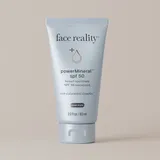
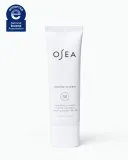
Image skincareDAILY PREVENTION pure mineral hydrating moisturizer SPF 30YOUR PRODUCTFace Reality SkincarepowerMineral SPF 50CeraVeHydrating Mineral Face Sunscreen Lotion SPF 50 with Zinc OxideOsea MalibuMarine Screen SPF 50 Mineral Sunscreen
Match—60%59%58%
Price$52.00$38.00−$14.00$18.99−$33.01$42.00−$10.00
Shared key ingredients—8 of 146 of 146 of 14
Key difference—Madecassic AcidNiacinamideBetaine
Irritancy Medium Low Low Low
SPFSPF 30SPF 50SPF 50SPF 50
Drying alcohol————
View product Shop Shop Shop

More alternatives: Paula's choice Calm Redness Relief Daytime Moisturizer with SPF 30 - Oily SkinThe INKEY List CA Zinc Oxide Sunscreen SPF 30

Cheaper alternatives? See how this stacks up against similar formulas.
We compare ingredient profiles across our catalog — pick the closest match for your budget.
Open dupe finder

Sources cited in this review

Every concentration estimate and effectiveness label is anchored to one of these 21 studies and safety reviews.

  1. 1
  2. 2
  3. 3
  4. 4
  5. 5
  6. 6
Image skincare DAILY PREVENTION pure mineral hydrating moisturizer SPF 30
Image skincareDAILY PREVENTION pure mineral hydrating moisturizer SPF 30

Affiliate links · As an Amazon Associate, WIMJ earns from qualifying purchases.

As an Amazon Associate, WIMJ earns from qualifying purchases.