Works for
1 of 1 advertised claim delivered
Moisturizing18 ingredients credited for this claimGood support
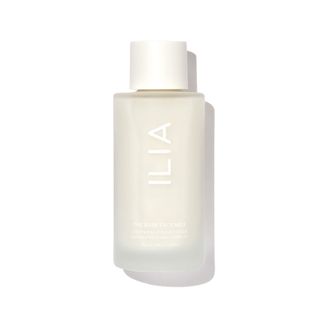
“The Base Face Milk Lotion Préhydratante”
This product can help improve hydration of the skin with the two types of ingredients.
The first type is called “humectants”:
these ingredients help attract water.
When humectants are on the surface of the skin, they “pull in” the moisture from the outside environment, or from
within deeper layers of the skin. The following ingredients in this product do the job:
glycerin, hydrolyzed hyaluronic acid.
This product also contains ingredients called “occlusives”. They help reduce the speed with which our skin loses moisture to the outside environment. These ingredients also help soften the upper layer of the skin, so it feels less tight and nicer to the touch. The following ingredients in this product do the job: squalane, argania spinosa kernel oil.
Can it cause trouble?
Irritancy11 flagged ingredientsLow risk
Comedogenic1 ingredient rated 2 or more on the 0–5 pore-clogging scale1 flagged
User reviews
Be the first — your take helps the next person decide.
Ingredients
Filter by role to see what each ingredient is doing.
Water~40–60%
Propanediol~4.4–6.6%
- Irritation risk
- Low
Acts as a solvent for other ingredients. Speeds up the absorption of other ingredients into the skin
More about PropanediolCaprylic/capric glycerides~3.2–4.8%
- Irritation risk
- Low
Help soften the upper layer of the skin
More about Caprylic/capric glyceridesSqualane~2.8–4.1%
- Irritation risk
- Low
An oil naturally present in skin. Works as an emollient to soften the skin and form a protective layer on its surface without a greasy feeling.
More about SqualaneButylene glycol~2–3%
- Irritation risk
- Low
Used to create a nice product texture and help delivery of other ingredients. Might be somewhat helpful in attracting water to the upper layer of the skin
More about Butylene glycolGlycerin~1.7–2.6%
- Irritation risk
- Low
One of the best moisturizing ingredients. Naturally present in skin. It attracts water to the upper layer of the skin working as a humectant
More about GlycerinArgania spinosa kernel oil~1.4–2.1%
- Irritation risk
- Medium
An emollient that helps soften the upper layer of the skin. Might have some weak anti-oxidant properties
More about Argania spinosa kernel oil1,2-hexanediol~0.45–1.1%
Hydroxyethyl acrylate/sodium acryloyldimethyl taurate copolymer~0.95–1.45%
- Irritation risk
- Medium
A gelling agent that thickens the product consistency and leaves the skin with a velvety finish
More about Hydroxyethyl acrylate/sodium acryloyldimethyl taurate copolymerHydroxyacetophenone~0.55–1.3%
Isohexadecane~0.55–1.25%
- Irritation risk
- Low
Improves the texture of the product and helps soften the skin. Helps oil and water mix together and can be used as a cleansing agent
More about IsohexadecaneAllantoin~0.4–0.9%
- Irritation risk
- Low
Helps calm down inflammation in skin and can help reduce itching. Helps to repair the skin barrier and keep skin hydrated
More about AllantoinLinoleic acid~0.4–1%
- Irritation risk
- Low
An excellent emollient. Helps soften the skin, restore its barrier function, and can help to calm down inflammation. It can be helpful to prevent blemishes and clogged pores
More about Linoleic acidPhospholipids~0.3–0.7%
- Irritation risk
- Low
Emollients that are naturaly present in skin. In addition, they help water and oil mix together in the product
More about PhospholipidsPhytosterols~0.3–0.75%
- Irritation risk
- Medium
Lipids that work as an emollient and can be helpful in repairing skin barrier function
More about PhytosterolsCaprylyl glycol~0.15–0.7%
- Irritation risk
- Medium
Helps preserve products and creates a nice product texture
More about Caprylyl glycolPolyglyceryl-10 stearate~0.15–0.55%
- Irritation risk
- Medium
Helps water and oil mix together and softens the upper layer of the skin
More about Polyglyceryl-10 stearateHydrolyzed opuntia ficus-indica flower extract~0.15–0.6%
- Irritation risk
- High
A plant extract. Can help attract water the upper layer of the skin and might have some anti-oxidant properties
More about Hydrolyzed opuntia ficus-indica flower extractPolysorbate 60~0.1–0.45%
Sorbitan isostearate~0.1–0.35%
- Irritation risk
- Low
Helps oil and water mix together
More about Sorbitan isostearateHyaluronic acid~0.05–0.25%
- Irritation risk
- Low
One of the best moisturizing ingredients. Attracts water into the upper layer of the skin. Naturally present in skin. Typically has large molecule size unless advertised otherwise on the product label. Helps support skin's barrier function and may help to reduce inflammation
More about Hyaluronic acidHydrolyzed hyaluronic acid~0.05–0.2%
- Irritation risk
- Low
One of the best moisturizing ingredients. Attracts water into the upper layer of the skin. A version of it is naturally present in skin
More about Hydrolyzed hyaluronic acidSodium hyaluronate~0.05–0.15%
- Irritation risk
- Low
One of the best moisturizing ingredients. Attracts water into the upper layer of the skin
More about Sodium hyaluronateChlorella vulgaris extract~0.01–0.1%
- Irritation risk
- Medium
- Comedogenicity
- 3/5
A plant extract that can help to attract water to the upper layer of the skin and might have some anti-oxidant and anti-inflammatory properties
More about Chlorella vulgaris extractLactic acid~0.01–0.05%
- Irritation risk
- Medium
An exfoliating and moisturizing alpha-hydroxy acid (AHA). Typically causes less irritation than other AHAs, for example, glycolic acid. At high concentrations (about 15%), lactic acid can help reduce lines and wrinkles. Recent studies show that lactic acid can support the "good" bacteria living on skin's surface (healthy skin microbiome)
More about Lactic acidIngredient list view
Water, Propanediol, Caprylic/capric glycerides, Squalane, Butylene glycol, Glycerin, Argania spinosa kernel oil, 1,2-hexanediol, Hydroxyethyl acrylate/sodium acryloyldimethyl taurate copolymer, Hydroxyacetophenone, Isohexadecane, Allantoin, Linoleic acid, Phospholipids, Phytosterols, Caprylyl glycol, Polyglyceryl-10 stearate, Hydrolyzed opuntia ficus-indica flower extract, Polysorbate 60, Sorbitan isostearate, Hyaluronic acid, Hydrolyzed hyaluronic acid, Sodium hyaluronate, Chlorella vulgaris extract, Lactic acid
Compare prices
Retailers ranked by price — lowest first.

Affiliate links · prices updated regularly
Sources cited in this review
Every concentration estimate and effectiveness label is anchored to one of these 13 studies and safety reviews.
- 1
- 2
- 3
- 4
- 5
- 6

Affiliate links · As an Amazon Associate, WIMJ earns from qualifying purchases.