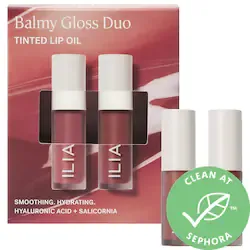
Works for
1 of 1 advertised claim delivered
Moisturizing11 ingredients credited for this claimGood support
“Highlighted Ingredients. . Hyaluronic Acid.”
This product can help improve hydration of the skin with the two types of ingredients.
The first type is called “humectants”:
these ingredients help attract water.
When humectants are on the surface of the skin, they “pull in” the moisture from the outside environment, or from
within deeper layers of the skin. The following ingredients in this product do the job:
sodium hyaluronate.
This product also contains ingredients called “occlusives”. They help reduce the speed with which our skin loses moisture to the outside environment. These ingredients also help soften the upper layer of the skin, so it feels less tight and nicer to the touch. The following ingredients in this product do the job: caprylic/capric triglyceride, helianthus annuus seed oil.
Can it cause trouble?
Irritancy8 strong irritants: Citrus aurantium dulcis peel extract, Citrus tangerina peel extract + 6 more — patch-test recommendedHigh risk
Comedogenic3 ingredients rated 2 or more on the 0–5 pore-clogging scale3 flagged
User reviews
Be the first — your take helps the next person decide.
Ingredients
Filter by role to see what each ingredient is doing.
Hydrogenated polyisobutene~22–34%
- Irritation risk
- Low
Used to improve the product consistency and soften the upper layer of the skin
More about Hydrogenated polyisobuteneDiisostearyl malate~5.1–7.7%
- Irritation risk
- Medium
Helps to soften the upper layer of the skin
More about Diisostearyl malateCaprylic/capric triglyceride~4.8–7.2%
- Irritation risk
- Medium
A good mix of fatty acids that forms a protective layer on the skin. Improves the shelf life of products. Derived from coconut and glycerin
More about Caprylic/capric triglycerideEthylene/propylene/styrene copolymer~3.7–5.6%
- Irritation risk
- Low
Used to create a thicker product consistency
More about Ethylene/propylene/styrene copolymerButylene/ethylene/styrene copolymer~2.7–4.1%
- Irritation risk
- Low
Used to create a gel-like product texture
More about Butylene/ethylene/styrene copolymerLimnanthes alba seed oil~2.2–3.2%
- Irritation risk
- Low
This oil's cmposition is closest to rapeseed oil. It is a very stable oil and serves as an emoillient
More about Limnanthes alba seed oilJojoba esters~1.7–2.6%
- Irritation risk
- Medium
An emollient made of jojoba oil. Helps soften the skin and support its barrier function
More about Jojoba estersEthylhexyl palmitate~1.4–2.1%
- Irritation risk
- Low
- Comedogenicity
- 3/5
An emollient that helps soften the skin and create a nice product texture
More about Ethylhexyl palmitateTocopherol~0.95–1.45%
- Irritation risk
- Low
Pure form of vitamin E. Can help moisturise and protect the skin from free radicals. Often used to help stabilise other ingredients or the formula itself
More about TocopherolHelianthus annuus seed oil~0.9–1.4%
- Irritation risk
- Low
A great emollient due to its high linoleic acid content. One of the most effective plant oils in helping skin hydration and repairing skin barrier function
More about Helianthus annuus seed oilButyrospermum parkii butter extract~0.6–1.35%
- Irritation risk
- Low
- Comedogenicity
- 3/5
A great moisturising ingredient that softens the skin and reduces water loss from its upper layer. It also can be helpful in protecting skin from free radicals
More about Butyrospermum parkii butter extractTetrahexyldecyl ascorbate~0.45–1%
- Irritation risk
- Medium
Being a lipid soluble form of vitamin C, it is more stable than ascorbic acid, but still degrades quickly and needs to be stabilized in a formulation with another ingredient. It is claimed to penetrate skin better than pure vitamin C and have the the similar benefits, but solid studies of its effectiveness are lacking. Is likely to require a higher concentration in a product than pure vitamin C to be effective. It might be able to help reduce pore clogging.
More about Tetrahexyldecyl ascorbatePentaerythrityl tetra-di-t-butyl hydroxyhydrocinnamate~0.4–0.9%
- Irritation risk
- Low
Used to increase stability of product formulations
More about Pentaerythrityl tetra-di-t-butyl hydroxyhydrocinnamateCitrus aurantium dulcis peel extract~0.3–0.75%
Citrus tangerina peel extract~0.3–0.75%
- Irritation risk
- High
Trihydroxystearin~0.3–0.7%
- Irritation risk
- Low
Helps soften the upper layer of the skin and improve the product texture
More about TrihydroxystearinSalicornia herbacea extract~0.2–0.8%
- Irritation risk
- Low
Citrus grandis peel extract~0.15–0.65%
- Irritation risk
- High
An aromatic irritating plant extract that can cause photosensitivity in skin
More about Citrus grandis peel extractCitrus junos peel extract~0.2–0.7%
- Irritation risk
- High
Citrus clementina fruit extract~0.15–0.7%
- Irritation risk
- High
Hedychium spicatum extract~0.15–0.6%
- Irritation risk
- Low
Vanilla planifolia fruit extract~0.15–0.6%
- Irritation risk
- High
A plant extract used as a fragrance. Can be irritating
More about Vanilla planifolia fruit extractZingiber officinale root extract~0.1–0.4%
- Irritation risk
- High
A plant extract that can contain an irritating essential oil. Might have some anti-oxidant effect, but evidence is lacking
More about Zingiber officinale root extractSodium hyaluronate~0.1–0.5%
- Irritation risk
- Low
One of the best moisturizing ingredients. Attracts water into the upper layer of the skin
More about Sodium hyaluronateGlucomannan~0.15–0.5%
- Irritation risk
- Low
Limonene~0.1–0.4%
- Irritation risk
- High
A common frangrance that can easily irritate skin, especially if exposed to air, light or heat
More about LimoneneCi 77891~0.1–0.45%
- Irritation risk
- Low
Titanium dioxide~0.2–0.7%
- Irritation risk
- Low
Works as a UV filter when used in high concentrations. It is photostable and is effective mostly against the UVB light, with some protection in the UVA range. In small concentrations, used for its ability to improve the color of cosmetic products. Is usually well tolerated by the skin
More about Titanium dioxideIron oxides~0.1–0.4%
- Irritation risk
- Low
An umbrella term for the following three colorants: CI 77491, CI 77492, CI 77499. They might be able to offer some protection against visible light, but the degree of the protection is not clear
More about Iron oxidesCi 15850~0.1–0.35%
Ci 19140~0.1–0.3%
Ci 73360~0.05–0.25%
Ci 17200~0.05–0.25%
Ingredient list view
Hydrogenated polyisobutene, Diisostearyl malate, Caprylic/capric triglyceride, Ethylene/propylene/styrene copolymer, Butylene/ethylene/styrene copolymer, Limnanthes alba seed oil, Jojoba esters, Ethylhexyl palmitate, Tocopherol, Helianthus annuus seed oil, Butyrospermum parkii butter extract, Tetrahexyldecyl ascorbate, Pentaerythrityl tetra-di-t-butyl hydroxyhydrocinnamate, Citrus aurantium dulcis peel extract, Citrus tangerina peel extract, Trihydroxystearin, Salicornia herbacea extract, Citrus grandis peel extract, Citrus junos peel extract, Citrus clementina fruit extract, Hedychium spicatum extract, Vanilla planifolia fruit extract, Zingiber officinale root extract, Sodium hyaluronate, Glucomannan, Limonene, Ci 77891, Titanium dioxide, Iron oxides, Ci 15850, Ci 19140, Ci 73360, Ci 17200
Compare prices
Retailers ranked by price — lowest first.
Sources cited in this review
Every concentration estimate and effectiveness label is anchored to one of these 17 studies and safety reviews.
- 1
- 2
- 3Vitamin E in dermatologyncbi.nlm.nih.gov
- 4Vitamin E and Skin Healthlpi.oregonstate.edu
- 5
- 6

Affiliate links · As an Amazon Associate, WIMJ earns from qualifying purchases.