Works for:
based on ingredients and %- Moisturizing
Can it cause trouble?
- Irritation risk: high
- Comedogenic risk ingredients: 5
Key actives

Works for
Moisturizing
What does the product description say?
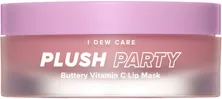
This rich, leave-on lip mask preps your pout for all those kissable moments thanks to a blend of cocoa butter, hibiscus flower extract, and Vitamin C. Use throughout the day to help nourish the lips or at night for an extra boost of moisture.
Source: Ulta
This product can help soften the skin and reduce its moisture loss with emollients and occlusives: butyrospermum parkii butter, copernicia cerifera wax.
Keep in mind that this product does not contain effective ingredients to attract water to the upper layer of the skin. This is why an additional product with humectants like glycerin or hyaluronic acid can be helpful (apply it before this product for the best results).
The following ingredients in this product are especially good for supporting the skin barrier and helping with the hydration level: palmitoyl tripeptide-1
Helps soften the upper layer of the skin and thickens the product's texture
A good emollient that helps soften the skin and helps repair its barrier function. It can clog pores if used in high concentrations.
A great emollient due to its high linoleic acid content. One of the most effective plant oils in helping skin hydration and repairing skin barrier function
A great moisturising ingredient that softens the skin and reduces water loss from its upper layer. It also can be helpful in protecting skin from free radicals
Helps soften the upper layer of the skin
Helps to soften the upper layer of the skin and create a nice product consistency
A type of peptide. Peptides are excellent moisturizers and might be able support collagen production reducing fine lines and wrinkles
A silicone that helps to reduce water loss from the surface of the skin. Can temporarily "fill in" lines and wrinkles, absorb oil, and create a nice product finish
Helps soften the upper layer of the skin and can be helpful in restoring the skin barrier function. Might have some anti-oxidant effect
Helps soften the upper layer of the skin and create a nice product texture
An emollient that helps soften the skin but is not effective for restoring its barrier function. Might be helpful to calm down inflammation
Helps to soften the upper layer of the skin
An emollient that helps soften the skin and create a nice product texture
Used to create a thicker product consistency and soften the upper layer of the skin
Used to create a nice product texture and help delivery of other ingredients. Might be somewhat helpful in attracting water to the upper layer of the skin
Used to improve the product consistency and soften the upper layer of the skin
A yeast extract that might help to attract water to the upper layer of the skin
Helps soften the upper layer of the skin and create a nice product consistency
Helps to soften the upper layer of the skin and create a nice product texture
An exfoliating and moisturizing alpha-hydroxy acid (AHA). Typically causes less irritation than other AHAs, for example, glycolic acid. At high concentrations (about 15%), lactic acid can help reduce lines and wrinkles. Recent studies show that lactic acid can support the "good" bacteria living on skin's surface (healthy skin microbiome)
A plant oil that helps to soften the upper layer of the skin and can help restore the skin barrier. Might have some anti-oxidant effect
An emollient that helps soften the upper layer of the skin. Might have some weak anti-oxidant properties
A good mix of fatty acids that forms a protective layer on the skin. Improves the shelf life of products. Derived from coconut and glycerin
Softens the upper layer of skin and helps restore the healthy skin barrier. Has shown to help calm down inflammation in skin. It is a stable oil, meaning that it retains its properties even when exposed to air.
A plant oil that can help soften the upper layer of the skin. Might be helpful in calming down inflammation in skin
Can have some moisturizing properties due to its sugar content
A plant oil that helps soften the upper layer of the skin
How honest is this product?
| Promise | Can it deliver? |
|---|---|
| Moisturizing |
Total Promises Fulfilled score: 100/100.
We receive a small commission for purchases made through these links at no cost for you. Thank you for your support! Learn more
Potential irritants
Comedogenic ingredients
User reviews (0)
Averages from community submissions.
No reviews yet for this product.
Be the first to share your experience!
Tried this product?
Help capture what the ingredient list can't—texture, finish, pilling, scent, and more. Answer what you can, skip the rest.
Takes ~30 seconds.
Reviews are shown in aggregate. No personal details.
| Product | Similarity | Price | Irritancy |
|---|---|---|---|
 I Dew Care Plush Party Buttery Vitamin C Lip Mask | Current | $7.99 | |
 BECCA Hydra-Light Plumping Lip Mask | 54% | ≈ $23.84 | |
 Grande Cosmetics GrandePOUT Plumping Lip Mask | 52% | $24.00 | |
 LAWLESS Forget The Filler Overnight Lip Plumping Mask | 50% | $27.00 |
Key Actives
A great moisturising ingredient that softens the skin and reduces water loss from its upper layer. It also can be helpful in protecting skin from free radicals
A plant oil that helps to soften the upper layer of the skin and can help restore the skin barrier. Might have some anti-oxidant effect
Helps soften the upper layer of the skin and can be helpful in restoring the skin barrier function. Might have some anti-oxidant effect
A vitamin C derivative that is more stable but less potent than pure form of vitamin C. Has a potential to boost collagen production, nutralise free radicals and reduce hyperpigmentation, but the required concentration is likely to be much higher than for the pure form of vitamin C, limiting the ingredient's effectiveness in products
An emollient that helps soften the upper layer of the skin. Might have some weak anti-oxidant properties
A plant oil that can help soften the upper layer of the skin. Might be helpful in calming down inflammation in skin
A silicone that helps to reduce water loss from the surface of the skin. Can temporarily "fill in" lines and wrinkles, absorb oil, and create a nice product finish
A type of peptide. Peptides are excellent moisturizers and might be able support collagen production reducing fine lines and wrinkles
Helps soften the upper layer of the skin and thickens the product's texture
Helps to soften the upper layer of the skin and create a nice product consistency
Works as a UV filter when used in high concentrations. It is photostable and is effective mostly against the UVB light, with some protection in the UVA range. In small concentrations, used for its ability to improve the color of cosmetic products. Is usually well tolerated by the skin
Helps soften the upper layer of the skin
A great emollient due to its high linoleic acid content. One of the most effective plant oils in helping skin hydration and repairing skin barrier function
Softens the upper layer of skin and helps restore the healthy skin barrier. Has shown to help calm down inflammation in skin. It is a stable oil, meaning that it retains its properties even when exposed to air.
A good mix of fatty acids that forms a protective layer on the skin. Improves the shelf life of products. Derived from coconut and glycerin
A good emollient that helps soften the skin and helps repair its barrier function. It can clog pores if used in high concentrations.
Potential irritants
Used to help oil and water mix together. Can be irritating
An aromatic blend of unspecified and possibly irritating ingredients
A plant extract that can be irritating. It might contain a compound anthocyanin that could be helpful in neutralizing free radicals
Can contain essential oil that can be irritating. Can help to soften the upper layer of the skin. Might be helpful in neutralizing free radicals
Causes redness and irritation in skin. Is often added to lip roducts to create a temporary plumping effect. Is likely to have a negative effect on skin's barrier function
An essential oil that is likely to be irritating and can cause photosensitivity
Chilli pepper extract that is very likely to be irritating. Might be added to lip product to create a temporary burst of color. Is likely to have a negative effect on the skin and dry it out
Helps soften the upper layer of the skin and thickens the product's texture
A more stable but less bio-available form of vitamin E compared to Tocopherol. Might help moisturize and protect the skin from free radicals, but mostly used in low concentrations to stabilize other ingredients.
An emollient that helps soften the upper layer of the skin. Might have some weak anti-oxidant properties
An emollient that helps soften the skin but is not effective for restoring its barrier function. Might be helpful to calm down inflammation
Softens the upper layer of skin and helps restore the healthy skin barrier. Has shown to help calm down inflammation in skin. It is a stable oil, meaning that it retains its properties even when exposed to air.
Used to stabilize the product formulation protecting it from sun light
A good mix of fatty acids that forms a protective layer on the skin. Improves the shelf life of products. Derived from coconut and glycerin
An exfoliating and moisturizing alpha-hydroxy acid (AHA). Typically causes less irritation than other AHAs, for example, glycolic acid. At high concentrations (about 15%), lactic acid can help reduce lines and wrinkles. Recent studies show that lactic acid can support the "good" bacteria living on skin's surface (healthy skin microbiome)
Can work as an exfoliant but is typically used to adjust the product pH
A good emollient that helps soften the skin and helps repair its barrier function. It can clog pores if used in high concentrations.
A vitamin C derivative that is more stable but less potent than pure form of vitamin C. Has a potential to boost collagen production, nutralise free radicals and reduce hyperpigmentation, but the required concentration is likely to be much higher than for the pure form of vitamin C, limiting the ingredient's effectiveness in products
Can have some moisturizing properties due to its sugar content
Comedogenic ingredients
A great moisturising ingredient that softens the skin and reduces water loss from its upper layer. It also can be helpful in protecting skin from free radicals
An emollient that helps soften the skin and create a nice product texture
Helps soften the upper layer of the skin and can be helpful in restoring the skin barrier function. Might have some anti-oxidant effect
A good emollient that helps soften the skin and helps repair its barrier function. It can clog pores if used in high concentrations.
All ingredients
Helps to soften the upper layer of the skin and create a nice product texture
Used to improve the product consistency and soften the upper layer of the skin
Helps soften the upper layer of the skin and create a nice product texture
Helps soften the upper layer of the skin and create a nice product consistency
Helps soften the upper layer of the skin and thickens the product's texture
A more stable but less bio-available form of vitamin E compared to Tocopherol. Might help moisturize and protect the skin from free radicals, but mostly used in low concentrations to stabilize other ingredients.
A great moisturising ingredient that softens the skin and reduces water loss from its upper layer. It also can be helpful in protecting skin from free radicals
Helps to soften the upper layer of the skin and create a nice product consistency
Used to create a thicker product consistency
Used to help oil and water mix together. Can be irritating
An aromatic blend of unspecified and possibly irritating ingredients
Works as a UV filter when used in high concentrations. It is photostable and is effective mostly against the UVB light, with some protection in the UVA range. In small concentrations, used for its ability to improve the color of cosmetic products. Is usually well tolerated by the skin
A plant oil that helps to soften the upper layer of the skin and can help restore the skin barrier. Might have some anti-oxidant effect
A plant oil that helps to soften the upper layer of the skin and can help restore skin's barrier function. Might have an anti-oxidant effect
An emollient that helps soften the upper layer of the skin. Might have some weak anti-oxidant properties
An emollient that helps soften the skin but is not effective for restoring its barrier function. Might be helpful to calm down inflammation
A plant oil that helps soften the upper layer of the skin
A great emollient due to its high linoleic acid content. One of the most effective plant oils in helping skin hydration and repairing skin barrier function
Softens the upper layer of skin and helps restore the healthy skin barrier. Has shown to help calm down inflammation in skin. It is a stable oil, meaning that it retains its properties even when exposed to air.
A plant oil that can help soften the upper layer of the skin. Might be helpful in calming down inflammation in skin
Used to stabilize the product formulation protecting it from sun light
A good mix of fatty acids that forms a protective layer on the skin. Improves the shelf life of products. Derived from coconut and glycerin
An emollient that helps soften the skin and create a nice product texture
Used to create a gel-like product texture
Used to increase stability of product formulations
A silicone that helps to reduce water loss from the surface of the skin. Can temporarily "fill in" lines and wrinkles, absorb oil, and create a nice product finish
A yeast extract that might help to attract water to the upper layer of the skin
Used to create a thicker product consistency and soften the upper layer of the skin
A plant extract that can be irritating. It might contain a compound anthocyanin that could be helpful in neutralizing free radicals
Helps soften the upper layer of the skin and can be helpful in restoring the skin barrier function. Might have some anti-oxidant effect
An exfoliating and moisturizing alpha-hydroxy acid (AHA). Typically causes less irritation than other AHAs, for example, glycolic acid. At high concentrations (about 15%), lactic acid can help reduce lines and wrinkles. Recent studies show that lactic acid can support the "good" bacteria living on skin's surface (healthy skin microbiome)
Can work as an exfoliant but is typically used to adjust the product pH
Can contain essential oil that can be irritating. Can help to soften the upper layer of the skin. Might be helpful in neutralizing free radicals
An umbrella term for the following three colorants: CI 77491, CI 77492, CI 77499. They might be able to offer some protection against visible light, but the degree of the protection is not clear
Causes redness and irritation in skin. Is often added to lip roducts to create a temporary plumping effect. Is likely to have a negative effect on skin's barrier function
A good emollient that helps soften the skin and helps repair its barrier function. It can clog pores if used in high concentrations.
A vitamin C derivative that is more stable but less potent than pure form of vitamin C. Has a potential to boost collagen production, nutralise free radicals and reduce hyperpigmentation, but the required concentration is likely to be much higher than for the pure form of vitamin C, limiting the ingredient's effectiveness in products
Used to create a nice product texture and help delivery of other ingredients. Might be somewhat helpful in attracting water to the upper layer of the skin
A type of peptide. Peptides are excellent moisturizers and might be able support collagen production reducing fine lines and wrinkles
Can have some moisturizing properties due to its sugar content
An essential oil that is likely to be irritating and can cause photosensitivity
Chilli pepper extract that is very likely to be irritating. Might be added to lip product to create a temporary burst of color. Is likely to have a negative effect on the skin and dry it out
Ingredient list view
Polyglyceryl-2 triisostearate, Hydrogenated polyisobutene, Diisostearyl malate, Hydrogenated poly(c6-14 olefin), Phytosteryl/isostearyl/cetyl/stearyl/behenyl dimer dilinoleate, Euphorbia cerifera cera, Tocopheryl acetate, Polyethylene, Butyrospermum parkii butter, Silica dimethyl silylate, Ozokerite, Copernicia cerifera wax, Microcrystalline wax, Ethylene/propylene/styrene copolymer, Sorbitan sesquioleate, Parfum, Titanium dioxide, Ci 77891, Prunus amygdalus dulcis seed, Camellia sinensis seed oil, Camellia japonica seed oil, Argania spinosa kernel oil, Olea europaea fruit oil, Macadamia integrifolia seed oil, Helianthus annuus seed oil, Simmondsia chinensis seed oil, Orbignya oleifera seed oil, Benzotriazolyl dodecyl p-cresol, Caprylic/capric triglyceride, Ethylhexyl palmitate, Butylene/ethylene/styrene copolymer, Pentaerythrityl tetra-di-t-butyl hydroxyhydrocinnamate, Dehydroacetic acid, Dimethicone, Monascus extract, Tribehenin, Hibiscus sabdariffa flower extract, Theobroma cacao seed butter, Lactic acid, Citric acid, Ci 15850, Pyrus malus seed oil, Sorbitan isostearate, Iron oxides, Ci 77492, Methyl nicotinate, Ci 15850, Water, Glycine soja oil, Ascorbyl glucoside, Ci 15850, Ci 45410, Blue 1 lake, Ci 42090, Butylene glycol, Palmitoyl tripeptide-1, Pyrus malus fruit extract, Zingiber officinale root oil, Capsicum frutescens fruit extract, Bht, 1,2-hexanediol
- Safety Assessment of Polyglyceryl Fatty Acid Esters as Used in Cosmetics
- Final report of the cosmetic ingredient review expert panel on the safety assessment of Polyisobutene and Hydrogenated Polyisobutene as used in cosmetics
- Final Report on the Safety Assessment of Candelilla Wax, Carnauba Wax, Japan Wax, and Beeswax
- Sorbitan sesquioleate, a common emulsifier in topical corticosteroids, is an important contact allergen
- Characteristics of Tea Seed Oil in Comparison with Sunflower and Olive Oils and Its Effect as a Natural Antioxidant
- Natural vegetable fats in the prevention of irritant contact dermatitis
- Use of “natural” oils for moisturization: Review of olive, coconut, and sunflower seed oil
- Fatty acids profile of oil from nine varieties of Macadamia nut
- Effect of Olive and Sunflower Seed Oil on the Adult Skin Barrier: Implications for Neonatal Skin Care
- Topically Applied Sunflower Seed Oil Prevents Invasive Bacterial Infections in Preterm Infants in Egypt
- Effect of topically applied lipids on surfactant-irritated skin
- Impact of topical oils on the skin barrier: possible implications for neonatal health in developing countries
- Anti-Inflammatory Activity of Babassu Oil and Development of a Microemulsion System for Topical Delivery
- Safety Assessment of Styrene and Vinyl-type Styrene Copolymers as Used in Cosmetics
- Safety Assessment of Pentaerythrityl Tetra-Di-t-Butyl Hydroxyhydrocinnamate as Used in Cosmetics
- 4 Final Report on the Safety Assessment of Sodium Dehydroacetate and Dehydroacetic Acid
- Dimethicone as a protective ingredient in topical medications
- Final Report on the Safety Assessment of Dimethicone Copolyol
- Anthocyanin-rich extract from Hibiscus sabdariffa calyx counteracts UVC-caused impairments in rats
- Hibiscus sabdariffa L. – A phytochemical and pharmacological review
- Liposome-containing Hibiscus sabdariffa calyx extract formulations with increased antioxidant activity, improved dermal penetration and reduced dermal toxicity
- Cocoa polyphenols and their influence on parameters involved in ex vivo skin restructuring
- Epidermal and dermal effects of topical lactic acid
- Dual Effects of Alpha-Hydroxy Acids on the Skin
- Safety Assessment of Pyrus malus (Apple)-derived Ingredients as Used in Cosmetics
- Methyl nicotinate
- The Roles of Vitamin C in Skin Health
- Stability, transdermal penetration, and cutaneous effects of ascorbic acid and its derivatives
- Scientific Committee on Consumer Safety Opinion on Acid Red 92
- Zingiber officinale Rosc. essential oil, a review on its composition and bioactivity
- The influence of alkane chain length on the skin irritation potential of 1,2-alkanediols