Works for:
based on ingredients and %- Anti-aging
- Evens skin tone
- Moisturizing
- Anti-blemish
Can it cause trouble?
- Irritation risk: medium
- Comedogenic risk ingredients: 2
Key actives


Product Summary
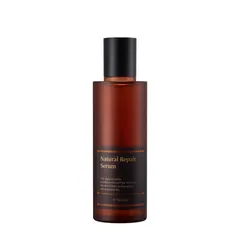
"HYGGEE - Natural Repair Serum" is effective for: Evens skin tone, Anti-aging, Moisturizing and Anti-blemish
Ingredient callouts
- A good concentration of Niacinamide (1.70% - 2.60%). Niacinamide is a well-studied multi-tasking active. It is stable, and can work well in almost any hydrating formulation. There is solid evidence that Niacinamide can help support skin barrier, regulate oil production and reduce acne and clogged pores. It also helps to fight photodamage and improve the skin tone, reducing pigmentation marks.
- Peptides (ascorbic acid polypeptide 0.15% - 0.60%). Peptides are a very big group of ingredients. They all consist of a different combination of aminoacids. Our skin produces Peptides naturally. Some of them work as natural antibiotics, promote wound-healing and production of collagen. The scientists are still studying how effective the topical application of Peptides is, but it is very likely that theynare helpful. Peptides might be able to support skin barrier restoration and even have an anti-aging benefit. At the very least, they certainly help attract water to the skin and support the hydration in this way.
- Adenosine 0.05% - 0.30%. It is a chemical present inside our skin cells. A clinical trial confirmed that topical application of Adenosine in a low concentration can reduce dynamic wrinkles (these are the wrinkles that appear with age in a places where our mimic is the most active, for example, in the corners of the eyes or on the forehead).
- An effective concentration of Panthenol (pro-vitamin B5) - about 0.85% - 1.25%. Panthenol helps strengthen the skin barrier, improve hydration and reduce inflammation in skin.
- Humectants (polyglutamic acid 0.10% - 0.35%, panthenol 0.85% - 1.25%, lactobacillus ferment 0.15% - 0.55%, glycine 0.10% - 0.35%, glycerin 3.60% - 5.40%, glutamic acid 0.05% - 0.20%, aspartic acid 0.05% - 0.25%, alanine 0.05% - 0.25% and histidine 0.05% - 0.25%). These ingredients help attract water to the upper layer of the skin and improve the skin hydration.
Price
The product retails for 44.20$ in the United States and for 22.50£ in the United Kingdom.
For a detailed price comparison: click here.
Anti-aging
What does the product description say?
ANTI-AGING & NOURISHING This serum is made of Red Ginseng Extract (66.7%) instead of water and 10 types of plant roots which are packed with antioxidants that regenerate and revitalize the skin.
Source: beMUSED
This product can help reduce and prevent fine lines and wrinkles, improve skin elasticity and firmness because it contains adenosine, niacinamide.
These ingredients in the product can also be helpful, even though there is less evidence for their effectiveness: ascorbic acid polypeptide, aspartic acid, lysine, serine, threonine.
Keep in mind that it typically takes at least 6 weeks to notice any results because the changes that are needed to improve fine lines and elasticity happen in the deeper layers of the skin. No topical anti-aging product can “erase” wrinkles or fully reverse signs of aging.
Is proven to be effective in reducing blemishes, evening out skin tone and helping to improve lines and wrinkles. It helps the skin to repair sun damage, calm down inflammation and keep maintain good levels of moisture. The concentration of about 2% is effective for supporting the skin barrier and evening out the skin tone. Concentration of 4-6% is better for helping with acne and balancing the sebum production
Might help improve cell turnover and reduce inflammation in skin. One study shows that the ingredients might be able to help reduce dynamic wrinkles (for example, in the corners of the eyes or on the forehead)
An amino-acid that helps to attract water to the upper layer of the skin. In combination with other amino-acids, might help to reduce fine lines and wrinkles
A type of peptide. Might help neutralize free radicals in skin. Peptides are excellent moisturizers and might be able support collagen production reducing fine lines and wrinkles
An amino-acid that helps to attract water to the upper layer of the skin. In combination with other amino-acids, might help to reduce fine lines and wrinkles
An amino-acid that helps to attract water to the upper layer of the skin. In combination with other amino-acids, might help to reduce fine lines and wrinkles
An amino-acid that helps increase skin hydration and might help to slightly improve skin firmness, potentially reducing lines and wrinkles
A plant extract that has been shown to be able to reduce inflammation in skin, support restoration of skin barrier function, as well as support collagen production. Contains active compounds called centelloids: asiaticoside, madecasosside, asiatic acid and madecassic acid. Might be helpful in preventing stretch marks. It can be itself be irritating though.
Can contain potent anti-oxidant compounds (abbreviated ECG, GCG, EGC, and EGCG) that might help protect the skin from free radicals. Can help calm down inflammation and has some anti-bacterial properties. Unfortunately, these antioxidants are unstable and lose their effectiveness very quickly in products. The concentration of the antioxidant compounds in the extract also tends to be low to be effective in topical formulation
Anti-blemish
This product can help reduce breakouts and clogged pores because it contains the following ingredient: niacinamide. This ingredient is used for treating acne and can have a noticeable effect.
Is proven to be effective in reducing blemishes, evening out skin tone and helping to improve lines and wrinkles. It helps the skin to repair sun damage, calm down inflammation and keep maintain good levels of moisture. The concentration of about 2% is effective for supporting the skin barrier and evening out the skin tone. Concentration of 4-6% is better for helping with acne and balancing the sebum production
Can be helpful in reducing inflammation in skin, including inflamed acne. It can be irritating
A plant extract that has been shown to be able to reduce inflammation in skin, support restoration of skin barrier function, as well as support collagen production. Contains active compounds called centelloids: asiaticoside, madecasosside, asiatic acid and madecassic acid. Might be helpful in preventing stretch marks. It can be itself be irritating though.
Can contain potent anti-oxidant compounds (abbreviated ECG, GCG, EGC, and EGCG) that might help protect the skin from free radicals. Can help calm down inflammation and has some anti-bacterial properties. Unfortunately, these antioxidants are unstable and lose their effectiveness very quickly in products. The concentration of the antioxidant compounds in the extract also tends to be low to be effective in topical formulation
Evens skin tone
This product can help reduce hypepigmentation and even out the skin tone because it contains the following effective ingredients: niacinamide
The following ingredient (ingredients) in this product might be helpful, but there is no evidence to confirm that it actually can help even out the skin tone: alanine, cysteine, glycyrrhiza glabra root extract, morus alba bark extract, paeonia lactiflora root extract, pancratium maritimum extract.
Keep in mind that you would need to apply any topical skincare targetted at hypigmentation consistently for a couple of months to get a result. No topical skincare product can help get rid of hyperpigmentation (including post-acne marks and age spots) instantly.
Is proven to be effective in reducing blemishes, evening out skin tone and helping to improve lines and wrinkles. It helps the skin to repair sun damage, calm down inflammation and keep maintain good levels of moisture. The concentration of about 2% is effective for supporting the skin barrier and evening out the skin tone. Concentration of 4-6% is better for helping with acne and balancing the sebum production
A plant extract that might help neutralize free radicals in skin. It might help reduce hyperpigmentation
A plant extract that might have anti-oxidant properties and help even out skin tone, but solid evidence is lacking
A plant extract that can help lighten the skin and calm down inflammation. Might be helpful in neutralizing free radicals
Might help neutralize free radicals in skin and might be helpful against hyperpigmentation
An amino-acid that helps to attract water to the upper layer of the skin and might help to lighten the skin, but solid evidence is lacking
A plant extract that might help neutralize free radicals and reduce hyperpigmentation, but the research on its effectiveness in skin is lacking
Can contain potent anti-oxidant compounds (abbreviated ECG, GCG, EGC, and EGCG) that might help protect the skin from free radicals. Can help calm down inflammation and has some anti-bacterial properties. Unfortunately, these antioxidants are unstable and lose their effectiveness very quickly in products. The concentration of the antioxidant compounds in the extract also tends to be low to be effective in topical formulation
Moisturizing
This product contains good ingredients to attract water to the upper layer of the skin. These ingredients are called "humectants": alanine, aspartic acid.
When humectants are on the surface of the skin, they “pull in” the moisture from the outside environment, or from within deeper layers of the skin. If the air is dry, humectants can speed up the moisture loss from the skin. This is why it is a good idea to use another product on top of this one to help "seal in" the moisture (look for ingredients like dimethicone, squalane, oils and butters).
The following ingredients in this product are especially good for supporting the skin barrier and helping with the hydration level: ascorbic acid polypeptide, niacinamide, panthenol
Helps to attract water to the upper layer of the skin and can help restore the skin barrier function
Might help neutralize free radicals in skin and might be helpful against hyperpigmentation
An amino-acid that helps to attract water to the upper layer of the skin. In combination with other amino-acids, might help to reduce fine lines and wrinkles
An amino-acid that helps attract water to the upper layer of the skin
Is proven to be effective in reducing blemishes, evening out skin tone and helping to improve lines and wrinkles. It helps the skin to repair sun damage, calm down inflammation and keep maintain good levels of moisture. The concentration of about 2% is effective for supporting the skin barrier and evening out the skin tone. Concentration of 4-6% is better for helping with acne and balancing the sebum production
Helps attract water to the upper layer of the skin and can help improve skin barrier function
Helps attract water to the upper layer of the skin.
Seaweed extract that might help to attract water to the upper layer of the skin and have some anti-oxidant properties
One of the best moisturizing ingredients. Naturally present in skin. It attracts water to the upper layer of the skin working as a humectant
A fermentation product created by bacteria Lactobacillus. The fermented product has anti-bacterial properties and might be helpful in calming down inflammation, but studies are lacking. Helps attract water to the upper layer of the skin. Can be used as a preservative
An amino-acid that helps to attract water to the upper layer of the skin. In combination with other amino-acids, might help to reduce fine lines and wrinkles
Plant oil that due to its high content of linoleic acid can help support skin's barrier function improving its hydration
An amino-acid that helps to attract water to the upper layer of the skin. In combination with other amino-acids, might help to reduce fine lines and wrinkles
An amino-acid that helps to attract water to the upper layer of the skin and might help to lighten the skin, but solid evidence is lacking
An amino acid that can help attract water to the upper layer of the skin and support skin's barrier function
Brown seaweed extract. Can help attract water to the upper layer of the skin and might have some antioxidant effect
A type of peptide. Might help neutralize free radicals in skin. Peptides are excellent moisturizers and might be able support collagen production reducing fine lines and wrinkles
An amino-acid that helps increase skin hydration and might help to slightly improve skin firmness, potentially reducing lines and wrinkles
Might help improve cell turnover and reduce inflammation in skin. One study shows that the ingredients might be able to help reduce dynamic wrinkles (for example, in the corners of the eyes or on the forehead)
Helps to soften the upper layer of the skin and create a nice product texture
A plant extract that might contain a compound baicalin that could be helpful in neutralizing free radicals and reducing inflammation in skin. The baicalin concentration in skincare products is often too low for an effective action. Can be used for its fragrant properties
Used to create a nice product texture and help delivery of other ingredients. Might be somewhat helpful in attracting water to the upper layer of the skin
A sugar that is used to stabilize the product formulation. Can help attract water to the upper layer of the skin
A plant extract that has been shown to be able to reduce inflammation in skin, support restoration of skin barrier function, as well as support collagen production. Contains active compounds called centelloids: asiaticoside, madecasosside, asiatic acid and madecassic acid. Might be helpful in preventing stretch marks. It can be itself be irritating though.
Helps attract water to the upper layer of the skin and improves the product texture
An amino acid that is naturally present in skin and helps keep it hydrated. When used together with AHAs, it can reduce their irritating effect on the skin
Can contain potent anti-oxidant compounds (abbreviated ECG, GCG, EGC, and EGCG) that might help protect the skin from free radicals. Can help calm down inflammation and has some anti-bacterial properties. Unfortunately, these antioxidants are unstable and lose their effectiveness very quickly in products. The concentration of the antioxidant compounds in the extract also tends to be low to be effective in topical formulation
Anti-oxidation
This product contains antioxidants (ascorbic acid polypeptide, cysteine) that might be able to help neutralize free radicals in skin to lessen the damage it gets from the UV light (sun). There is not enough evidence to confirm their effectiveness in skin though.
Might help neutralize free radicals in skin and might be helpful against hyperpigmentation
A type of peptide. Might help neutralize free radicals in skin. Peptides are excellent moisturizers and might be able support collagen production reducing fine lines and wrinkles
A plant extract that might help neutralize free radicals in skin. It might help reduce hyperpigmentation
A plant extract that might have anti-oxidant properties and help even out skin tone, but solid evidence is lacking
Might help improve cell turnover and reduce inflammation in skin. One study shows that the ingredients might be able to help reduce dynamic wrinkles (for example, in the corners of the eyes or on the forehead)
Brown seaweed extract. Can help attract water to the upper layer of the skin and might have some antioxidant effect
A plant extract that can help lighten the skin and calm down inflammation. Might be helpful in neutralizing free radicals
A fermentation product created by bacteria Lactobacillus. The fermented product has anti-bacterial properties and might be helpful in calming down inflammation, but studies are lacking. Helps attract water to the upper layer of the skin. Can be used as a preservative
A plant extract that might help neutralize free radicals and reduce hyperpigmentation, but the research on its effectiveness in skin is lacking
A plant extract that might contain a compound baicalin that could be helpful in neutralizing free radicals and reducing inflammation in skin. The baicalin concentration in skincare products is often too low for an effective action. Can be used for its fragrant properties
A plant extract that might have some anti-inflammatory properties, but solid evidence is lacking. It can be irritating
Can contain potent anti-oxidant compounds (abbreviated ECG, GCG, EGC, and EGCG) that might help protect the skin from free radicals. Can help calm down inflammation and has some anti-bacterial properties. Unfortunately, these antioxidants are unstable and lose their effectiveness very quickly in products. The concentration of the antioxidant compounds in the extract also tends to be low to be effective in topical formulation
A plant extract that has been shown to be able to reduce inflammation in skin, support restoration of skin barrier function, as well as support collagen production. Contains active compounds called centelloids: asiaticoside, madecasosside, asiatic acid and madecassic acid. Might be helpful in preventing stretch marks. It can be itself be irritating though.
Can be helpful in reducing inflammation in skin, including inflamed acne. It can be irritating
A plant extract that can contain resveratrol, an antioxidant that can help neutralize free radicals in skin. The effectiveness depends on the extract quality and concentration in the product
How honest is this product?
| Promise | Can it deliver? |
|---|---|
| Anti-aging |
Total Promises Fulfilled score: 100/100.
We receive a small commission for purchases made through these links at no cost for you. Thank you for your support! Learn more
Potential irritants
Comedogenic ingredients
User reviews (1)
Averages from community submissions.
How would you describe the texture?
How much does this product clog pores?
How would you describe the smell?
Tried this product?
Help capture what the ingredient list can't—texture, finish, pilling, scent, and more. Answer what you can, skip the rest.
Takes ~30 seconds.
Reviews are shown in aggregate. No personal details.
| Product | Similarity | Price | Irritancy |
|---|---|---|---|
 HYGGEE Natural Repair Serum | Current | $44.20 | |
MEDI-PEEL Luminous Silk Oil Serum | 87% | $30.20 | |
Elishacoy Kombucha Gyeol-Biome Ampoule | 85% | $19.60 | |
 BLANC DIVA Rebirth Serum | 84% | $36.73 | |
 BANOBAGI Milk Thistle Repair Serum | 81% | $18.36 | |
 Superegg Tonal Scenery Reparative Serum | 81% | $72.00 |
Key Actives
Is proven to be effective in reducing blemishes, evening out skin tone and helping to improve lines and wrinkles. It helps the skin to repair sun damage, calm down inflammation and keep maintain good levels of moisture. The concentration of about 2% is effective for supporting the skin barrier and evening out the skin tone. Concentration of 4-6% is better for helping with acne and balancing the sebum production
A plant extract that has been shown to be able to reduce inflammation in skin, support restoration of skin barrier function, as well as support collagen production. Contains active compounds called centelloids: asiaticoside, madecasosside, asiatic acid and madecassic acid. Might be helpful in preventing stretch marks. It can be itself be irritating though.
A fermentation product created by bacteria Lactobacillus. The fermented product has anti-bacterial properties and might be helpful in calming down inflammation, but studies are lacking. Helps attract water to the upper layer of the skin. Can be used as a preservative
Helps attract water to the upper layer of the skin and can help improve skin barrier function
A type of peptide. Might help neutralize free radicals in skin. Peptides are excellent moisturizers and might be able support collagen production reducing fine lines and wrinkles
Might help neutralize free radicals in skin and might be helpful against hyperpigmentation
Might help improve cell turnover and reduce inflammation in skin. One study shows that the ingredients might be able to help reduce dynamic wrinkles (for example, in the corners of the eyes or on the forehead)
Brown seaweed extract. Can help attract water to the upper layer of the skin and might have some antioxidant effect
An amino-acid that helps to attract water to the upper layer of the skin. In combination with other amino-acids, might help to reduce fine lines and wrinkles
An amino-acid that helps increase skin hydration and might help to slightly improve skin firmness, potentially reducing lines and wrinkles
An amino-acid that helps to attract water to the upper layer of the skin and might help to lighten the skin, but solid evidence is lacking
An amino-acid that helps to attract water to the upper layer of the skin. In combination with other amino-acids, might help to reduce fine lines and wrinkles
A plant extract that might help neutralize free radicals in skin. It might help reduce hyperpigmentation
An amino-acid that helps to attract water to the upper layer of the skin. In combination with other amino-acids, might help to reduce fine lines and wrinkles
One of the best moisturizing ingredients. Naturally present in skin. It attracts water to the upper layer of the skin working as a humectant
Seaweed extract that might help to attract water to the upper layer of the skin and have some anti-oxidant properties
Helps to attract water to the upper layer of the skin and can help restore the skin barrier function
An amino-acid that helps attract water to the upper layer of the skin
Plant oil that due to its high content of linoleic acid can help support skin's barrier function improving its hydration
An amino acid that is naturally present in skin and helps keep it hydrated. When used together with AHAs, it can reduce their irritating effect on the skin
An amino acid that can help attract water to the upper layer of the skin and support skin's barrier function
Helps attract water to the upper layer of the skin.
Helps attract water to the upper layer of the skin and improves the product texture
Potential irritants
A plant extract that might have some anti-inflammatory properties, but solid evidence is lacking. It can be irritating
A plant extract that might contain a compound baicalin that could be helpful in neutralizing free radicals and reducing inflammation in skin. The baicalin concentration in skincare products is often too low for an effective action. Can be used for its fragrant properties
A plant extract that might have anti-oxidant properties and help even out skin tone, but solid evidence is lacking
Can be helpful in reducing inflammation in skin, including inflamed acne. It can be irritating
Plant extract that can have healing and anti-inflammatory properties. It is a potential allergen and can be irritating
A plant extract that might help neutralize free radicals in skin. It might help reduce hyperpigmentation
A plant extract that can help lighten the skin and calm down inflammation. Might be helpful in neutralizing free radicals
A plant extract that has been shown to be able to reduce inflammation in skin, support restoration of skin barrier function, as well as support collagen production. Contains active compounds called centelloids: asiaticoside, madecasosside, asiatic acid and madecassic acid. Might be helpful in preventing stretch marks. It can be itself be irritating though.
A plant extract that can contain resveratrol, an antioxidant that can help neutralize free radicals in skin. The effectiveness depends on the extract quality and concentration in the product
A plant extract that might help neutralize free radicals and reduce hyperpigmentation, but the research on its effectiveness in skin is lacking
Used to dissolve other ingredients and to improve smell of products. It could be irritating
Comedogenic ingredients
Seaweed extract that might help to attract water to the upper layer of the skin and have some anti-oxidant properties
All ingredients
A plant extract that might have some anti-inflammatory properties, but solid evidence is lacking. It can be irritating
One of the best moisturizing ingredients. Naturally present in skin. It attracts water to the upper layer of the skin working as a humectant
Acts as a solvent for other ingredients. Speeds up the absorption of other ingredients into the skin
Used to create a nice product texture and help delivery of other ingredients. Might be somewhat helpful in attracting water to the upper layer of the skin
Is proven to be effective in reducing blemishes, evening out skin tone and helping to improve lines and wrinkles. It helps the skin to repair sun damage, calm down inflammation and keep maintain good levels of moisture. The concentration of about 2% is effective for supporting the skin barrier and evening out the skin tone. Concentration of 4-6% is better for helping with acne and balancing the sebum production
A type of silicone that helps to create nice product texture and is used as an anti-foaming agent
Helps attract water to the upper layer of the skin and can help improve skin barrier function
Seaweed extract that might help to attract water to the upper layer of the skin and have some anti-oxidant properties
Brown seaweed extract. Can help attract water to the upper layer of the skin and might have some antioxidant effect
A type of peptide. Might help neutralize free radicals in skin. Peptides are excellent moisturizers and might be able support collagen production reducing fine lines and wrinkles
A fermentation product created by bacteria Lactobacillus. The fermented product has anti-bacterial properties and might be helpful in calming down inflammation, but studies are lacking. Helps attract water to the upper layer of the skin. Can be used as a preservative
A plant extract that can help lighten the skin and calm down inflammation. Might be helpful in neutralizing free radicals
A sugar that is used to stabilize the product formulation. Can help attract water to the upper layer of the skin
A plant extract that has been shown to be able to reduce inflammation in skin, support restoration of skin barrier function, as well as support collagen production. Contains active compounds called centelloids: asiaticoside, madecasosside, asiatic acid and madecassic acid. Might be helpful in preventing stretch marks. It can be itself be irritating though.
A plant extract that might contain a compound baicalin that could be helpful in neutralizing free radicals and reducing inflammation in skin. The baicalin concentration in skincare products is often too low for an effective action. Can be used for its fragrant properties
Helps to attract water to the upper layer of the skin and can help restore the skin barrier function
A plant extract that can contain resveratrol, an antioxidant that can help neutralize free radicals in skin. The effectiveness depends on the extract quality and concentration in the product
An amino-acid that helps to attract water to the upper layer of the skin. In combination with other amino-acids, might help to reduce fine lines and wrinkles
An amino-acid that helps attract water to the upper layer of the skin
Plant oil that due to its high content of linoleic acid can help support skin's barrier function improving its hydration
Can contain potent anti-oxidant compounds (abbreviated ECG, GCG, EGC, and EGCG) that might help protect the skin from free radicals. Can help calm down inflammation and has some anti-bacterial properties. Unfortunately, these antioxidants are unstable and lose their effectiveness very quickly in products. The concentration of the antioxidant compounds in the extract also tends to be low to be effective in topical formulation
A plant extract that might have anti-oxidant properties and help even out skin tone, but solid evidence is lacking
A plant extract that might help neutralize free radicals and reduce hyperpigmentation, but the research on its effectiveness in skin is lacking
An amino-acid that helps increase skin hydration and might help to slightly improve skin firmness, potentially reducing lines and wrinkles
Can be helpful in reducing inflammation in skin, including inflamed acne. It can be irritating
Plant extract that can have healing and anti-inflammatory properties. It is a potential allergen and can be irritating
An amino-acid that helps to attract water to the upper layer of the skin and might help to lighten the skin, but solid evidence is lacking
An amino-acid that helps to attract water to the upper layer of the skin. In combination with other amino-acids, might help to reduce fine lines and wrinkles
An amino acid that is naturally present in skin and helps keep it hydrated. When used together with AHAs, it can reduce their irritating effect on the skin
A plant extract that might help neutralize free radicals in skin. It might help reduce hyperpigmentation
An amino-acid that helps to attract water to the upper layer of the skin. In combination with other amino-acids, might help to reduce fine lines and wrinkles
An amino acid that can help attract water to the upper layer of the skin and support skin's barrier function
Might help neutralize free radicals in skin and might be helpful against hyperpigmentation
Used to create thicker product consistency and stabilize emulsions
Increases thickness of a product. Texture enhancer for oil-in-water emulsions
Helps to soften the upper layer of the skin and create a nice product texture
Might help improve cell turnover and reduce inflammation in skin. One study shows that the ingredients might be able to help reduce dynamic wrinkles (for example, in the corners of the eyes or on the forehead)
Used to dissolve other ingredients and to improve smell of products. It could be irritating
Helps create a thicker or gel-like product texture. It is not a surfactant but can be used in gentle cleansing formulations
Helps attract water to the upper layer of the skin and improves the product texture
Ingredient list view
Panax ginseng root extract, Glycerin, Propanediol, 1,2-hexanediol, Butylene glycol, Niacinamide, Water, Simethicone, Panthenol, Gelidium cartilagineum extract, Laminaria japonica extract, Hizikia fusiforme extract, Ascophyllum nodosum extract, Ascorbic acid polypeptide, Lactobacillus ferment, Glycyrrhiza glabra root extract, Dextrin, Centella asiatica extract, Scutellaria baicalensis root extract, Glycine, Polygonum cuspidatum root extract, Serine, Glutamic acid, Sesamum indicum seed extract, Sophora flavescens root extract, Camellia sinensis leaf extract, Cimicifuga racemosa root extract, Morus alba bark extract, Paeonia lactiflora root extract, Phellinus linteus extract, Angelica gigas root extract, Polygonum multiflorum root extract, Aspartic acid, Leucine, Rosmarinus officinalis leaf extract, Chamomilla recutita flower extract, Paeonia suffruticosa root extract, Alanine, Lysine, Arginine, Tyrosine, Phenylalanine, Valine, Pancratium maritimum extract, Threonine, Proline, Isoleucine, Histidine, Methionine, Cysteine, Cellulose gum, Ammonium acryloyldimethyltaurate/vp copolymer, Sodium polyacryloyldimethyl taurate, Hydrogenated polydecene, Ethylhexylglycerin, Adenosine, Trideceth-10, Theobroma cacao extract, Disodium edta, T-butyl alcohol, Carbomer, Polyglutamic acid, Pvm/ma copolymer, Betaine
- Ginseng in Dermatology: A Review
- Antiaging effects of the mixture of Panax ginseng and Crataegus pinnatifida in human dermal fibroblasts and healthy human skin
- Glycerol and the skin: holistic approach to its origin and functions
- The influence of alkane chain length on the skin irritation potential of 1,2-alkanediols
- Niacinamide - mechanisms of action and its topical use in dermatology
- Gehring, W. (2004). Nicotinic acid/niacinamide and the skin. Journal of Cosmetic Dermatology, 3(2), 88–93. doi:10.1111/j.1473-2130.2004.00115.x
- Skin moisturizing effects of panthenol-based formulations
- Safety Assessment of Panthenol, Pantothenic Acid, and Derivatives as Used in Cosmetics
- The effect of probiotics on immune regulation, acne, and photoaging
- Comparison of clinical and histological effects between lactobacillus-fermented Chamaecyparis obtusa and tea tree oil for the treatment of acne: an eight-week double-blind randomized controlled split-face study
- Use of Probiotics for Dermal Applications
- Anti-Inflammatory Effect of Titrated Extract of Centella asiatica in Phthalic Anhydride-Induced Allergic Dermatitis Animal Model
- Centella asiatica in cosmetology
- Triterpene Composition and Bioactivities of Centella asiatica
- Asiaticoside induction for cell-cycle progression, proliferation and collagen synthesis in human dermal fibroblasts
- Assessment report on Centella asiatica (L.) Urban, herba
- Contact dermatitis due to Madecassol
- The Effects of a Standardized Extract of Centella asiatica on Postlaser Resurfacing Wound Healing on the Face: A Split-Face, Double-Blind, Randomized, Placebo-Controlled Trial
- Scutellaria baicalensis, the golden herb from the garden of Chinese medicinal plants
- Flavonoids in Treating Psoriasis
- Improvement of skin barrier dysfunction by Scutellaria baicalensis GEOGI extracts through lactic acid fermentation
- Safety Assessment of Scutellaria baicalensis-Derived Ingredients as Used in Cosmetics
- Effect of Topical Application of Glycine and Proline on Recalcitrant Leg Ulcers of Prolidase Deficiency
- Functional glycine receptor in cultured human keratinocytes
- Nuclear Factor Kappa B Inhibition as a Therapeutic Target of Nutraceuticals in Arthritis, Osteoarthritis, and Related Inflammation
- Resveratrol as an active ingredient for cosmetic and dermatological applications: a review
- Topical palmitoyl pentapeptide provides improvement in photoaged human facial skin
- Seed oil content and fatty acid composition in East African sesame (Sesamum indicum L.) accessions evaluated over 3 years
- Mulberroside F Isolated from the Leaves of Morus alba Inhibits Melanin Biosynthesis
- Morus alba L. nature's functional tonic
- The skin-depigmenting potential of Paeonia lactiflora root extract and paeoniflorin: in vitro evaluation using reconstructed pigmented human epidermis
- Acetyl aspartic acid, a novel active ingredient, demonstrates potential to improve signs of skin ageing: from consumer need to clinical proof
- In vivo topical application of acetyl aspartic acid increases fibrillin-1 and collagen IV deposition leading to a significant improvement of skin firmness
- Allergic contact dermatitis induced by rosemary leaf extract in a cleansing gel
- Safety Assessment of Rosmarinus officinalis (Rosemary)-Derived Ingredients as Used in Cosmetics
- Rosmarinus officinalis Extract Suppresses Propionibacterium acnes–Induced Inflammatory Responses
- Combination of amino acids reduces pigmentation in B16F0 melanoma cells
- Use of Pancratium maritimum extract as cosmetic antioxidizing agent and/or melanogenesis inhibitor in cosmetic composition e.g. to prevent/fight against the signs of skin aging, and for depigmenting of the skin, body hair and/or hair
- Local rhamnosoft, ceramides and L‐isoleucine in atopic eczema: a randomized, placebo controlled trial
- Histidine and/or Histidine Derivative for the Treatment of Inflammatory Skin Diseases
- Safety Assessment of α-Amino Acids as Used in Cosmetics
- The Potential Uses of N-acetylcysteine in Dermatology: A Review
- Safety Assessment of Polyene Group as Used in Cosmetics
- Evaluation of anti-wrinkle efficacy of adenosine-containing products using the FOITS technique
- Amended final report of the safety assessment of t-Butyl Alcohol as used in cosmetics
- γ‐Polyglutamic Acid Produced by Bacillus Subtilis (Natto): Structural Characteristics, Chemical Properties and Biological Functionalities
- Natural and edible biopolymer poly‐γ‐glutamic acid: synthesis, production, and applications