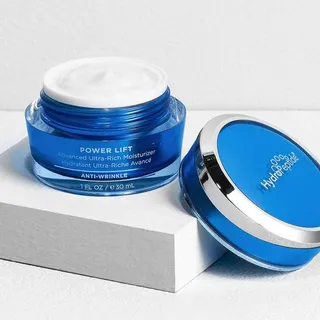
HydroPeptide Power Lift Moisturizer

HydroPeptide Power Lift Moisturizer

Efficacy87/100IrritancyHigh

Works for

Moisturizing
Dipeptide diaminobutyroyl benzylamide diacetate, Panthenol + 15 more
Works well
What the product description says
“Imparts Intense Moisture”
Source: HydroPeptide

This product can help improve hydration of the skin with the two types of ingredients.

The first type is called “humectants”:
these ingredients help attract water. When humectants are on the surface of the skin, they “pull in” the moisture from the outside environment, or from within deeper layers of the skin. The following ingredients in this product do the job: glycerin, sodium hyaluronate.

This product also contains ingredients called “occlusives”. They help reduce the speed with which our skin loses moisture to the outside environment. These ingredients also help soften the upper layer of the skin, so it feels less tight and nicer to the touch. The following ingredients in this product do the job: butyrospermum parkii butter, caprylic/capric triglyceride.

The following ingredients in this product are especially good for supporting the skin barrier and helping with the hydration level: acetyl dipeptide-1 cetyl ester, dipeptide diaminobutyroyl benzylamide diacetate, panthenol

Dipeptide diaminobutyroyl benzylamide diacetateHeroEffect: HighA type of peptide. Peptides are excellent moisturizers and might be able support collagen production reducing fine lines and wrinkles~0.65–1%
PanthenolHero· HumectantEffect: HighHelps attract water to the upper layer of the skin and can help improve skin barrier function~0.3–0.55%
Acetyl dipeptide-1 cetyl esterHeroEffect: HighA type of peptide. Peptides are excellent moisturizers and might be able support collagen production reducing fine lines and wrinkles~0.2–0.35%
GlycerinKey active· HumectantEffect: HighOne of the best moisturizing ingredients. Naturally present in skin. It attracts water to the upper layer of the skin working as a humectant~2.9–3.6%
Caprylic/capric triglycerideKey active· Emollient, OcclusiveEffect: HighA good mix of fatty acids that forms a protective layer on the skin. Improves the shelf life of products. Derived from coconut and glycerin~2.3–2.8%
Cetearyl alcoholKey active· EmollientEffect: MediumA non-drying alcohol. Works as an emollient. Helps water and oil mix together and creates a nice product texture~1.8–2.2%
Butyrospermum parkii butterKey active· Emollient, OcclusiveEffect: HighA great moisturising ingredient that softens the skin and reduces water loss from its upper layer. It also can be helpful in protecting skin from free radicals~1.1–1.3%
SqualaneKey active· Emollient, OcclusiveEffect: HighAn oil naturally present in skin. Works as an emollient to soften the skin and form a protective layer on its surface without a greasy feeling.~0.2–0.35%
Sodium hyaluronateKey active· HumectantEffect: HighOne of the best moisturizing ingredients. Attracts water into the upper layer of the skin~0.15–0.3%
Butylene glycol· HumectantEffect: LowUsed to create a nice product texture and help delivery of other ingredients. Might be somewhat helpful in attracting water to the upper layer of the skin~5.4–6.5%
Behenyl alcohol· Emollient, OcclusiveEffect: LowNon-drying alcohol that helps water and oil mix together. Also serves as an emollient~1.3–1.6%
Arachidyl alcohol· EmollientEffect: LowUsed to soften the upper layer of the skin and create a thicker product consistency~0.45–0.7%
Ethylhexyl isononanoate· EmollientEffect: LowHelps soften the upper layer of the skin and improve the product consistency~0.4–0.6%
Caprylyl glycol· Humectant, EmollientEffect: LowHelps preserve products and creates a nice product texture~0.25–0.5%
Ananas sativus fruit extractEffect: LowA fruit extract that might help to attract water to the upper layer of the skin, but there is no evidence for any other benefits to the skin~0.2–0.35%
Isononyl isononanoateEffect: Low, below effective doseForms a protective film on the surface of the skin to prevent moisture loss. Gives a velvety feel to products while reducing tackiness~0.55–0.8%
Camellia sinensis leaf extractEffect: Low, below effective doseCan contain potent anti-oxidant compounds (abbreviated ECG, GCG, EGC, and EGCG) that might help protect the skin from free radicals. Can help calm down inflammation and has some anti-bacterial properties. Unfortunately, these antioxidants are unstable and lose their effectiveness very quickly in products. The concentration of the antioxidant compounds in the extract also tends to be low to be effective in topical formulation~0.2–0.4%
Anti-aging
Dipeptide diaminobutyroyl benzylamide diacetate, Acetyl dipeptide-1 cetyl ester + 4 more
May help
What the product description says
“Smooths Fine Lines”
Source: HydroPeptide

This product contains acetyl dipeptide-1 cetyl ester, dipeptide diaminobutyroyl benzylamide diacetate. There is some human evidence that these ingredients help reduce and prevent fine lines and wrinkles and improve skin elasticity and firmness, though it is smaller or less consistent than the evidence for the best anti-aging ingredients.

Dipeptide diaminobutyroyl benzylamide diacetateKey activeEffect: MediumA type of peptide. Peptides are excellent moisturizers and might be able support collagen production reducing fine lines and wrinkles~0.65–1%
Acetyl dipeptide-1 cetyl esterKey activeEffect: MediumA type of peptide. Peptides are excellent moisturizers and might be able support collagen production reducing fine lines and wrinkles~0.2–0.35%
Butyrospermum parkii butterEffect: LowA great moisturising ingredient that softens the skin and reduces water loss from its upper layer. It also can be helpful in protecting skin from free radicals~1.1–1.3%
Camellia sinensis leaf extractEffect: Low, below effective doseCan contain potent anti-oxidant compounds (abbreviated ECG, GCG, EGC, and EGCG) that might help protect the skin from free radicals. Can help calm down inflammation and has some anti-bacterial properties. Unfortunately, these antioxidants are unstable and lose their effectiveness very quickly in products. The concentration of the antioxidant compounds in the extract also tends to be low to be effective in topical formulation~0.2–0.4%
Magnesium ascorbyl phosphateEffect: Low, below effective doseA derivative of vitamin C that is more stable, but less bioavailable than the pure form of vitamin C. It does not penetrate the skin well, but has been shown to convert to pure vitamin C once in skin. It can be helpful in stimulating collagen production and lightening the skin tone, but the required concentration is likely to be very high~0.2–0.35%
Tetrahexyldecyl ascorbateUnder-dosedBeing a lipid soluble form of vitamin C, it is more stable than ascorbic acid, but still degrades quickly and needs to be stabilized in a formulation with another ingredient. It is claimed to penetrate skin better than pure vitamin C and have the the similar benefits, but solid studies of its effectiveness are lacking. Is likely to require a higher concentration in a product than pure vitamin C to be effective. It might be able to help reduce pore clogging.~0.15–0.3%
Anti-oxidation
Side benefit · Arbutin, Echinacea purpurea extract + 8 more
May help

This product contains antioxidants (arbutin) that can help neutralize free radicals in skin to lessen the damage it gets from the UV light (sun). There is some human evidence for this effect in skin, though it is smaller or less consistent than the evidence for the best antioxidants.

ArbutinKey activeEffect: MediumBeta-arbutin. Can help to reduce hyperpigmentation and has an anti-oxidant effect when used in high enough concentration. Is less effective compared to alpha-arbutin~0.2–0.35%
Echinacea purpurea extractEffect: LowPlant extract that might have some anti-oxidant properties. Can be irritating~1.4–1.8%
Butyrospermum parkii butterEffect: LowA great moisturising ingredient that softens the skin and reduces water loss from its upper layer. It also can be helpful in protecting skin from free radicals~1.1–1.3%
Glycyrrhiza glabra root extractEffect: LowA plant extract that can help lighten the skin and calm down inflammation. Might be helpful in neutralizing free radicals~0.15–0.3%
Rosmarinus officinalis leaf oilEffect: Low, below effective doseA plant oil with high content of volatile compounds that can irritate the skin. Can be used as a fragrance. Has anti-bacterial properties and might help neutralize free radicals on the surface of the skin~0.2–0.35%
Magnesium ascorbyl phosphateEffect: Low, below effective doseA derivative of vitamin C that is more stable, but less bioavailable than the pure form of vitamin C. It does not penetrate the skin well, but has been shown to convert to pure vitamin C once in skin. It can be helpful in stimulating collagen production and lightening the skin tone, but the required concentration is likely to be very high~0.2–0.35%
Tocopheryl acetateEffect: Low, below effective doseA more stable but less bio-available form of vitamin E compared to Tocopherol. Might help moisturize and protect the skin from free radicals, but mostly used in low concentrations to stabilize other ingredients.~0.15–0.3%
Rosmarinus officinalis leaf extractEffect: Low, below effective doseCan be helpful in reducing inflammation in skin, including inflamed acne. It can be irritating~0.1–0.15%
Camellia sinensis leaf extractUnder-dosedCan contain potent anti-oxidant compounds (abbreviated ECG, GCG, EGC, and EGCG) that might help protect the skin from free radicals. Can help calm down inflammation and has some anti-bacterial properties. Unfortunately, these antioxidants are unstable and lose their effectiveness very quickly in products. The concentration of the antioxidant compounds in the extract also tends to be low to be effective in topical formulation~0.2–0.4%
Tetrahexyldecyl ascorbateUnder-dosedBeing a lipid soluble form of vitamin C, it is more stable than ascorbic acid, but still degrades quickly and needs to be stabilized in a formulation with another ingredient. It is claimed to penetrate skin better than pure vitamin C and have the the similar benefits, but solid studies of its effectiveness are lacking. Is likely to require a higher concentration in a product than pure vitamin C to be effective. It might be able to help reduce pore clogging.~0.15–0.3%
Evens skin tone
Side benefit · Arbutin, Glycyrrhiza glabra root extract + 3 more
May help

The following ingredient (ingredients) in this product might be helpful, but there is no evidence to confirm that it actually works: arbutin, glycyrrhiza glabra root extract.

ArbutinKey activeEffect: MediumBeta-arbutin. Can help to reduce hyperpigmentation and has an anti-oxidant effect when used in high enough concentration. Is less effective compared to alpha-arbutin~0.2–0.35%
Glycyrrhiza glabra root extractEffect: LowA plant extract that can help lighten the skin and calm down inflammation. Might be helpful in neutralizing free radicals~0.15–0.3%
Magnesium ascorbyl phosphateEffect: Low, below effective doseA derivative of vitamin C that is more stable, but less bioavailable than the pure form of vitamin C. It does not penetrate the skin well, but has been shown to convert to pure vitamin C once in skin. It can be helpful in stimulating collagen production and lightening the skin tone, but the required concentration is likely to be very high~0.2–0.35%
Camellia sinensis leaf extractEffect: Low, below effective doseCan contain potent anti-oxidant compounds (abbreviated ECG, GCG, EGC, and EGCG) that might help protect the skin from free radicals. Can help calm down inflammation and has some anti-bacterial properties. Unfortunately, these antioxidants are unstable and lose their effectiveness very quickly in products. The concentration of the antioxidant compounds in the extract also tends to be low to be effective in topical formulation~0.2–0.4%
Tetrahexyldecyl ascorbateUnder-dosedBeing a lipid soluble form of vitamin C, it is more stable than ascorbic acid, but still degrades quickly and needs to be stabilized in a formulation with another ingredient. It is claimed to penetrate skin better than pure vitamin C and have the the similar benefits, but solid studies of its effectiveness are lacking. Is likely to require a higher concentration in a product than pure vitamin C to be effective. It might be able to help reduce pore clogging.~0.15–0.3%

Can it cause trouble?

Irritancy
11 strong irritants: Menthoxypropanediol, Lavandula angustifolia flower/leaf/stem extract + 9 more — patch-test recommended
High risk
We flagged 34 ingredients with irritancy potential. Severity depends on your sensitivity threshold; the table lists the worst offenders first.
IngredientFunctionIrritationEst. amount
Echinacea purpurea extractPlant extract that might have some anti-oxidant properties. Can be irritatingHigh~1.4–1.8%est.
MenthoxypropanediolUsed as a fragrance. Can be irritatingHigh~0.2–0.35%est.
Lavandula angustifolia flower/leaf/stem extractUsed as a fragranceHigh~0.2–0.35%est.
Citrus aurantium bergamia fruit oilA plant oil with a high content of volatile compounds that can irritate the skin and lead to allergic reactions. Can lead to photosensitivityHigh~0.15–0.3%est.
Salvia officinalis oil—High~0.2–0.35%est.
Rosmarinus officinalis leaf oilA plant oil with high content of volatile compounds that can irritate the skin. Can be used as a fragrance. Has anti-bacterial properties and might help neutralize free radicals on the surface of the skinHigh~0.2–0.35%est.
Coriandrum sativum fruit oilA plant oil that is used as a fragrance. Can be irritatingHigh~0.15–0.25%est.
Salvia sclarea oil—High~0.15–0.3%est.
Jasminum officinale flower/leaf extractUsed as a fragranceHigh~0.1–0.2%est.
Rosa damascena flower extractUsed as a fragrance. Can be irritatingHigh~0.15–0.25%est.
Vanilla planifolia fruit extractA plant extract used as a fragrance. Can be irritatingHigh~0.1–0.2%est.
Rosmarinus officinalis leaf extractCan be helpful in reducing inflammation in skin, including inflamed acne. It can be irritatingHigh~0.1–0.15%est.
Silybum marianum ethyl esterHelps to create a nice product texture. Used to substitute siliconesMedium~3.9–4.8%est.
Caprylic/capric triglycerideA good mix of fatty acids that forms a protective layer on the skin. Improves the shelf life of products. Derived from coconut and glycerinMedium~2.3–2.8%est.
Leuconostoc/radish root ferment filtrateA preservative that comes from radishes fermented by a bacteria. New research suggests that the preservation properties in the ingredient come from an ammonium salt that is not present naturally in radish root but used in its cultivation. Is problematic because the exact amount of the preservative agents is difficult to determineMedium~0.3–0.55%est.
Caprylyl glycolHelps preserve products and creates a nice product textureMedium~0.25–0.5%est.
1,2-hexanediolA preservativeMedium~0.2–0.4%est.
Hydroxyethyl acrylate/sodium acryloyldimethyl taurate copolymerA gelling agent that thickens the product consistency and leaves the skin with a velvety finishMedium~0.2–0.35%est.
Acrylates/c10-30 alkyl acrylate crosspolymerMaintains the texture of skincare products. Allows the product to spread evenly. Helps oil and water mix togetherMedium~0.2–0.35%est.
Tocopheryl acetateA more stable but less bio-available form of vitamin E compared to Tocopherol. Might help moisturize and protect the skin from free radicals, but mostly used in low concentrations to stabilize other ingredients.Medium~0.15–0.3%est.
Cetearyl glucosideHelps water and oil in the product mix well together and improves product textureMedium~0.15–0.3%est.
Sorbitan laurateHelps water and oil mix togetherMedium~0.15–0.3%est.
Tetrahexyldecyl ascorbateBeing a lipid soluble form of vitamin C, it is more stable than ascorbic acid, but still degrades quickly and needs to be stabilized in a formulation with another ingredient. It is claimed to penetrate skin better than pure vitamin C and have the the similar benefits, but solid studies of its effectiveness are lacking. Is likely to require a higher concentration in a product than pure vitamin C to be effective. It might be able to help reduce pore clogging.Medium~0.15–0.3%est.
Disodium edtaStabilizes the product formulationMedium~0.15–0.3%est.
O-cymen-5-olA preservativeMedium~0.05–0.1%est.
Polysorbate 60Helps oil and water mix togetherMedium~0.2–0.35%est.
Ananas sativus fruit extractA fruit extract that might help to attract water to the upper layer of the skin, but there is no evidence for any other benefits to the skinMedium~0.2–0.35%est.
Citric acidCan work as an exfoliant but is typically used to adjust the product pHMedium~0.2–0.35%est.
Potassium sorbateA preservativeMedium~0.2–0.4%est.
Glycyrrhiza glabra root extractA plant extract that can help lighten the skin and calm down inflammation. Might be helpful in neutralizing free radicalsMedium~0.15–0.3%est.
ArbutinBeta-arbutin. Can help to reduce hyperpigmentation and has an anti-oxidant effect when used in high enough concentration. Is less effective compared to alpha-arbutinMedium~0.2–0.35%est.
Magnesium ascorbyl phosphateA derivative of vitamin C that is more stable, but less bioavailable than the pure form of vitamin C. It does not penetrate the skin well, but has been shown to convert to pure vitamin C once in skin. It can be helpful in stimulating collagen production and lightening the skin tone, but the required concentration is likely to be very highMedium~0.2–0.35%est.
Sodium metabisulfiteA preservativeMedium~0.1–0.2%est.
Triethyl citrateUsed as a fragrance. Rarely causes irritationMedium~0.2–0.35%est.
Comedogenic
3 ingredients rated 2 or more on the 0–5 pore-clogging scale
3 flagged
These ingredients have a comedogenic rating of 2 or more on a 0–5 scale; the table shows each one's rating. In leave-on products they can clog pores in acne-prone skin.
IngredientFunctionRatingEst. amount
Butyrospermum parkii butterA great moisturising ingredient that softens the skin and reduces water loss from its upper layer. It also can be helpful in protecting skin from free radicals3/5~1.1–1.3%est.
Fucus vesiculosus extract—3/5~0.15–0.3%est.
Cetearyl alcoholA non-drying alcohol. Works as an emollient. Helps water and oil mix together and creates a nice product texture2/5~1.8–2.2%est.
Did this help you decide?

User reviews

Would you recommend?
No community reviews yet.

Be the first — your take helps the next person decide.

Ingredients

Filter by role to see what each ingredient is doing.

Water~45–55%
Formula
Irritation risk
Low

Plain old water

More about Water
Butylene glycol~5.4–6.5%
Formula
Irritation risk
Low
Works for
Moisturizing

Used to create a nice product texture and help delivery of other ingredients. Might be somewhat helpful in attracting water to the upper layer of the skin

More about Butylene glycol
Silybum marianum ethyl ester~3.9–4.8%
Irritant · medium
Irritation risk
Medium

Helps to create a nice product texture. Used to substitute silicones

More about Silybum marianum ethyl ester
Glycerin~2.9–3.6%
Key active
Irritation risk
Low
Works for
Moisturizing

One of the best moisturizing ingredients. Naturally present in skin. It attracts water to the upper layer of the skin working as a humectant

More about Glycerin
Caprylic/capric triglyceride~2.3–2.8%
Key activeIrritant · medium
Irritation risk
Medium
Works for
Moisturizing

A good mix of fatty acids that forms a protective layer on the skin. Improves the shelf life of products. Derived from coconut and glycerin

More about Caprylic/capric triglyceride
Cetearyl alcohol~1.8–2.2%
Key activeComedogenic 2/5
Irritation risk
Low
Comedogenicity
2/5
Works for
CleansingMoisturizing

A non-drying alcohol. Works as an emollient. Helps water and oil mix together and creates a nice product texture

More about Cetearyl alcohol
Echinacea purpurea extract~1.4–1.8%
Irritant · high
Irritation risk
High
Works for
Anti-oxidation

Plant extract that might have some anti-oxidant properties. Can be irritating

More about Echinacea purpurea extract
Behenyl alcohol~1.3–1.6%
Formula
Irritation risk
Low
Works for
Moisturizing

Non-drying alcohol that helps water and oil mix together. Also serves as an emollient

More about Behenyl alcohol
Butyrospermum parkii butter~1.1–1.3%
Key activeComedogenic 3/5
Irritation risk
Low
Comedogenicity
3/5
Works for
MoisturizingAnti-oxidationAnti-aging

A great moisturising ingredient that softens the skin and reduces water loss from its upper layer. It also can be helpful in protecting skin from free radicals

More about Butyrospermum parkii butter
Dipeptide diaminobutyroyl benzylamide diacetate~0.65–1%
Hero · Moisturizing
Irritation risk
Low
Works for
MoisturizingAnti-aging

A type of peptide. Peptides are excellent moisturizers and might be able support collagen production reducing fine lines and wrinkles

More about Dipeptide diaminobutyroyl benzylamide diacetate
Isononyl isononanoate~0.55–0.8%
Formula
Irritation risk
Low
Works for
Moisturizing

Forms a protective film on the surface of the skin to prevent moisture loss. Gives a velvety feel to products while reducing tackiness

More about Isononyl isononanoate
Arachidyl alcohol~0.45–0.7%
Formula
Irritation risk
Low
Works for
Moisturizing

Used to soften the upper layer of the skin and create a thicker product consistency

More about Arachidyl alcohol
Ethylhexyl isononanoate~0.4–0.6%
Formula
Irritation risk
Low
Works for
Moisturizing

Helps soften the upper layer of the skin and improve the product consistency

More about Ethylhexyl isononanoate
Oryza sativa bran~0.55–0.85%
Formula
Leuconostoc/radish root ferment filtrate~0.3–0.55%
Irritant · medium
Irritation risk
Medium

A preservative that comes from radishes fermented by a bacteria. New research suggests that the preservation properties in the ingredient come from an ammonium salt that is not present naturally in radish root but used in its cultivation. Is problematic because the exact amount of the preservative agents is difficult to determine

More about Leuconostoc/radish root ferment filtrate
Panthenol~0.3–0.55%
Hero · Moisturizing
Irritation risk
Low
Works for
MoisturizingReduces rednessReduces irritation

Helps attract water to the upper layer of the skin and can help improve skin barrier function

More about Panthenol
Tetrahydroxypropyl ethylenediamine~0.25–0.5%
Formula
Caprylyl glycol~0.25–0.5%
Irritant · medium
Irritation risk
Medium
Works for
Moisturizing

Helps preserve products and creates a nice product texture

More about Caprylyl glycol
1,2-hexanediol~0.2–0.4%
Irritant · medium
Irritation risk
Medium

A preservative

More about 1,2-hexanediol
Arachidyl glucoside~0.2–0.4%
Formula
Irritation risk
Low
Works for
Cleansing

Helps oil and water mix together

More about Arachidyl glucoside
Menthoxypropanediol~0.2–0.35%
Irritant · high
Irritation risk
High

Used as a fragrance. Can be irritating

More about Menthoxypropanediol
Hydroxyethyl acrylate/sodium acryloyldimethyl taurate copolymer~0.2–0.35%
Irritant · medium
Irritation risk
Medium

A gelling agent that thickens the product consistency and leaves the skin with a velvety finish

More about Hydroxyethyl acrylate/sodium acryloyldimethyl taurate copolymer
Acrylates/c10-30 alkyl acrylate crosspolymer~0.2–0.35%
Irritant · medium
Irritation risk
Medium

Maintains the texture of skincare products. Allows the product to spread evenly. Helps oil and water mix together

More about Acrylates/c10-30 alkyl acrylate crosspolymer
Tocopheryl acetate~0.15–0.3%
Irritant · medium
Irritation risk
Medium
Works for
Anti-oxidation

A more stable but less bio-available form of vitamin E compared to Tocopherol. Might help moisturize and protect the skin from free radicals, but mostly used in low concentrations to stabilize other ingredients.

More about Tocopheryl acetate
Xanthan gum~0.15–0.3%
Formula
Irritation risk
Low
Works for
Cleansing

Used to create a thicker product consistency

More about Xanthan gum
Cetearyl glucoside~0.15–0.3%
Irritant · medium
Irritation risk
Medium
Works for
Cleansing

Helps water and oil in the product mix well together and improves product texture

More about Cetearyl glucoside
Sorbitan laurate~0.15–0.3%
Irritant · medium
Irritation risk
Medium
Works for
Cleansing

Helps water and oil mix together

More about Sorbitan laurate
Squalane~0.2–0.35%
Key active
Irritation risk
Low
Works for
Moisturizing

An oil naturally present in skin. Works as an emollient to soften the skin and form a protective layer on its surface without a greasy feeling.

More about Squalane
Cyclodextrin~0.15–0.25%
Formula
Irritation risk
Low

A type of sugar that is used to support delivery of active ingredients and can enhance their penetration into the skin without disrupting the skin's barrier

More about Cyclodextrin
Tetrahexyldecyl ascorbate~0.15–0.3%
Under-dosedIrritant · medium
Irritation risk
Medium
Works for
Anti-agingEvens skin toneAnti-oxidation

Being a lipid soluble form of vitamin C, it is more stable than ascorbic acid, but still degrades quickly and needs to be stabilized in a formulation with another ingredient. It is claimed to penetrate skin better than pure vitamin C and have the the similar benefits, but solid studies of its effectiveness are lacking. Is likely to require a higher concentration in a product than pure vitamin C to be effective. It might be able to help reduce pore clogging.

More about Tetrahexyldecyl ascorbate
Buddleja davidii extract~0.15–0.3%
Formula
Disodium edta~0.15–0.3%
Irritant · medium
Irritation risk
Medium

Stabilizes the product formulation

More about Disodium edta
O-cymen-5-ol~0.05–0.1%
Irritant · medium
Irritation risk
Medium

A preservative

More about O-cymen-5-ol
Sodium hyaluronate~0.15–0.3%
Key active
Irritation risk
Low
Works for
Moisturizing

One of the best moisturizing ingredients. Attracts water into the upper layer of the skin

More about Sodium hyaluronate
Polysorbate 60~0.2–0.35%
Irritant · medium
Irritation risk
Medium
Works for
Cleansing

Helps oil and water mix together

More about Polysorbate 60
Ananas sativus fruit extract~0.2–0.35%
Irritant · medium
Irritation risk
Medium
Works for
Moisturizing

A fruit extract that might help to attract water to the upper layer of the skin, but there is no evidence for any other benefits to the skin

More about Ananas sativus fruit extract
Hydroxyethylcellulose~0.2–0.4%
Formula
Irritation risk
Low

Used to thicken product formulations and create gel-like textures

More about Hydroxyethylcellulose
Acetyl dipeptide-1 cetyl ester~0.2–0.35%
Hero · Moisturizing
Irritation risk
Low
Works for
Reduces irritationMoisturizingAnti-inflammatoryAnti-aging

A type of peptide. Peptides are excellent moisturizers and might be able support collagen production reducing fine lines and wrinkles

More about Acetyl dipeptide-1 cetyl ester
Sodium benzoate~0.2–0.35%
Formula
Irritation risk
Low

A preservative

More about Sodium benzoate
Citric acid~0.2–0.35%
Irritant · medium
Irritation risk
Medium

Can work as an exfoliant but is typically used to adjust the product pH

More about Citric acid
Potassium sorbate~0.2–0.4%
Irritant · medium
Irritation risk
Medium

A preservative

More about Potassium sorbate
Glycyrrhiza glabra root extract~0.15–0.3%
Irritant · medium
Irritation risk
Medium
Works for
Anti-inflammatoryReduces rednessEvens skin toneAnti-oxidationAntibacterial

A plant extract that can help lighten the skin and calm down inflammation. Might be helpful in neutralizing free radicals

More about Glycyrrhiza glabra root extract
Pyridoxine tris-hexyldecanoate~0.2–0.35%
Formula
Arbutin~0.2–0.35%
Key activeIrritant · medium
Irritation risk
Medium
Works for
Evens skin toneAnti-oxidation

Beta-arbutin. Can help to reduce hyperpigmentation and has an anti-oxidant effect when used in high enough concentration. Is less effective compared to alpha-arbutin

More about Arbutin
Magnesium ascorbyl phosphate~0.2–0.35%
Irritant · medium
Irritation risk
Medium
Works for
Anti-agingEvens skin toneAnti-oxidation

A derivative of vitamin C that is more stable, but less bioavailable than the pure form of vitamin C. It does not penetrate the skin well, but has been shown to convert to pure vitamin C once in skin. It can be helpful in stimulating collagen production and lightening the skin tone, but the required concentration is likely to be very high

More about Magnesium ascorbyl phosphate
Tropolone~0.2–0.35%
Formula
Irritation risk
Low
More about Tropolone
Myristoyl tripeptide-31~0.2–0.35%
Formula
Sodium metabisulfite~0.1–0.2%
Irritant · medium
Irritation risk
Medium

A preservative

More about Sodium metabisulfite
Hexapeptide-10~0.2–0.35%
Formula
Irritation risk
Low
More about Hexapeptide-10
Diacetyl boldine~0.2–0.35%
Formula
Triethyl citrate~0.2–0.35%
Irritant · medium
Irritation risk
Medium

Used as a fragrance. Rarely causes irritation

More about Triethyl citrate
Lavandula angustifolia flower/leaf/stem extract~0.2–0.35%
Irritant · high
Citrus aurantium bergamia fruit oil~0.15–0.3%
Irritant · high
Irritation risk
High

A plant oil with a high content of volatile compounds that can irritate the skin and lead to allergic reactions. Can lead to photosensitivity

More about Citrus aurantium bergamia fruit oil
Camellia sinensis leaf extract~0.2–0.4%
Under-dosed
Irritation risk
Low
Works for
Anti-oxidationAntibacterialAnti-agingAnti-blemishEvens skin toneMoisturizing

Can contain potent anti-oxidant compounds (abbreviated ECG, GCG, EGC, and EGCG) that might help protect the skin from free radicals. Can help calm down inflammation and has some anti-bacterial properties. Unfortunately, these antioxidants are unstable and lose their effectiveness very quickly in products. The concentration of the antioxidant compounds in the extract also tends to be low to be effective in topical formulation

More about Camellia sinensis leaf extract
Salvia officinalis oil~0.2–0.35%
Irritant · high
Cupressus sempervirens oil~0.2–0.35%
Formula
Rosmarinus officinalis leaf oil~0.2–0.35%
Irritant · high
Irritation risk
High
Works for
AntibacterialAnti-oxidation

A plant oil with high content of volatile compounds that can irritate the skin. Can be used as a fragrance. Has anti-bacterial properties and might help neutralize free radicals on the surface of the skin

More about Rosmarinus officinalis leaf oil
Coriandrum sativum fruit oil~0.15–0.25%
Irritant · high
Irritation risk
High

A plant oil that is used as a fragrance. Can be irritating

More about Coriandrum sativum fruit oil
Salvia sclarea oil~0.15–0.3%
Irritant · high
Fucus vesiculosus extract~0.15–0.3%
Comedogenic 3/5
Irritation risk
Low
Comedogenicity
3/5
More about Fucus vesiculosus extract
Jasminum officinale flower/leaf extract~0.1–0.2%
Irritant · high
Irritation risk
High

Used as a fragrance

More about Jasminum officinale flower/leaf extract
Rosa damascena flower extract~0.15–0.25%
Irritant · high
Irritation risk
High

Used as a fragrance. Can be irritating

More about Rosa damascena flower extract
Vanilla planifolia fruit extract~0.1–0.2%
Irritant · high
Irritation risk
High

A plant extract used as a fragrance. Can be irritating

More about Vanilla planifolia fruit extract
Rosmarinus officinalis leaf extract~0.1–0.15%
Irritant · high
Irritation risk
High
Works for
Anti-blemishAnti-oxidationAntibacterial

Can be helpful in reducing inflammation in skin, including inflamed acne. It can be irritating

More about Rosmarinus officinalis leaf extract
Ingredient list view

Water, Butylene glycol, Silybum marianum ethyl ester, Glycerin, Caprylic/capric triglyceride, Cetearyl alcohol, Echinacea purpurea extract, Behenyl alcohol, Butyrospermum parkii butter, Dipeptide diaminobutyroyl benzylamide diacetate, Isononyl isononanoate, Arachidyl alcohol, Ethylhexyl isononanoate, Oryza sativa bran, Leuconostoc/radish root ferment filtrate, Panthenol, Tetrahydroxypropyl ethylenediamine, Caprylyl glycol, 1,2-hexanediol, Arachidyl glucoside, Menthoxypropanediol, Hydroxyethyl acrylate/sodium acryloyldimethyl taurate copolymer, Acrylates/c10-30 alkyl acrylate crosspolymer, Tocopheryl acetate, Xanthan gum, Cetearyl glucoside, Sorbitan laurate, Squalane, Cyclodextrin, Tetrahexyldecyl ascorbate, Buddleja davidii extract, Disodium edta, O-cymen-5-ol, Sodium hyaluronate, Polysorbate 60, Ananas sativus fruit extract, Hydroxyethylcellulose, Acetyl dipeptide-1 cetyl ester, Sodium benzoate, Citric acid, Potassium sorbate, Glycyrrhiza glabra root extract, Pyridoxine tris-hexyldecanoate, Arbutin, Magnesium ascorbyl phosphate, Tropolone, Myristoyl tripeptide-31, Sodium metabisulfite, Hexapeptide-10, Diacetyl boldine, Triethyl citrate, Lavandula angustifolia flower/leaf/stem extract, Citrus aurantium bergamia fruit oil, Camellia sinensis leaf extract, Salvia officinalis oil, Cupressus sempervirens oil, Rosmarinus officinalis leaf oil, Coriandrum sativum fruit oil, Salvia sclarea oil, Fucus vesiculosus extract, Jasminum officinale flower/leaf extract, Rosa damascena flower extract, Vanilla planifolia fruit extract, Rosmarinus officinalis leaf extract

Compare prices

Retailers ranked by price — lowest first.

HydroPeptide0.17 FL OZ
$23.00
Buy
Amazon USPrice as of 11/19 15:24 GMT
$77.25
Buy
HydroPeptide1 FL OZ
$114.00
Buy

Affiliate links · As an Amazon Associate, WIMJ earns from qualifying purchases.

Worth comparing, line by line.

Match % combines shared ingredients, the first five ingredients, shared actives and hero ingredients, irritancy (lower counts in the alternative's favour), texture and body area. Only products in the same routine step are compared.

Side-by-side comparison of this product against its closest alternatives
HydroPeptidePower Lift MoisturizerYOUR PRODUCTNEOGEN X SUR.MEDICSurmedic 24K Gold Caviar Repair Vital CreamNo7Menopause Skincare Nourishing Overnight CreamDr.wantRetinol Dream
Match—57%56%55%
Price$23.00$60.00+$37.00$25.95+$2.95$15.30−$7.70
Shared key ingredients—7 of 107 of 107 of 10
Key difference—Hexapeptide-11NiacinamideCopper Tripeptide-1
Irritancy High Medium Medium Medium
Drying alcohol—— Contains drying alcohol Contains drying alcohol
View product Shop Shop Shop

More alternatives: Mizon S-Venom Wrinkle Tox CreamBalea Beauty Expert Day Cream 3% Peptid-Solution 1% Ectoin

Cheaper alternatives? See how this stacks up against similar formulas.
We compare ingredient profiles across our catalog — pick the closest match for your budget.
Open dupe finder

Sources cited in this review

Every concentration estimate and effectiveness label is anchored to one of these 32 studies and safety reviews.

  1. 1
  2. 2
  3. 3
  4. 4
  5. 5
  6. 6
HydroPeptide Power Lift Moisturizer
HydroPeptidePower Lift Moisturizer

Affiliate links · As an Amazon Associate, WIMJ earns from qualifying purchases.

As an Amazon Associate, WIMJ earns from qualifying purchases.