Works for:
based on ingredients and %- Moisturizing
- Anti-blemish
- Anti-aging
- Evens skin tone
Can it cause trouble?
- Irritation risk: high
- Comedogenic risk ingredients: 5
Key actives


Product Summary
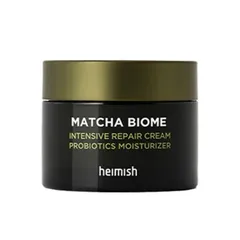
"Heimish - Buy Heimish Matcha Biome Intensive Repair Cream Australia - Korean Skin Care" is a well-rounded moisturizing product. The formulation is based on a combination of good humectants and emollients. Both are needed to increase the skin hydration level. Humectants in this product (panthenol, lactobacillus ferment, sodium hyaluronate, butylene glycol and dextrin) help to increase the water content in the upper layer of the skin. (These ingredients do so by "capturing" water molecules from the outside air or from within the deeper layers of the skin). Butyrospermum parkii butter, caprylic/capric triglyceride, cetearyl alcohol, cetyl palmitate and diisostearyl malate in this product help decrease the water evoporation from the skin, so that it stays hydrated for longer. These ingredients also soften the skin and take away the feeling of tightness and dryness.
Ingredient callouts
- Adenosine 0.45% - 0.70%. It is a compound that in involved in many biological processes inside the skin cells. According one high-quality clinical trial, topical Adenosine in low concentrations can somewhat help improve "deep wrinkles" - the wrinkles that appear with age in places where our faces are most dynamic (for example, on the forehead or in the corners of the eyes).
- An effective concentration of Panthenol (pro-vitamin B5) - about 0.60% - 0.90%. Panthenol helps strengthen the skin barrier, improve hydration and reduce inflammation in skin.
Irritation risk
There are quite a few common irritants in this product, including ingredients without particular skin benefits. We would not recommend it for sensitive skin. We assess the overall irritancy of this moisturizer to be high. For a detailed overview of all potential irritants: click here
You can see the detailed formula review with the breakdown of all actives in the product and the full ingredient list with estimated concentrations in the tables below.
Price
The product retails for 27.00A$ in Australia.
For a detailed price comparison: click here.
Anti-aging
This product can help reduce and prevent fine lines and wrinkles, improve skin elasticity and firmness because it contains adenosine, niacinamide.
These ingredients in the product can also be helpful, even though there is less evidence for their effectiveness: centella asiatica extract.
Keep in mind that it typically takes at least 6 weeks to notice any results because the changes that are needed to improve fine lines and elasticity happen in the deeper layers of the skin. No topical anti-aging product can “erase” wrinkles or fully reverse signs of aging.
Might help improve cell turnover and reduce inflammation in skin. One study shows that the ingredients might be able to help reduce dynamic wrinkles (for example, in the corners of the eyes or on the forehead)
Is proven to be effective in reducing blemishes, evening out skin tone and helping to improve lines and wrinkles. It helps the skin to repair sun damage, calm down inflammation and keep maintain good levels of moisture. The concentration of about 2% is effective for supporting the skin barrier and evening out the skin tone. Concentration of 4-6% is better for helping with acne and balancing the sebum production
A plant extract that has been shown to be able to reduce inflammation in skin, support restoration of skin barrier function, as well as support collagen production. Contains active compounds called centelloids: asiaticoside, madecasosside, asiatic acid and madecassic acid. Might be helpful in preventing stretch marks. It can be itself be irritating though.
Can contain potent anti-oxidant compounds (abbreviated ECG, GCG, EGC, and EGCG) that might help protect the skin from free radicals. Can help calm down inflammation and has some anti-bacterial properties. Unfortunately, these antioxidants are unstable and lose their effectiveness very quickly in products. The concentration of the antioxidant compounds in the extract also tends to be low to be effective in topical formulation
A great moisturising ingredient that softens the skin and reduces water loss from its upper layer. It also can be helpful in protecting skin from free radicals
Anti-blemish
This product can help reduce breakouts and clogged pores because it contains the following ingredient: niacinamide. This ingredient is used for treating acne and can have a noticeable effect.
Is proven to be effective in reducing blemishes, evening out skin tone and helping to improve lines and wrinkles. It helps the skin to repair sun damage, calm down inflammation and keep maintain good levels of moisture. The concentration of about 2% is effective for supporting the skin barrier and evening out the skin tone. Concentration of 4-6% is better for helping with acne and balancing the sebum production
A plant extract that has anti-bacterial properties. Can be used to preserve the product. Can be irritating
A plant extract that has been shown to be able to reduce inflammation in skin, support restoration of skin barrier function, as well as support collagen production. Contains active compounds called centelloids: asiaticoside, madecasosside, asiatic acid and madecassic acid. Might be helpful in preventing stretch marks. It can be itself be irritating though.
Helps water and oil mix together. Has anti-bacterial properties that might be helpful in preventing blemishes
Can contain potent anti-oxidant compounds (abbreviated ECG, GCG, EGC, and EGCG) that might help protect the skin from free radicals. Can help calm down inflammation and has some anti-bacterial properties. Unfortunately, these antioxidants are unstable and lose their effectiveness very quickly in products. The concentration of the antioxidant compounds in the extract also tends to be low to be effective in topical formulation
Can be helpful in reducing inflammation in skin, including inflamed acne. It can be irritating
Evens skin tone
This product can help reduce hypepigmentation and even out the skin tone because it contains the following effective ingredients: niacinamide
The following ingredient (ingredients) in this product might be helpful, but there is no evidence to confirm that it actually can help even out the skin tone: glycyrrhiza glabra root extract.
Keep in mind that you would need to apply any topical skincare targetted at hypigmentation consistently for a couple of months to get a result. No topical skincare product can help get rid of hyperpigmentation (including post-acne marks and age spots) instantly.
Is proven to be effective in reducing blemishes, evening out skin tone and helping to improve lines and wrinkles. It helps the skin to repair sun damage, calm down inflammation and keep maintain good levels of moisture. The concentration of about 2% is effective for supporting the skin barrier and evening out the skin tone. Concentration of 4-6% is better for helping with acne and balancing the sebum production
A plant extract that can help lighten the skin and calm down inflammation. Might be helpful in neutralizing free radicals
Can contain potent anti-oxidant compounds (abbreviated ECG, GCG, EGC, and EGCG) that might help protect the skin from free radicals. Can help calm down inflammation and has some anti-bacterial properties. Unfortunately, these antioxidants are unstable and lose their effectiveness very quickly in products. The concentration of the antioxidant compounds in the extract also tends to be low to be effective in topical formulation
Moisturizing
What does the product description say?
Boosts skin's natural strength and fortifies the skin barrier. Perfect for sensitive and dry skin
Source: Lila Beauty
This product can help improve hydration of the skin with the two types of ingredients.
The first type is called “humectants”:
these ingredients help attract water.
When humectants are on the surface of the skin, they “pull in” the moisture from the outside environment, or from
within deeper layers of the skin. The following ingredients in this product do the job:
lactobacillus ferment, sodium hyaluronate.
This product also contains ingredients called “occlusives”. They help reduce the speed with which our skin loses moisture to the outside environment. These ingredients also help soften the upper layer of the skin, so it feels less tight and nicer to the touch. The following ingredients in this product do the job: butyrospermum parkii butter, caprylic/capric triglyceride.
The following ingredients in this product are especially good for supporting the skin barrier and helping with the hydration level: niacinamide, panthenol
A plant extract that has been shown to be able to reduce inflammation in skin, support restoration of skin barrier function, as well as support collagen production. Contains active compounds called centelloids: asiaticoside, madecasosside, asiatic acid and madecassic acid. Might be helpful in preventing stretch marks. It can be itself be irritating though.
A great moisturising ingredient that softens the skin and reduces water loss from its upper layer. It also can be helpful in protecting skin from free radicals
A fermentation product created by bacteria Lactobacillus. The fermented product has anti-bacterial properties and might be helpful in calming down inflammation, but studies are lacking. Helps attract water to the upper layer of the skin. Can be used as a preservative
Is proven to be effective in reducing blemishes, evening out skin tone and helping to improve lines and wrinkles. It helps the skin to repair sun damage, calm down inflammation and keep maintain good levels of moisture. The concentration of about 2% is effective for supporting the skin barrier and evening out the skin tone. Concentration of 4-6% is better for helping with acne and balancing the sebum production
Helps attract water to the upper layer of the skin and can help improve skin barrier function
A product of yeast fermentation. Helps attract water to the upper layer of the skin
One of the best moisturizing ingredients. Attracts water into the upper layer of the skin
A good mix of fatty acids that forms a protective layer on the skin. Improves the shelf life of products. Derived from coconut and glycerin
Might help improve cell turnover and reduce inflammation in skin. One study shows that the ingredients might be able to help reduce dynamic wrinkles (for example, in the corners of the eyes or on the forehead)
Plant oil from nuts that helps soften the upper layer of the skin. Contains a high concentration of oleic acid that can weaken skin's barrier function and increase water-loss while enhancing penetration of other ingredients
A non-drying alcohol. Works as an emollient. Helps water and oil mix together and creates a nice product texture
An emollient that helps soften the skin and is used to improve product texture and stability
Helps to soften the upper layer of the skin
Helps soften the upper layer of the skin and create a nice product texture
A sugar that is used to stabilize the product formulation. Can help attract water to the upper layer of the skin
An emollient that is naturally present in skin and helps soften it
Used to create a nice product texture and help delivery of other ingredients. Might be somewhat helpful in attracting water to the upper layer of the skin
An emollient that softens the skin and forms a protective layer on its surface. Helps water and oil mix together
Helps to soften the upper layer of the skin and create a nice product texture
Used to improve the product consistency and soften the upper layer of the skin
A plant extract that might contain a compound baicalin that could be helpful in neutralizing free radicals and reducing inflammation in skin. The baicalin concentration in skincare products is often too low for an effective action. Can be used for its fragrant properties
Can contain potent anti-oxidant compounds (abbreviated ECG, GCG, EGC, and EGCG) that might help protect the skin from free radicals. Can help calm down inflammation and has some anti-bacterial properties. Unfortunately, these antioxidants are unstable and lose their effectiveness very quickly in products. The concentration of the antioxidant compounds in the extract also tends to be low to be effective in topical formulation
Helps oil and water mix together and works as an emollient
Anti-oxidation
This product contains antioxidants (camellia sinensis leaf extract, centella asiatica extract) that might be able to help neutralize free radicals in skin to lessen the damage it gets from the UV light (sun). There is not enough evidence to confirm their effectiveness in skin though.
A plant extract that has been shown to be able to reduce inflammation in skin, support restoration of skin barrier function, as well as support collagen production. Contains active compounds called centelloids: asiaticoside, madecasosside, asiatic acid and madecassic acid. Might be helpful in preventing stretch marks. It can be itself be irritating though.
Can contain potent anti-oxidant compounds (abbreviated ECG, GCG, EGC, and EGCG) that might help protect the skin from free radicals. Can help calm down inflammation and has some anti-bacterial properties. Unfortunately, these antioxidants are unstable and lose their effectiveness very quickly in products. The concentration of the antioxidant compounds in the extract also tends to be low to be effective in topical formulation
A fermentation product created by bacteria Lactobacillus. The fermented product has anti-bacterial properties and might be helpful in calming down inflammation, but studies are lacking. Helps attract water to the upper layer of the skin. Can be used as a preservative
A plant extract that might be helpful to neutralize free radicals in skin
A great moisturising ingredient that softens the skin and reduces water loss from its upper layer. It also can be helpful in protecting skin from free radicals
A plant extract that can help lighten the skin and calm down inflammation. Might be helpful in neutralizing free radicals
A plant extract that might have some anti-oxidant properties but evidence of effectiveness in skin is lacking
A plant extract that might contain a compound baicalin that could be helpful in neutralizing free radicals and reducing inflammation in skin. The baicalin concentration in skincare products is often too low for an effective action. Can be used for its fragrant properties
Might help improve cell turnover and reduce inflammation in skin. One study shows that the ingredients might be able to help reduce dynamic wrinkles (for example, in the corners of the eyes or on the forehead)
A plant extract that can contain resveratrol, an antioxidant that can help neutralize free radicals in skin. The effectiveness depends on the extract quality and concentration in the product
A more stable but less bio-available form of vitamin E compared to Tocopherol. Might help moisturize and protect the skin from free radicals, but mostly used in low concentrations to stabilize other ingredients.
Can be helpful in reducing inflammation in skin, including inflamed acne. It can be irritating
How honest is this product?
| Promise | Can it deliver? |
|---|---|
| Moisturizing |
Total Promises Fulfilled score: 100/100.
We receive a small commission for purchases made through these links at no cost for you. Thank you for your support! Learn more
Affiliate link · supports WIMJ at no cost to you
Potential irritants
Comedogenic ingredients
User reviews (0)
Averages from community submissions.
No reviews yet for this product.
Be the first to share your experience!
Tried this product?
Help capture what the ingredient list can't—texture, finish, pilling, scent, and more. Answer what you can, skip the rest.
Takes ~30 seconds.
Reviews are shown in aggregate. No personal details.
| Product | Similarity | Price | Irritancy |
|---|---|---|---|
 Heimish Buy Heimish Matcha Biome Intensive Repair Cream Australia - Korean Skin Care | Current | $27.00 | |
Ciracle Anti-Redness K Cream | 88% | $7.99 | |
TOSOWOONG Cica Snail Cream | 88% | $16.40 | |
 NatureONE Melaone Whitening Cream | 88% | $20.15 | |
 MEDI-PEEL Azulene Water Calming Cream | 86% | $25.10 | |
 ALOE for CURE Anti-Aging Cream S | 86% | $23.80 |
Key Actives
Is proven to be effective in reducing blemishes, evening out skin tone and helping to improve lines and wrinkles. It helps the skin to repair sun damage, calm down inflammation and keep maintain good levels of moisture. The concentration of about 2% is effective for supporting the skin barrier and evening out the skin tone. Concentration of 4-6% is better for helping with acne and balancing the sebum production
A plant extract that has been shown to be able to reduce inflammation in skin, support restoration of skin barrier function, as well as support collagen production. Contains active compounds called centelloids: asiaticoside, madecasosside, asiatic acid and madecassic acid. Might be helpful in preventing stretch marks. It can be itself be irritating though.
Can contain potent anti-oxidant compounds (abbreviated ECG, GCG, EGC, and EGCG) that might help protect the skin from free radicals. Can help calm down inflammation and has some anti-bacterial properties. Unfortunately, these antioxidants are unstable and lose their effectiveness very quickly in products. The concentration of the antioxidant compounds in the extract also tends to be low to be effective in topical formulation
A fermentation product created by bacteria Lactobacillus. The fermented product has anti-bacterial properties and might be helpful in calming down inflammation, but studies are lacking. Helps attract water to the upper layer of the skin. Can be used as a preservative
A great moisturising ingredient that softens the skin and reduces water loss from its upper layer. It also can be helpful in protecting skin from free radicals
Helps attract water to the upper layer of the skin and can help improve skin barrier function
Can be helpful in reducing inflammation in skin, including inflamed acne. It can be irritating
Might help improve cell turnover and reduce inflammation in skin. One study shows that the ingredients might be able to help reduce dynamic wrinkles (for example, in the corners of the eyes or on the forehead)
A plant extract that has anti-bacterial properties. Can be used to preserve the product. Can be irritating
A good mix of fatty acids that forms a protective layer on the skin. Improves the shelf life of products. Derived from coconut and glycerin
A product of yeast fermentation. Helps attract water to the upper layer of the skin
One of the best moisturizing ingredients. Attracts water into the upper layer of the skin
Potential irritants
A plant extract that might contain a compound baicalin that could be helpful in neutralizing free radicals and reducing inflammation in skin. The baicalin concentration in skincare products is often too low for an effective action. Can be used for its fragrant properties
Can be helpful in reducing inflammation in skin, including inflamed acne. It can be irritating
Plant extract that can have healing and anti-inflammatory properties. It is a potential allergen and can be irritating
Used as a fragrance. Can lead to irritation
Essential oil that can be irritating
A plant extract that has anti-bacterial properties. Can be used to preserve the product. Can be irritating
An essential oil with a lemon-like smell that is extracted from a fruit grown in Asia. Used as a fragrance
A plant oil with a high content of volatile compounds that can irritate the skin and lead to allergic reactions. Can lead to photosensitivity
A good mix of fatty acids that forms a protective layer on the skin. Improves the shelf life of products. Derived from coconut and glycerin
Plant oil from nuts that helps soften the upper layer of the skin. Contains a high concentration of oleic acid that can weaken skin's barrier function and increase water-loss while enhancing penetration of other ingredients
A plant extract that has been shown to be able to reduce inflammation in skin, support restoration of skin barrier function, as well as support collagen production. Contains active compounds called centelloids: asiaticoside, madecasosside, asiatic acid and madecassic acid. Might be helpful in preventing stretch marks. It can be itself be irritating though.
A plant extract that can contain resveratrol, an antioxidant that can help neutralize free radicals in skin. The effectiveness depends on the extract quality and concentration in the product
A plant extract that can help lighten the skin and calm down inflammation. Might be helpful in neutralizing free radicals
A plant extract that might have some anti-oxidant properties but evidence of effectiveness in skin is lacking
A more stable but less bio-available form of vitamin E compared to Tocopherol. Might help moisturize and protect the skin from free radicals, but mostly used in low concentrations to stabilize other ingredients.
Helps water and oil mix together and stabilize the product formulation
Helps water and oil mix together. Has anti-bacterial properties that might be helpful in preventing blemishes
A plant extract that might be helpful to neutralize free radicals in skin
Helps oil and water mix together. Could be comedogenic
Comedogenic ingredients
A great moisturising ingredient that softens the skin and reduces water loss from its upper layer. It also can be helpful in protecting skin from free radicals
A non-drying alcohol. Works as an emollient. Helps water and oil mix together and creates a nice product texture
Helps water and oil mix together. Has anti-bacterial properties that might be helpful in preventing blemishes
Helps oil and water mix together. Could be comedogenic
All ingredients
Can contain potent anti-oxidant compounds (abbreviated ECG, GCG, EGC, and EGCG) that might help protect the skin from free radicals. Can help calm down inflammation and has some anti-bacterial properties. Unfortunately, these antioxidants are unstable and lose their effectiveness very quickly in products. The concentration of the antioxidant compounds in the extract also tends to be low to be effective in topical formulation
Acts as a solvent for other ingredients. Speeds up the absorption of other ingredients into the skin
Used to create a nice product texture and help delivery of other ingredients. Might be somewhat helpful in attracting water to the upper layer of the skin
A good mix of fatty acids that forms a protective layer on the skin. Improves the shelf life of products. Derived from coconut and glycerin
A great moisturising ingredient that softens the skin and reduces water loss from its upper layer. It also can be helpful in protecting skin from free radicals
A non-drying alcohol. Works as an emollient. Helps water and oil mix together and creates a nice product texture
Is proven to be effective in reducing blemishes, evening out skin tone and helping to improve lines and wrinkles. It helps the skin to repair sun damage, calm down inflammation and keep maintain good levels of moisture. The concentration of about 2% is effective for supporting the skin barrier and evening out the skin tone. Concentration of 4-6% is better for helping with acne and balancing the sebum production
Plant oil from nuts that helps soften the upper layer of the skin. Contains a high concentration of oleic acid that can weaken skin's barrier function and increase water-loss while enhancing penetration of other ingredients
An emollient that softens the skin and forms a protective layer on its surface. Helps water and oil mix together
Used to improve the product consistency and soften the upper layer of the skin
Helps soften the upper layer of the skin and create a nice product texture
Helps to soften the upper layer of the skin and create a nice product texture
Helps to dissolve other ingredients in a formulation. Slows down the rate of product drying
Helps attract water to the upper layer of the skin and can help improve skin barrier function
A fermentation product created by bacteria Lactobacillus. The fermented product has anti-bacterial properties and might be helpful in calming down inflammation, but studies are lacking. Helps attract water to the upper layer of the skin. Can be used as a preservative
A product of yeast fermentation. Helps attract water to the upper layer of the skin
A plant extract that has been shown to be able to reduce inflammation in skin, support restoration of skin barrier function, as well as support collagen production. Contains active compounds called centelloids: asiaticoside, madecasosside, asiatic acid and madecassic acid. Might be helpful in preventing stretch marks. It can be itself be irritating though.
A plant extract that might contain a compound baicalin that could be helpful in neutralizing free radicals and reducing inflammation in skin. The baicalin concentration in skincare products is often too low for an effective action. Can be used for its fragrant properties
A plant extract that can contain resveratrol, an antioxidant that can help neutralize free radicals in skin. The effectiveness depends on the extract quality and concentration in the product
Can be helpful in reducing inflammation in skin, including inflamed acne. It can be irritating
Plant extract that can have healing and anti-inflammatory properties. It is a potential allergen and can be irritating
Used as a fragrance. Can lead to irritation
A plant extract that can help lighten the skin and calm down inflammation. Might be helpful in neutralizing free radicals
Essential oil that can be irritating
Might help improve cell turnover and reduce inflammation in skin. One study shows that the ingredients might be able to help reduce dynamic wrinkles (for example, in the corners of the eyes or on the forehead)
A plant extract that has anti-bacterial properties. Can be used to preserve the product. Can be irritating
One of the best moisturizing ingredients. Attracts water into the upper layer of the skin
An essential oil with a lemon-like smell that is extracted from a fruit grown in Asia. Used as a fragrance
A plant extract that might have some anti-oxidant properties but evidence of effectiveness in skin is lacking
Used to create a thicker product consistency and stabilize the product formulation
Helps oil and water mix togehter and creates a nice product texture
An emollient that is naturally present in skin and helps soften it
A more stable but less bio-available form of vitamin E compared to Tocopherol. Might help moisturize and protect the skin from free radicals, but mostly used in low concentrations to stabilize other ingredients.
An emollient that helps soften the skin and is used to improve product texture and stability
Helps water and oil mix together and stabilize the product formulation
Helps create a thicker or gel-like product texture. It is not a surfactant but can be used in gentle cleansing formulations
A plant oil with a high content of volatile compounds that can irritate the skin and lead to allergic reactions. Can lead to photosensitivity
A sugar that is used to stabilize the product formulation. Can help attract water to the upper layer of the skin
Helps water and oil mix together. Has anti-bacterial properties that might be helpful in preventing blemishes
A plant extract that might be helpful to neutralize free radicals in skin
Helps oil and water mix together. Could be comedogenic
Ingredient list view
Camellia sinensis leaf extract, Propanediol, Butylene glycol, Diisostearyl malate, Caprylic/capric triglyceride, Butyrospermum parkii butter, Polyglyceryl-3 methylglucose distearate, Cetearyl alcohol, Niacinamide, Macadamia ternifolia seed oil, Water, Glyceryl stearate, 1,2-hexanediol, Hydrogenated polyisobutene, Hydrogenated poly(c6-14 olefin), Hydrogenated polydecene, Dipropylene glycol, Panthenol, Lactobacillus ferment, Saccharomyces ferment, Centella asiatica extract, Scutellaria baicalensis root extract, Polygonum cuspidatum root extract, Rosmarinus officinalis leaf extract, Chamomilla recutita flower extract, Jasminum officinale flower water, Salvia officinalis leaf extract, Glycyrrhiza glabra root extract, Lavandula angustifolia flower extract, Adenosine, Citrus nobilis peel extract, Melia azadirachta leaf extract, Cupressus sempervirens leaf/stem extract, Sodium hyaluronate, Hedera helix leaf/stem extract, Litsea cubeba fruit oil, Ribes nigrum leaf extract, Polyacrylate-13, Peg-100 stearate, Palmitic acid, Tocopheryl acetate, Stearic acid, Polyisobutene, Hydroxyacetophenone, Cetyl palmitate, Sorbitan olivate, Sorbitan palmitate, Polysorbate 20, Carbomer, Sorbitan isostearate, Tromethamine, Citrus aurantium bergamia fruit oil, Theobroma cacao seed extract, Dextrin, Lauric acid, Melia azadirachta flower extract, Myristic acid, Disodium edta
- Niacinamide - mechanisms of action and its topical use in dermatology
- Gehring, W. (2004). Nicotinic acid/niacinamide and the skin. Journal of Cosmetic Dermatology, 3(2), 88–93. doi:10.1111/j.1473-2130.2004.00115.x
- Fatty acids profile of oil from nine varieties of Macadamia nut
- The influence of alkane chain length on the skin irritation potential of 1,2-alkanediols
- Final report of the cosmetic ingredient review expert panel on the safety assessment of Polyisobutene and Hydrogenated Polyisobutene as used in cosmetics
- Safety Assessment of Polyene Group as Used in Cosmetics
- Skin moisturizing effects of panthenol-based formulations
- Safety Assessment of Panthenol, Pantothenic Acid, and Derivatives as Used in Cosmetics
- The effect of probiotics on immune regulation, acne, and photoaging
- Comparison of clinical and histological effects between lactobacillus-fermented Chamaecyparis obtusa and tea tree oil for the treatment of acne: an eight-week double-blind randomized controlled split-face study
- Use of Probiotics for Dermal Applications
- Anti-Inflammatory Effect of Titrated Extract of Centella asiatica in Phthalic Anhydride-Induced Allergic Dermatitis Animal Model
- Centella asiatica in cosmetology
- Triterpene Composition and Bioactivities of Centella asiatica
- Asiaticoside induction for cell-cycle progression, proliferation and collagen synthesis in human dermal fibroblasts
- Assessment report on Centella asiatica (L.) Urban, herba
- Contact dermatitis due to Madecassol
- The Effects of a Standardized Extract of Centella asiatica on Postlaser Resurfacing Wound Healing on the Face: A Split-Face, Double-Blind, Randomized, Placebo-Controlled Trial
- Scutellaria baicalensis, the golden herb from the garden of Chinese medicinal plants
- Flavonoids in Treating Psoriasis
- Improvement of skin barrier dysfunction by Scutellaria baicalensis GEOGI extracts through lactic acid fermentation
- Safety Assessment of Scutellaria baicalensis-Derived Ingredients as Used in Cosmetics
- Nuclear Factor Kappa B Inhibition as a Therapeutic Target of Nutraceuticals in Arthritis, Osteoarthritis, and Related Inflammation
- Resveratrol as an active ingredient for cosmetic and dermatological applications: a review
- Allergic contact dermatitis induced by rosemary leaf extract in a cleansing gel
- Safety Assessment of Rosmarinus officinalis (Rosemary)-Derived Ingredients as Used in Cosmetics
- Rosmarinus officinalis Extract Suppresses Propionibacterium acnes–Induced Inflammatory Responses
- Allergic contact dermatitis caused by Salvia officinalis extract
- Evaluation of Skin Irritation and Acute and Subacute Oral Toxicity of Lavandula angustifolia Essential Oils in Rabbit and Mice
- Assessment report on Lavandula angustifolia Mill., aetheroleum and Lavandula angustifolia Mill., flos
- Evaluation of anti-wrinkle efficacy of adenosine-containing products using the FOITS technique
- Melia azedarach
- Preliminary and Pharmacological Profile of Melia azedarach L.: An Overview
- Hyaluronic acid: A key molecule in skin aging
- Hyaluronan (Hyaluronic Acid): a natural moisturizer for skin care
- Ethnopharmacological Properties and Medicinal Uses of Litsea cubeba
- Extract from Ribes nigrum leaves in vitro activates nitric oxide synthase (eNOS) and increases CD39 expression in human endothelial cells
- Safety Assessment of Tromethamine as Used in Cosmetics
- Safety Assessment of Citrus-Derived Peel Oils as Used in Cosmetics
- Oxidized citrus oil (R-limonene): A frequent skin sensitizer in Europe
- Air oxidation increases skin irritation from fragrance terpenes
- The fatty acid profile of the skin surface lipid layer in papulopustular rosacea