Works for
CleansingPeg-20 glyceryl triisostearateCan be harsh
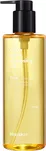
“Pore Cleansing Oil - PHA”
This product works by removing dirt and oil from the surface of the skin.
Keep in mind that cleansing can disrupt the skin barrier, and most people do not need to cleanse their skin more than once per day.
ExfoliationGluconolactone ~0.35–0.85%, below the ~1% it needsUnder-dosed
“Hanskin Pore Cleansing Oil is specially formulated with polyhydroxy acids (PHAs), a gentle acid suitable for sensitive skin types, to lightly exfoliate and help keep blackheads and dead skin cells at bay.”
This product does not contain effective exfoliating ingredients. It might be able to deliver physical exfoliation, that is scrub off some of the dead cells on the surface of the skin. We do not recommend physical exfoliation, because it is not uniform (some bits of skin can get exfoliated too much while others not at all). It can also traumatize the skin and aggrevate acne and other skin conditions.
Anti-blemishGluconolactone ~0.35–0.85%, below the ~1% it needsUnder-dosed
“Hanskin Pore Cleansing Oil is specially formulated with polyhydroxy acids (PHAs), a gentle acid suitable for sensitive skin types, to lightly exfoliate and help keep blackheads and dead skin cells at bay.”
Effective ingredients missing or their concentration is too low.
Can it cause trouble?
Irritancy8 strong irritants: Litsea cubeba fruit oil, Citrus aurantium dulcis peel oil + 6 more — patch-test recommendedHigh risk
Comedogenic2 ingredients rated 2 or more on the 0–5 pore-clogging scale2 flagged
User reviews
Be the first — your take helps the next person decide.
Ingredients
Filter by role to see what each ingredient is doing.
Glycine soja oil~22–33%
- Irritation risk
- Medium
- Comedogenicity
- 2/5
A good emollient that helps soften the skin and helps repair its barrier function. It can clog pores if used in high concentrations.
More about Glycine soja oilEthylhexyl palmitate~4.7–7%
- Irritation risk
- Low
- Comedogenicity
- 3/5
An emollient that helps soften the skin and create a nice product texture
More about Ethylhexyl palmitateTriethylhexanoin~4.7–7.1%
- Irritation risk
- Medium
Helps soften the upper layer of the skin
More about TriethylhexanoinPeg-20 glyceryl triisostearate~3.9–5.8%
- Irritation risk
- Medium
Helps water and oil mix together
More about Peg-20 glyceryl triisostearateHelianthus annuus seed oil~3.4–5.1%
- Irritation risk
- Low
A great emollient due to its high linoleic acid content. One of the most effective plant oils in helping skin hydration and repairing skin barrier function
More about Helianthus annuus seed oilCaprylic/capric triglyceride~2.6–3.9%
- Irritation risk
- Medium
A good mix of fatty acids that forms a protective layer on the skin. Improves the shelf life of products. Derived from coconut and glycerin
More about Caprylic/capric triglyceride1,2-hexanediol~1.1–1.7%
Litsea cubeba fruit oil~1.5–2.2%
- Irritation risk
- High
An essential oil with a lemon-like smell that is extracted from a fruit grown in Asia. Used as a fragrance
More about Litsea cubeba fruit oilPentaerythrityl tetra-di-t-butyl hydroxyhydrocinnamate~1.2–1.8%
- Irritation risk
- Low
Used to increase stability of product formulations
More about Pentaerythrityl tetra-di-t-butyl hydroxyhydrocinnamateTocopheryl linoleate~1.1–1.7%
- Irritation risk
- Medium
A relative of vitamin E (Tocopherol). It can have an anti-oxidant effect in skin and/or to stabilize the product fromulation. It could be irritating but most of the reported allergy and irritation cases appeared in one geographic location (Switzerland) in 1992, and might be due to the quality issues in manufacturing of a particular batch of the ingredient
More about Tocopheryl linoleateCitrus aurantium dulcis peel oil~0.95–1.45%
- Irritation risk
- High
An essentil oil from orange peel. Potential allergen and can be irritating
More about Citrus aurantium dulcis peel oilLavandula angustifolia oil~0.85–1.3%
- Irritation risk
- High
An essential oil. Potential allergen and can be irritating. It has some anti-bacterial properties
More about Lavandula angustifolia oilPelargonium graveolens oil~0.8–1.2%
Water~0.55–1.3%
Canarium luzonicum gum nonvolatiles~0.55–1.25%
- Irritation risk
- Low
Rosmarinus officinalis leaf oil~0.5–1.2%
- Irritation risk
- High
A plant oil with high content of volatile compounds that can irritate the skin. Can be used as a fragrance. Has anti-bacterial properties and might help neutralize free radicals on the surface of the skin
More about Rosmarinus officinalis leaf oilEucalyptus globulus leaf oil~0.5–1.15%
- Irritation risk
- High
An essential oil that can be very irritating. Has some anti-bacterial properties
More about Eucalyptus globulus leaf oilCitrus aurantium amara flower oil~0.45–1.1%
- Irritation risk
- High
Used as a fragrance. Can be irritating
More about Citrus aurantium amara flower oilAnthemis nobilis flower oil~0.35–0.85%
- Irritation risk
- High
An essential oil that is used as a fragrance and can be irritating. It might have some anti-oxidant effect in skin
More about Anthemis nobilis flower oilGluconolactone~0.35–0.85%
- Irritation risk
- Medium
A polyhydroxy acid (PHA) that helps shed the dead cells from the skin surface revealing smoother skin. Is believed to be genter than AHAs. It helps attract water to the upper layer of the skin and can stimulate production of skin's own hyaluronic acid resulting in improved hydration levels. It has been shown to be helpful against acne and clogged pores if used consistently (e.g over a period of 12 weeks) in high enough concentration. It can help reduce fine lines and wrinkles and improve skin tone with long-term application. Can help neutralize free radicals
More about GluconolactonePrunus armeniaca kernel oil~0.4–0.95%
- Irritation risk
- Medium
An emollient that helps soften the skin
More about Prunus armeniaca kernel oilSqualane~0.4–0.95%
- Irritation risk
- Low
An oil naturally present in skin. Works as an emollient to soften the skin and form a protective layer on its surface without a greasy feeling.
More about SqualaneCamellia kissi seed oil~0.35–0.85%
- Irritation risk
- Low
Simmondsia chinensis seed oil~0.35–0.85%
- Irritation risk
- Medium
Softens the upper layer of skin and helps restore the healthy skin barrier. Has shown to help calm down inflammation in skin. It is a stable oil, meaning that it retains its properties even when exposed to air.
More about Simmondsia chinensis seed oilButylene glycol~0.2–0.7%
- Irritation risk
- Low
Used to create a nice product texture and help delivery of other ingredients. Might be somewhat helpful in attracting water to the upper layer of the skin
More about Butylene glycolAllantoin~0.15–0.6%
- Irritation risk
- Low
Helps calm down inflammation in skin and can help reduce itching. Helps to repair the skin barrier and keep skin hydrated
More about AllantoinMelaleuca alternifolia leaf oil~0.15–0.6%
- Irritation risk
- High
An essential oil that can be irritating. Has some anti-bacterial properties
More about Melaleuca alternifolia leaf oilGlycerin~0.15–0.7%
- Irritation risk
- Low
One of the best moisturizing ingredients. Naturally present in skin. It attracts water to the upper layer of the skin working as a humectant
More about GlycerinCamellia sinensis leaf extract~0.15–0.55%
- Irritation risk
- Low
Can contain potent anti-oxidant compounds (abbreviated ECG, GCG, EGC, and EGCG) that might help protect the skin from free radicals. Can help calm down inflammation and has some anti-bacterial properties. Unfortunately, these antioxidants are unstable and lose their effectiveness very quickly in products. The concentration of the antioxidant compounds in the extract also tends to be low to be effective in topical formulation
More about Camellia sinensis leaf extractCamellia japonica flower extract~0.2–0.75%
- Irritation risk
- High
A plant extract that might help neutralize free radicals in skin
More about Camellia japonica flower extractRhus semialata gall extract~0.15–0.5%
- Irritation risk
- Low
Oxygen~0.1–0.45%
- Irritation risk
- Low
Oxygen molecules that are abundant in normal air. In cosmetic formulas typically comes as a perfluorohexane oxygen emulsion. There is no evidence for benefits of the oxygen emulsion in topical creams, lotions or serums. There is a study available confirming a positive impact of oxygen therapy for skin wound healing, but it used an emulsion stored under high pressure using special equipment
More about OxygenNelumbium speciosum flower extract~0.1–0.4%
- Irritation risk
- Low
Pentylene glycol~0.15–0.6%
- Irritation risk
- Medium
Used to preserve products, dissolve other ingredients and create a nice product texture
More about Pentylene glycolIngredient list view
Glycine soja oil, Ethylhexyl palmitate, Triethylhexanoin, Peg-20 glyceryl triisostearate, Helianthus annuus seed oil, Caprylic/capric triglyceride, 1,2-hexanediol, Litsea cubeba fruit oil, Pentaerythrityl tetra-di-t-butyl hydroxyhydrocinnamate, Tocopheryl linoleate, Citrus aurantium dulcis peel oil, Lavandula angustifolia oil, Pelargonium graveolens oil, Water, Canarium luzonicum gum nonvolatiles, Rosmarinus officinalis leaf oil, Eucalyptus globulus leaf oil, Citrus aurantium amara flower oil, Anthemis nobilis flower oil, Gluconolactone, Prunus armeniaca kernel oil, Squalane, Camellia kissi seed oil, Simmondsia chinensis seed oil, Butylene glycol, Allantoin, Melaleuca alternifolia leaf oil, Glycerin, Camellia sinensis leaf extract, Camellia japonica flower extract, Rhus semialata gall extract, Oxygen, Nelumbium speciosum flower extract, Pentylene glycol
Compare prices
Retailers ranked by price — lowest first.

Worth comparing, line by line.
Match % combines shared ingredients, the first five ingredients, shared actives and hero ingredients, irritancy (lower counts in the alternative's favour), texture and body area. Only products in the same routine step are compared.
| HanskinPore Cleansing Oil - PHAYOUR PRODUCT | NUXEReve de Miel Make-up Removing Gel | SkingredientsPreProbiotic Cleanse | NeutrogenaSkin Balancing Milky Cleanser with 2% PHA | |
|---|---|---|---|---|
| Match | — | 45% | 45% | 45% |
| Price | $27.00 | $13.79−$13.21 | — | — |
| Shared key ingredients | — | 4 of 14 | 3 of 14 | 3 of 14 |
| Key difference | — | Glyceryl Oleate | Myristyl Myristate | Persea Gratissima Oil |
| Irritancy | High | Medium | Low | Medium |
| Drying alcohol | — | — | — | — |
| View product | Shop | Shop | Shop |



More alternatives: Farmacy Beauty Clearly Clean Cleansing BalmMary&May Rice Glutathione LHA Cleansing Oil
Sources cited in this review
Every concentration estimate and effectiveness label is anchored to one of these 33 studies and safety reviews.
- 1
- 2
- 3
- 4
- 5Effect of topically applied lipids on surfactant-irritated skinonlinelibrary.wiley.com
- 6

Affiliate links · As an Amazon Associate, WIMJ earns from qualifying purchases.