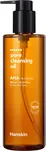
Works for
CleansingPeg-20 glyceryl triisostearate, Hydrogenated lecithinCleanses gently
“Hanskin's Pore Cleansing Oil AHA is a deep cleansing oil that removes makeup and purifies combination skin in a single step.”
This product works by removing dirt and oil from the surface of the skin. It uses a combination of mild cleansing agents (hydrogenated lecithin, peg-20 glyceryl triisostearate) and should be able to cleanse the skin gently. Still keep in mind that any cleansing can disrupt the skin barrier, and most people do not need to cleanse their skin more than once per day.
ExfoliationGlycolic acid, Lactic acidWorks well
“AHAs like lactic and glycolic acid gently exfoliate dead skin and pore impurities”
This product can help exfoliate the skin. In other words, it helps break down the bonds between dead cells on the surface of the skin and speed up the skin turnover. Skin often appears softer and brighter after exfoliation, but overdoing it can result in disrupted skin barrier. The following ingredient is doing the exfoliating job in this product: glycolic acid.
Anti-blemishGlycolic acid, Centella asiatica extractNot delivered
“Lactic acid and glycolic acid work deep within pores to dissolve clogs and remove debris, while citric acid brightens.”
This product contains ingredients (glycolic acid) that could help reduce blemishes and clogged pores in theory, but there is not enough evidence that they actually work.
Can it cause trouble?
Irritancy7 strong irritants: Litsea cubeba fruit oil, Citrus aurantium dulcis peel oil + 5 more — patch-test recommendedHigh risk
Comedogenic1 ingredient rated 2 or more on the 0–5 pore-clogging scale1 flagged
User reviews
Be the first — your take helps the next person decide.
Ingredients
Filter by role to see what each ingredient is doing.
Ethylhexyl palmitate~22–33%
- Irritation risk
- Low
- Comedogenicity
- 3/5
An emollient that helps soften the skin and create a nice product texture
More about Ethylhexyl palmitateParaffinum liquidum~4.9–7.4%
- Irritation risk
- Low
Mineral oil. One of the most effective and well studied occlusive and emollient moisturizing ingredients. Helps reduce moisture loss in skin and repair skin barrier function
More about Paraffinum liquidumHelianthus annuus seed oil~4.5–6.8%
- Irritation risk
- Low
A great emollient due to its high linoleic acid content. One of the most effective plant oils in helping skin hydration and repairing skin barrier function
More about Helianthus annuus seed oilPeg-20 glyceryl triisostearate~3.3–5%
- Irritation risk
- Medium
Helps water and oil mix together
More about Peg-20 glyceryl triisostearateCaprylic/capric triglyceride~2.9–4.4%
- Irritation risk
- Medium
A good mix of fatty acids that forms a protective layer on the skin. Improves the shelf life of products. Derived from coconut and glycerin
More about Caprylic/capric triglyceride1,2-hexanediol~0.6–1.4%
Tocopheryl acetate~1.5–2.2%
- Irritation risk
- Medium
A more stable but less bio-available form of vitamin E compared to Tocopherol. Might help moisturize and protect the skin from free radicals, but mostly used in low concentrations to stabilize other ingredients.
More about Tocopheryl acetateLitsea cubeba fruit oil~1.3–1.9%
- Irritation risk
- High
An essential oil with a lemon-like smell that is extracted from a fruit grown in Asia. Used as a fragrance
More about Litsea cubeba fruit oilPentaerythrityl tetra-di-t-butyl hydroxyhydrocinnamate~0.95–1.45%
- Irritation risk
- Low
Used to increase stability of product formulations
More about Pentaerythrityl tetra-di-t-butyl hydroxyhydrocinnamateCitrus aurantium dulcis peel oil~0.85–1.3%
- Irritation risk
- High
An essentil oil from orange peel. Potential allergen and can be irritating
More about Citrus aurantium dulcis peel oilLavandula angustifolia oil~0.55–1.25%
- Irritation risk
- High
An essential oil. Potential allergen and can be irritating. It has some anti-bacterial properties
More about Lavandula angustifolia oilPelargonium graveolens oil~0.45–1.05%
Water~0.4–0.95%
Canarium luzonicum gum nonvolatiles~0.4–0.9%
- Irritation risk
- Low
Rosmarinus officinalis leaf oil~0.35–0.85%
- Irritation risk
- High
A plant oil with high content of volatile compounds that can irritate the skin. Can be used as a fragrance. Has anti-bacterial properties and might help neutralize free radicals on the surface of the skin
More about Rosmarinus officinalis leaf oilEucalyptus globulus leaf oil~0.35–0.8%
- Irritation risk
- High
An essential oil that can be very irritating. Has some anti-bacterial properties
More about Eucalyptus globulus leaf oilLactic acid~0.35–0.8%
- Irritation risk
- Medium
An exfoliating and moisturizing alpha-hydroxy acid (AHA). Typically causes less irritation than other AHAs, for example, glycolic acid. At high concentrations (about 15%), lactic acid can help reduce lines and wrinkles. Recent studies show that lactic acid can support the "good" bacteria living on skin's surface (healthy skin microbiome)
More about Lactic acidGlycolic acid~0.35–0.75%
- Irritation risk
- High
An alpha-hydroxy acid (AHA) that helps to remove the dead skin cells on the surface of the skin reveling a more even, smoother complexation. It is also able to stimulate collagen production with long-term use. Could help to reduce pore congestion. It can be irritating to the skin. Apply sunscreen daily if using products with glycolic acid
More about Glycolic acidCitric acid~0.2–0.8%
- Irritation risk
- Medium
Can work as an exfoliant but is typically used to adjust the product pH
More about Citric acidCitrus aurantium amara flower oil~0.2–0.75%
- Irritation risk
- High
Used as a fragrance. Can be irritating
More about Citrus aurantium amara flower oilAnthemis nobilis flower oil~0.15–0.65%
- Irritation risk
- High
An essential oil that is used as a fragrance and can be irritating. It might have some anti-oxidant effect in skin
More about Anthemis nobilis flower oilCamellia japonica seed oil~0.3–0.7%
- Irritation risk
- Low
A plant oil that helps to soften the upper layer of the skin and can help restore skin's barrier function. Might have an anti-oxidant effect
More about Camellia japonica seed oilArgania spinosa kernel oil~0.2–0.75%
- Irritation risk
- Medium
An emollient that helps soften the upper layer of the skin. Might have some weak anti-oxidant properties
More about Argania spinosa kernel oilSimmondsia chinensis seed oil~0.3–0.7%
- Irritation risk
- Medium
Softens the upper layer of skin and helps restore the healthy skin barrier. Has shown to help calm down inflammation in skin. It is a stable oil, meaning that it retains its properties even when exposed to air.
More about Simmondsia chinensis seed oilGlycerin~0.15–0.7%
- Irritation risk
- Low
One of the best moisturizing ingredients. Naturally present in skin. It attracts water to the upper layer of the skin working as a humectant
More about GlycerinButylene glycol~0.15–0.6%
- Irritation risk
- Low
Used to create a nice product texture and help delivery of other ingredients. Might be somewhat helpful in attracting water to the upper layer of the skin
More about Butylene glycolGlycine~0.15–0.6%
- Irritation risk
- Low
Helps to attract water to the upper layer of the skin and can help restore the skin barrier function
More about GlycineCamellia japonica flower extract~0.2–0.75%
- Irritation risk
- High
A plant extract that might help neutralize free radicals in skin
More about Camellia japonica flower extractLysine~0.15–0.6%
- Irritation risk
- Low
An amino-acid that helps to attract water to the upper layer of the skin. In combination with other amino-acids, might help to reduce fine lines and wrinkles
More about LysineLeucine~0.15–0.6%
- Irritation risk
- Low
Methionine~0.15–0.6%
- Irritation risk
- Low
Ficus carica fruit extract~0.15–0.6%
- Irritation risk
- Medium
A plant extract that can help neutralize free radicals. The concentrations typically used in cosmetics are too small to have an effect
More about Ficus carica fruit extractValine~0.15–0.6%
- Irritation risk
- Low
Centella asiatica extract~0.2–0.8%
- Irritation risk
- Medium
A plant extract that has been shown to be able to reduce inflammation in skin, support restoration of skin barrier function, as well as support collagen production. Contains active compounds called centelloids: asiaticoside, madecasosside, asiatic acid and madecassic acid. Might be helpful in preventing stretch marks. It can be itself be irritating though.
More about Centella asiatica extractRhus semialata gall extract~0.15–0.6%
- Irritation risk
- Low
Oxygen~0.15–0.6%
- Irritation risk
- Low
Oxygen molecules that are abundant in normal air. In cosmetic formulas typically comes as a perfluorohexane oxygen emulsion. There is no evidence for benefits of the oxygen emulsion in topical creams, lotions or serums. There is a study available confirming a positive impact of oxygen therapy for skin wound healing, but it used an emulsion stored under high pressure using special equipment
More about OxygenCeramide np~0.3–0.7%
- Irritation risk
- Low
A type of lipid similar to ceramides naturally present in skin. Helps to soften the upper layer of the skin and supports the skin barrier function to keep it hydrated. Can help to prevent inflammation in skin
More about Ceramide npSodium hyaluronate~0.15–0.65%
- Irritation risk
- Low
One of the best moisturizing ingredients. Attracts water into the upper layer of the skin
More about Sodium hyaluronateCysteine~0.15–0.6%
- Irritation risk
- Low
Might help neutralize free radicals in skin and might be helpful against hyperpigmentation
More about CysteineAspartic acid~0.15–0.6%
- Irritation risk
- Low
An amino-acid that helps increase skin hydration and might help to slightly improve skin firmness, potentially reducing lines and wrinkles
More about Aspartic acidIsoleucine~0.15–0.6%
- Irritation risk
- Low
An amino acid that can help attract water to the upper layer of the skin and support skin's barrier function
More about IsoleucineAlanine~0.15–0.5%
- Irritation risk
- Low
An amino-acid that helps to attract water to the upper layer of the skin and might help to lighten the skin, but solid evidence is lacking
More about AlanineArginine~0.1–0.45%
- Irritation risk
- Low
An amino acid that is naturally present in skin and helps keep it hydrated. When used together with AHAs, it can reduce their irritating effect on the skin
More about ArginineTyrosine~0.1–0.5%
Phenylalanine~0.15–0.55%
- Irritation risk
- Low
Proline~0.15–0.55%
Hydrogenated lecithin~0.1–0.35%
- Irritation risk
- Low
Helps to retain moisture by creating a protective barrier on the skin. Rich in fatty acids. Improves product texture and helps with the penetration of other ingredients.
More about Hydrogenated lecithinHistidine~0.1–0.4%
Ingredient list view
Ethylhexyl palmitate, Paraffinum liquidum, Helianthus annuus seed oil, Peg-20 glyceryl triisostearate, Caprylic/capric triglyceride, 1,2-hexanediol, Tocopheryl acetate, Litsea cubeba fruit oil, Pentaerythrityl tetra-di-t-butyl hydroxyhydrocinnamate, Citrus aurantium dulcis peel oil, Lavandula angustifolia oil, Pelargonium graveolens oil, Water, Canarium luzonicum gum nonvolatiles, Rosmarinus officinalis leaf oil, Eucalyptus globulus leaf oil, Lactic acid, Glycolic acid, Citric acid, Citrus aurantium amara flower oil, Anthemis nobilis flower oil, Camellia japonica seed oil, Argania spinosa kernel oil, Simmondsia chinensis seed oil, Glycerin, Butylene glycol, Glycine, Camellia japonica flower extract, Lysine, Leucine, Methionine, Ficus carica fruit extract, Valine, Centella asiatica extract, Rhus semialata gall extract, Oxygen, Ceramide np, Sodium hyaluronate, Cysteine, Aspartic acid, Isoleucine, Alanine, Arginine, Tyrosine, Phenylalanine, Proline, Hydrogenated lecithin, Histidine
Compare prices
Retailers ranked by price — lowest first.


Worth comparing, line by line.
Match % combines shared ingredients, the first five ingredients, shared actives and hero ingredients, irritancy (lower counts in the alternative's favour), texture and body area. Only products in the same routine step are compared.
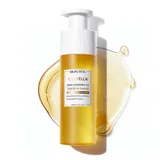
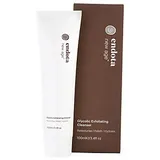
| HanskinPore Cleansing Oil - AHAYOUR PRODUCT | skintificCentella Deep Cleansing Oil Makeup Remover | endota spaGlycolic Exfoliating Cleanser | ISDINEssential Cleansing | |
|---|---|---|---|---|
| Match | — | 44% | 38% | 36% |
| Price | $27.00 | $29.55+$2.55 | $35.11+$8.11 | $34.69+$7.69 |
| Shared key ingredients | — | 8 of 24 | 4 of 24 | 3 of 24 |
| Key difference | — | Madecassic Acid | Apricot Kernel Oil | Isopropyl Myristate |
| Irritancy | High | Medium | Low | Medium |
| Drying alcohol | — | — | — | — |
| View product | Shop | Shop | Shop |


More alternatives: SWANICOCO Anti Sebum Cleansing OilKracie Naïve Botanical Olive Cleansing Oil
Sources cited in this review
Every concentration estimate and effectiveness label is anchored to one of these 46 studies and safety reviews.
- 1A review on the extensive skin benefits of mineral oilncbi.nlm.nih.gov
- 2
- 3
- 4Effect of topically applied lipids on surfactant-irritated skinonlinelibrary.wiley.com
- 5
- 6

Affiliate links · As an Amazon Associate, WIMJ earns from qualifying purchases.