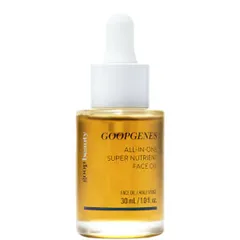
Works for:
based on ingredients and %- Evens skin tone
- Anti-aging
- Moisturizing
- Anti-oxidation
Can it cause trouble?
- Irritation risk: high
- Comedogenic risk ingredients: 0
Key actives

Anti-aging
What does the product description say?
What Else You Need to Know This restorative oil made with nine powerful, nutrient-dense oils (including bakuchiol, cacay, and amla) and extracts like schisandra fruit and squalane that work together to diminish the appearance of fine lines and wrinkles, improve visible firmness, smooth texture, soften, hydrate, and increase your glow.
Source: Sephora CA
This product can help reduce and prevent fine lines and wrinkles, improve skin elasticity and firmness because it contains bakuchiol.
Keep in mind that it typically takes at least 6 weeks to notice any results because the changes that are needed to improve fine lines and elasticity happen in the deeper layers of the skin. No topical anti-aging product can “erase” wrinkles or fully reverse signs of aging.
A plant extract that is, though different in chemical structure, acts similar to retinoids. First studies show that it can help reduce fine lines and wrinkles, improve skin tone, reduce clogged pores and blemishes, and reduce inflammation. There is no conclusive evidence that bakuchiol is as effective as retinol however. The study that directly compared retinol with bakuchiol used bakuchiol applied twice daily compared to once per day for the retinol. According to this study, bakuchiol is less irritating than retinol. Bakuchiol is extracted from seeds of Babchi plant. Other parts of the plant contain coumarins that could cause allergic and irritant reactions. These compounds should be removed in the extraction process when bakuchiol is produced, but it is a good idea to be cautious and stay away from products that include the Babchi plant extracts other than purified bakuchiol to avoid irritation
Pure form of vitamin E. Can help moisturise and protect the skin from free radicals. Often used to help stabilise other ingredients or the formula itself
Anti-oxidation
This product contains antioxidants (bakuchiol) that can help neutralize free radicals in skin. By doing so, they can lessen the damage the skin gets from the UV light (sun).
The following ingredients - emblica officinalis fruit extract also can have an antioxidant effect, but there is less evidence to confirm their effectiveness in skin.
A plant extract that is, though different in chemical structure, acts similar to retinoids. First studies show that it can help reduce fine lines and wrinkles, improve skin tone, reduce clogged pores and blemishes, and reduce inflammation. There is no conclusive evidence that bakuchiol is as effective as retinol however. The study that directly compared retinol with bakuchiol used bakuchiol applied twice daily compared to once per day for the retinol. According to this study, bakuchiol is less irritating than retinol. Bakuchiol is extracted from seeds of Babchi plant. Other parts of the plant contain coumarins that could cause allergic and irritant reactions. These compounds should be removed in the extraction process when bakuchiol is produced, but it is a good idea to be cautious and stay away from products that include the Babchi plant extracts other than purified bakuchiol to avoid irritation
A plant extract that might be helping in neutralizing free radicals in skin. It could help reduce hyperpigmentation. There is some research to confirm its effectiveness in skin
A plant oil with a high content of linoleic acid that helps soften the upper layer of the skin and helps strengthen the skin barrier. It is an excellent moisturizer. Might have an anti-oxidant effect
A berry extract that might help neutralize free radicals on the surface of the skin
Helps soften the upper layer of the skin and can support skin barrier function
A plant oil that helps soften the upper layer of the skin. It might have anti-oxidant properties. Might help reduce inflammation in skin and help against blemishes
Pure form of vitamin E. Can help moisturise and protect the skin from free radicals. Often used to help stabilise other ingredients or the formula itself
Can be helpful in reducing inflammation in skin, including inflamed acne. It can be irritating
Evens skin tone
What does the product description say?
, Cacay Oil Visibly evens skin tone, softens, and smooths.
Source: Sephora CA
This product can help reduce hypepigmentation and even out the skin tone because it contains the following effective ingredients: bakuchiol
The following ingredient (ingredients) in this product might be helpful, but there is no evidence to confirm that it actually can help even out the skin tone: emblica officinalis fruit extract.
Keep in mind that you would need to apply any topical skincare targetted at hypigmentation consistently for a couple of months to get a result. No topical skincare product can help get rid of hyperpigmentation (including post-acne marks and age spots) instantly.
A plant extract that is, though different in chemical structure, acts similar to retinoids. First studies show that it can help reduce fine lines and wrinkles, improve skin tone, reduce clogged pores and blemishes, and reduce inflammation. There is no conclusive evidence that bakuchiol is as effective as retinol however. The study that directly compared retinol with bakuchiol used bakuchiol applied twice daily compared to once per day for the retinol. According to this study, bakuchiol is less irritating than retinol. Bakuchiol is extracted from seeds of Babchi plant. Other parts of the plant contain coumarins that could cause allergic and irritant reactions. These compounds should be removed in the extraction process when bakuchiol is produced, but it is a good idea to be cautious and stay away from products that include the Babchi plant extracts other than purified bakuchiol to avoid irritation
A plant extract that might be helping in neutralizing free radicals in skin. It could help reduce hyperpigmentation. There is some research to confirm its effectiveness in skin
Anti-blemish
This product might be able to help reduce blemishes and clogged pores because it contains bakuchiol.
A plant extract that is, though different in chemical structure, acts similar to retinoids. First studies show that it can help reduce fine lines and wrinkles, improve skin tone, reduce clogged pores and blemishes, and reduce inflammation. There is no conclusive evidence that bakuchiol is as effective as retinol however. The study that directly compared retinol with bakuchiol used bakuchiol applied twice daily compared to once per day for the retinol. According to this study, bakuchiol is less irritating than retinol. Bakuchiol is extracted from seeds of Babchi plant. Other parts of the plant contain coumarins that could cause allergic and irritant reactions. These compounds should be removed in the extraction process when bakuchiol is produced, but it is a good idea to be cautious and stay away from products that include the Babchi plant extracts other than purified bakuchiol to avoid irritation
Helps soften the upper layer of the skin and can support skin barrier function
Can be helpful in reducing inflammation in skin, including inflamed acne. It can be irritating
Moisturizing
What does the product description say?
What Else You Need to Know This restorative oil made with nine powerful, nutrient-dense oils (including bakuchiol, cacay, and amla) and extracts like schisandra fruit and squalane that work together to diminish the appearance of fine lines and wrinkles, improve visible firmness, smooth texture, soften, hydrate, and increase your glow.
Source: Sephora CA
This product can help soften the skin and reduce its moisture loss with emollients and occlusives: helianthus annuus seed oil, ricinus communis seed oil.
Keep in mind that this product does not contain effective ingredients to attract water to the upper layer of the skin. This is why an additional product with humectants like glycerin or hyaluronic acid can be helpful (apply it before this product for the best results).
Helps soften the upper layer of the skin
A plant oil with a high content of linoleic acid that helps soften the upper layer of the skin and helps strengthen the skin barrier. It is an excellent moisturizer. Might have an anti-oxidant effect
A good emollient helping to soften the skin. Might have some anti-oxidant properties. Adds a fragrance to the product
A plant oil that can help soften the skin. It might be helpful in calming down inflammation, but solid research is lacking. Is often used in lip products to create the needed product consistency
An oil naturally present in skin. Works as an emollient to soften the skin and form a protective layer on its surface without a greasy feeling.
A great emollient due to its high linoleic acid content. One of the most effective plant oils in helping skin hydration and repairing skin barrier function
Helps soften the upper layer of the skin and can support skin barrier function
A plant oil that helps soften the upper layer of the skin. It might have anti-oxidant properties. Might help reduce inflammation in skin and help against blemishes
A plant extract that helps soften the upper layer of the skin
Pure form of vitamin E. Can help moisturise and protect the skin from free radicals. Often used to help stabilise other ingredients or the formula itself
How honest is this product?
| Promise | Can it deliver? |
|---|---|
| Anti-aging | |
| Evens skin tone | |
| Moisturizing |
Total Promises Fulfilled score: 91/100.
We receive a small commission for purchases made through these links at no cost for you. Thank you for your support! Learn more
Potential irritants
Comedogenic ingredients
No comedogenic ingredients detected
User reviews (0)
Averages from community submissions.
No reviews yet for this product.
Be the first to share your experience!
Tried this product?
Help capture what the ingredient list can't—texture, finish, pilling, scent, and more. Answer what you can, skip the rest.
Takes ~30 seconds.
Reviews are shown in aggregate. No personal details.
| Product | Similarity | Price | Irritancy |
|---|---|---|---|
 goop GOOPGENES Super Nutrient Face Oil | Current | ≈ $94.89 | |
 Codexial Enotime Supreme Oil | 83% | ≈ $43.53 | |
 Facetheory Ceranight Night Oil O12 | 82% | - | |
 Olverum Facial Oil | 80% | ≈ $79.32 | |
 BYBI Eye Plump Overnight Cream | 67% | ≈ $22.46 | |
 QRxLabs Perfect Eye Elixir | 67% | - |
Key Actives
A plant extract that is, though different in chemical structure, acts similar to retinoids. First studies show that it can help reduce fine lines and wrinkles, improve skin tone, reduce clogged pores and blemishes, and reduce inflammation. There is no conclusive evidence that bakuchiol is as effective as retinol however. The study that directly compared retinol with bakuchiol used bakuchiol applied twice daily compared to once per day for the retinol. According to this study, bakuchiol is less irritating than retinol. Bakuchiol is extracted from seeds of Babchi plant. Other parts of the plant contain coumarins that could cause allergic and irritant reactions. These compounds should be removed in the extraction process when bakuchiol is produced, but it is a good idea to be cautious and stay away from products that include the Babchi plant extracts other than purified bakuchiol to avoid irritation
Helps soften the upper layer of the skin and can support skin barrier function
Pure form of vitamin E. Can help moisturise and protect the skin from free radicals. Often used to help stabilise other ingredients or the formula itself
A plant oil that helps soften the upper layer of the skin. It might have anti-oxidant properties. Might help reduce inflammation in skin and help against blemishes
Can be helpful in reducing inflammation in skin, including inflamed acne. It can be irritating
A plant oil with a high content of linoleic acid that helps soften the upper layer of the skin and helps strengthen the skin barrier. It is an excellent moisturizer. Might have an anti-oxidant effect
A plant extract that might be helping in neutralizing free radicals in skin. It could help reduce hyperpigmentation. There is some research to confirm its effectiveness in skin
A plant oil that can help soften the skin. It might be helpful in calming down inflammation, but solid research is lacking. Is often used in lip products to create the needed product consistency
An oil naturally present in skin. Works as an emollient to soften the skin and form a protective layer on its surface without a greasy feeling.
A great emollient due to its high linoleic acid content. One of the most effective plant oils in helping skin hydration and repairing skin barrier function
A good emollient helping to soften the skin. Might have some anti-oxidant properties. Adds a fragrance to the product
Helps soften the upper layer of the skin
Potential irritants
A plant oil with a high content of volatile compounds that can irritate the skin and lead to allergic reactions. Can lead to photosensitivity
Used as a fragrance. It can be irritating and cause photosensitivity
A good emollient helping to soften the skin. Might have some anti-oxidant properties. Adds a fragrance to the product
Can be helpful in reducing inflammation in skin, including inflamed acne. It can be irritating
A common frangrance that can easily irritate skin, especially if exposed to air, light or heat
A plant extract that might be helping in neutralizing free radicals in skin. It could help reduce hyperpigmentation. There is some research to confirm its effectiveness in skin
Helps soften the upper layer of the skin and can support skin barrier function
A plant oil that helps soften the upper layer of the skin. It might have anti-oxidant properties. Might help reduce inflammation in skin and help against blemishes
A plant extract that is, though different in chemical structure, acts similar to retinoids. First studies show that it can help reduce fine lines and wrinkles, improve skin tone, reduce clogged pores and blemishes, and reduce inflammation. There is no conclusive evidence that bakuchiol is as effective as retinol however. The study that directly compared retinol with bakuchiol used bakuchiol applied twice daily compared to once per day for the retinol. According to this study, bakuchiol is less irritating than retinol. Bakuchiol is extracted from seeds of Babchi plant. Other parts of the plant contain coumarins that could cause allergic and irritant reactions. These compounds should be removed in the extraction process when bakuchiol is produced, but it is a good idea to be cautious and stay away from products that include the Babchi plant extracts other than purified bakuchiol to avoid irritation
A plant oil that can help soften the skin. It might be helpful in calming down inflammation, but solid research is lacking. Is often used in lip products to create the needed product consistency
A plant extract that helps soften the upper layer of the skin
A berry extract that might help neutralize free radicals on the surface of the skin
Comedogenic ingredients
We couldn't find any comedogenic ingredients in this product
All ingredients
A plant oil with a high content of linoleic acid that helps soften the upper layer of the skin and helps strengthen the skin barrier. It is an excellent moisturizer. Might have an anti-oxidant effect
A plant extract that might be helping in neutralizing free radicals in skin. It could help reduce hyperpigmentation. There is some research to confirm its effectiveness in skin
Helps soften the upper layer of the skin and can support skin barrier function
A plant oil that helps soften the upper layer of the skin. It might have anti-oxidant properties. Might help reduce inflammation in skin and help against blemishes
A plant oil that helps to soften the upper layer of the skin and can help restore skin's barrier function. Might have an anti-oxidant effect
An oil naturally present in skin. Works as an emollient to soften the skin and form a protective layer on its surface without a greasy feeling.
A great emollient due to its high linoleic acid content. One of the most effective plant oils in helping skin hydration and repairing skin barrier function
A plant extract that is, though different in chemical structure, acts similar to retinoids. First studies show that it can help reduce fine lines and wrinkles, improve skin tone, reduce clogged pores and blemishes, and reduce inflammation. There is no conclusive evidence that bakuchiol is as effective as retinol however. The study that directly compared retinol with bakuchiol used bakuchiol applied twice daily compared to once per day for the retinol. According to this study, bakuchiol is less irritating than retinol. Bakuchiol is extracted from seeds of Babchi plant. Other parts of the plant contain coumarins that could cause allergic and irritant reactions. These compounds should be removed in the extraction process when bakuchiol is produced, but it is a good idea to be cautious and stay away from products that include the Babchi plant extracts other than purified bakuchiol to avoid irritation
A plant oil with a high content of volatile compounds that can irritate the skin and lead to allergic reactions. Can lead to photosensitivity
Used as a fragrance. It can be irritating and cause photosensitivity
A good emollient helping to soften the skin. Might have some anti-oxidant properties. Adds a fragrance to the product
A plant oil that can help soften the skin. It might be helpful in calming down inflammation, but solid research is lacking. Is often used in lip products to create the needed product consistency
A plant extract that helps soften the upper layer of the skin
Pure form of vitamin E. Can help moisturise and protect the skin from free radicals. Often used to help stabilise other ingredients or the formula itself
A berry extract that might help neutralize free radicals on the surface of the skin
Can be helpful in reducing inflammation in skin, including inflamed acne. It can be irritating
A common frangrance that can easily irritate skin, especially if exposed to air, light or heat
Ingredient list view
Caryodendron orinocense seed oil, Emblica officinalis fruit extract, Oenothera biennis oil, Oenocarpus bataua fruit oil, Rosa canina seed oil, Camellia japonica seed oil, Squalane, Calophyllum inophyllum seed oil, Helianthus annuus seed oil, Oryza sativa bran extract, Bakuchiol, Citrus aurantium amara flower oil, Citrus aurantium amara leaf/twig oil, Citrus aurantium bergamia fruit oil, Citrus aurantium dulcis oil, Citrus limon peel extract, Citrus nobilis oil, Passiflora edulis seed oil, Ricinus communis seed oil, Salvia sclarea oil, Lupinus albus seed extract, Tocopherol, Helianthus annuus extract, Schisandra chinensis fruit extract, Rosmarinus officinalis leaf extract, Citral, Citronellol, Geraniol, Limonene, Linalool
- Chemical characterization and antioxidant activity of Amazonian (Ecuador) Caryodendron orinocense Karst. and Bactris gasipaes Kunth seed oils
- Emblica
- Nutrient composition of rose (Rosa canina L.) seed and oils
- Characterization of Rosehip (Rosa canina L.) Seed and Seed Oil
- Bioactive ingredients of rose hips (Rosa canina L) with special reference to antioxidative and anti-inflammatory properties: in vitro studies
- Effect of Olive and Sunflower Seed Oil on the Adult Skin Barrier: Implications for Neonatal Skin Care
- Topically Applied Sunflower Seed Oil Prevents Invasive Bacterial Infections in Preterm Infants in Egypt
- Effect of topically applied lipids on surfactant-irritated skin
- Impact of topical oils on the skin barrier: possible implications for neonatal health in developing countries
- Bakuchiol in the Management of Acne-affected Skin
- Prospective, randomized, double‐blind assessment of topical bakuchiol and retinol for facial photoageing
- A dermocosmetic containing bakuchiol, Ginkgo biloba extract and mannitol improves the efficacy of adapalene in patients with acne vulgaris: result from a controlled randomized trial
- Biological Activities and Safety of Citrus spp. Essential Oils
- Safety Assessment of Citrus-Derived Peel Oils as Used in Cosmetics
- Oxidized citrus oil (R-limonene): A frequent skin sensitizer in Europe
- Air oxidation increases skin irritation from fragrance terpenes
- Oxidized citrus oil (R-limonene): A frequent skin sensitizer in Europe
- Final report on the safety assessment of Ricinus Communis (Castor) Seed Oil, Hydrogenated Castor Oil, Glyceryl Ricinoleate, Glyceryl Ricinoleate SE, Ricinoleic Acid, Potassium Ricinoleate, Sodium Ricinoleate, Zinc Ricinoleate, Cetyl Ricinoleate, Ethyl Ricinoleate, Glycol Ricinoleate, Isopropyl Ricinoleate, Methyl Ricinoleate, and Octyldodecyl Ricinoleate
- Castor Oil: Properties, Uses, and Optimization of Processing Parameters in Commercial Production
- Effect of ricinoleic acid in acute and subchronic experimental models of inflammation
- Vitamin E in dermatology
- Vitamin E and Skin Health
- Allergic contact dermatitis induced by rosemary leaf extract in a cleansing gel
- Safety Assessment of Rosmarinus officinalis (Rosemary)-Derived Ingredients as Used in Cosmetics
- Rosmarinus officinalis Extract Suppresses Propionibacterium acnes–Induced Inflammatory Responses
- Annex I: Clinical evidence regarding sensitisation to individual fragrance chemicals and to natural extracts