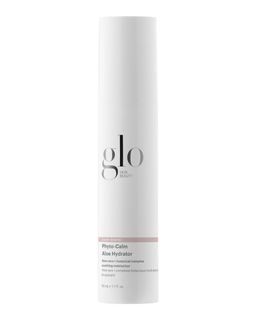
Glo Skin Beauty Phyto-Calm Aloe Hydrator
Works for
1 of 3 advertised claims delivered
Moisturizing13 ingredients credited for this claimGood support
“Phyto-Calm Aloe Hydrator”
This product can help improve hydration of the skin with the two types of ingredients.
The first type is called “humectants”:
these ingredients help attract water.
When humectants are on the surface of the skin, they “pull in” the moisture from the outside environment, or from
within deeper layers of the skin. The following ingredients in this product do the job:
arginine, glycerin.
This product also contains ingredients called “occlusives”. They help reduce the speed with which our skin loses moisture to the outside environment. These ingredients also help soften the upper layer of the skin, so it feels less tight and nicer to the touch. The following ingredients in this product do the job: arginine, caprylic/capric triglyceride.
Anti-aging2 ingredients credited for this claimWeak support
“Protects: Antioxidant complex strengthens skin, safeguarding against premature aging.”
Effective ingredients missing or their concentration is too low.
Evens skin tone1 ingredient credited for this claimWeak support
“Delivering amplified antioxidant protection against aging elements, the appearance of hyperpigmentation and uneven skin tone is diminished, for a balanced, revitalized complexion.”
Effective ingredients missing or their concentration is too low
Can it cause trouble?
Irritancy5 strong irritants: Alcohol, Santalum spicata wood oil + 3 more — patch-test recommendedHigh risk
ComedogenicClean of flagged comedogenic ingredientsNone flagged
User reviews
Be the first — your take helps the next person decide.
Ingredients
Filter by role to see what each ingredient is doing.
Aloe barbadensis leaf juice~23–34%
- Irritation risk
- Medium
Traditionally used to treat sunburns, dermatitis and inflammation, but evidence for its effectiveness is lacking. The extract can contain humectants that help attract water into the skin
More about Aloe barbadensis leaf juiceHelianthus annuus seed oil~4.9–7.4%
- Irritation risk
- Low
A great emollient due to its high linoleic acid content. One of the most effective plant oils in helping skin hydration and repairing skin barrier function
More about Helianthus annuus seed oilCaprylic/capric triglyceride~4.6–6.8%
- Irritation risk
- Medium
A good mix of fatty acids that forms a protective layer on the skin. Improves the shelf life of products. Derived from coconut and glycerin
More about Caprylic/capric triglycerideGlycerin~3.2–4.9%
- Irritation risk
- Low
One of the best moisturizing ingredients. Naturally present in skin. It attracts water to the upper layer of the skin working as a humectant
More about GlycerinPolyglyceryl-2 stearate~2.5–3.8%
- Irritation risk
- Medium
Helps water and oil mix together
More about Polyglyceryl-2 stearateGlyceryl stearate~1.9–2.9%
- Irritation risk
- Low
An emollient that softens the skin and forms a protective layer on its surface. Helps water and oil mix together
More about Glyceryl stearateStearyl alcohol~1.4–2.1%
- Irritation risk
- Low
An emollient that helps soften the skin
More about Stearyl alcoholGlyceryl caprylate~1.2–1.8%
- Irritation risk
- Low
An emollient that can also help water and oil mix together, as well as prevent bacteria growth in products
More about Glyceryl caprylateRibes nigrum seed oil~1–1.5%
- Irritation risk
- Medium
An emollient. Can be helpful for restoring skin barrier function.
More about Ribes nigrum seed oilOctyldodecanol~0.85–1.3%
- Irritation risk
- Low
An emollient that helps to soften the skin and create a pleasant product texture and stabilize the formulation
More about OctyldodecanolOctyldodecyl oleate~0.55–1.3%
- Irritation risk
- Low
Octyldodecyl stearoyl stearate~0.45–1.1%
- Irritation risk
- Low
Alcohol~0.35–0.85%
- Irritation risk
- High
Can be drying and contribute to skin irritation. Used in formulars to dissolve other ingredients, create a thinner product consistency or for its antibacterial properties
More about AlcoholPaeonia suffruticosa root extract~0.35–0.8%
Solidago virgaurea extract~0.3–0.7%
- Irritation risk
- Low
Sodium hyaluronate~0.2–0.8%
- Irritation risk
- Low
One of the best moisturizing ingredients. Attracts water into the upper layer of the skin
More about Sodium hyaluronateLactic acid~0.2–0.8%
- Irritation risk
- Medium
An exfoliating and moisturizing alpha-hydroxy acid (AHA). Typically causes less irritation than other AHAs, for example, glycolic acid. At high concentrations (about 15%), lactic acid can help reduce lines and wrinkles. Recent studies show that lactic acid can support the "good" bacteria living on skin's surface (healthy skin microbiome)
More about Lactic acidArginine~0.15–0.65%
- Irritation risk
- Low
An amino acid that is naturally present in skin and helps keep it hydrated. When used together with AHAs, it can reduce their irritating effect on the skin
More about ArginineSodium phytate~0.3–0.7%
Punica granatum seed extract~0.2–0.75%
Hippophae rhamnoides fruit extract~0.15–0.7%
- Irritation risk
- Medium
A plant extract that might help neutralize free radicals in skin, but research on its effectiveness is lacking
More about Hippophae rhamnoides fruit extractSantalum spicata wood oil~0.15–0.6%
- Irritation risk
- High
Lavandula angustifolia flower oil~0.15–0.6%
- Irritation risk
- High
A fragrant plant oil, can be irritating
More about Lavandula angustifolia flower oilRosmarinus officinalis leaf extract~0.1–0.45%
- Irritation risk
- High
Can be helpful in reducing inflammation in skin, including inflamed acne. It can be irritating
More about Rosmarinus officinalis leaf extractTanacetum annuum flower oil~0.15–0.5%
- Irritation risk
- High
An essential oil that has anti-inflammatory properties but also contains irritating compounds
More about Tanacetum annuum flower oilBisabolol~0.1–0.35%
- Irritation risk
- Low
An active component of chamomile plant that historically has been used to calm down irritated skin. A recent study shows that bisabolol indeed can have some anti-inflammatory effect on skin, even though conclusive data is lacking. Bisabolol has a sweet floral scent and can be added to products for its aromatic properties
More about BisabololXanthan gum~0.1–0.4%
- Irritation risk
- Low
Used to create a thicker product consistency
More about Xanthan gumSodium dehydroacetate~0.1–0.4%
Water~0.1–0.35%
Ingredient list view
Aloe barbadensis leaf juice, Helianthus annuus seed oil, Caprylic/capric triglyceride, Glycerin, Polyglyceryl-2 stearate, Glyceryl stearate, Stearyl alcohol, Glyceryl caprylate, Ribes nigrum seed oil, Octyldodecanol, Octyldodecyl oleate, Octyldodecyl stearoyl stearate, Alcohol, Paeonia suffruticosa root extract, Solidago virgaurea extract, Sodium hyaluronate, Lactic acid, Arginine, Sodium phytate, Punica granatum seed extract, Hippophae rhamnoides fruit extract, Santalum spicata wood oil, Lavandula angustifolia flower oil, Unknown, Rosmarinus officinalis leaf extract, Tanacetum annuum flower oil, Bisabolol, Xanthan gum, Sodium dehydroacetate, Water
Compare prices
Retailers ranked by price — lowest first.

Sources cited in this review
Every concentration estimate and effectiveness label is anchored to one of these 16 studies and safety reviews.
- 1
- 2
- 3Effect of topically applied lipids on surfactant-irritated skinonlinelibrary.wiley.com
- 4
- 5
- 6

Affiliate links · As an Amazon Associate, WIMJ earns from qualifying purchases.