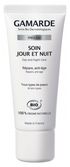
Gamarde Organic Près-Âge Day and Night Care
Works for
0 of 1 advertised claim delivered
Anti-agingNo ingredient credited for this claimNo evidence
“Gamarde Organic Près-Âge Day and Night Care 40ml is an association of anti-aging actives organic Hazelnut oils, rich in fatty acids, in antioxidant Vitamin E, Wheat germ that reinforces the elasticity of the skin and antioxidant Chlorophylle. The complexion is radiant ! Preservative free. PEG free. Silicon free. Organic Cosmetic.”
Effective ingredients missing or their concentration is too low.
MoisturizingNot advertised by the brand · Beeswax, Cera alba + 9 moreGood evidence
This product can help improve hydration of the skin with the two types of ingredients.
The first type is called “humectants”:
these ingredients help attract water.
When humectants are on the surface of the skin, they “pull in” the moisture from the outside environment, or from
within deeper layers of the skin. The following ingredients in this product do the job:
glycerin, inositol.
This product also contains ingredients called “occlusives”. They help reduce the speed with which our skin loses moisture to the outside environment. These ingredients also help soften the upper layer of the skin, so it feels less tight and nicer to the touch. The following ingredients in this product do the job: beeswax, cera alba.
Can it cause trouble?
Irritancy12 strong irritants: Cinnamomum camphora bark oil, Pelargonium graveolens flower oil + 10 more — patch-test recommendedHigh risk
Comedogenic2 ingredients rated 2 or more on the 0–5 pore-clogging scale2 flagged
User reviews
Be the first — your take helps the next person decide.
Ingredients
Filter by role to see what each ingredient is doing.
Water~45–55%
Elaeis guineensis oil~6.2–7.5%
- Irritation risk
- Low
Helps soften the upper layer of the skin
More about Elaeis guineensis oilCorylus avellana seed oil~4.4–5.4%
- Irritation risk
- Low
Cetearyl alcohol~2.6–3.2%
- Irritation risk
- Low
- Comedogenicity
- 2/5
A non-drying alcohol. Works as an emollient. Helps water and oil mix together and creates a nice product texture
More about Cetearyl alcoholGlycerin~2.5–3%
- Irritation risk
- Low
One of the best moisturizing ingredients. Naturally present in skin. It attracts water to the upper layer of the skin working as a humectant
More about GlycerinCera alba~2.3–2.8%
- Irritation risk
- Medium
Forms a protective barrier that holds water and keeps dry skin hydrated. Keeps an emulsion from separating into its oil and liquid components, and increases the thickness of a product. Can be an allergen
More about Cera albaBeeswax~1.8–2.2%
- Irritation risk
- Low
Forms a protective barrier that holds water and keeps dry skin hydrated. Keeps an emulsion from separating into its oil and liquid components, and increases the thickness of a product. Can be an allergen
More about BeeswaxArgania spinosa kernel oil~1.5–1.8%
- Irritation risk
- Medium
An emollient that helps soften the upper layer of the skin. Might have some weak anti-oxidant properties
More about Argania spinosa kernel oilCetearyl glucoside~1.2–1.5%
- Irritation risk
- Medium
Helps water and oil in the product mix well together and improves product texture
More about Cetearyl glucosideRicinus communis seed oil~1–1.2%
- Irritation risk
- Medium
A plant oil that can help soften the skin. It might be helpful in calming down inflammation, but solid research is lacking. Is often used in lip products to create the needed product consistency
More about Ricinus communis seed oilGlyceryl caprylate~0.75–1.15%
- Irritation risk
- Low
An emollient that can also help water and oil mix together, as well as prevent bacteria growth in products
More about Glyceryl caprylateHelianthus annuus seed oil~0.6–0.95%
- Irritation risk
- Low
A great emollient due to its high linoleic acid content. One of the most effective plant oils in helping skin hydration and repairing skin barrier function
More about Helianthus annuus seed oilCinnamomum camphora bark oil~0.5–0.75%
- Irritation risk
- High
Pelargonium graveolens flower oil~0.5–0.75%
- Irritation risk
- High
An essential oil. Can be irritating. Can become an allergen with oxidation
More about Pelargonium graveolens flower oilCymbopogon martini oil~0.45–0.65%
- Irritation risk
- High
Aromatic plant oil used in cosmetics as a fragrance. A likely irritant
More about Cymbopogon martini oilLavandula hybrida oil~0.45–0.7%
- Irritation risk
- High
Plant extract that can be irritating and is a known allergen
More about Lavandula hybrida oilTriticum vulgare germ oil~0.45–0.7%
- Irritation risk
- Low
- Comedogenicity
- 3/5
A good emoillient. Contains vitamin E which can help neutralise free radicals, however the oil is unstable. Avoid if you have gluten or wheat sensitivity (including food allergies).
More about Triticum vulgare germ oilCupressus sempervirens oil~0.35–0.65%
- Irritation risk
- Low
Thymus vulgaris flower/leaf oil~0.3–0.55%
- Irritation risk
- High
Citrus aurantium amara leaf/twig oil~0.3–0.55%
- Irritation risk
- High
Inositol~0.25–0.5%
Citric acid~0.25–0.4%
- Irritation risk
- Medium
Can work as an exfoliant but is typically used to adjust the product pH
More about Citric acidXanthan gum~0.2–0.4%
- Irritation risk
- Low
Used to create a thicker product consistency
More about Xanthan gumCitral~0.15–0.3%
Citronellol~0.15–0.25%
Farnesol~0.15–0.25%
Geraniol~0.1–0.2%
Limonene~0.1–0.15%
- Irritation risk
- High
A common frangrance that can easily irritate skin, especially if exposed to air, light or heat
More about LimoneneLinalool~0.05–0.15%
Ingredient list view
Water, Elaeis guineensis oil, Corylus avellana seed oil, Cetearyl alcohol, Glycerin, Cera alba, Beeswax, Argania spinosa kernel oil, Cetearyl glucoside, Ricinus communis seed oil, Glyceryl caprylate, Helianthus annuus seed oil, Cinnamomum camphora bark oil, Pelargonium graveolens flower oil, Cymbopogon martini oil, Lavandula hybrida oil, Triticum vulgare germ oil, Cupressus sempervirens oil, Thymus vulgaris flower/leaf oil, Citrus aurantium amara leaf/twig oil, Inositol, Citric acid, Unknown, Xanthan gum, Citral, Citronellol, Farnesol, Geraniol, Limonene, Linalool
Compare prices
Retailers ranked by price — lowest first.

Affiliate links · prices updated regularly
Sources cited in this review
Every concentration estimate and effectiveness label is anchored to one of these 14 studies and safety reviews.
- 1
- 2
- 3
- 4
- 5
- 6

Affiliate links · As an Amazon Associate, WIMJ earns from qualifying purchases.