Works for
1 of 2 advertised claims delivered
Moisturizing22 ingredients credited for this claimGood support
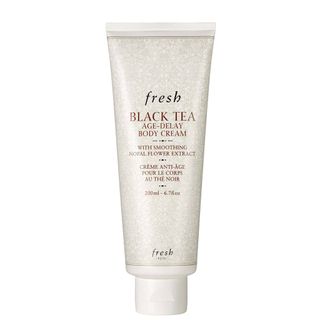
“** Nopal flower extract helps to smooth skin texture, increasing softness and radiance and mango seed butter helps to moisturize and soften the skin.”
This product can help improve hydration of the skin with the two types of ingredients.
The first type is called “humectants”:
these ingredients help attract water.
When humectants are on the surface of the skin, they “pull in” the moisture from the outside environment, or from
within deeper layers of the skin. The following ingredients in this product do the job:
glycerin, saccharomyces ferment filtrate.
This product also contains ingredients called “occlusives”. They help reduce the speed with which our skin loses moisture to the outside environment. These ingredients also help soften the upper layer of the skin, so it feels less tight and nicer to the touch. The following ingredients in this product do the job: beeswax, cera alba.
Anti-aging2 ingredients credited for this claimWeak support
“* Fortified with the powerful age-delay ingredients of our black tea complex, the luxurious, cocooning formula improves the feel of skin elasticity and density while enhancing radiance for velvety soft, supple, younger-looking skin.”
Effective ingredients missing or their concentration is too low.
Can it cause trouble?
Irritancy5 strong irritants: Parfum, Rosa damascena extract + 3 more — patch-test recommendedHigh risk
Comedogenic3 ingredients rated 2 or more on the 0–5 pore-clogging scale3 flagged
User reviews
Be the first — your take helps the next person decide.
Ingredients
Filter by role to see what each ingredient is doing.
Water~45–55%
Cetearyl isononanoate~4.6–5.6%
- Irritation risk
- Low
An emollient that softens the skin and helps prevent moisture loss.
More about Cetearyl isononanoateGlycerin~4.1–5.1%
- Irritation risk
- Low
One of the best moisturizing ingredients. Naturally present in skin. It attracts water to the upper layer of the skin working as a humectant
More about GlycerinEthylhexyl palmitate~3.1–3.8%
- Irritation risk
- Low
- Comedogenicity
- 3/5
An emollient that helps soften the skin and create a nice product texture
More about Ethylhexyl palmitateIsohexadecane~2.4–2.9%
- Irritation risk
- Low
Improves the texture of the product and helps soften the skin. Helps oil and water mix together and can be used as a cleansing agent
More about IsohexadecanePentylene glycol~2–2.4%
- Irritation risk
- Medium
Used to preserve products, dissolve other ingredients and create a nice product texture
More about Pentylene glycolJojoba esters~1.7–2%
- Irritation risk
- Medium
An emollient made of jojoba oil. Helps soften the skin and support its barrier function
More about Jojoba estersHydrogenated coco-glycerides~1.4–1.7%
- Irritation risk
- Medium
Helps oil and water mix together while creating a nice finish on the skin
More about Hydrogenated coco-glyceridesParfum~1.1–1.3%
- Irritation risk
- High
An aromatic blend of unspecified and possibly irritating ingredients
More about ParfumSteareth-21~0.95–1.2%
Stearyl alcohol~0.75–1.15%
- Irritation risk
- Low
An emollient that helps soften the skin
More about Stearyl alcoholCera alba~0.7–1.05%
- Irritation risk
- Medium
Forms a protective barrier that holds water and keeps dry skin hydrated. Keeps an emulsion from separating into its oil and liquid components, and increases the thickness of a product. Can be an allergen
More about Cera albaBeeswax~0.55–0.85%
- Irritation risk
- Low
Forms a protective barrier that holds water and keeps dry skin hydrated. Keeps an emulsion from separating into its oil and liquid components, and increases the thickness of a product. Can be an allergen
More about BeeswaxDimethicone~0.5–0.75%
- Irritation risk
- Low
A silicone that helps to reduce water loss from the surface of the skin. Can temporarily "fill in" lines and wrinkles, absorb oil, and create a nice product finish
More about DimethiconeAluminum starch octenylsuccinate~0.4–0.65%
- Irritation risk
- Medium
Used to thicken the product's consistency
More about Aluminum starch octenylsuccinateSaccharomyces ferment filtrate~0.4–0.6%
- Irritation risk
- Low
A product of yeast fermentation. Helps attract water to the upper layer of the skin
More about Saccharomyces ferment filtrateCamellia sinensis leaf extract~0.4–0.6%
- Irritation risk
- Low
Can contain potent anti-oxidant compounds (abbreviated ECG, GCG, EGC, and EGCG) that might help protect the skin from free radicals. Can help calm down inflammation and has some anti-bacterial properties. Unfortunately, these antioxidants are unstable and lose their effectiveness very quickly in products. The concentration of the antioxidant compounds in the extract also tends to be low to be effective in topical formulation
More about Camellia sinensis leaf extractMangifera indica seed butter~0.3–0.6%
- Irritation risk
- Low
Helps to soften the upper layer of the skin and might have some anti-oxidant effect
More about Mangifera indica seed butterRosa damascena extract~0.3–0.55%
- Irritation risk
- High
Oil of a very fragrant pink rose used as fragrance in cosmetics. Extensive research has shown it has mixed benefits. In the pro column, inhaling this flower’s scent seems to have relaxing properties and the plant’s petals contain skin-soothing and antioxidant compounds that can benefit skin. On the flipside, the numerous chemicals that create this rose’s distinctive fragrance pose a risk of causing skin aggravation.
More about Rosa damascena extractOpuntia coccinellifera flower extract~0.3–0.5%
- Irritation risk
- Low
Rubus fruticosus leaf extract~0.25–0.5%
- Irritation risk
- Low
Litchi chinensis seed extract~0.25–0.45%
- Irritation risk
- Low
Tocopheryl acetate~0.25–0.5%
- Irritation risk
- Medium
A more stable but less bio-available form of vitamin E compared to Tocopherol. Might help moisturize and protect the skin from free radicals, but mostly used in low concentrations to stabilize other ingredients.
More about Tocopheryl acetateTocopherol~0.25–0.5%
- Irritation risk
- Low
Pure form of vitamin E. Can help moisturise and protect the skin from free radicals. Often used to help stabilise other ingredients or the formula itself
More about TocopherolSodium hyaluronate~0.25–0.45%
- Irritation risk
- Low
One of the best moisturizing ingredients. Attracts water into the upper layer of the skin
More about Sodium hyaluronateGlyceryl stearate~0.3–0.55%
- Irritation risk
- Low
An emollient that softens the skin and forms a protective layer on its surface. Helps water and oil mix together
More about Glyceryl stearatePolyacrylate-13~0.3–0.5%
- Irritation risk
- Low
Used to create a thicker product consistency and stabilize the product formulation
More about Polyacrylate-13Steareth-2~0.25–0.5%
Bis-behenyl/isostearyl/phytosteryl dimer dilinoleyl dimer dilinoleate~0.3–0.55%
- Irritation risk
- High
Decyloxazolidinone~0.25–0.5%
Polyisobutene~0.3–0.5%
Butylene glycol~0.25–0.45%
- Irritation risk
- Low
Used to create a nice product texture and help delivery of other ingredients. Might be somewhat helpful in attracting water to the upper layer of the skin
More about Butylene glycolCetearyl alcohol~0.3–0.55%
- Irritation risk
- Low
- Comedogenicity
- 2/5
A non-drying alcohol. Works as an emollient. Helps water and oil mix together and creates a nice product texture
More about Cetearyl alcoholAcrylates/c10-30 alkyl acrylate crosspolymer~0.25–0.5%
- Irritation risk
- Medium
Maintains the texture of skincare products. Allows the product to spread evenly. Helps oil and water mix together
More about Acrylates/c10-30 alkyl acrylate crosspolymerCetyl palmitate~0.3–0.55%
- Irritation risk
- Low
An emollient that helps soften the skin and is used to improve product texture and stability
More about Cetyl palmitateTetrasodium edta~0.25–0.45%
Sorbitol~0.25–0.45%
- Irritation risk
- Low
Helps attract water to the upper layer of the skin and improves the product texture
More about SorbitolCocoglycerides~0.3–0.55%
- Irritation risk
- High
Help soften the upper layer of the skin and make it easier for oil and water mix together. Recently, a rising number of allergic reactions to cocoglycerides and other coconut-derived surfactants has been reported. As there is a significant overlap between frequent irritants and allergens, we flag this ingredient for attention of those with very sensitive, reactive skin
More about CocoglyceridesTromethamine~0.25–0.45%
Xanthan gum~0.25–0.5%
- Irritation risk
- Low
Used to create a thicker product consistency
More about Xanthan gumMaltodextrin~0.25–0.45%
- Irritation risk
- Low
Used to stabilize the product formulation and can help absorb oil
More about MaltodextrinAlgin~0.25–0.45%
- Irritation risk
- Low
- Comedogenicity
- 3/5
Used to thicken product formulation. Can help attract water to the upper layer of the skin
More about AlginSynthetic fluorphlogopite~0.25–0.5%
- Irritation risk
- Low
A mineral that is used as an optical filter (makes the skin looks nicer through light reflection) and to improve the texture of cosmetic products
More about Synthetic fluorphlogopiteSilica~0.35–0.65%
Sorbitan isostearate~0.25–0.5%
- Irritation risk
- Low
Helps oil and water mix together
More about Sorbitan isostearateCi 77891~0.2–0.4%
- Irritation risk
- Low
Titanium dioxide~0.35–0.65%
- Irritation risk
- Low
Works as a UV filter when used in high concentrations. It is photostable and is effective mostly against the UVB light, with some protection in the UVA range. In small concentrations, used for its ability to improve the color of cosmetic products. Is usually well tolerated by the skin
More about Titanium dioxidePolysorbate 20~0.3–0.55%
Polyvinyl alcohol~0.25–0.5%
Bht~0.25–0.45%
Cellulose gum~0.25–0.45%
- Irritation risk
- Low
Used to create thicker product consistency and stabilize emulsions
More about Cellulose gumHydroxyethylcellulose~0.25–0.45%
- Irritation risk
- Low
Used to thicken product formulations and create gel-like textures
More about HydroxyethylcelluloseSodium citrate~0.2–0.4%
- Irritation risk
- Medium
Helps to control the skin's pH level. Maintains the skin's natural film of amino-lactic acids and oils. Helps to preserve products
More about Sodium citrateCitric acid~0.2–0.4%
- Irritation risk
- Medium
Can work as an exfoliant but is typically used to adjust the product pH
More about Citric acidEthylhexylglycerin~0.2–0.4%
Potassium sorbate~0.15–0.3%
Biotin~0.15–0.3%
- Irritation risk
- Low
Might have some moisturising properties. Is not effective when applied topically beyond some moisturizing effect
More about BiotinPhenoxyethanol~0.2–0.35%
- Irritation risk
- Low
A preservative. It helps prevent bacterial growth in cosmetic products
More about PhenoxyethanolLinalool~0.15–0.25%
Citronellol~0.1–0.15%
Geraniol~0.1–0.15%
Ingredient list view
Water, Cetearyl isononanoate, Glycerin, Ethylhexyl palmitate, Isohexadecane, Pentylene glycol, Jojoba esters, Hydrogenated coco-glycerides, Parfum, Steareth-21, Stearyl alcohol, Cera alba, Beeswax, Dimethicone, Aluminum starch octenylsuccinate, Saccharomyces ferment filtrate, Camellia sinensis leaf extract, Mangifera indica seed butter, Rosa damascena extract, Opuntia coccinellifera flower extract, Rubus fruticosus leaf extract, Litchi chinensis seed extract, Tocopheryl acetate, Tocopherol, Sodium hyaluronate, Glyceryl stearate, Polyacrylate-13, Steareth-2, Bis-behenyl/isostearyl/phytosteryl dimer dilinoleyl dimer dilinoleate, Decyloxazolidinone, Polyisobutene, Butylene glycol, Cetearyl alcohol, Acrylates/c10-30 alkyl acrylate crosspolymer, Cetyl palmitate, Tetrasodium edta, Sorbitol, Cocoglycerides, Tromethamine, Xanthan gum, Maltodextrin, Algin, Synthetic fluorphlogopite, Silica, Sorbitan isostearate, Ci 77891, Titanium dioxide, Polysorbate 20, Polyvinyl alcohol, Bht, Cellulose gum, Hydroxyethylcellulose, Sodium citrate, Citric acid, Ethylhexylglycerin, Potassium sorbate, Biotin, Phenoxyethanol, Linalool, Citronellol, Geraniol
Compare prices
Retailers ranked by price — lowest first.
Affiliate links · prices updated regularly · As an Amazon Associate, WIMJ earns from qualifying purchases.
Sources cited in this review
Every concentration estimate and effectiveness label is anchored to one of these 15 studies and safety reviews.
- 1
- 2
- 3
- 4Final Report on the Safety Assessment of Dimethicone Copolyoljournals.sagepub.com
- 5Extraction and Characteristics of Seed Kernel Oil from Mangopdfs.semanticscholar.org
- 6

Affiliate links · As an Amazon Associate, WIMJ earns from qualifying purchases.